A simple, traditional Spanish dipping sauce that packs a massive punch.
Not quite the same consistency as a traditionally made Alioli, but this is a fantastic treat for us happy campers.
Ingredients
5T Olive oil
1t Vinegar
.25t Course salt
2 average garlic cloves
Add olive oil and vinegar and this is all you need in order to make Alioli. Easy.
Method
Usually this food is made with a pestle and mortar. I do not know about you, but I do not take one camping! Today, at home, I tried a campers version, using what most of us might have in a tent or camper van. It takes quite a time and is fairly hard work too, but it is well worth the effort.
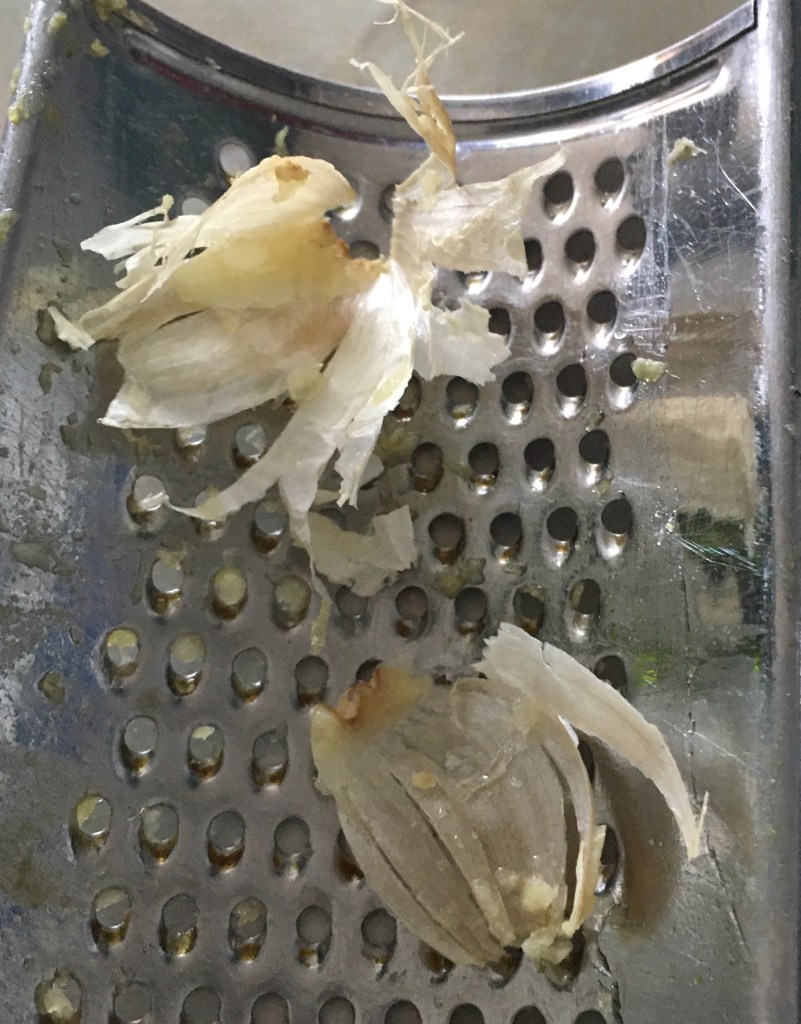
Grate the garlic, with their skins on, ideally using a fine grater. Alternatively smash the cloves with a rock, or a knife and put your mashings into your little bowl. My left over garlic gratings.
Grate garlic into your little bowl
Add salt
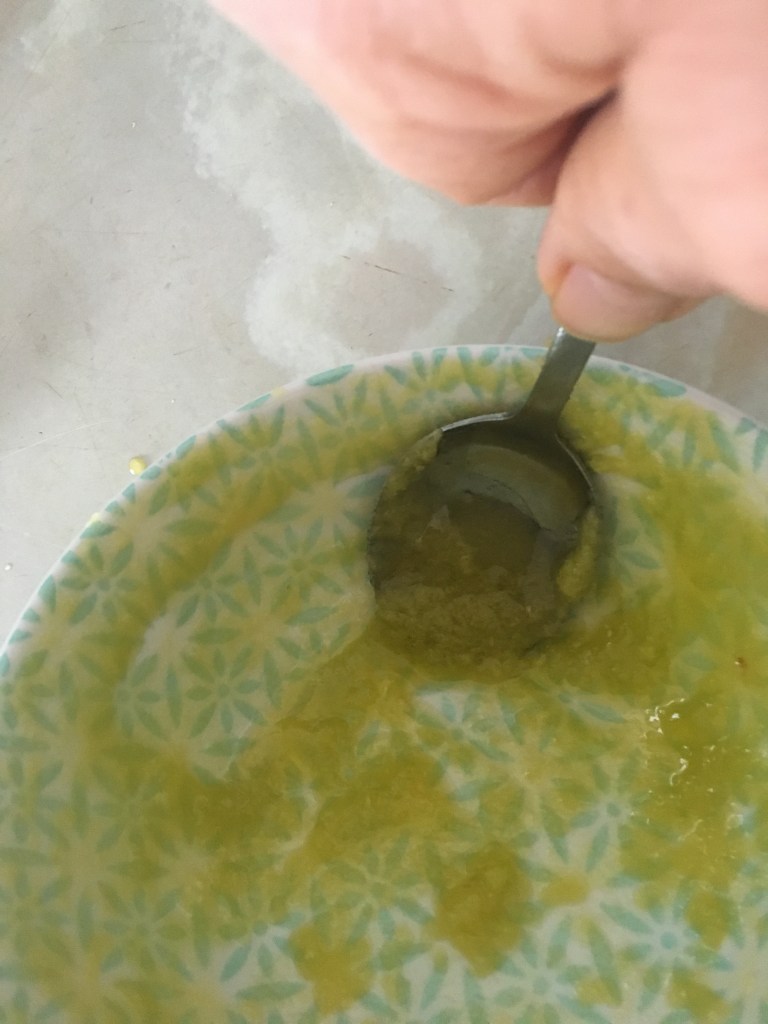
Mash the grated garlic into the finest possible paste by using the back of your spoon pressed and rubbed against the side of your bowl
Add the vinegar to your bowl and carry on mashing your garlic, salt and vinegar together
Mashing garlic, salt and vinegar together
Now begin to add your oil a little at a time, mashing the garlic mix until it firms up and becomes creamy looking. I use half a teaspoonful of oil at a time, or less, and press the spoon very firmly and rapidly around and around the side of the bowl.
Only add more oil when your mix looks like this.
Repeat, dripping in the oil and madly mashing until you have a reasonable amount of paste.
I find this method does not give a very stiff dipping paste. It is more of a dipping sauce. A pestle and mortar gives fantastic results; did I mention that?
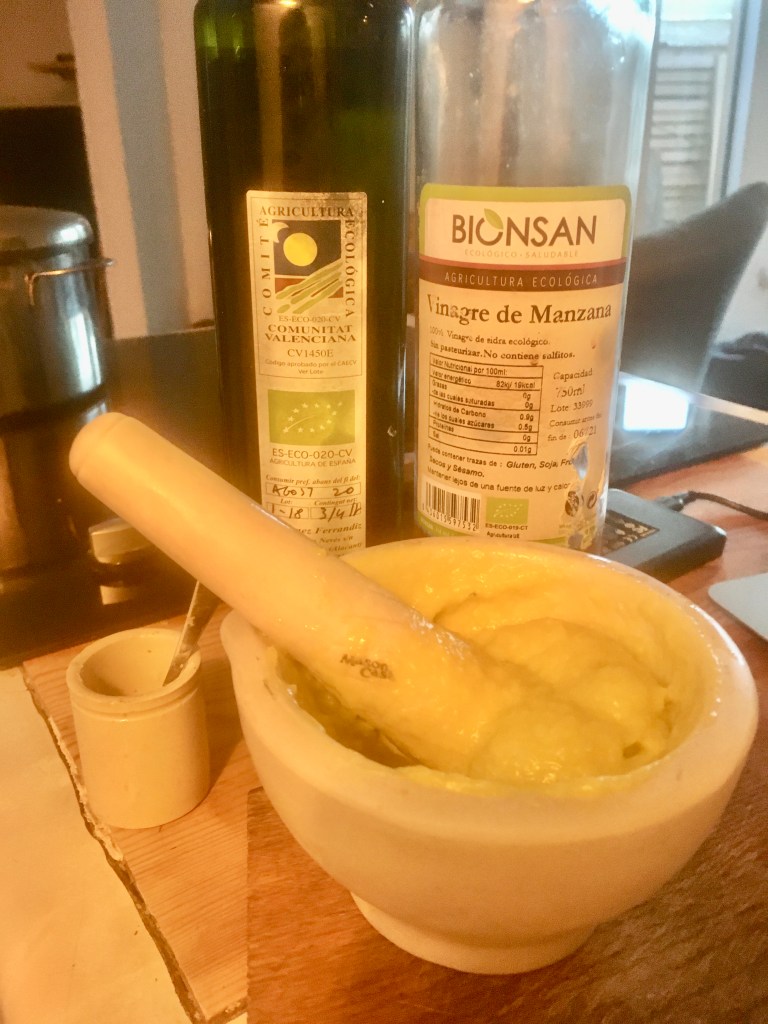
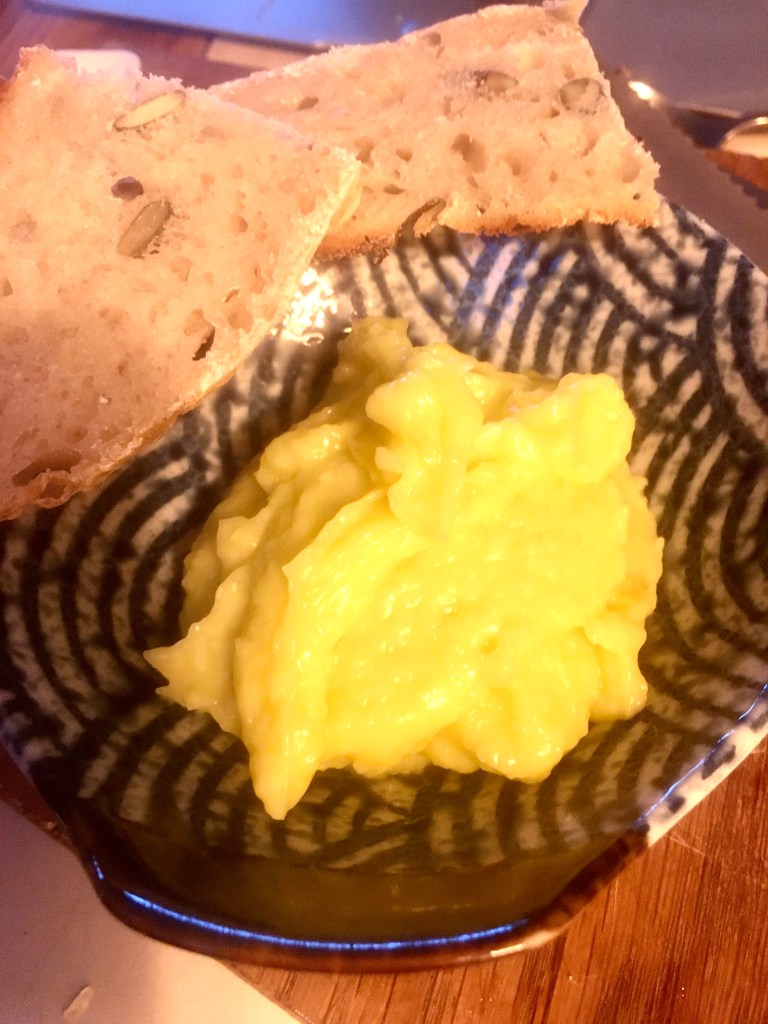
Here is some I made earlier by using our pestle and mortar.
The resulting sauce is delicious and is great when used for:-
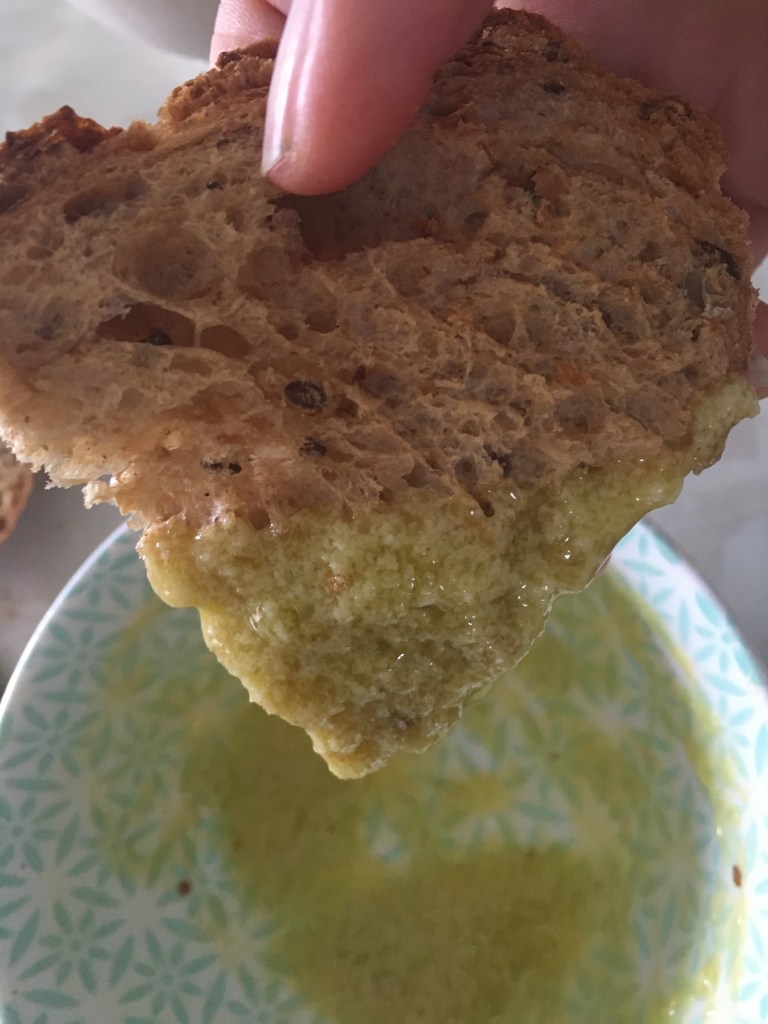
Dipping bread into
Drizzling onto sushi before rolling them and dipping the sushi into at the table as you eat them.
Homemade Alioli made by using a pestle and mortar.
Making this simple food is simply hard work. Remember, nothing worth having comes easy.
We hope that you will give this little recipe a go. If you do, let us know how you get on and please pass on any tips or improvements. Please use the reply button below, or press ‘like’ to register your approval.
Of course you are very welcome to join our merry band of regular readers by pressing the ‘follow’ button below. Every time we post an article, you will receive an update. All the best, us Wallys. xx
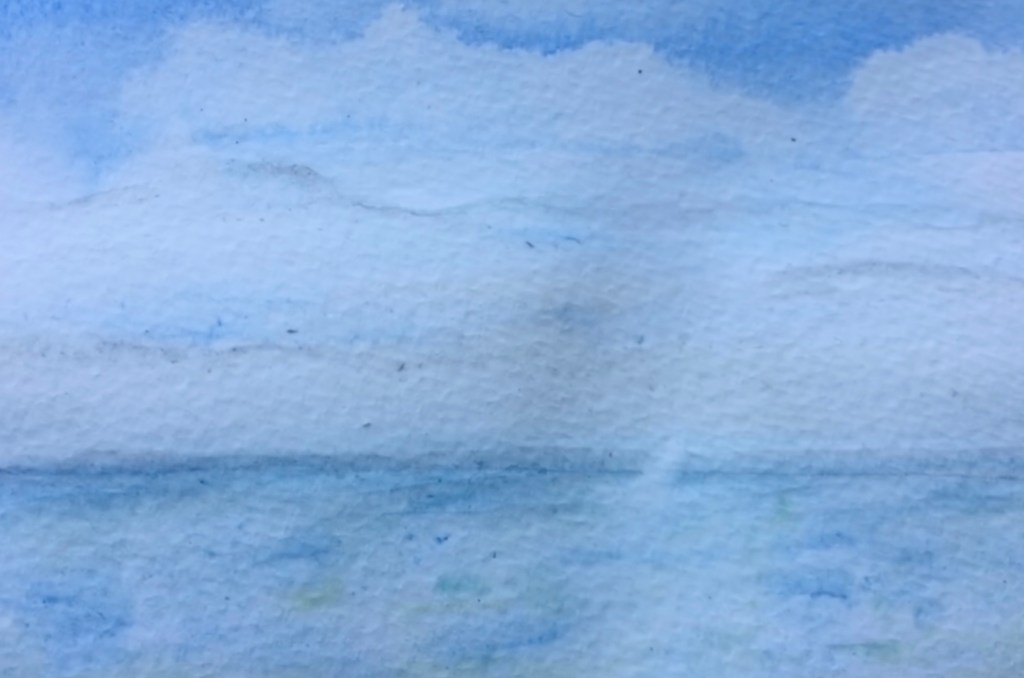
Waves come in sets and if you catch a good one, you can ride it all the way to heaven.
15.3.20
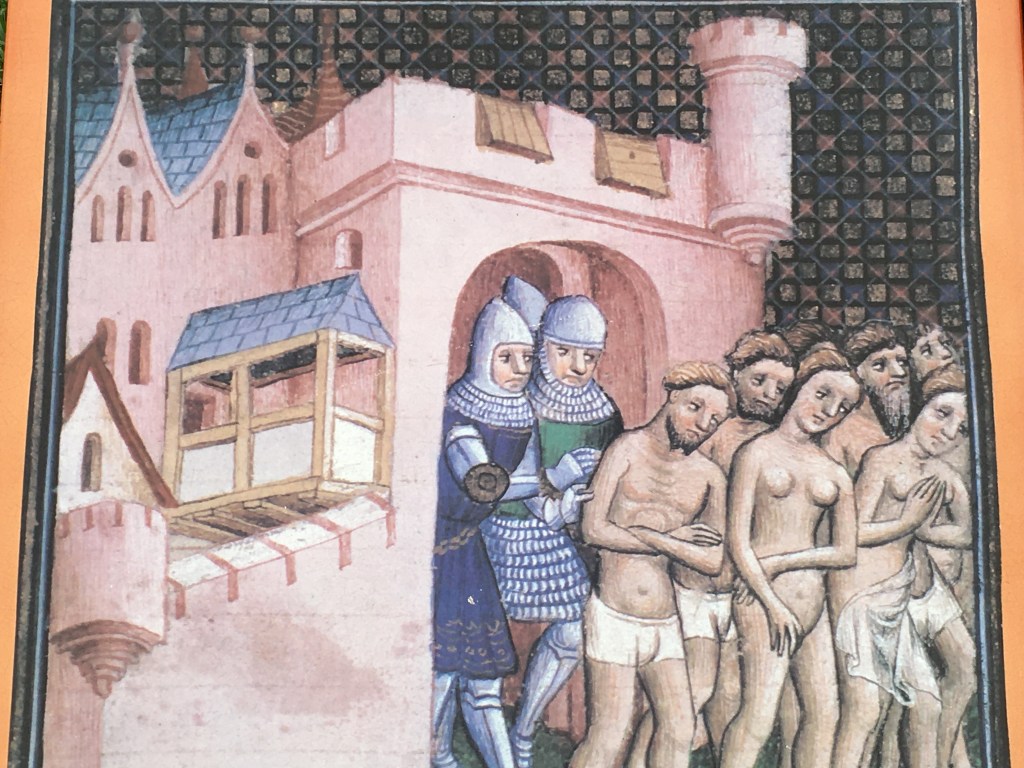
This medieval image from Carcassonne sums up our feelings as we were waved through Spain and then France. They wanted all foreigners gone.
Today we travelled up through Spain to Ampolla. It was clear that our plans of a slow journey, taking in some of the country’s best wildlife areas, was in jeopardy because of the CoronaVirus.
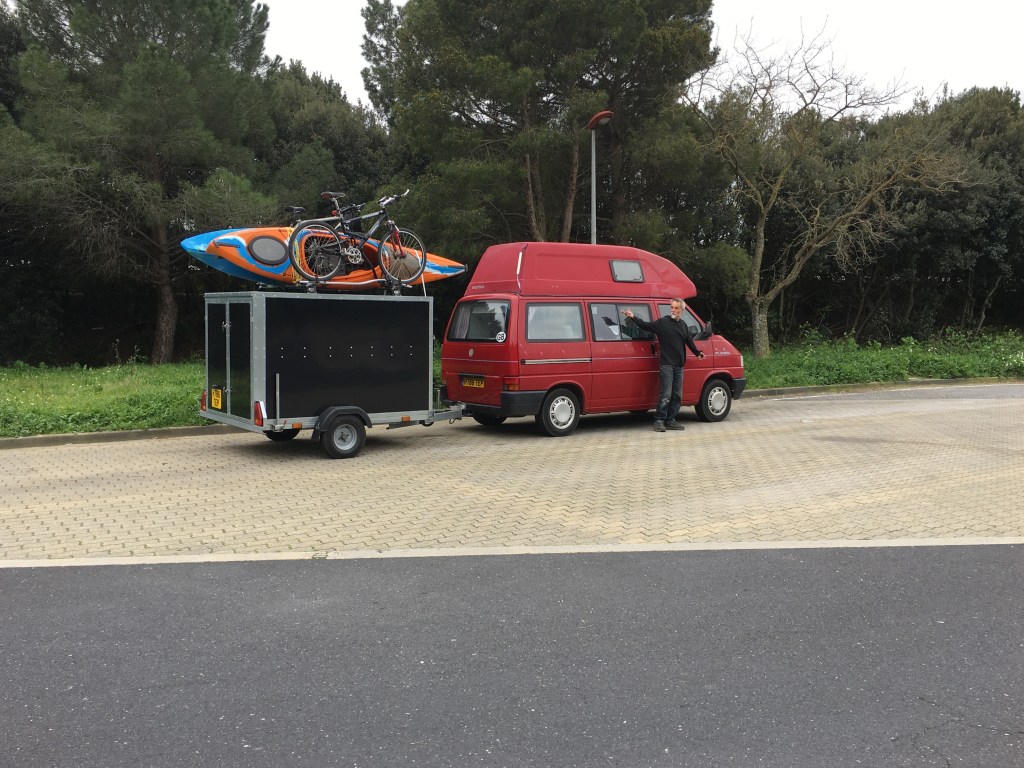
All packed up and ready to roll.
16.3.20
Our first morning, and we knew we would have to make a decision whether to dash for home, or hang on and hope for the best. The Spanish President was to make a speech at 4pm and the rumour was that the country would be going into lockdown. He had issued a warning the day before. A great idea as it caused the mass exodus of people who rushed off to their second homes, or out shopping for all the things they might need for month of house arrest, or both. I cannot imagine what they were stocking up on, as shelves had been empty for days. Not a single loo roll could be found throughout the land. Sadly that was not the case for the virus which had undoubtably been spread further by the 24 hour forewarning.
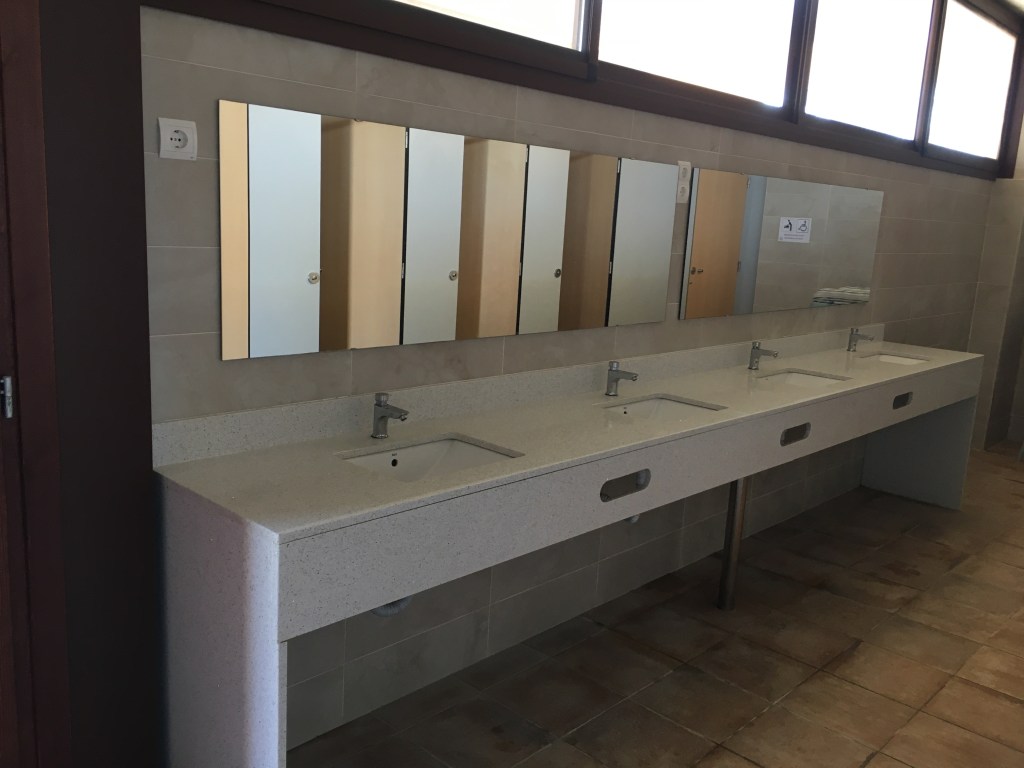
The loos at our Ampolla campsite. Can you see any shop? NO? Hand sanitiser? NO? Not very encouraging in a pandemic?
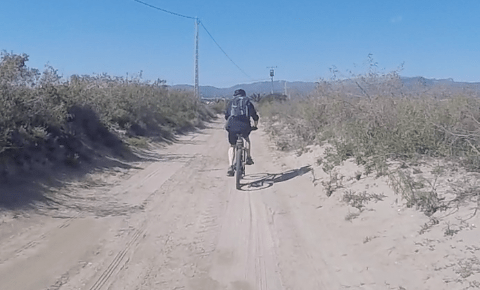
We decided that we would spend the day riding our mountain bikes around the salt marshes and paddy fields of the area, taking in the wildlife and the stunning scenery. Why not? Then we would see what the great man had to say.
Sand cycling. Great fun!
17.3.20
This morning the campsite asked everyone to leave. They had to close down as they were not a ‘long term’ site. Spain is now in Lockdown.
So, what to do?
Italy locked down seven days ago and France was also teetering. France would lockdown within the week, with the UK within two weeks. That was our guess. We needed to get a squirt on.
We decided to head up through France and switch our ferry from Bilbao, Spain, to Caen, France. We had no guarantee that our Spanish ferry would be sailing in a weeks time. We did not want to get there and find we were stranded, with no ferry and the borders to France shut. As wonderful as the north Spanish coast is, we didn’t want to be wild camping, in winter there. Barri does not enjoy the cold.
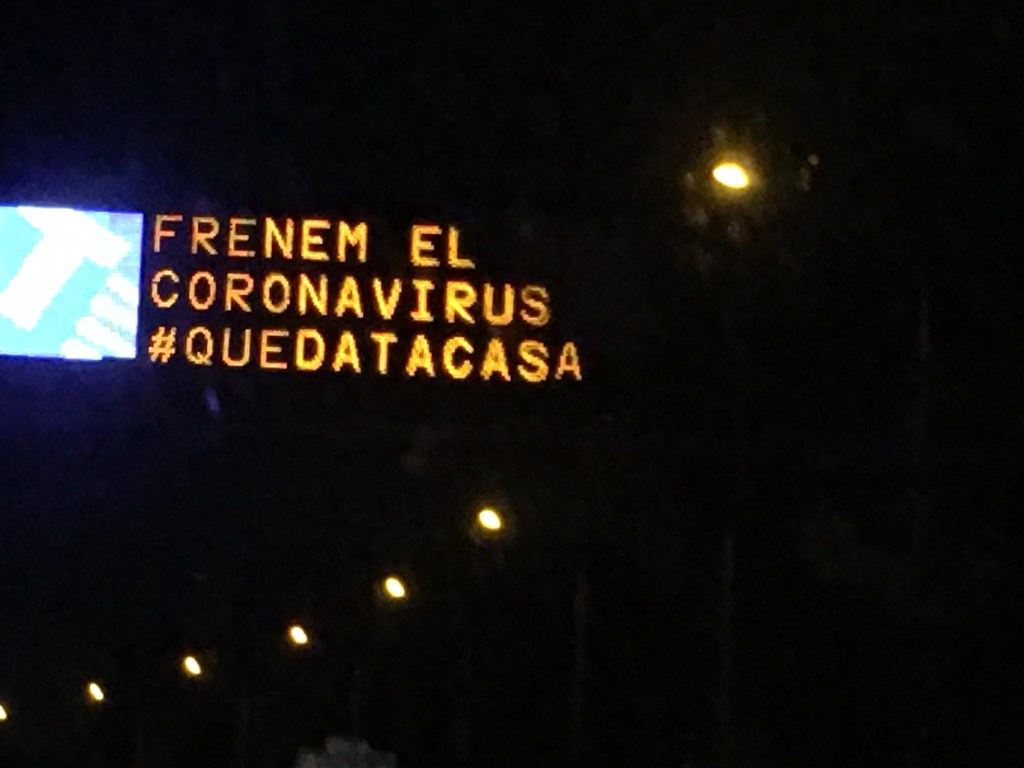
Roughly translated, this sign says, ‘restrict movement, stay home’.
Then we started to hear reports from our friends and the BBC that France was closing their borders at some point between midnight and 8am. I do not want to be too pedantic here, but schengen has meant the removal of all border paraphernalia throughout inland Europe. France has no ‘borders’ to close, apart from it’s coastal ports, but it can put up road blocks, and the police have guns. I wont argue.
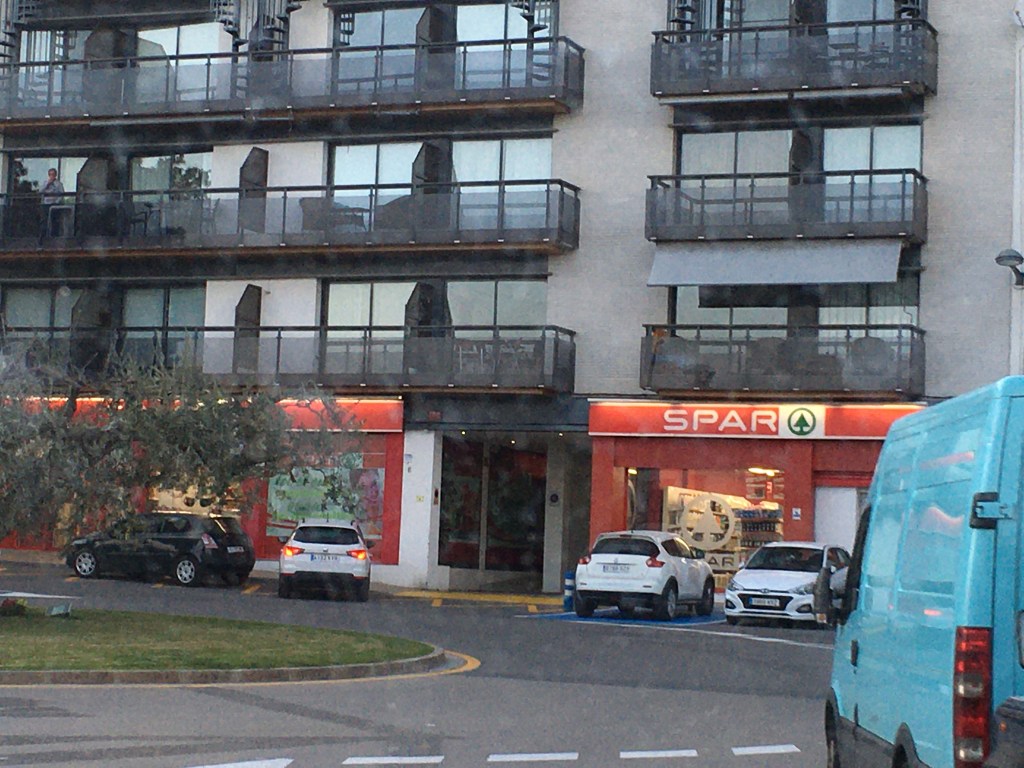
The ever shifting news was that all hospitality in Spain was closed. France was enforcing the lockdown the following day, although both countries had made their pronouncements on the 17th of March. We had a tiny window of opportunity to get over the border, after which there were no guarantees. Ampolla’s local Spar had everything we might need to eat for four or five days. There was no hint of a panic buying here. It was surreal; no shortages, no empty shelves, no queues.
Everything normal here, Ampolla Spar
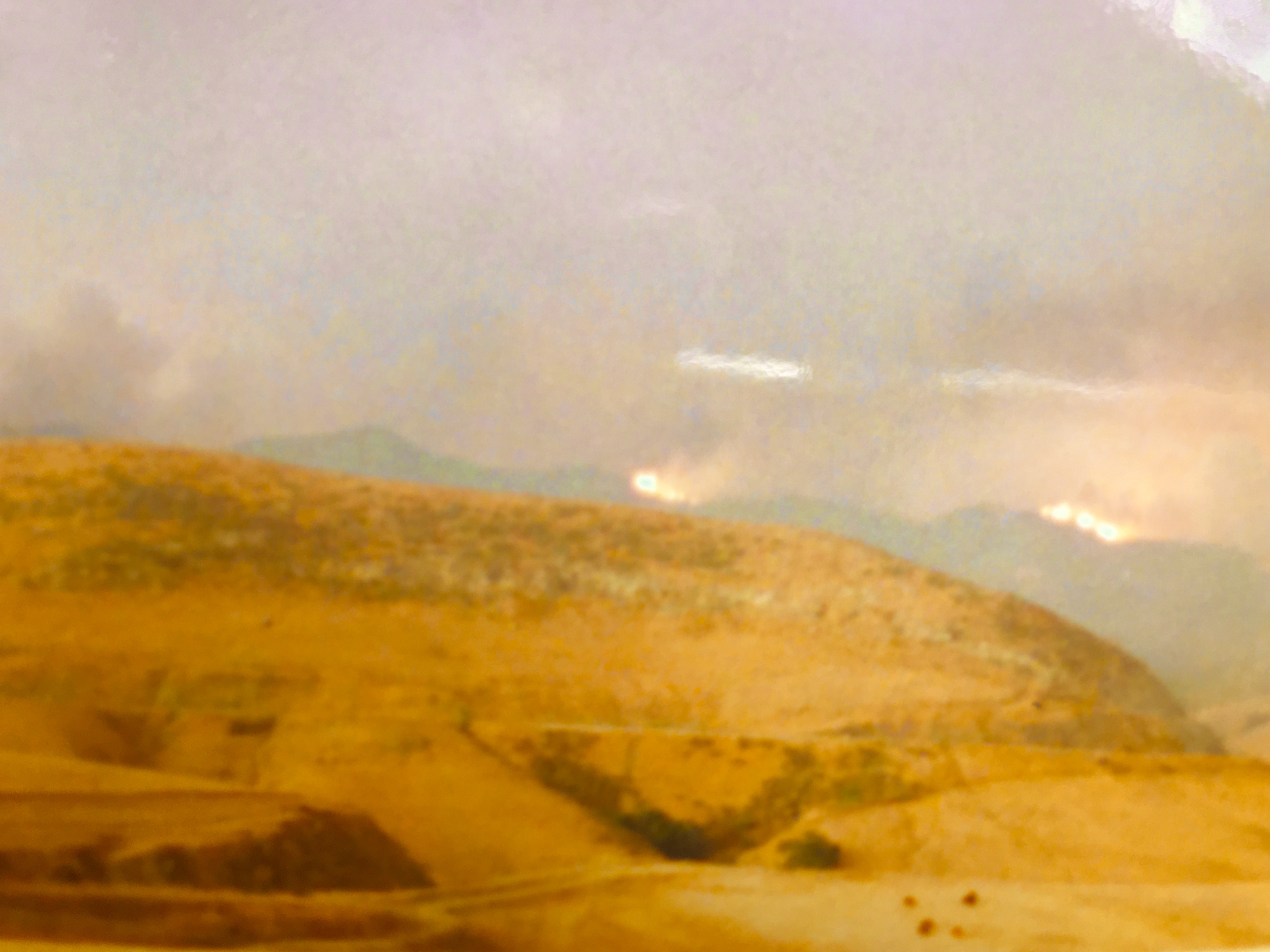
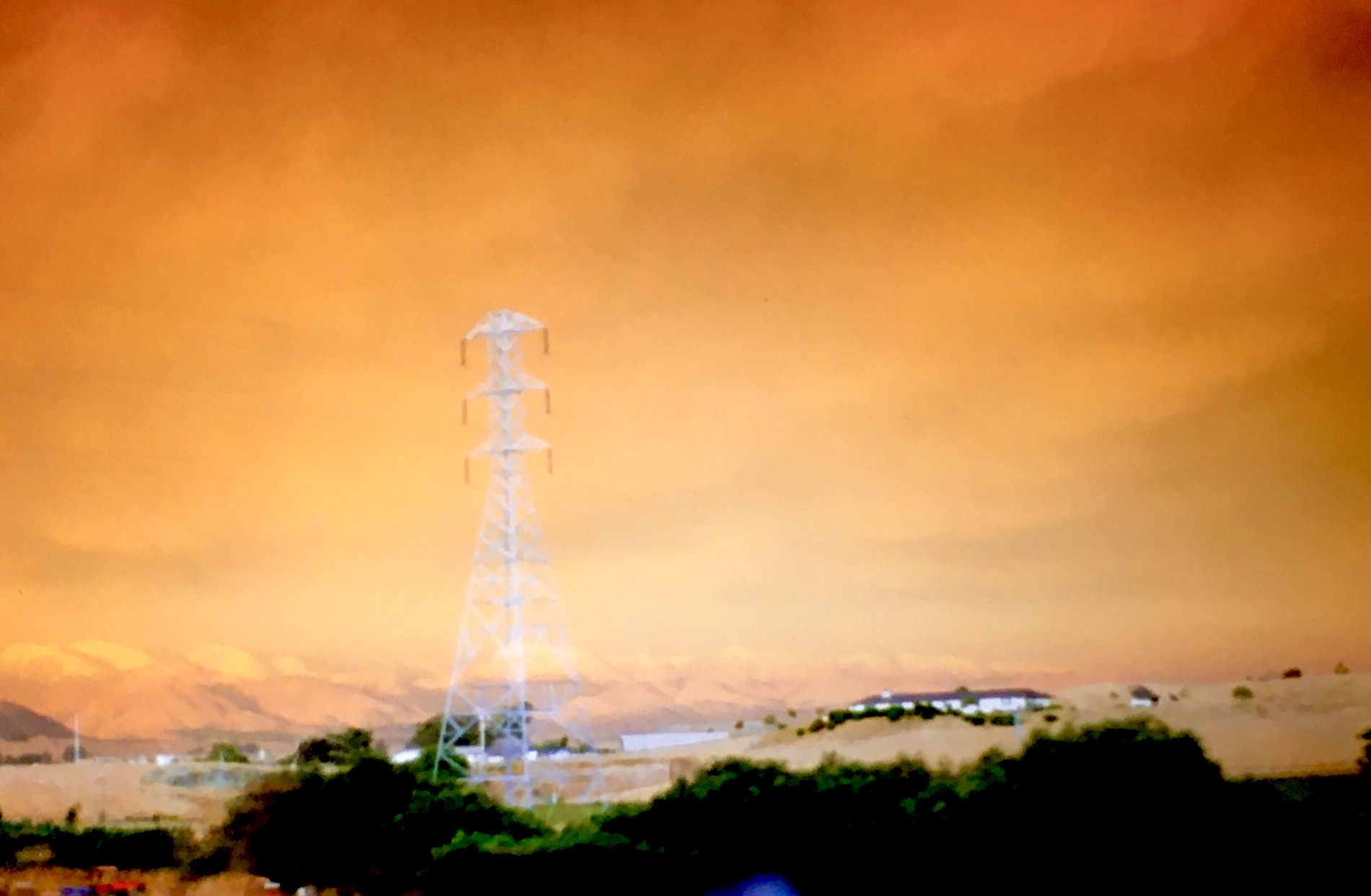
We set off on a steady drive along the stunning Mediterranean Sea. We had to shun Barcelona and it’s environs as it was a CoronaVirus hotspot. Garages had no loos open and we did not want to handle pumps without good hand washing facilities. Yes, we do carry sanitiser, always, but there is no substitute for good hand washing. We were reminded, trapped as we were, between the sea on one side and a wall of death on the other, of a journey we made up through California. Somehow we managed to get trapped in a forest fire and had to outrun it. As it thundered north west, the fire finally caught us, forcing us along the 101 coast road. We had the fire behind us and alongside us, with the sea as a potential escape route. At least with the fire, we could see, feel and taste how close it was. Worryingly, none of that applies to this invisible killer.
California forest fire, we only just managed to outrun it, it took us 8 hours!
18.3.20
It was just after midnight when we crossed the Spanish French border. We had ridden the Spanish wave and come skimming down it’s gorgeous green face plummeting into France, jubilant that we had not dropped off once.
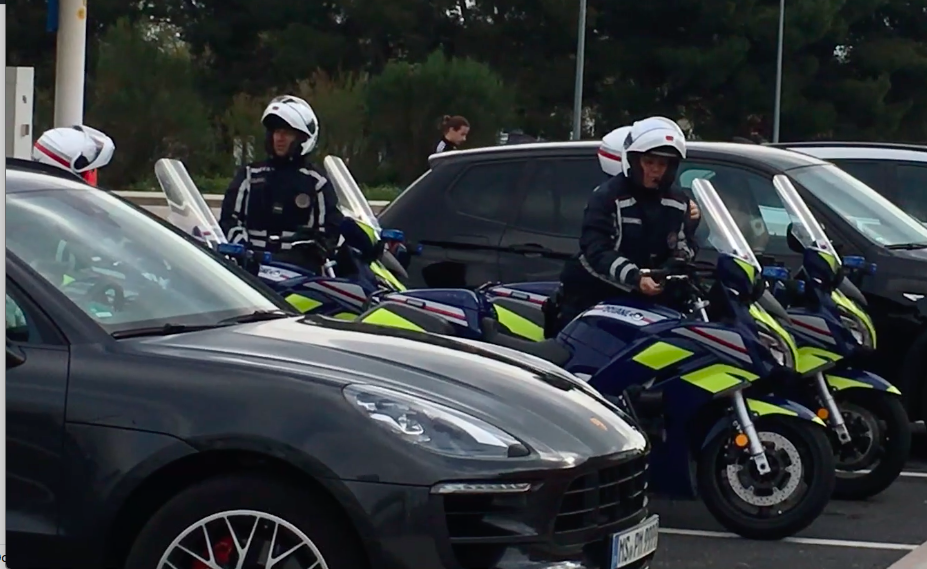
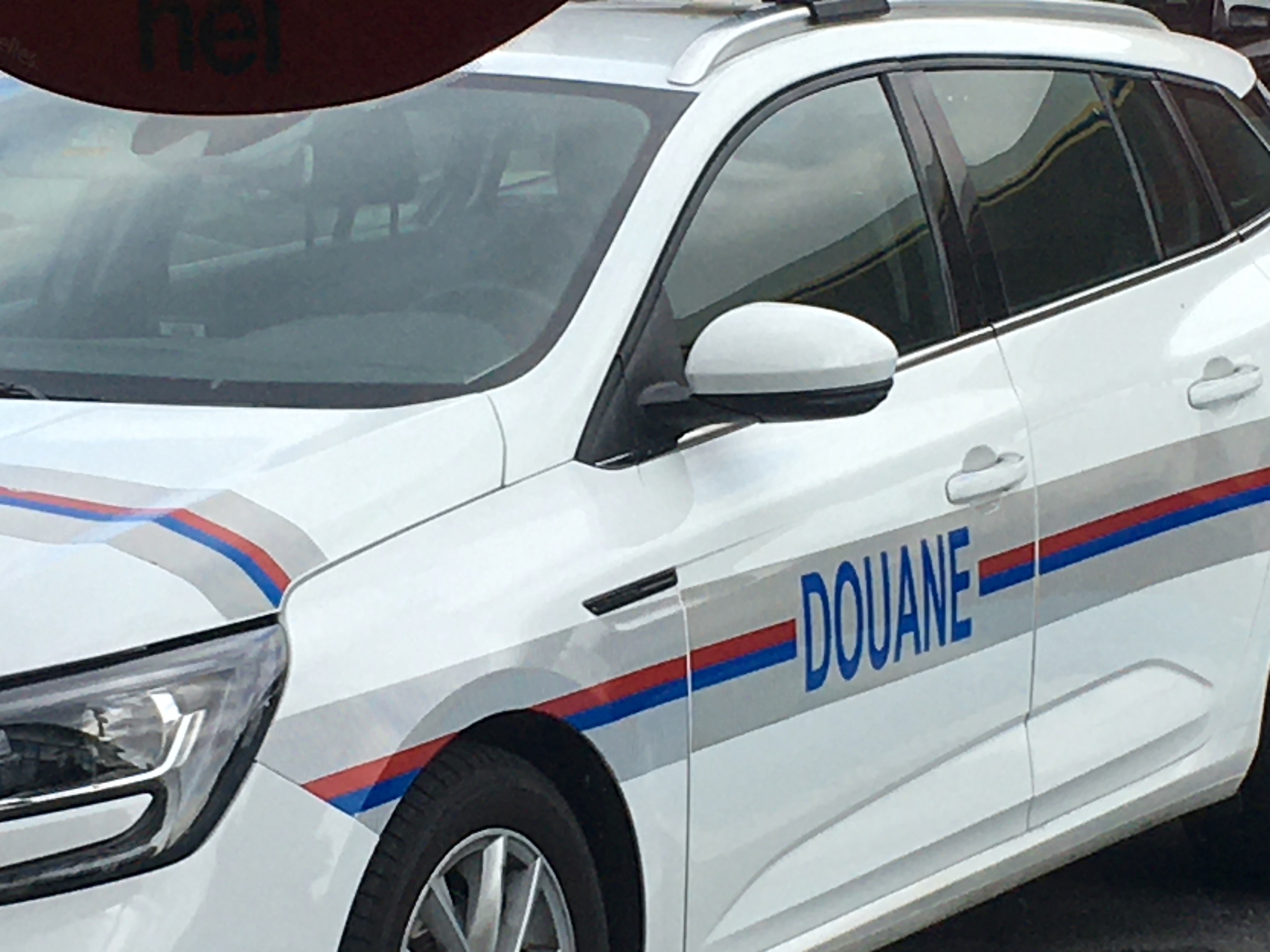
The French customs officials massed at the motorway services. We counted at least 50 of them. We guessed they were being deployed to the borders.
We headed to the first town over the border, Le Boulou, with campervan parking, an aire, and found it completely packed. Road after road of vans of all descriptions, parked in every possible location. Hundreds of them had washed up here on the crest of that wave. It was one of the most remarkable things I have ever seen. We found a small space with a scrubby woodland just outside the door, need I go into detail?
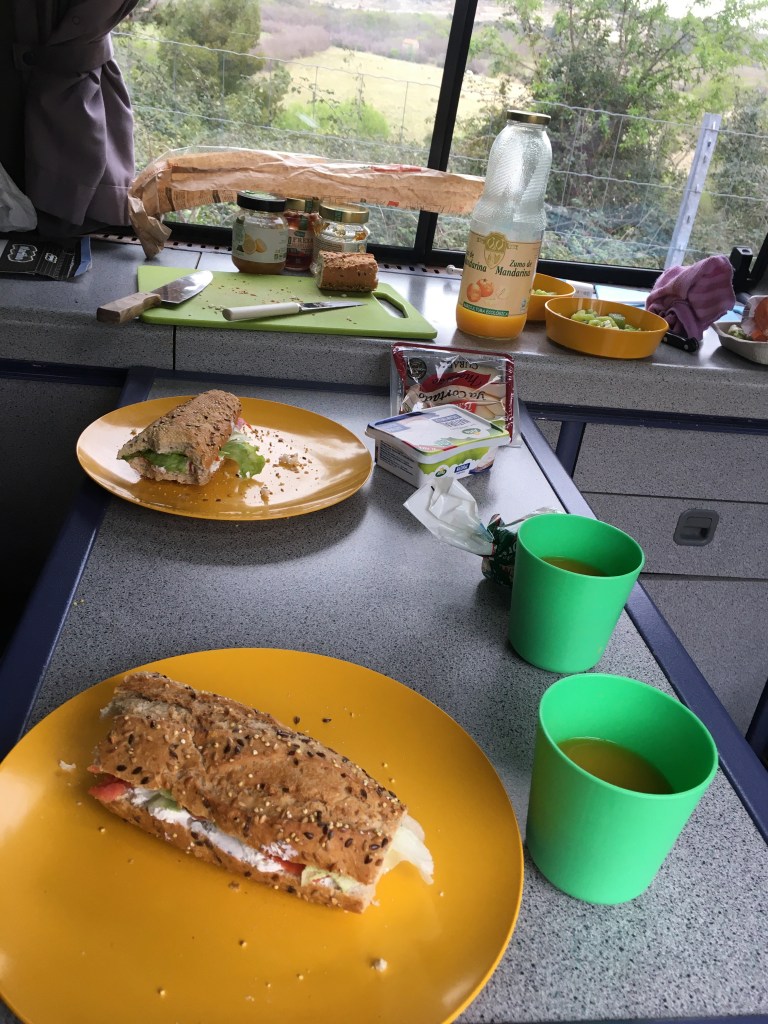
Nice, simple brekky to set us up for the day.
In the morning we headed off. The little town was awash with motorhomes travelling in every direction and seemingly, coming and going up and down every street. It was probably the world’s most valuable ever gridlock.
We managed to get away and drove north towards Bordeaux, hoping our chosen campsite would take us in. The news, as it came in was dire. France was locking down, we were on that wave again and running coast to coast, rolling up and down the hilly landscape and carving around sweeping rivers. What a delight this route is.
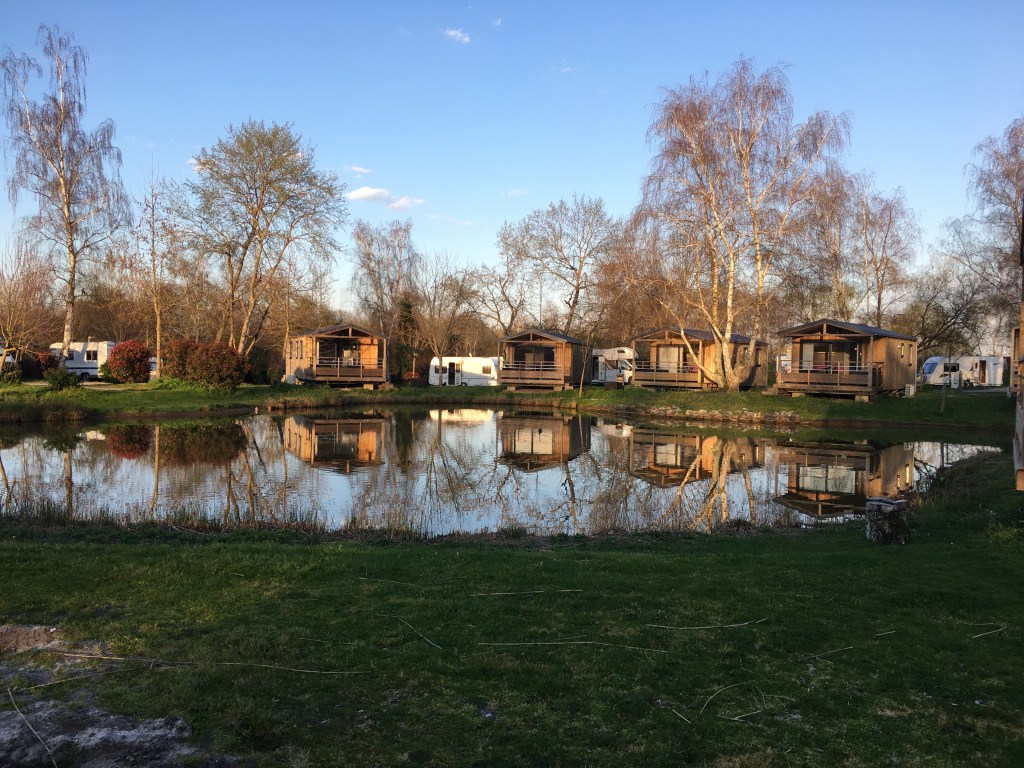
Carcassone came and went and our destination was soon hoving into view. And there it was, our campsite. We booked in and found a perfect lakeside pitch.
19.3.20
We have transferred our ferry ticket and will be leaving from Caen tomorrow morning, unless they can fit us in tonight. Off we went, determined to get to the port before tonight’s sailing, just in case they can squeeze us onto the boat and take us to the UK. France is locking down tightly. In the services vending machine drinks and loos are available for the weary traveller.
At last the sea appeared in front of us, along with migrants, dashing along the roads looking for a lift to a new life. All of them, young, fit men, some little more than boys, living their groundhog days in this unforgiving climate. There was no boat out of town for us, so we headed for the aire a short walk from the ferry terminal and it’s loos and hot water.
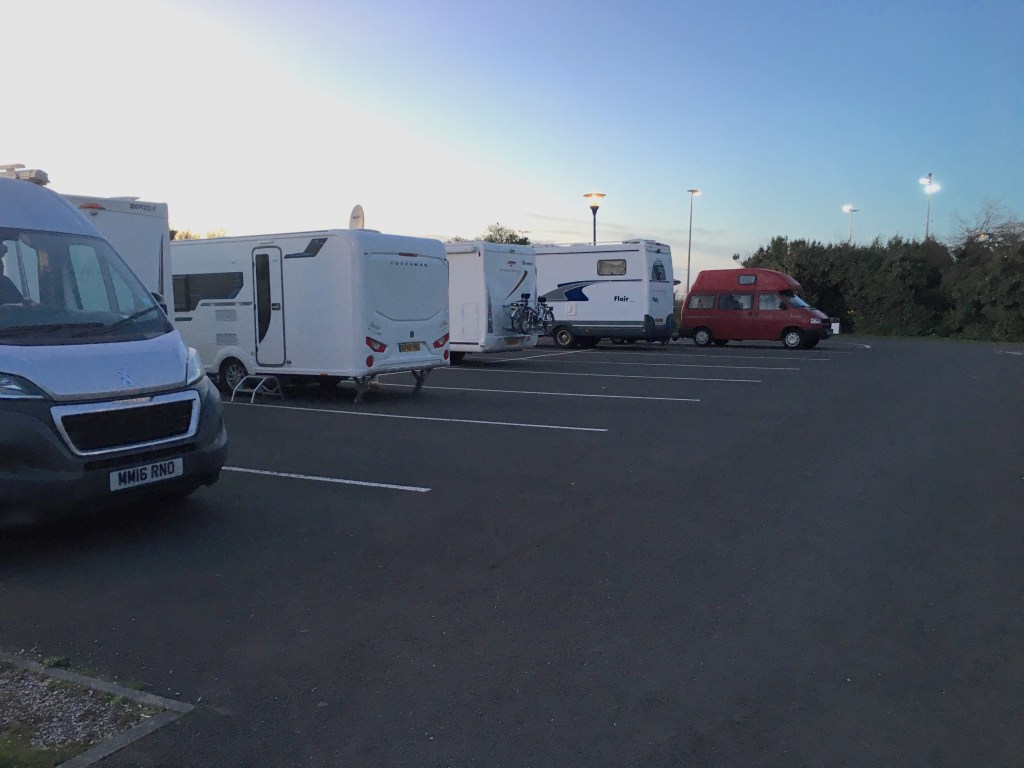
Caen aire.
This evening as we sat in our van twiddling our thumbs, the van shook noticeably. And again. And again. We investigated and found a lovely young guy, thin, kindly and gentle, hiding behind our trailer. I asked him to leave. No. I told him to leave. No. He kept pointing at something and trying to walk between our van and our neighbours. Our side door was open and he could have popped in and locked the door behind him. I held him back, telling him that he must leave by the other route, but no, he would not do that. Wally caught a glimpse of something dark, on the tarmac, under the neighbours van. It was the lads winter jacket. We helped him put it on and wished him good luck as he left. I felt so sorry for him and his predicament.
20.3.20
We are on the ferry bright and early. Happy day. We have made it.
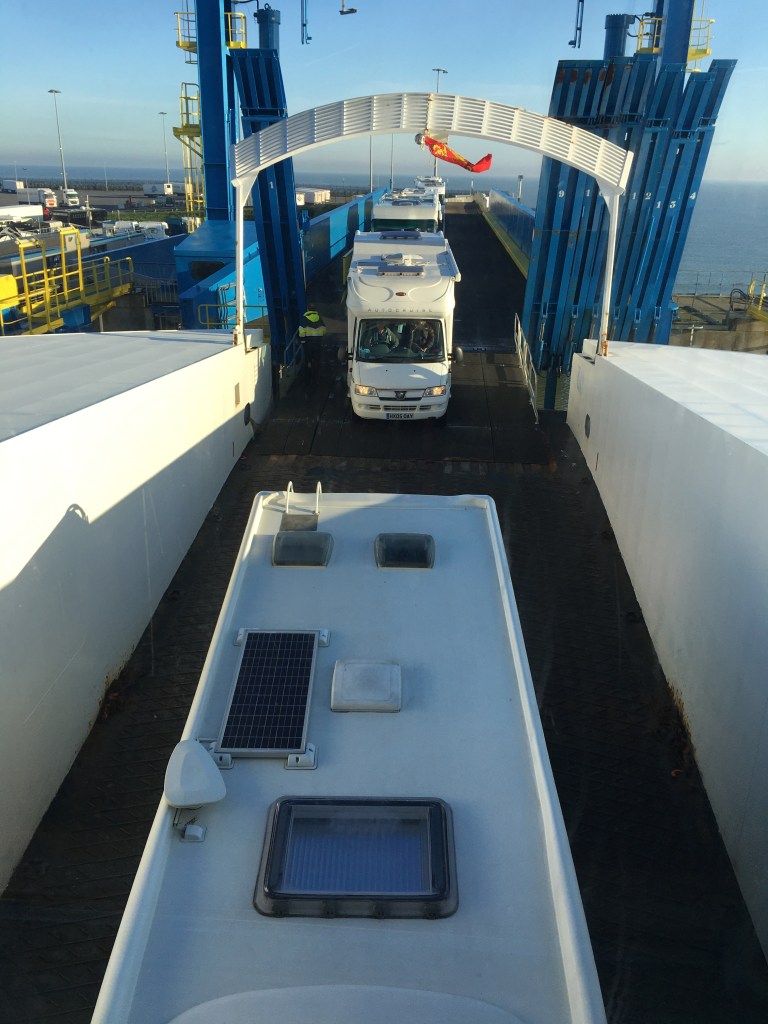
All Aboard! The majority of vehicles aboard the ferry were motorhomes, which we have never experienced before.
On the ferry, our neighbour from the night before stopped me for a chat. He was a rather curmudgeonly chap, but pleasant enough, so I stayed on my feet as he talked away. He had a shock this morning because his motorhome had been checked by the immigration team at the ferry port and they had found the lad from the night before hiding in his spare wheel hanger, under the chassis. The sweet kid had almost made it.
The view from the ferry.
23.3.20
Today the UK went into lockdown. We had ridden that wave all the way home and it is heaven.
If you have enjoyed this post and would like to comment, please write in the reply box below. Also, please click the ‘like’ box and sign up to follow us. thank you. The Wallys. xx
Today we head back towards the UK in the midst of a Coronavirus storm. Back to the mythical land of rainstorms and tea. From royalty down to the average citizen, a land of disunity. But fear not, the pandemic has brought us something to unite against. Expect the good old British wartime spirit to emerge, minus the mortal combat, of course.
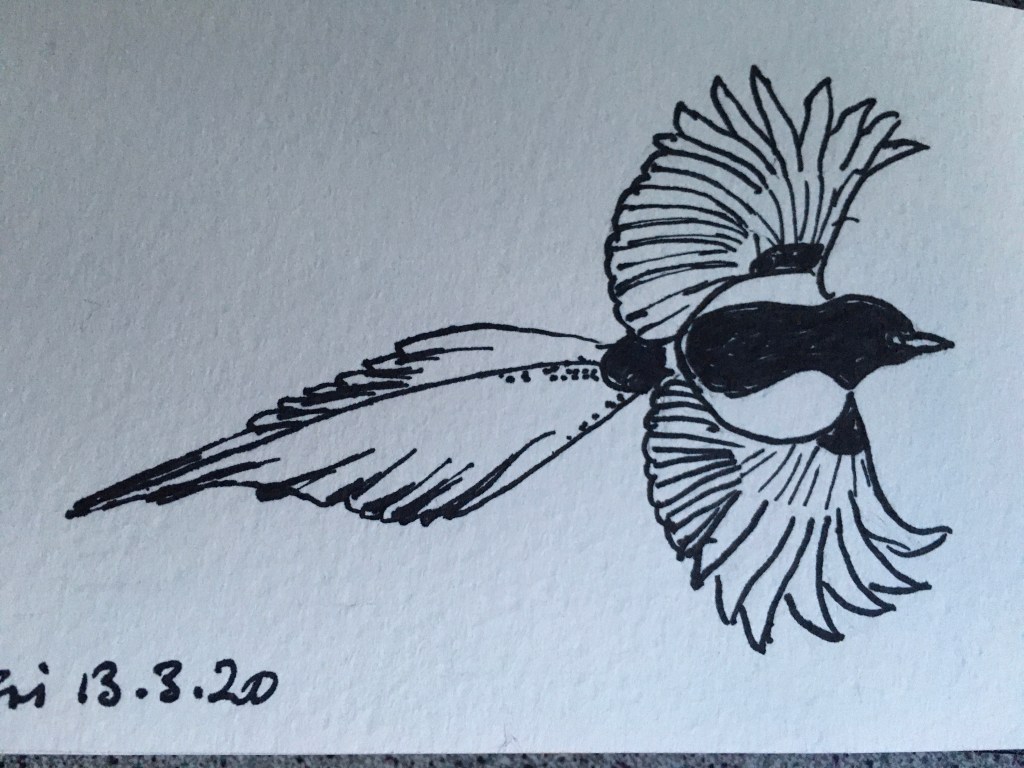
As we drifted northwards I was staring out Barri’s passenger window, aimlessly counting magpies.
One for sorrow,
Two for joy,
Three for a girl and
Four for a boy,
Five for silver and
Six for gold,
Seven for a secret never to be told.
Eight for a wish,
Nine for a kiss and
Ten for a bird you must not miss.
MA-A-A-AGPIE!!!
Ah, ten, surely a good omen, I mused, the bird of good fortune. With Covid 19 closing in with zombie like persistence we might need some folkloric protection. Having seen ten magpies, and avoiding the sorrowful number one position this leaves me trying to evade further encounters. Luckily no more magpies. Phew! Coincidently it’s Friday the thirteenth, it’s a good job I’m not superstitious.
Who knew that the whole of Europe and us, the UK, it’s stiff, upright, tiny neighbour, would begin to close down all fun? Our drive back has to take into account that whole areas of Spain are closed to itinerants passing through: actually it is two areas of the country and four villages relatively close to our Friday 13th campsite. Both of the locked down areas are on our route to the north. Like the entire human race, we have spent our lives navigating a path through this life; so, how hard can it be to do it now?
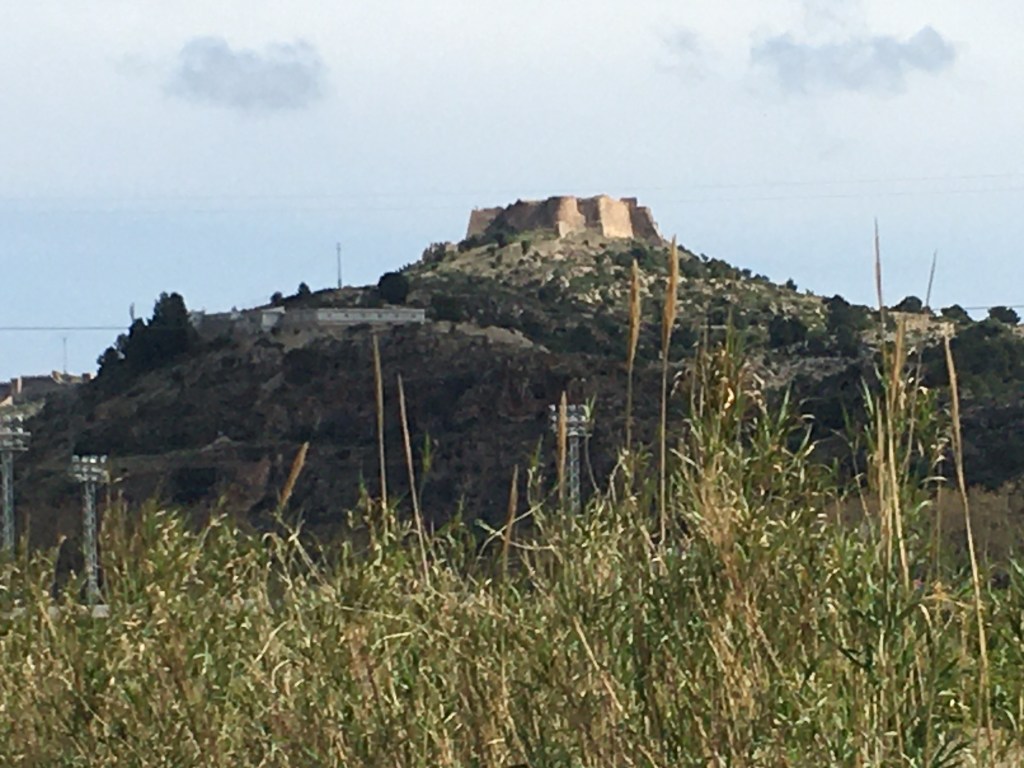
I glance out of Barri’s window and catch a glimpse of an ancient fort, high atop a rocky hill. Over the centuries, terrified communities have retreated up into these bastions until all danger has either passed, or been fought off, or they all die. Which ever comes first.
With Coronavirus closing in from every quarter, we are in the same situation. No castle to huddle in, to share our meagre resources, or our weapons. We have our homes, some have freezers and our weapons are soap and water. Vats of boiling oil wont cut it this time, but strategic thinking always comes in handy, I am reliably informed by Radio 4 and it’s never ending stream of experts. Well, we all need to be experts now. It really is do or die.
At our first overnight stop on the way north, we are greeted by a young man in reception, who wears a hygiene glove and tells us that we can stay for tonight. We had pre-booked for two, with an option for a third. He has no idea if we can stay more than one night, or if we will need to stay for two weeks. The Spanish president had just made a speech on national TV saying that he will announce his intended measures tomorrow. He is considering locking down the whole country for two weeks meaning that we may have to stay here, in Ampolla, on a decent campsite, whether we like it or not. We like it. It has FLAMINGOS!
On the flip side? The campsite might be closed down for the two weeks and then …… what?
It is Friday the thirteenth
It is Friday the thirteenth
I have now seen eleven Magpies – Sorrow!
And a whole host of Castles on hilltops


We are in a little red van.
We have no freezer
We need our oil for food – not for warding off the enemy.
How hard can this be?
The original version, as published 1846:
One for sorrow
Two for mirth
Three for a funeral
Four for birth
Five for heaven
Six for hell
Seven for the Devil, his own self.
Yep, it could be pretty hard.
Please don’t forget to ‘like’ what you have enjoyed reading. Also please remember to leave us a comment by clicking the ‘Reply’ box and please don’t move on before you click one of the ‘Follow’ boxes, so that you receive a nudge every time we post something new. Many thanks the Wallys. xx
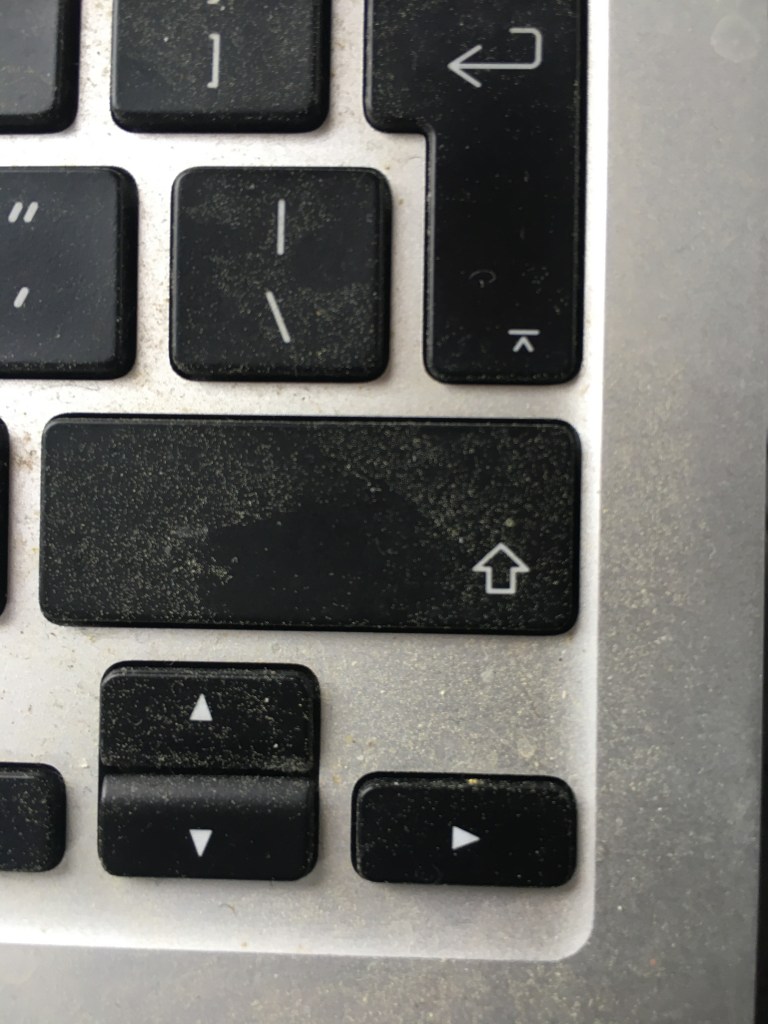
Windless February days along the Mediterranean coast, bring a golden dusting of pollen that rains down from the pine trees. On breezy days it billows about in great khaki coloured clouds. When the wind is up, it flies, thickly, horizontally, until it rams into the crevices in vertical surfaces. Nothing and no one is spared. It even finds it’s way into sealed containers. No part of a motorhome, camper van, awning, car, motorcycle, canoe, bicycle, or body, is spared. The dust is released so consistently, that the moment it is cleaned away, more lands. Gleaming surfaces recede into distant memory. A romantic dream of halcyon times, when the world and those who people it, were not a dusty and jaundiced yellow.
Pollen on my keyboard. How very dare it?!
The old trope that no part of a pine tree is poisonous is no consolation for a small minority, for whom this is a tissue issue. It is boom time for the local pharmacy, as sales of antihistamines rocket. Misery ensues. Inhalers whizz.
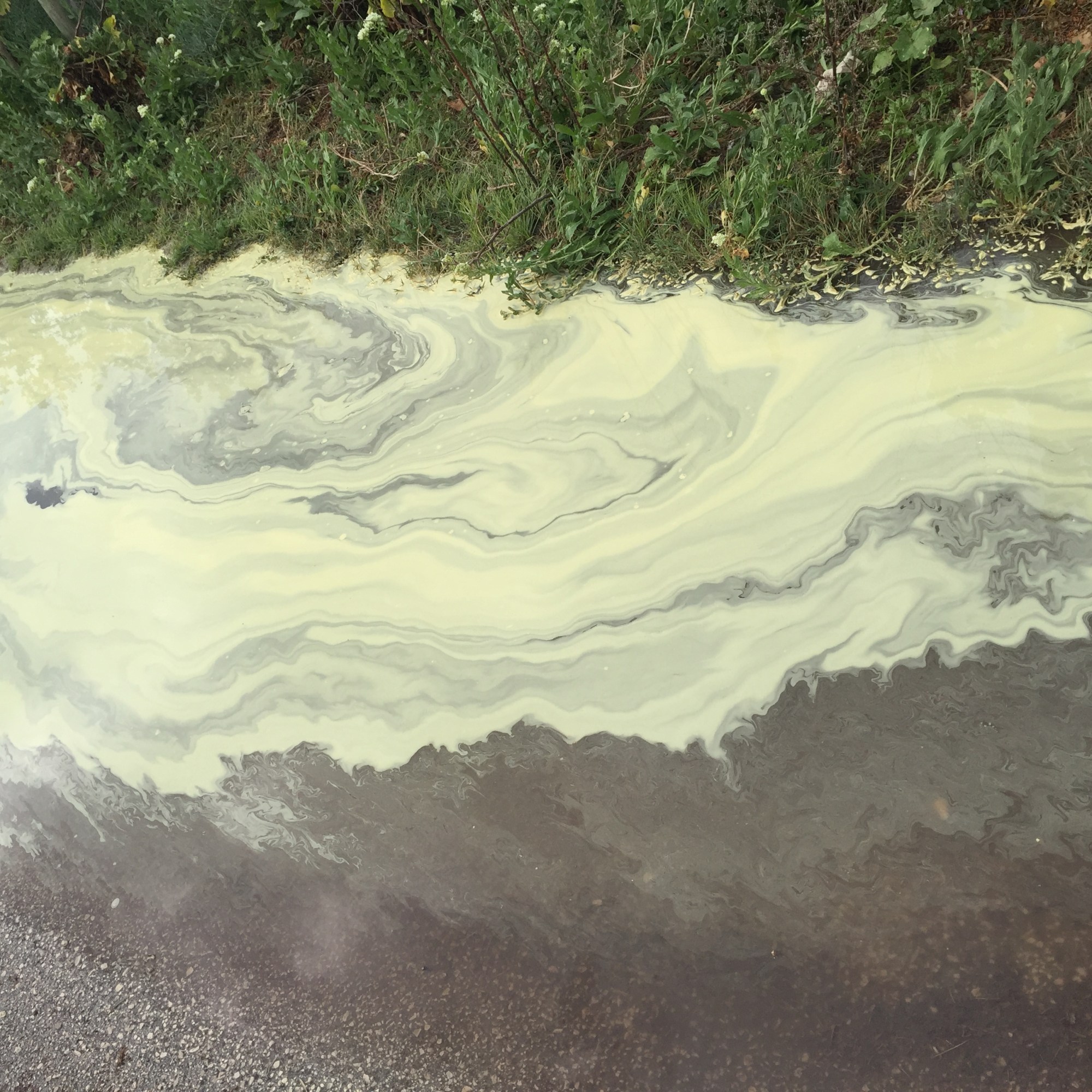
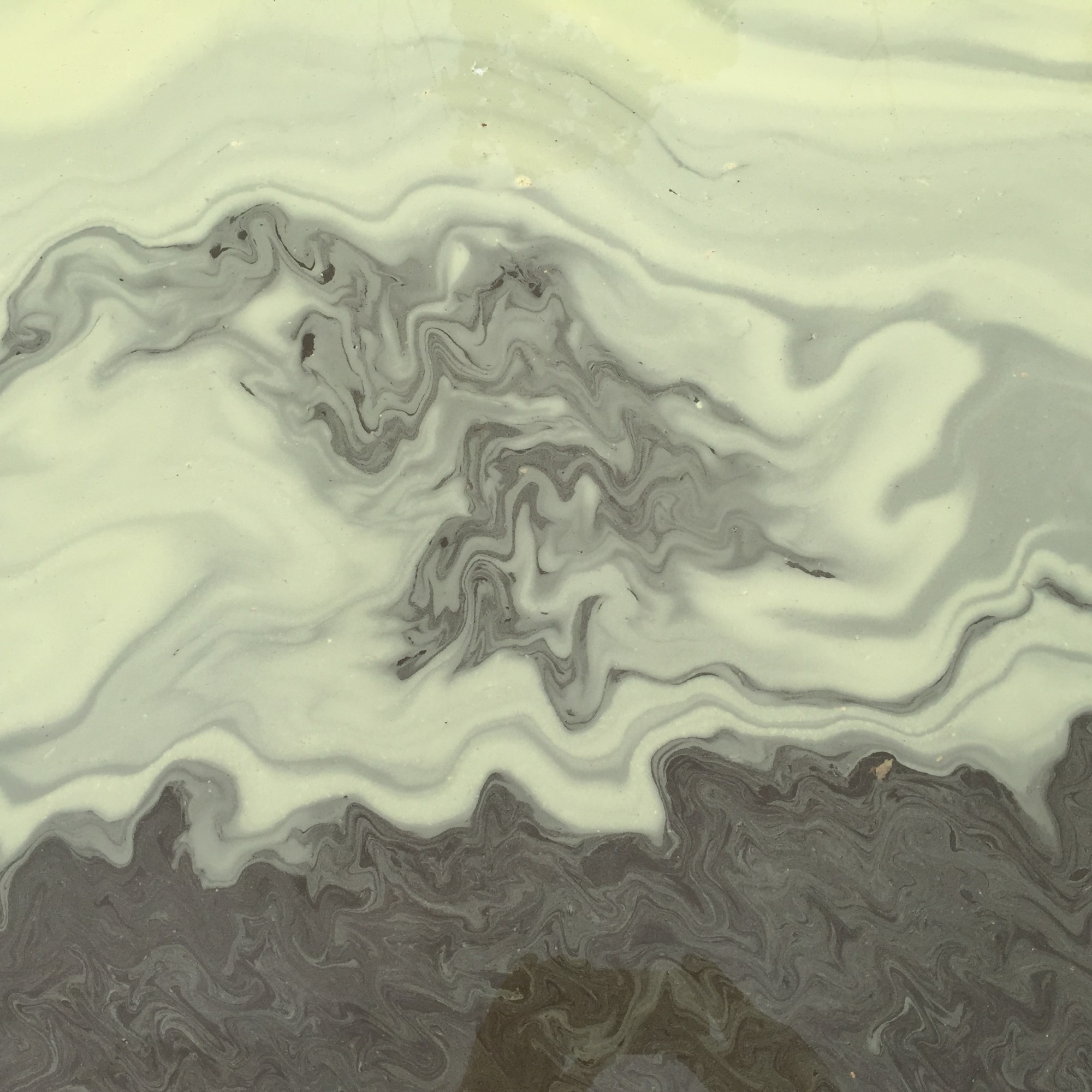
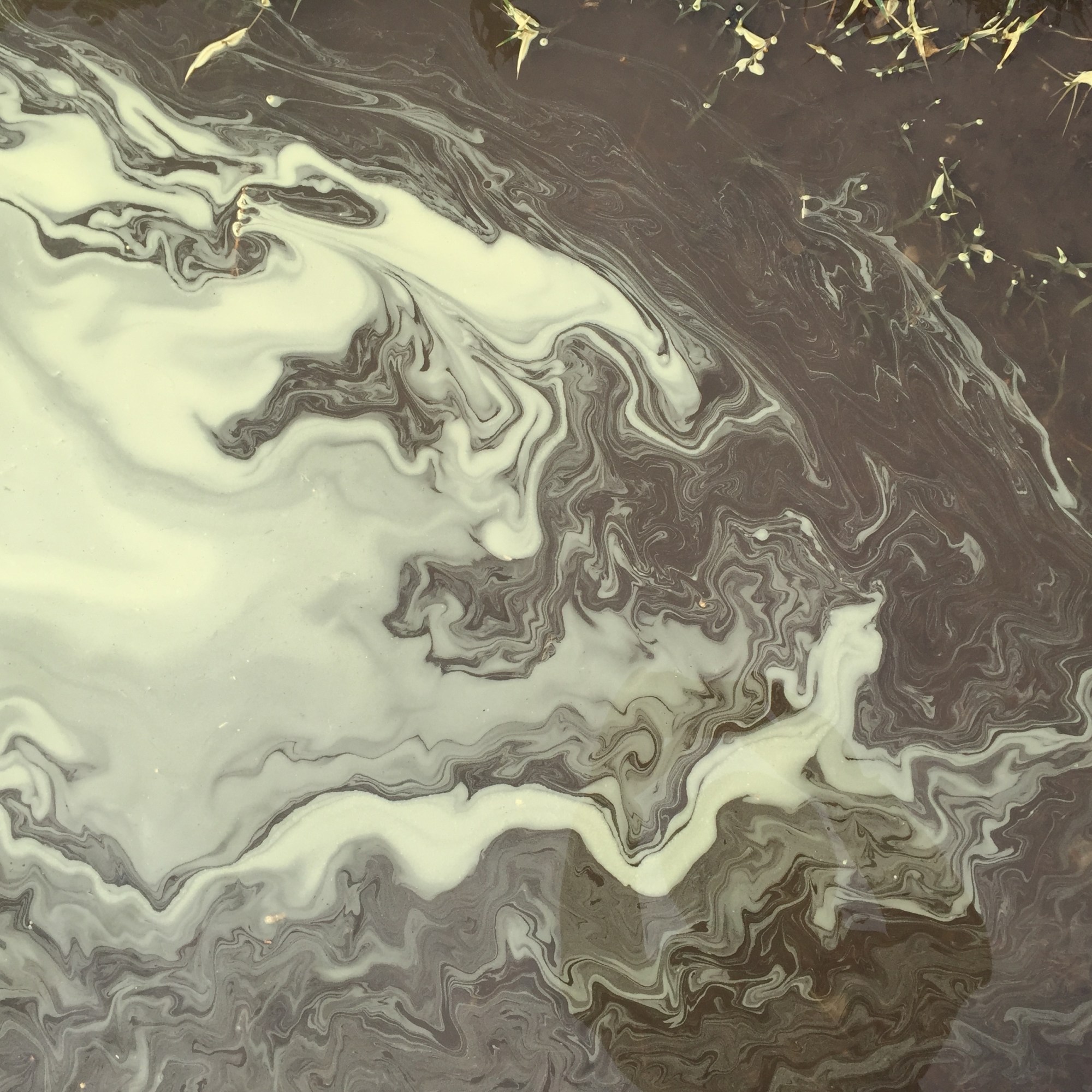
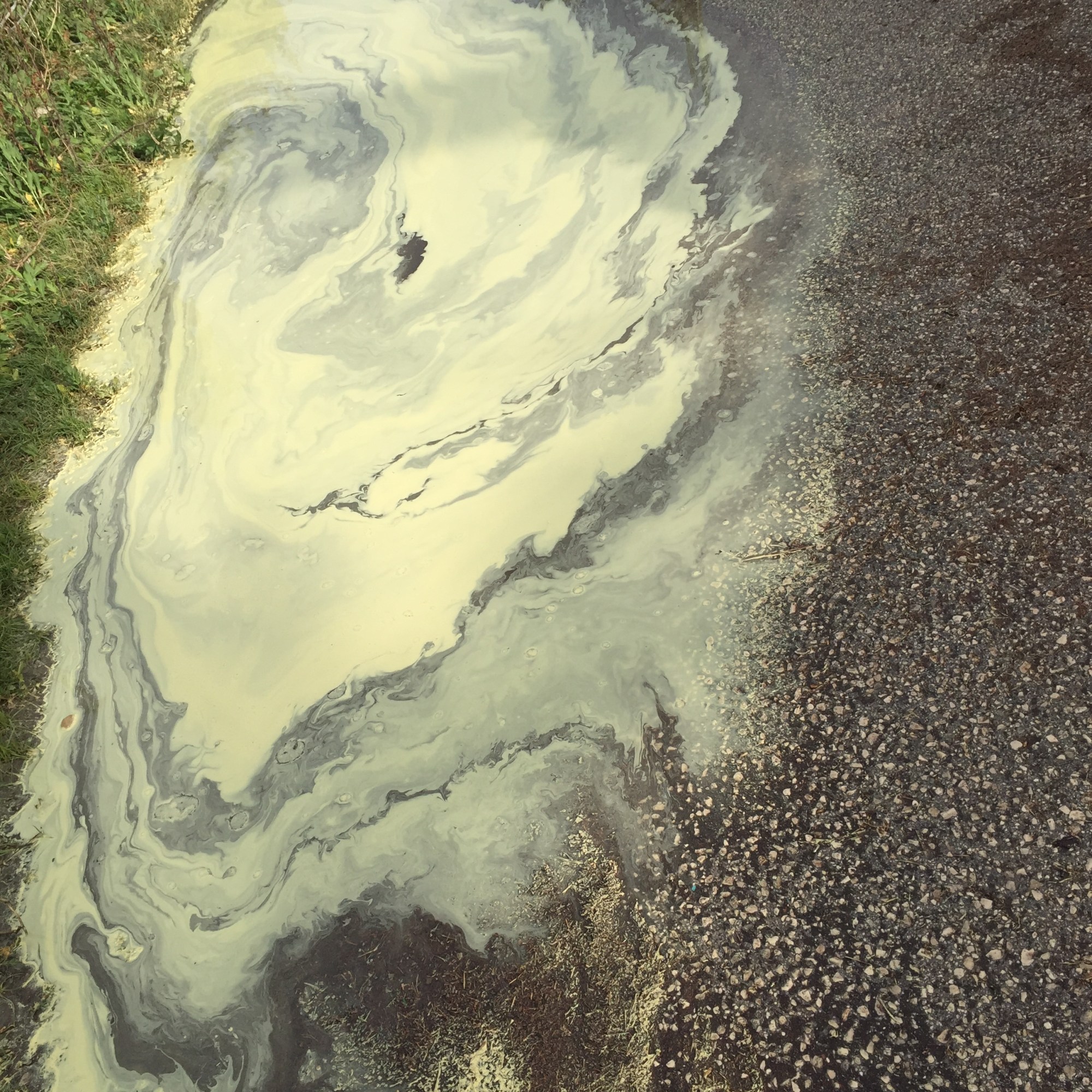
Pollen on a puddle of water.
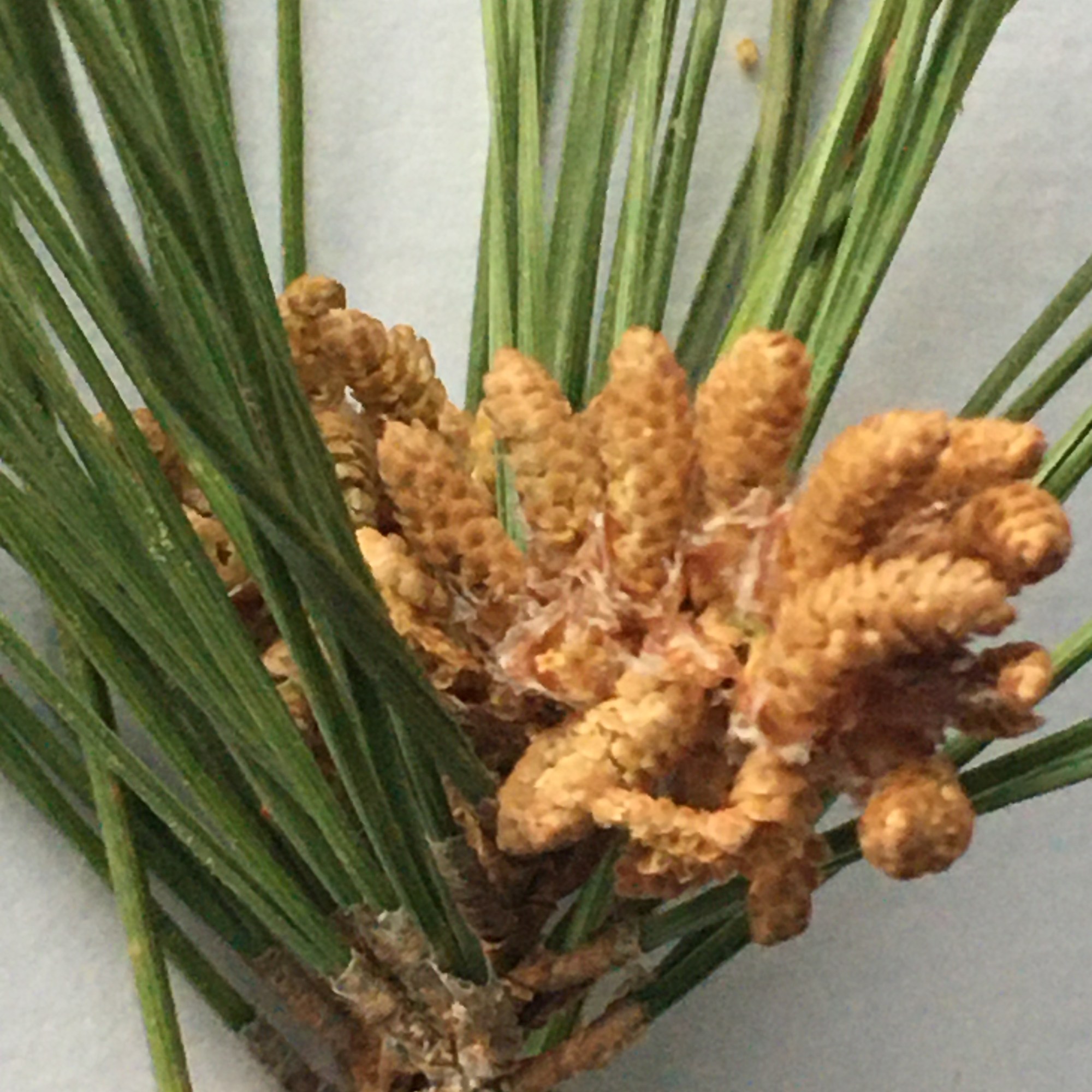
After a few weeks, the pollen stops falling and we all breath a sigh of relief, apart from the allergic gang who still cannot breath. By now there is a thick, puce green meets yellow, layer of pollen on every possible surface and without rain, it is whipped up into the air with every puff of wind. It is nature battling to assert itself, one pollen grain at a time, in the face of the might of millions of pounds worth of huge, shiny white, diesel guzzling, planet destroying, motorhomes hunkered here on this tiny site of 109 pitches. The final assault is the ‘attack of the maggots’. Bucket loads of small male cones, the spent remains of all that masculinity, fall, pitter-patter, onto every surface. The final fling of the campsite sentinels.
‘Maggots’ (male cones), spent of their pollen and ready to fall to the ground.
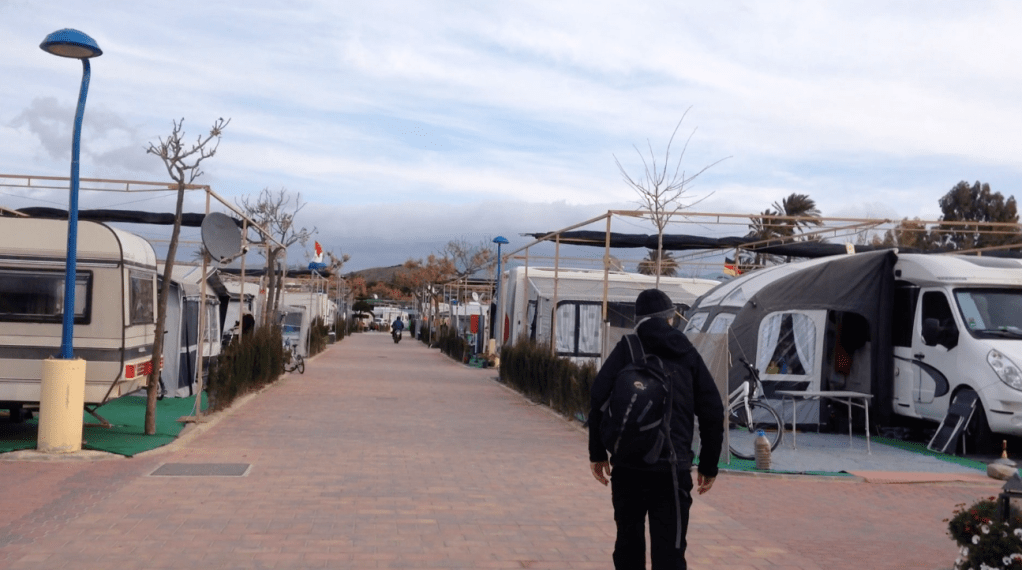
Of course this rather tatty, basic campsite could go the way of many on the Spanish Mediterranean and cut down all trees, spread tarmac, add sun screening in the form of giant, overhead, horizontal blinds and pack in almost twice the number of vehicles in neat ranks. Seasoned travellers call this type of campsite a ‘car park’, because that is how they look and feel.
Playa de Bolnuevo campsite, Spain; a ‘car park’.
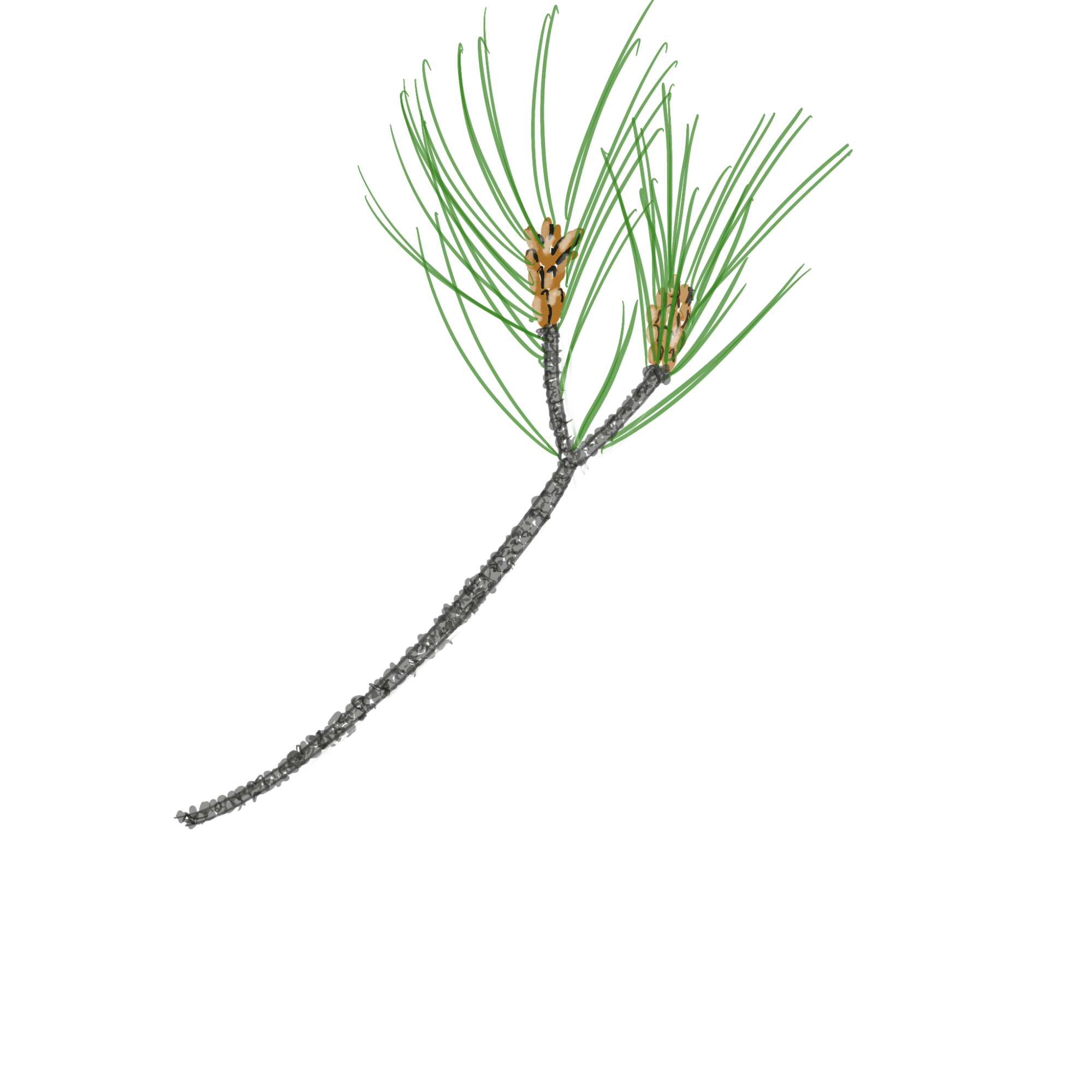
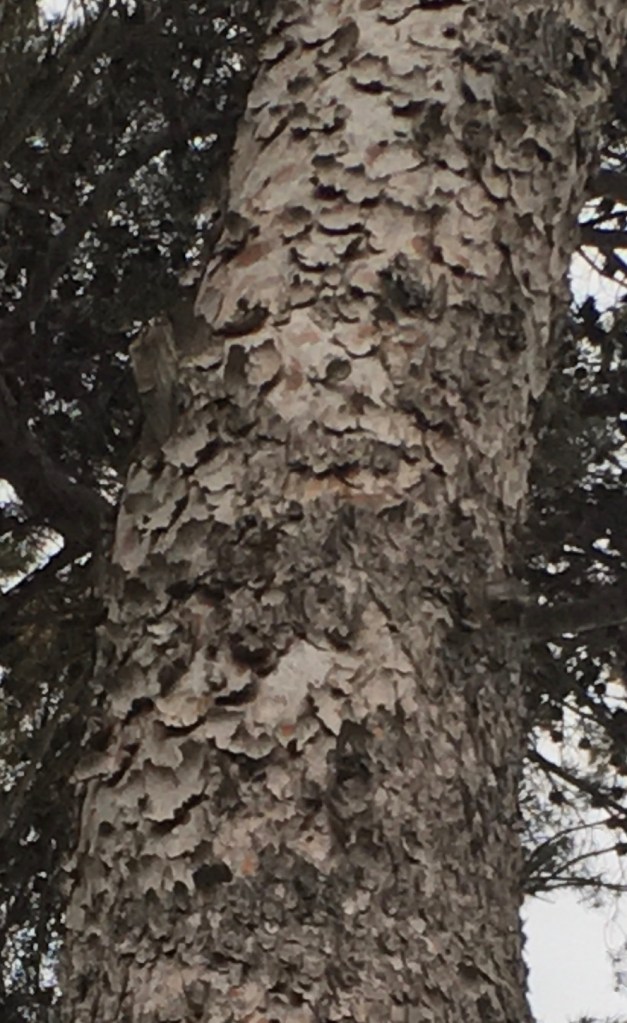
In fact, our site cannot chop down it’s pines as they are protected by law. The pine here, the Stone Pine to the British, Pino Pinonero to the Spanish and Pinus pinea to the overly interested, has to stay put, or else. They are a very tall, hard wooded, but light-weight, useful tree and can totter on for about three hundred years. With their parasol shaped tops and long, shingled trunks, they are a prehistoric beauty. The site owners could quite easily get rid of them, storm by storm, tree by tree, until there was nothing left. No one would be any the wiser. Thankfully the owners love the trees as much as the regulars here: despite the pollen and the ‘worms’.
The bark arranged like shingles on a roof.
Ancient species are always food for something. The Western Conifer Seed Beetle (Leptoglossus occidentalis) an American immigrant, is a sap feeder and deprives the baby cones of nutrient, which makes them drop off. The other pest is our old chum, the Processionary Pine Moth; more about his little house of horror here.
These are the trees that give us the uber trendy, uber expensive pine nut. It has been a food source for us for about 6000 years. Around the time that some of the local, neolithic cave art was created. These inventive people were collecting the cones from high up in these trees for the little seeds inside. A very long pole with a hook in the end and, I imagine, good eyesight are the tools of the trade.
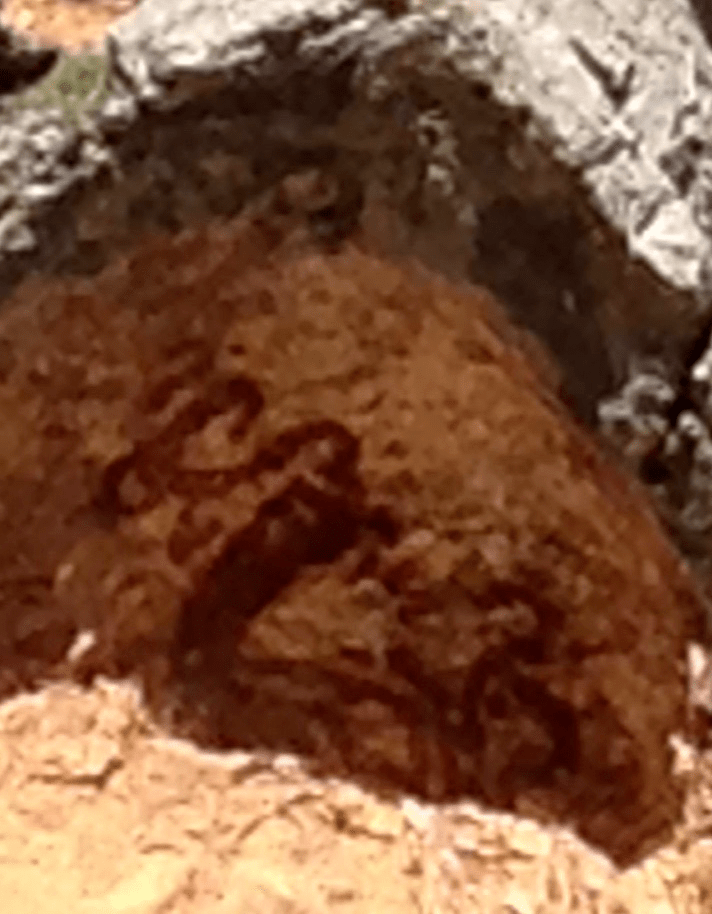
Local Prehistoric Cave Painting, click on picture to discover more.
The cones are gathered whilst still immature, at about three years old, they are large, tightly closed and often still green. They are stored until they open up and release the hard shelled seed. The shells are broken open to reveal the fat and protein packed nugget within. A valuable resource to early peoples and us to us modern sophisticates alike. Some things never change.
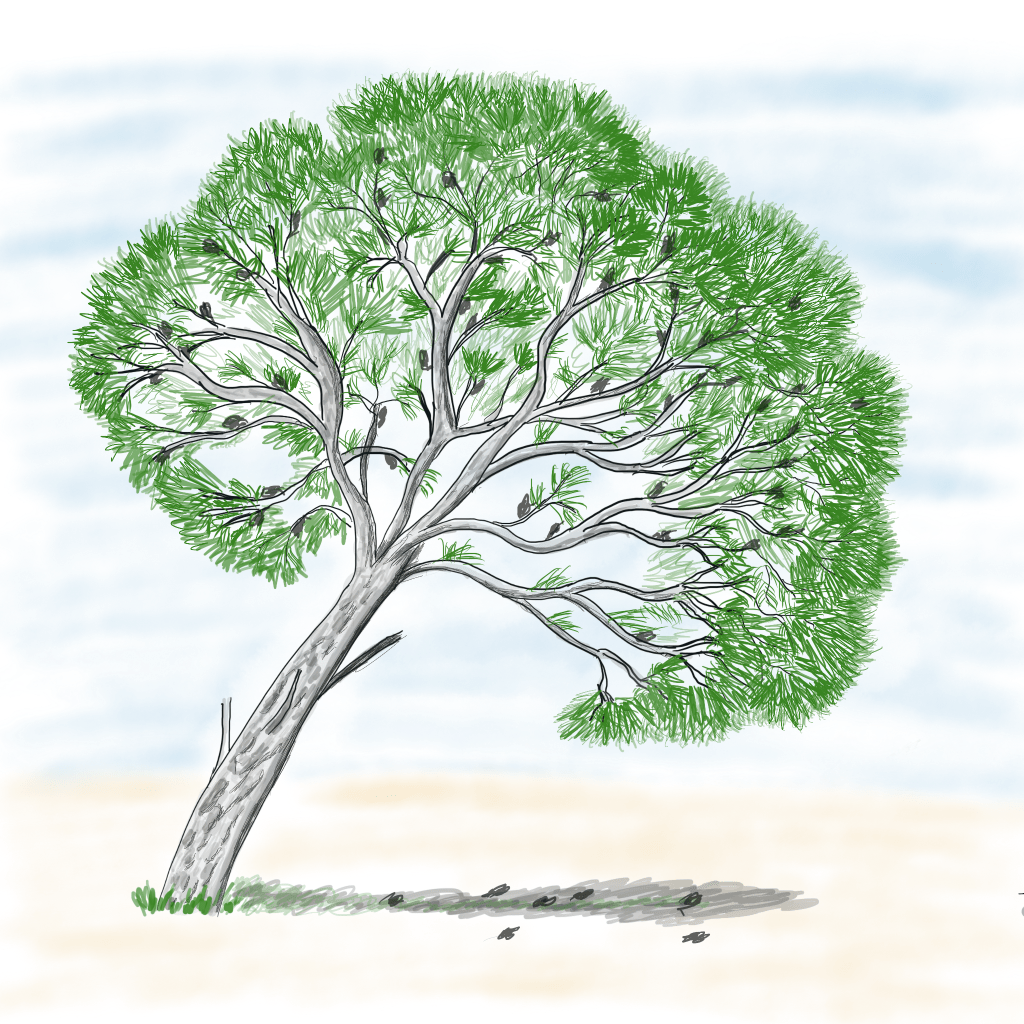
The Stone Pine.
Please feel free to leave us a comment by using the ‘reply’ box below. We love hearing from you.
You can also ‘follow’ us by clicking on the button at the bottom of this page. If you do this you will receive an alert whenever we update this website.
If none of the above grab you, please click the ‘like’ button. This helps us know that we are keeping you happy. Many thanks. The Wallys xx




 The Wandering Wallys