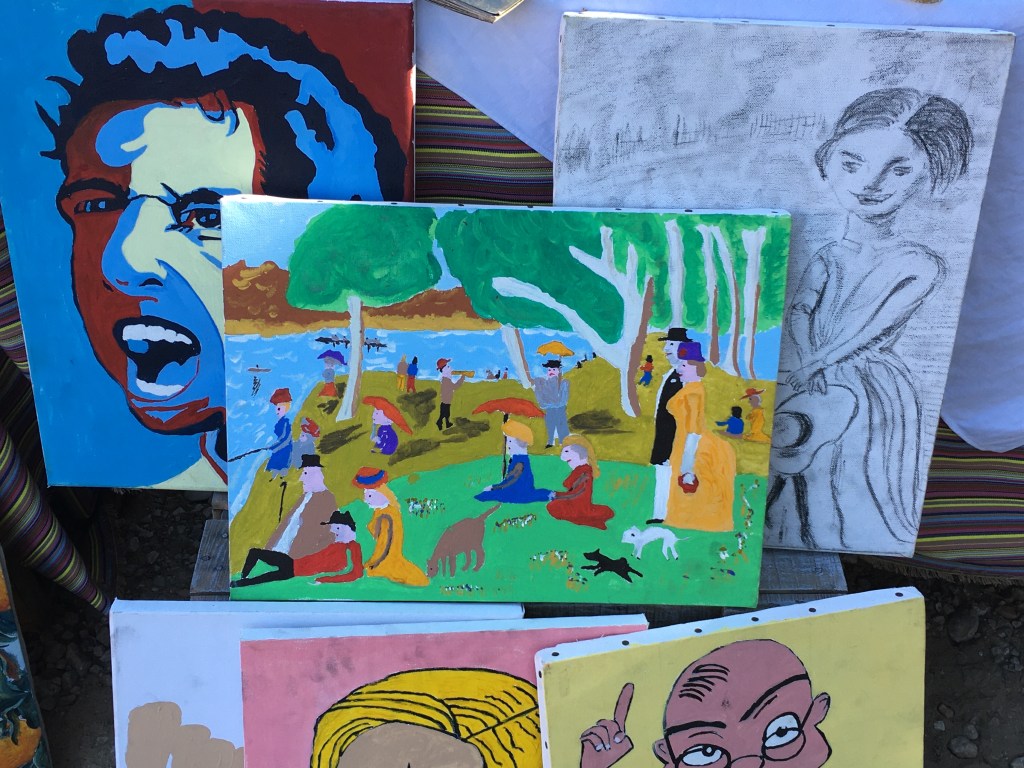
We got the impression that the artist was so impressed with the impressionists that s/he decided to to paint their own impressions of them and then offer them for sale to see if we, the public, would be impressed. And we were.
Wandering about in space and time.
We got the impression that the artist was so impressed with the impressionists that s/he decided to to paint their own impressions of them and then offer them for sale to see if we, the public, would be impressed. And we were.
This is the first of 3 walks we are going to offer you that head to the top of Montgo. This is the most demanding of the three, but for us, it was the most fun, which is why it is the first one to be covered here. We filmed it just under a year ago. Take a look at the video at the end which gives an idea of the surprisingly committing nature of this undertaking!
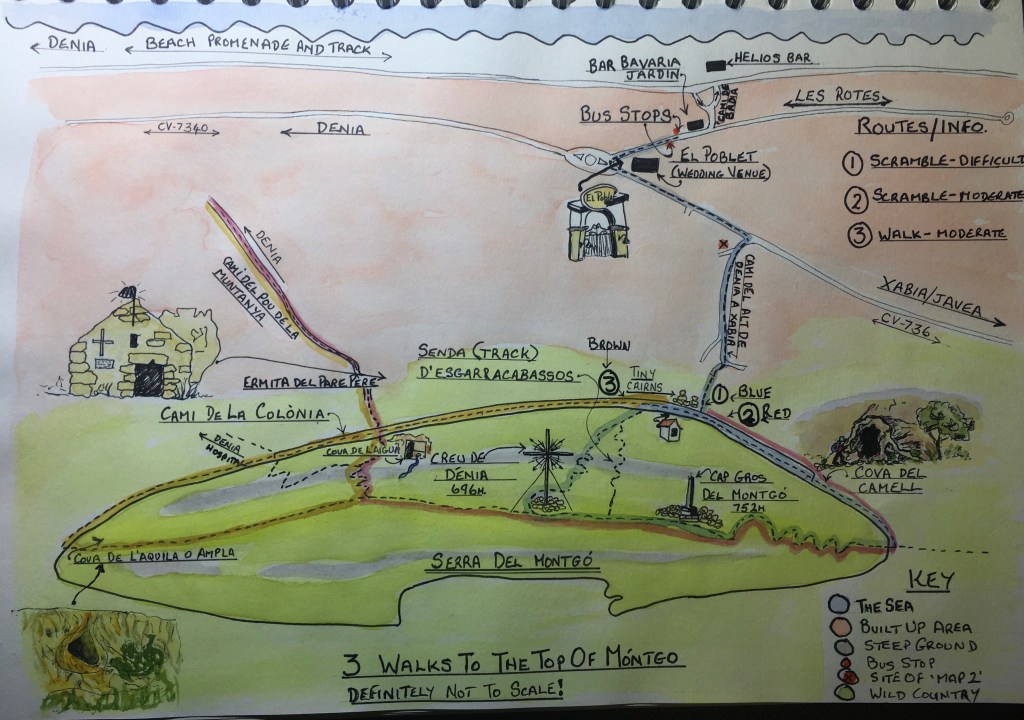
On this first walk, us deviants are true to our nature and leave the beaten path to one side. If you decide to join us, you will have to pick your own route up the mountain. If this type of walking and scrambling, the terrain and the possible exposure are new to you, this walk is best avoided until you have developed a heightened level of stupidity, just like us Wallys. There are plenty of less worrisome routes to choose from that will take you to the top of Mongo, emotionally and metaphorically. Allow a full day. If you have knee problems, or suffer from vertigo, it may not be the walk for you. Remember it is the coming down that tends to make vertigo worse, so always be prepared to backtrack and if you feel things are getting to a point where you wont be able to reverse, stop and go back while you still can. Remember GRIEM (Spanish Mountain Rescue) charge for their services. Google the scale of charges and then hail our British equivalent, all volunteers, who will turn out in all weathers, to all in need, at all hours, at no charge. They are always glad of funds, so please donate a little something every time you hit the hills. On that salutary note, I guess we should sally forth.

Take the ‘Las Rotas’ DeniBus (bus) from beside Denia Marina, almost opposite the main shopping street called Marques de Campo. The bus will be pointing the wrong way, as in the photo; do not worry about that, it will turn around just after setting off. The bus leaves on the hour, starting at 8am; there is no 3pm bus. Get off the bus at the bus stop beside El Poblet, wedding Venue. The return bus is diagonally opposite, outside the Bavaria Jardin Restaurant, and leaves at quarter past the hour, but, again, no bus at 3.15pm.

Time to get those walking legs going. Follow Map 1 above until you arrive at the the ‘X’ on Map 2, below.
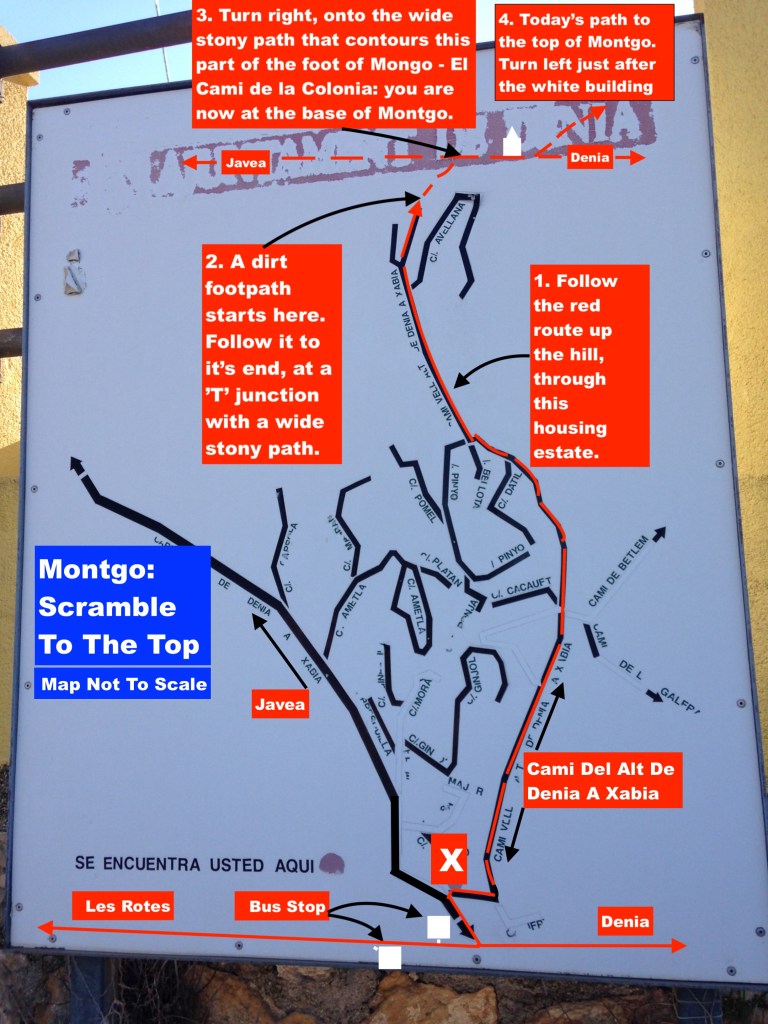
Follow the red route, on Map 2, through this steeply up hill housing estate. It is possible to drive to the top of the estate and walk from there, but the final bit of road is very narrow, the locals get quite upset about lazy walkers leaving their vehicles in the way. Better, if you drive, to leave your car well within the estate, on one of the wider roads. The path begins at the top of the estate and runs off to your right, towards Montgo Mount.

Follow your nose until the narrow, ruggedly rocky path ends at a wide and well maintained track, the Cami de la Colonia. Turn right, walking towards the tiny white building that sits beside the path.
Just past this building is an indistinct, unmarked path that can be seen forking off on your left. Take this path.
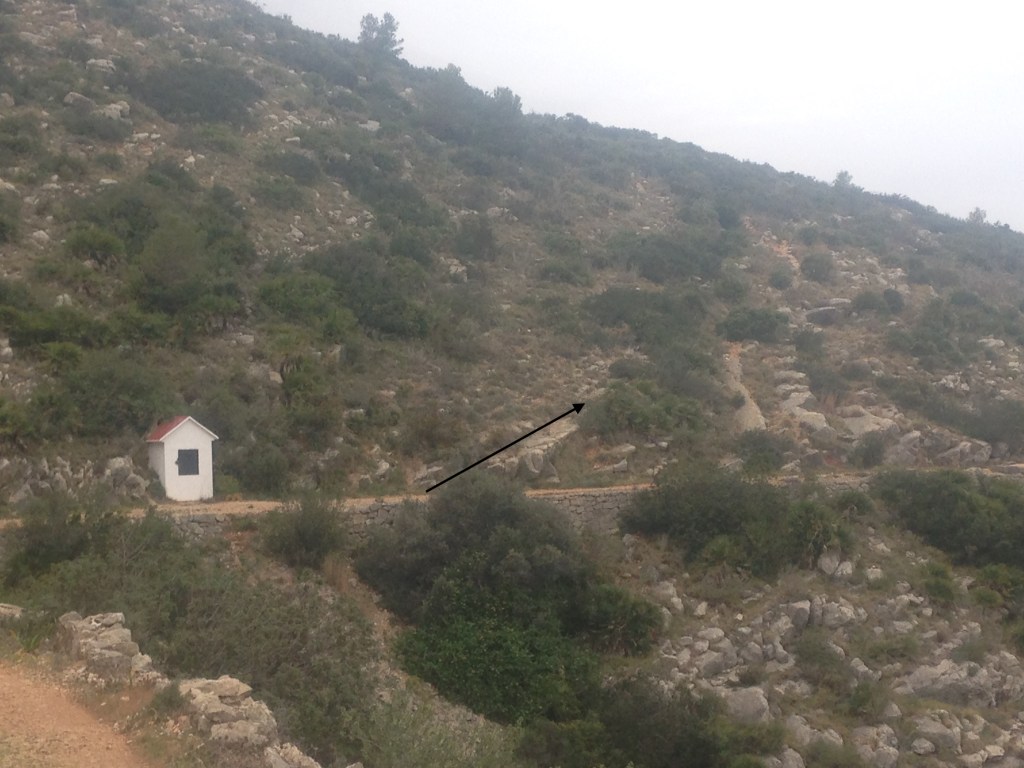
Stay on this path as it rises very gently across the lower flank of Montgo. You will arrive at a scree slope. The Senda D’esgarracabassos really starts at this point and is a classic scramble route to the top of Montgo. You can see the well worn tracks left by keen walkers. We are not taking this route today, we are taking a punt, seeing if there is another scramble route up; and there is!

Make your way across the scree slope. Go right to the other side. This is where the fun begins.
Our strategy was to head right on the plateaux (level/shelf like bits) and up where the rock faces were about scramble height, usually that is no more than 3 times your height. Any higher and it feels more like a rock climb, and we do not want that, do we?! There are no paths here, and no sign posts. You are very much at your own devices. As long as you stick to today’s rule of moving right on the level, green bits and moving up the lowish rock faces, you should be fine.
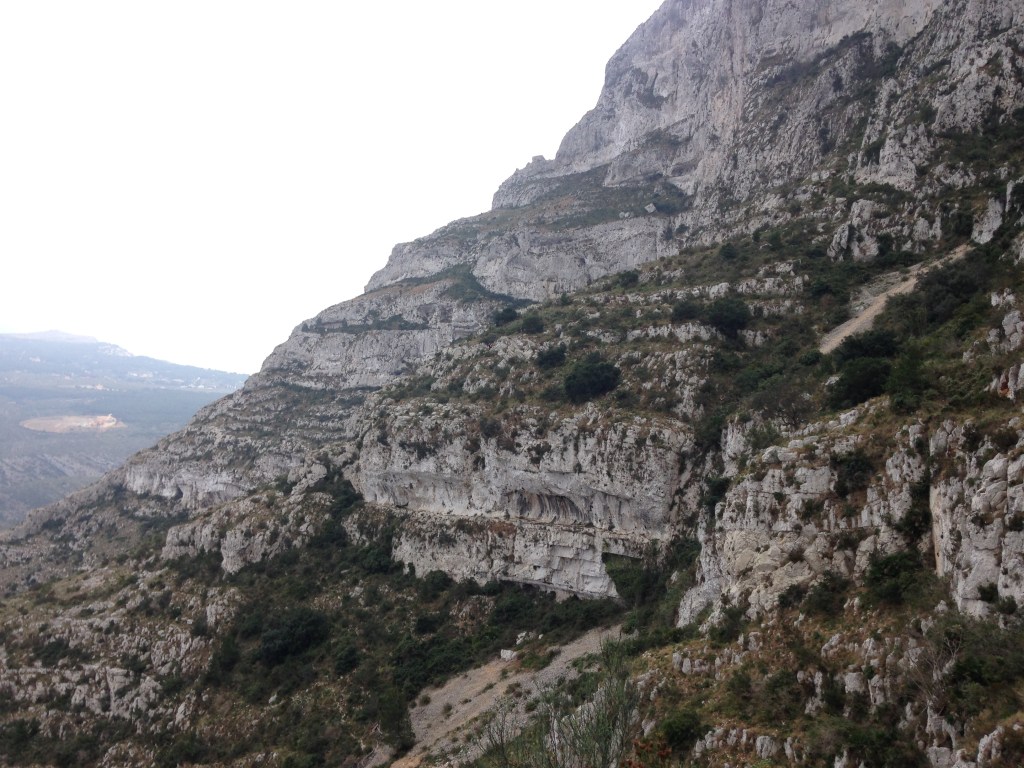
If you prefer, you can take the classic scramble route; it is well worn, you will not get lost and the scrambles are good. If you choose to take this route instead, keep to the well worn path up the side of the scree slope and follow your nose. If this all looks a bit too much, head back down to the Cami de la Colonia and enjoy walk 2 or 3 on the map. The views are awe inspiring. Your day will still be superb.
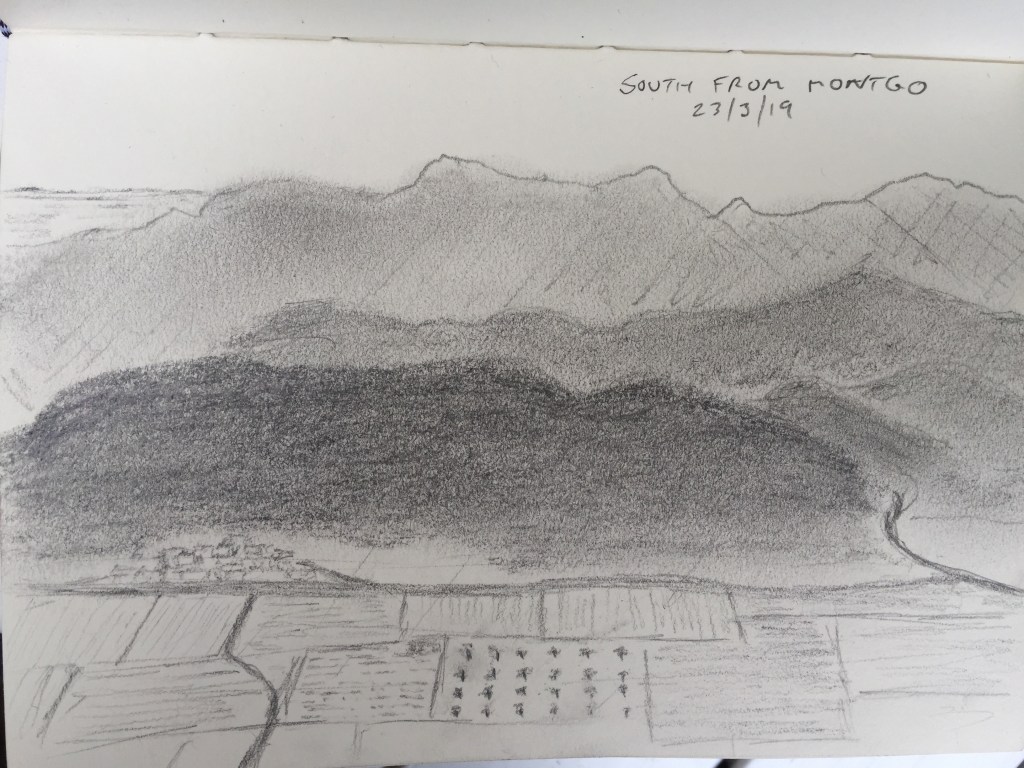
We stopped on the way up for a little lunch and finally topped out some way to the left of the Creu de Denia (the cross).
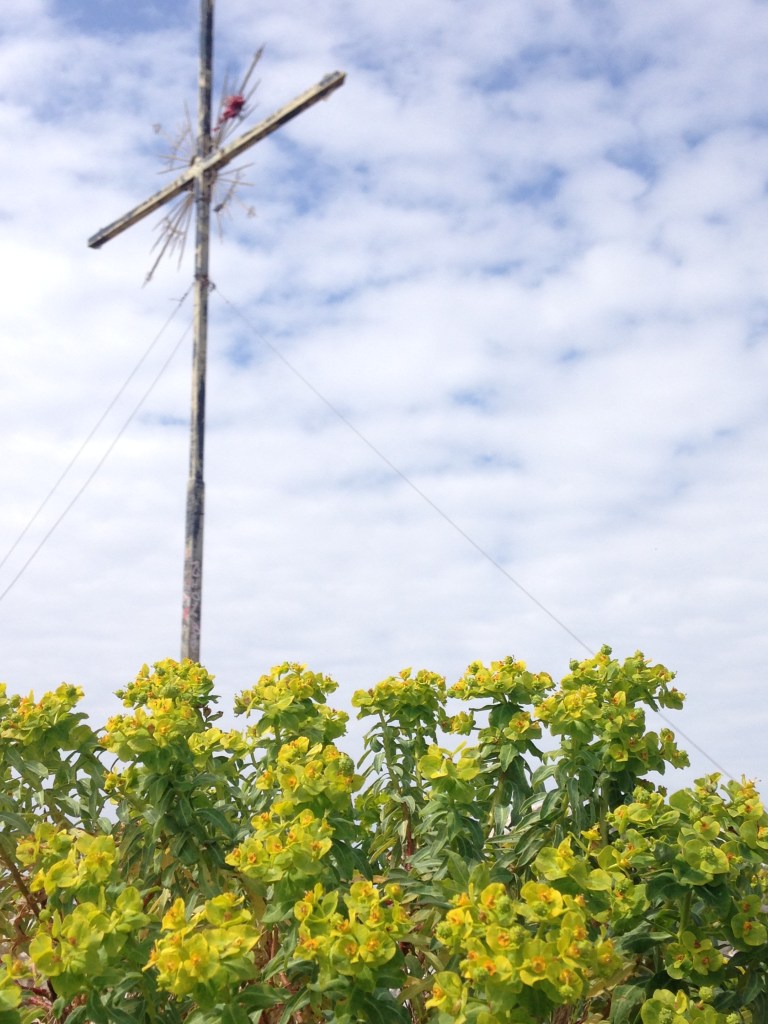
The route is now straight forward. Walk to the cross and admire the views, and then retrace your steps and keep walking ahead along the path and onto the Cap Gros del Montgo (trig point). Please make sure to linger long enough to take in the stupendous views along the way.
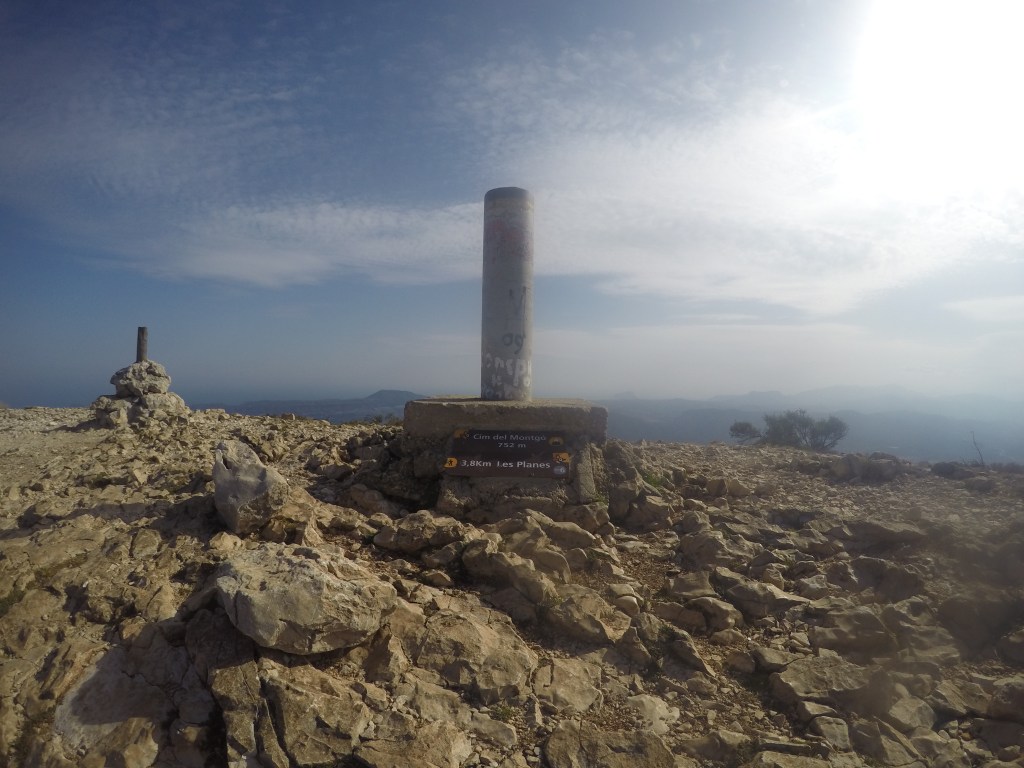
Once you have tired of the views, head for the rocky exit that overlooks Javea. You may need to take a look around to find it, but it is there and is very well worn. The initial way down is a gentle scramble followed by a pleasant zig-zag path to the bottom.

Once at the bottom of Montgo, turn left onto the well made up path and then right to follow a well signed, small path that will lead back onto the Cami de la Colonia.
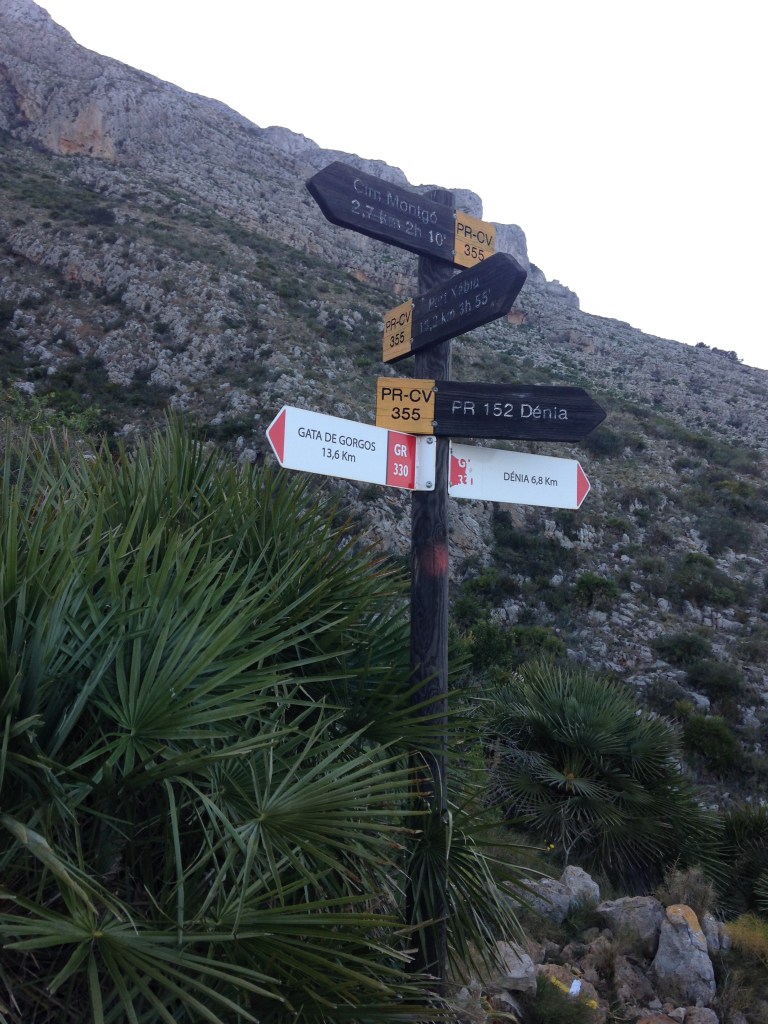
On the way back to the Cami de la Colonia, take time to visit the well sign posted Cova del Camell (camel cave). It is a very short detour, so why not?
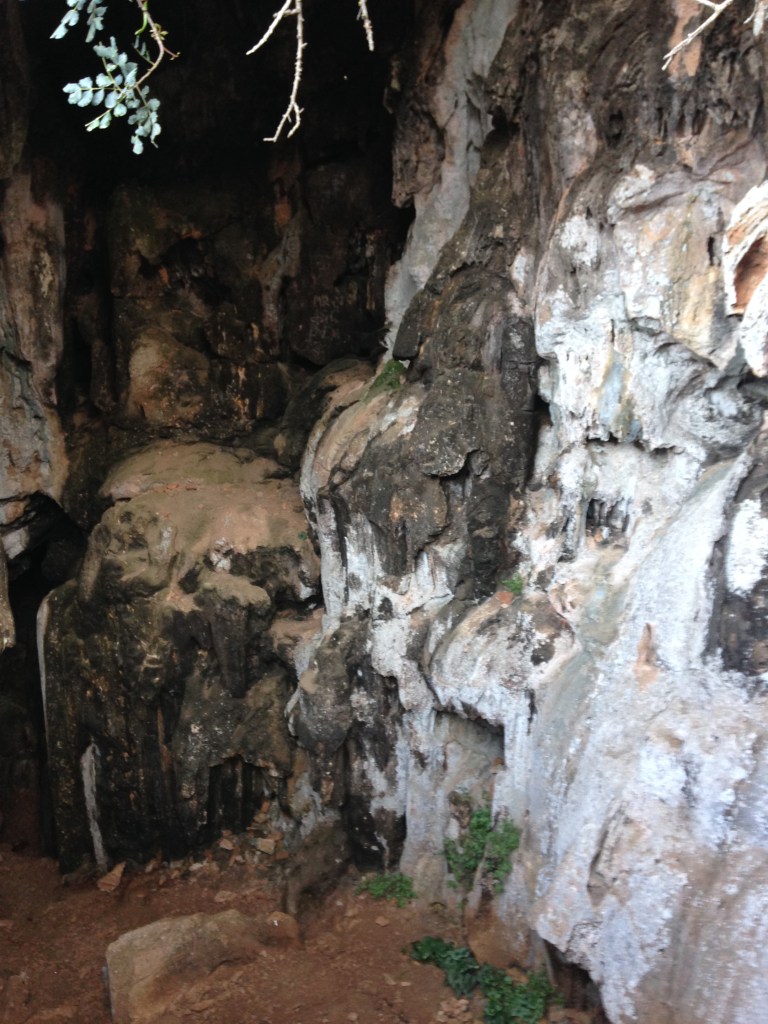
Shortly after the cave you will leave your current rather rough and narrow path and rejoin the very obvious and welcome Cami de la Colonia. It is an easy walk from here back to the junction with the housing estate path, on your right.
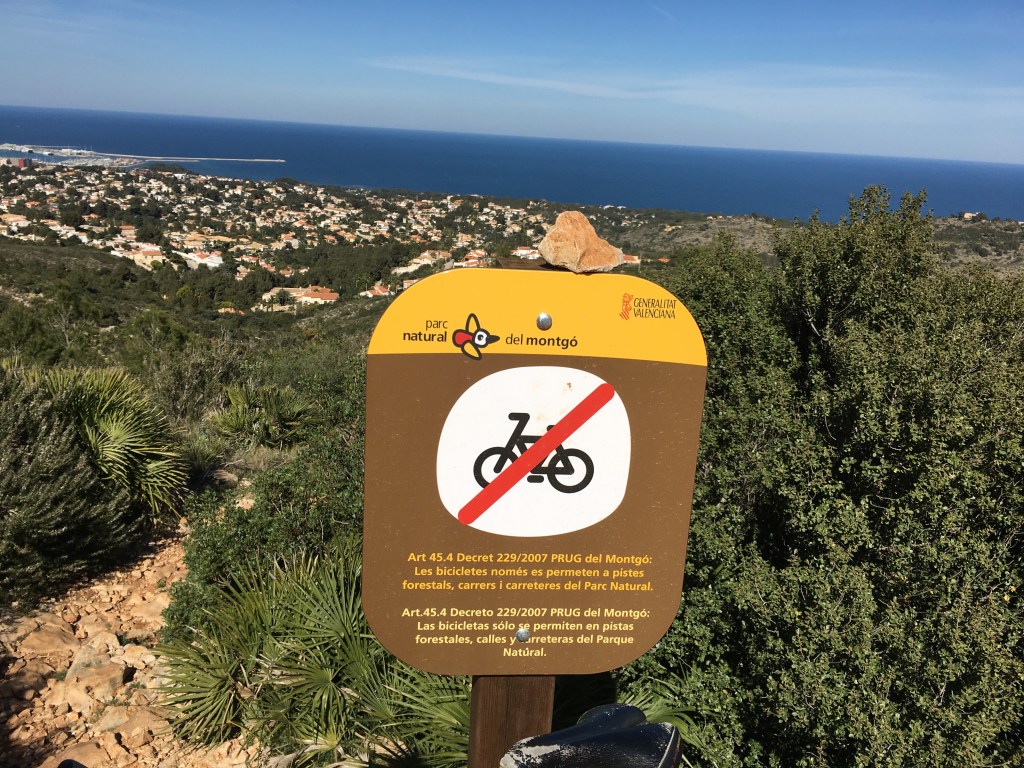
If you reach the little white building, you have, as you know, gone past the path junction you are looking for. Go back and take another look.
Retrace your steps to the bus stop. If you are too early for the bus, or simply fancy a breather before leaving, there are two options. The Bavarian Jardin bar/restaurant makes a great place to have a drink as you wait for the next bus back to town. Sadly, it is not open during the winter. Alternatively, Take a very short stroll down the Cami de Badia and have a drink in Helios Bar. Here you can sit on the terrace overlooking the sea. It is open all year round. Last bus into Denia is at 9.15pm.
At the end of this piece there is a video, lasting just over 2 minutes. It showcases some of the wildlife you might come across here. Please do not expect wandering herds of Wildebeests, or a David Attenborough commentary. Do expect all participating creatures to have been filmed on, or near, the campsite and not in a zoo ….
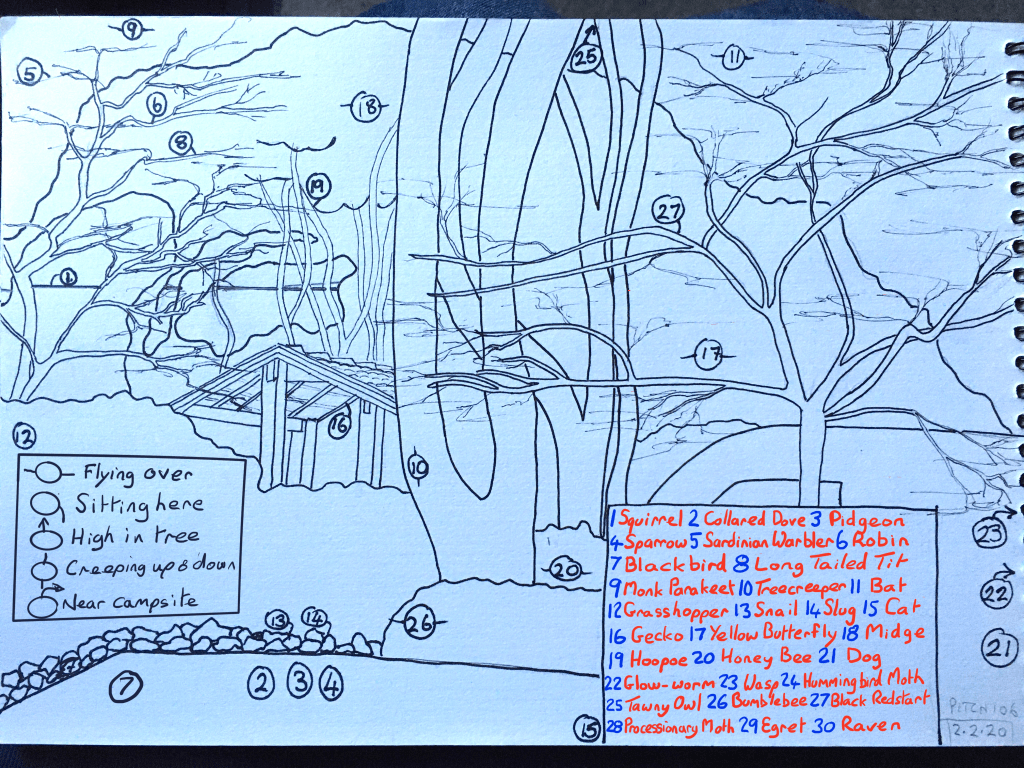
What a luxury it is to lie in bed in the morning, cup of tea in hand and watch the wildlife parade before your bedside window. Some mornings, almost nothing happens. Other mornings,we are treated to a panoply of creatures, doing what ever it is they do, as we slurp our brew.
This winter, we have added more ‘rarities’ to our list of visitors. We have also crept about the site at night, like a couple of weirdo’s, seeking out the shy and/or nocturnal; slugs,snails, cats and geckos.

The results are a host of critters, all dropping by to forage and feed, or hanging out in their favourite places, waiting for a meal to wander past.
To be honest, most of what we see will be familiar to you, so we wont bore you with long descriptions of the obvious. Instead we will add a few notes on those unusual characters that brighten our day, or force us to consult Dr Google for more information. The numbers below, should match those on the picture at the top.
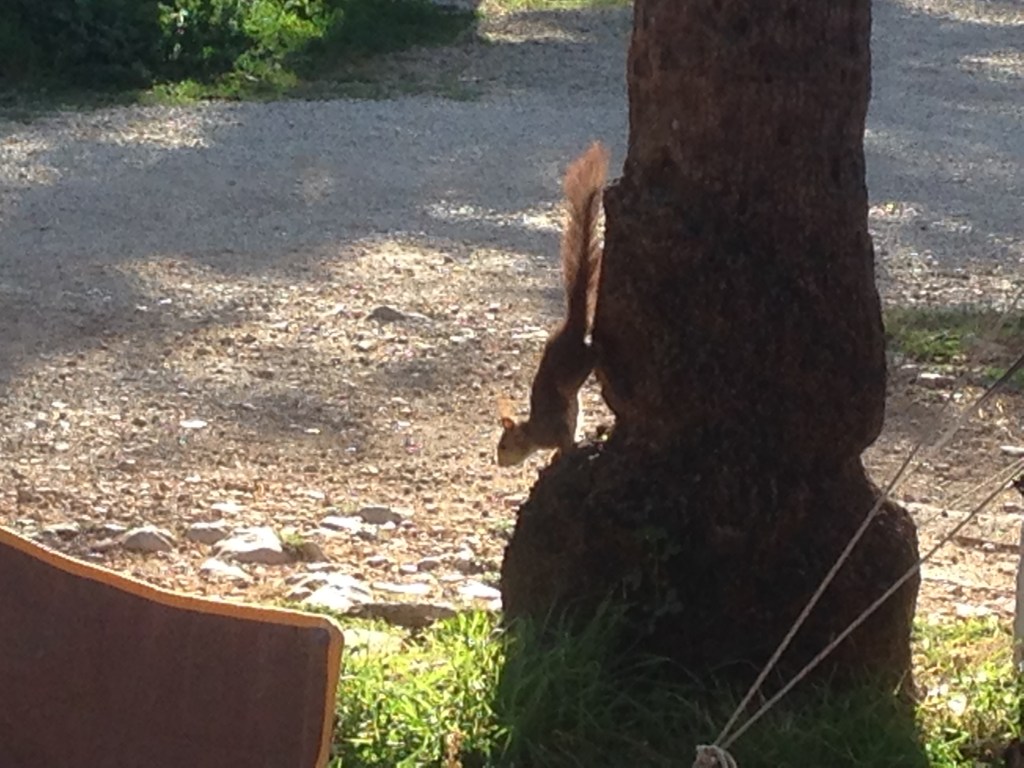
1. We are very fortunate to have a Red Squirrel colony on site. Many of the squirrels can be hand fed and are very fussy eaters, refusing all offerings except nuts. Each squirrel is identifiable by it’s colouration and damage. There are no black coloured Red Squirrels here. The squirrels feature heavily in our little video.

5. Sardinian Warbler. Yes, you knew it was a bird, but not one we see much of in the UK, unless you are a bit of a twitcher. It is cute, often holding it’s tail up like a Wren. It has a bright red eye and it is very common on site. Males are black headed and grey backed and the females are ….. need we paint a picture? Generally it does not migrate, it nests in low shrubs, although here it would lose it’s young to the many cats on site. I cannot explain why I constantly call it a Siberian Warbler; old age getting the better of me?

7. Blackbirds are not a rarity, except that here, they have a gene that gives rise to some birds having white markings (leucism). Ours has an almost entirely white head and is disputing the pitch boundary with a very ordinary Blackbird. Some short footage of one of their typical battles is included on the video. At home we have a similar gene in our garden’s Blackbird population, giving us the lovely Roger Moore, he had one white ‘eyebrow’ permanently raised and was the son of whitey.
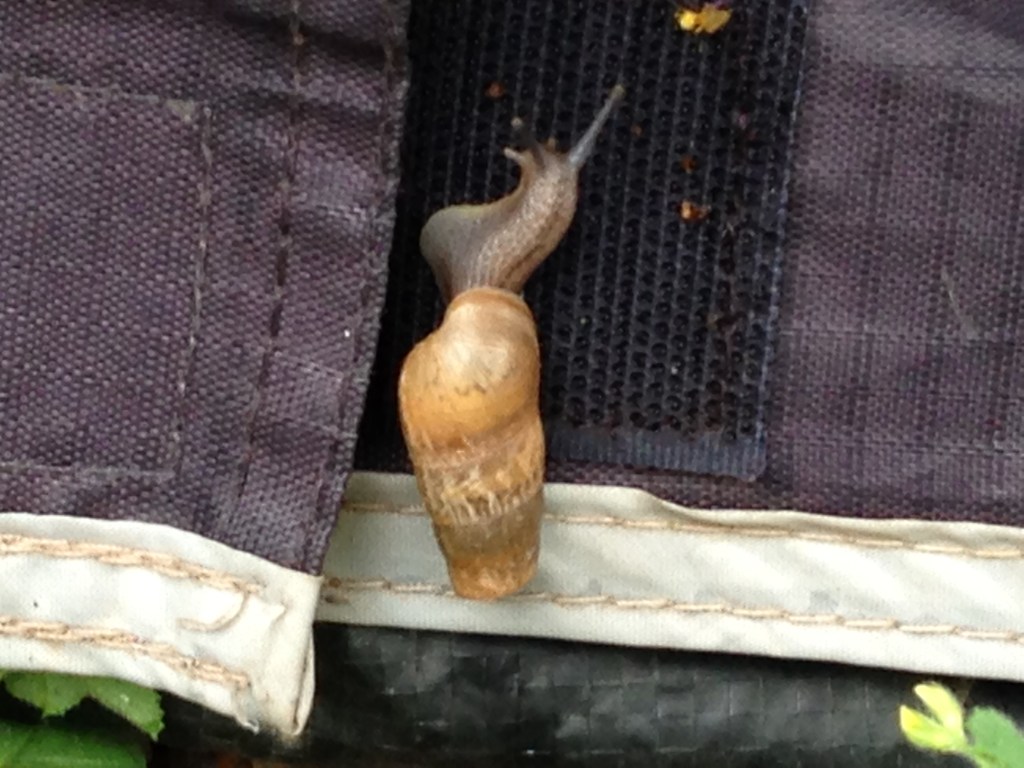
13. The snails here are a revelation. So many new ones to us. All you need do is look out for the ‘dead’ shells during the day, or head out at night with a torch. 11o’clock onwards is the best time to go hunting; what else would you be doing at that time of night? Our favourite, the Decollate snail, lovely shell.
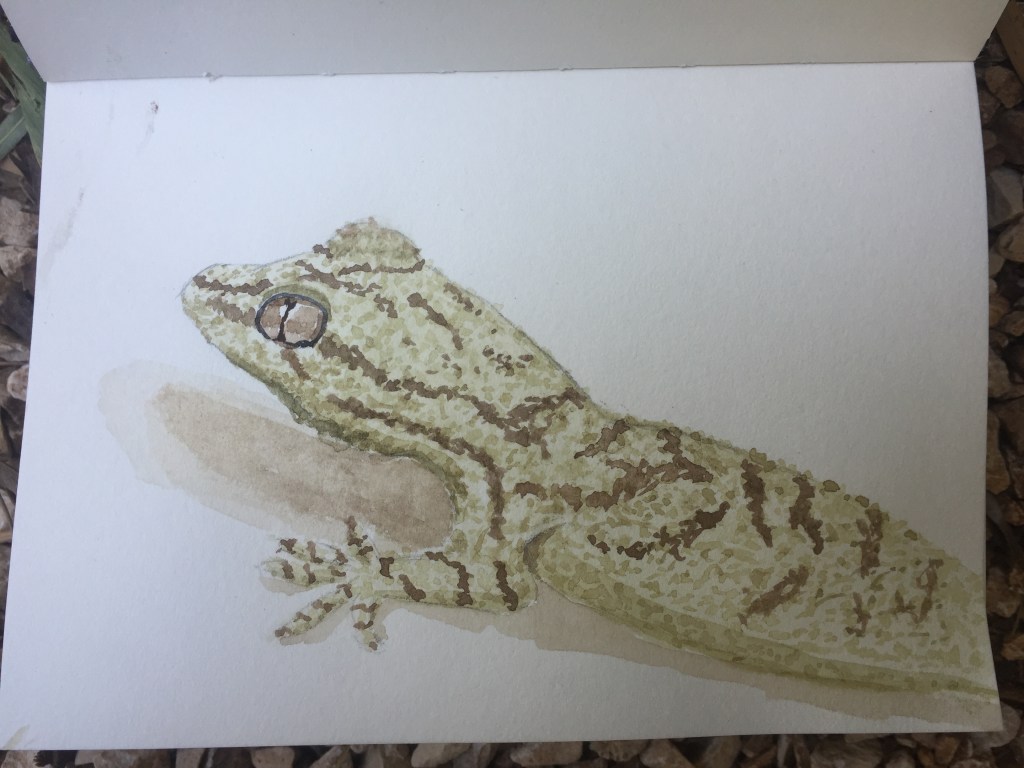
16. Gecko’s are plentiful on the campsite. They emerge, year round on warm evenings, clinging impossibly to walls and waiting for food to pass by. Generally, they seem to be territorial; if you find one, it will be there every time you pass. They try to stay out of reach and here they keep within range of a light fitting so that they can catch and eat the insects that are drawn to them. They like to have a cable, or roof tile, or loose bark to slip behind and out of sight.The wash house has a good sized specimen where we have placed the number 16 in the picture. The most easily seen type of Gecko we have seen here (January – June) is the Moroccan or Crocodile Gecko (Tarentola mauritanica). The hugely common, Mediterranean Gecko (Hemidactylis turcicus) does hang out at this campsite, but all we ever find are babies. The Mediterranean Gecko has colonised huge swathes of the world.
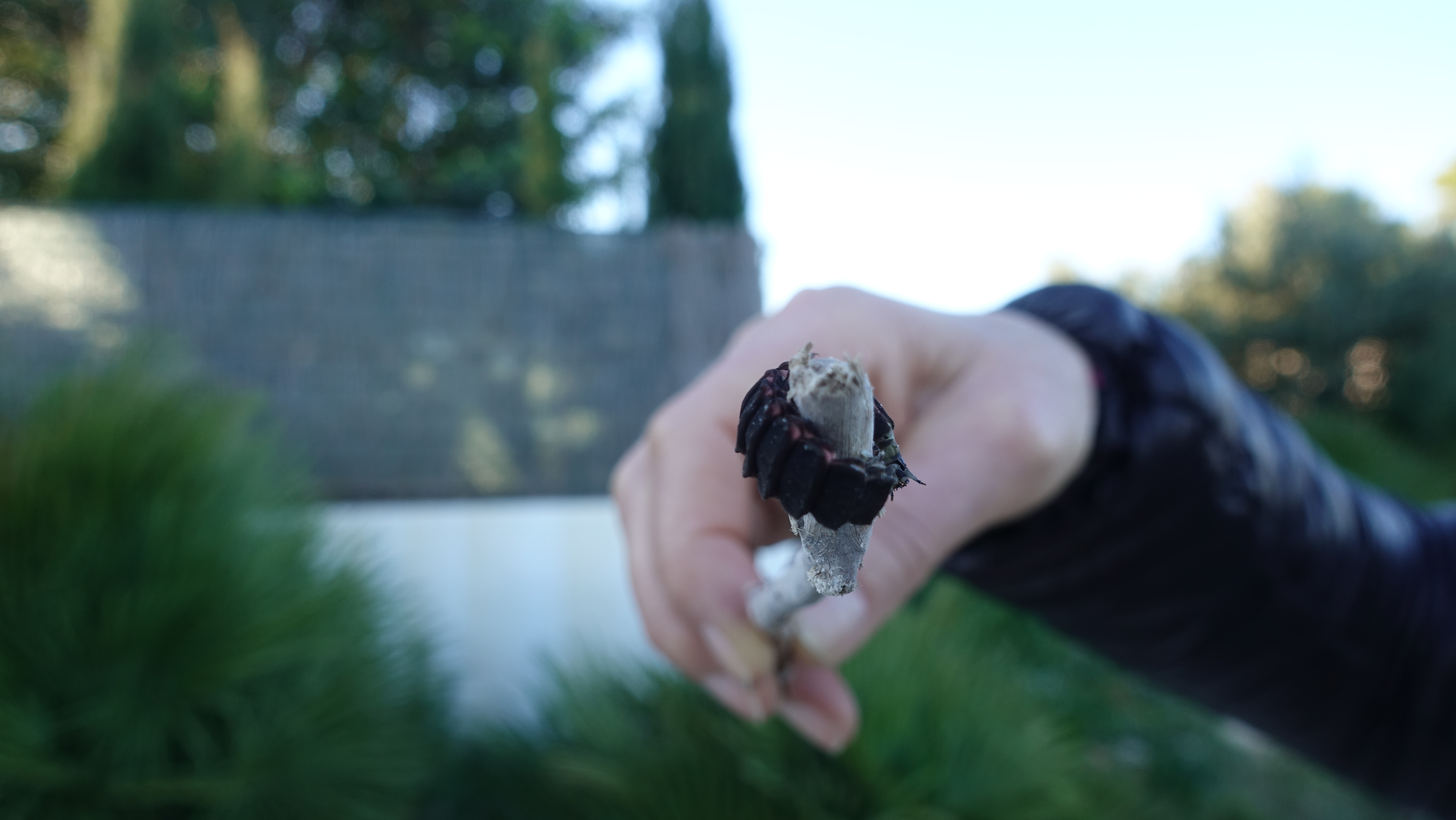
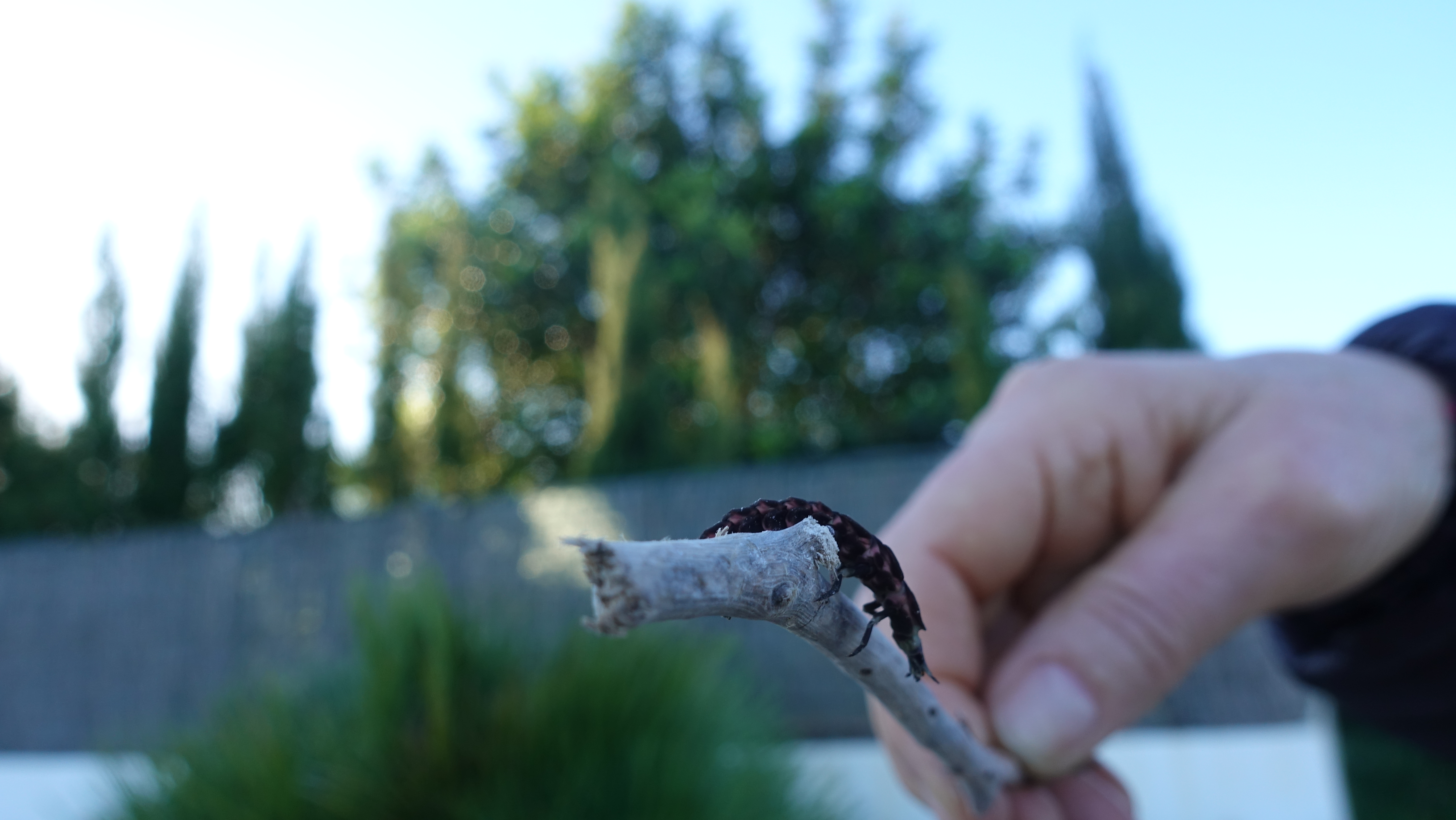

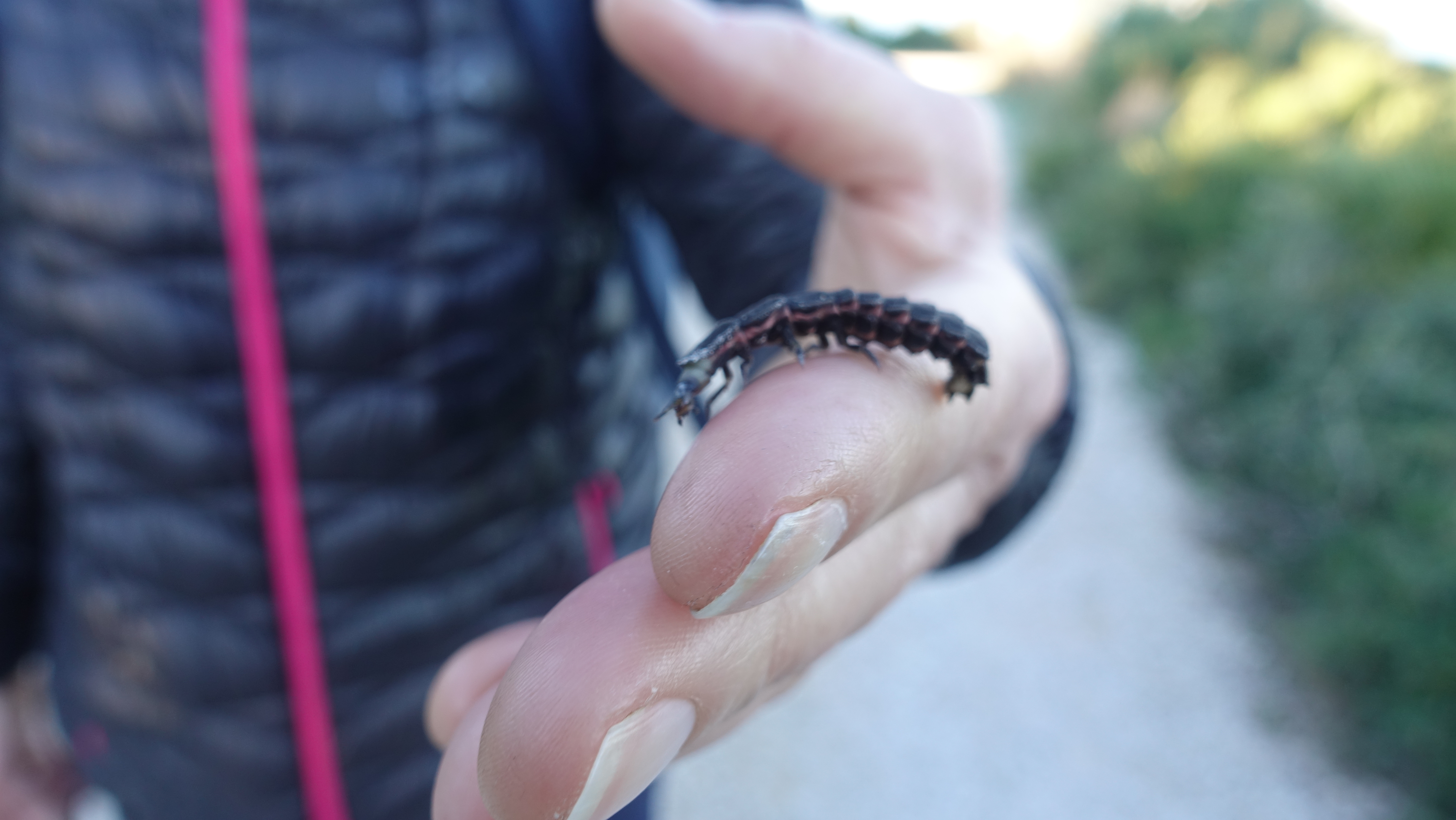
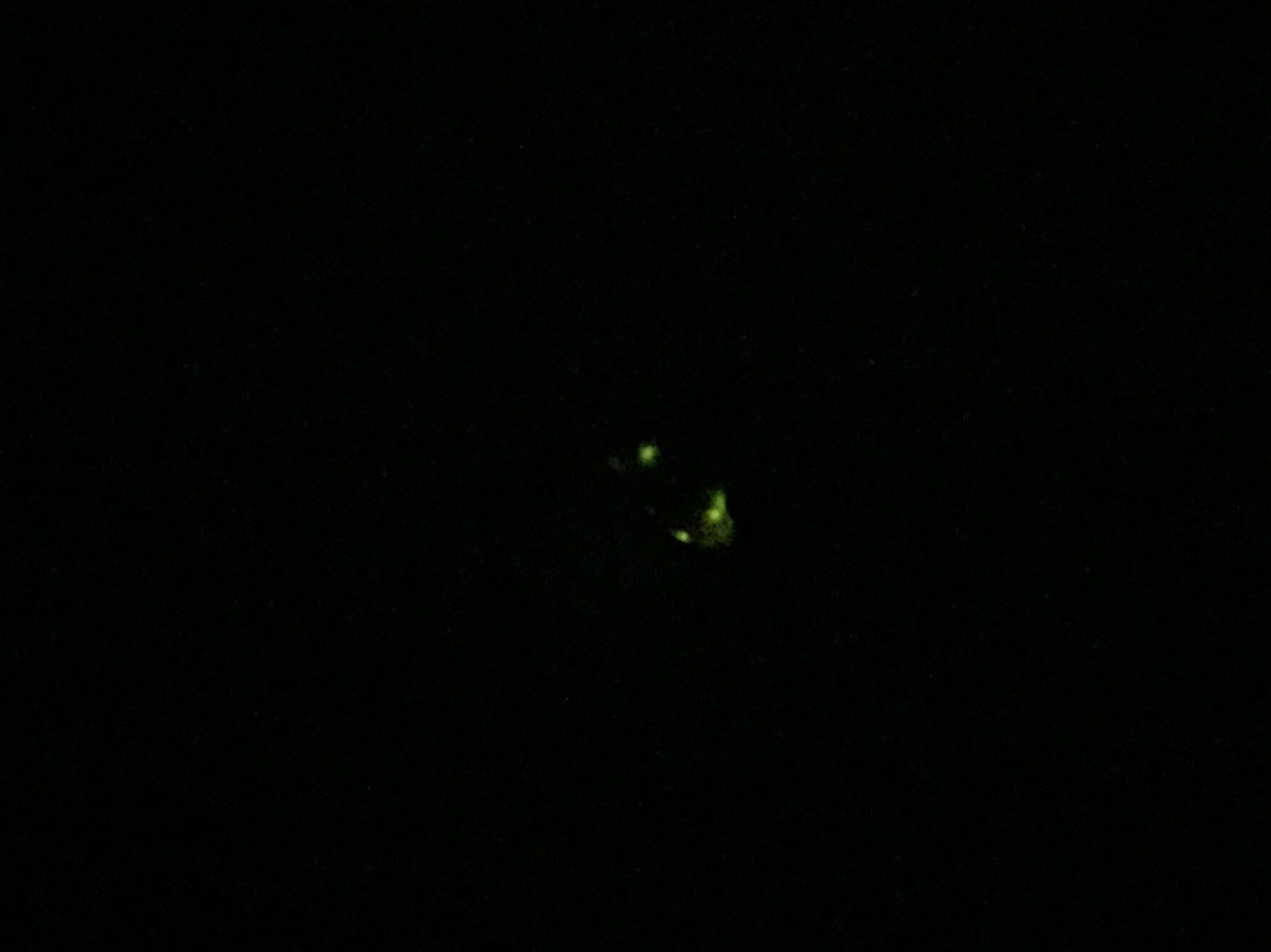
22. Mediterranean Pale Glow-Worms are to be found glowing, in our experience, low down in the shrubby areas beside the seafront promenade. We saw them in mid March, at about 2am as we walked back from the Fallas shenanigans. In January this year, in the middle of the day, we also picked up this beauty on the path to the lighthouse. It was crossing the gravel track. A clumsy mover, it made it’s way caterpillar style at the back end, whilst using it’s legs, all at the front end, to haul itself forward. Like the proverbial chicken, we guessed it was probably trying to get to the other side. These are unmistakeable creatures and it was great to help it cross it’s road.
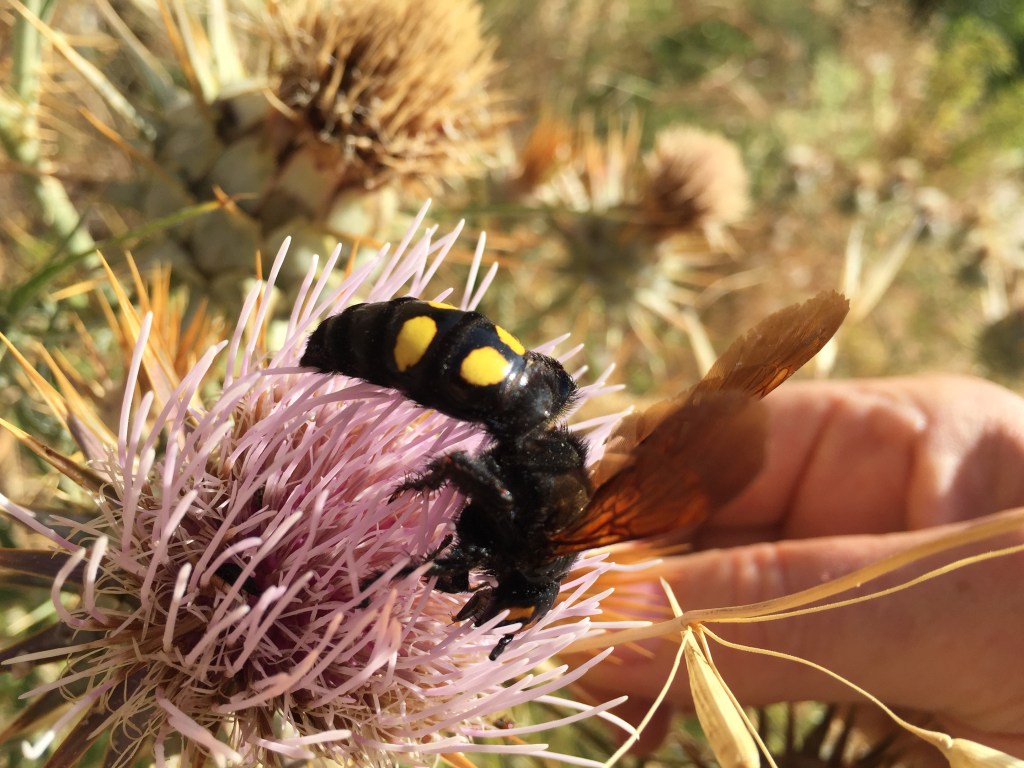
23. We wandered past the biggest wasp we have ever seen, and although it was sipping nectar from a plant beside the path, outside the campsite, we have included it. It is a Mammoth Wasp (Megascolia maculata), Males have a black head and the much larger females have a yellow head. Females can be 6cm/2.4ins long. Only the females have a sting and venom, which they use to paralyse the host grub for their young. They lay an egg in the pre-paralysed grub of the Rhinoceros Beetle and the rest you are welcome to imagine.
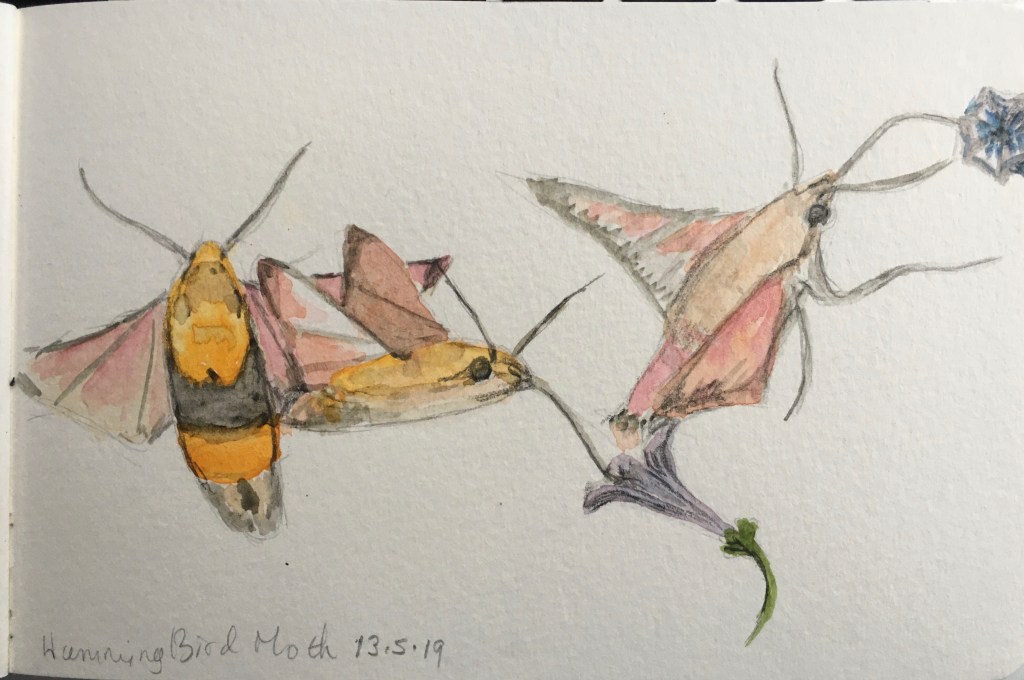
24. Humming Bird Hawk-Moths (Macroglossum stellatarum) are common around here, once the weather warms up. One balmy evening, here on the campsite, we enjoyed watching one as we drank a beer in the bar. Despite being two a penny, they look so exotic that, whenever we see them, we get far too excited for our own good health. The very best place to see them locally, is where the sandy beach starts, just as you leave Denia. The plant borders alongside the boardwalk thrum with them when the temperature is up around the high twenties, we saw them in June. Often seen in the UK too.
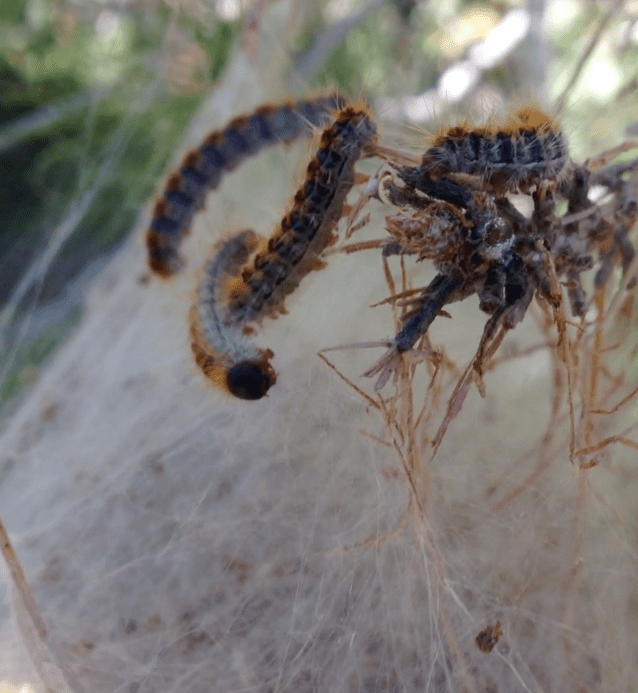
28. This campsite has no problem with the infamous Pine Processionary Moth, because it has a regime of spraying in place in order to prevent infestation. Despite this, we have one colony on site, next to us, which will be ‘dealt with’ very soon (now gone). The colony I am shaking up in the movie was off site, but nearby. The life cycle is straight forward; eggs laid in pine trees in the summer by the parent moth that has one day to complete the task before dying. The hatchlings emerge in the Autumn, and feed on pine needles. In January the caterpillars get together and form the distinctive nest which becomes home for the winter. They sleep by day in their nest and forage in their pine tree for needles to eat by night. In the spring, they leave their nest and their host tree to find somewhere suitable to pupate, often, but not always soil. This is when they can be seen processing along the ground, nose to tail.
Why the concern over a moth? It is all because when the caterpillars come out of their spidery nursery cocoon, high in trees, to wriggle along the ground, in single file, they look very sweet. Pets and young children are fascinated by them and love to investigate anything new. However, if the caterpillars are touched, their hairs can cause an allergic reaction, fatal in some cases.

27. The Black Redstart is a nice enough looking bird until it flies off. Then you get a flash of it’s red tail; all very flamenco.
Whilst here on site, we have seen or heard everything, from the tiny and yet complex Ant up to the top predator, the Tawny Owl. All this in an area no bigger than our courtyard garden at home. It is remarkable what is out there waiting to be admired.
Here was one of those days. You know the sort of thing; mid twenties Celsius, still, blue, breathless.
The air stroked us warmly as we moved through it, easing our minds and muscles. What winter bliss; so rare. In such balmy conditions, us Northern Europeans actually let our goose bumps relax and smoothen, and dare to hope for the perfect, even, tan.

For us Wallys, this was a day to get away from all that beach side flesh. At least two people had taken up positions on their deck chairs, heads back, mouths lolling open, feet in the cooling water. That was our queue to go.
Meanwhile, back at our base, our poor kayaks had the look of abandoned dogs, lounging about the place, positioned so we were made to feel guilty every time we left our pitch. No matter how many times we told them that they would not enjoy cycling to the shops, or walking up to the Gerro Tower, they still hounded us with those doggy looks. Today was to be their day. Lucky boats and lucky us.
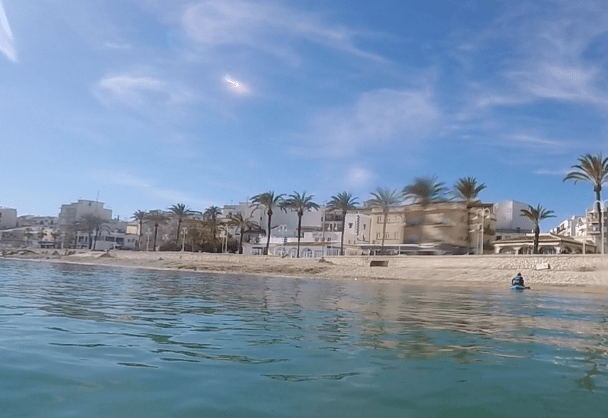
We had decided to head into the neighbouring town of Xavia, or Javea, pronounced Have-ee-a, a town in two parts. One area is set up hill from the sea and the other is a coastal strand of eateries, bars and apartments set along a Palm dotted, sweeping cove. Our plan was to get there; we would be happy with that, eat our snack, grab a cafe cuppa and come back. This would be a three hour, sweaty slog, on foot. Today it would be a gentle two hour glide, sitting down all the way.
As ever, once on the water, we spent the day scanning for wildlife. One of us sported shiny new binoculars. The old ones having fogged in one eyepiece, on the stroke of midnight, on new years eve. The moment was reminiscent of the tales of grandfather’s clock. You know, the one that stops ticking the moment it’s master dies. Never to tock again. We are pleased to say, that so far, both of us still have pulses, although none of us knows what little bomb is ticking away inside us, waiting to make the mist roll down. On that cheery note, we paddled on.

The sea was oily smooth as we paddled. The shattered coast was strewn with gigantic boulders, and pockmarked with small coves and deep caves. Everywhere we looked, reefs lurked just on and under the surface. Very few places offered an easy landing. This is definitely no place to be shipwrecked.
After two hours and twenty minutes of bimbling about, cave mooching, bird watching, and very slow, lazy paddling, we arrived in Xavia. An hour later, we left, having eaten our sarnies and enjoyed cold drinks in the nearest bar.
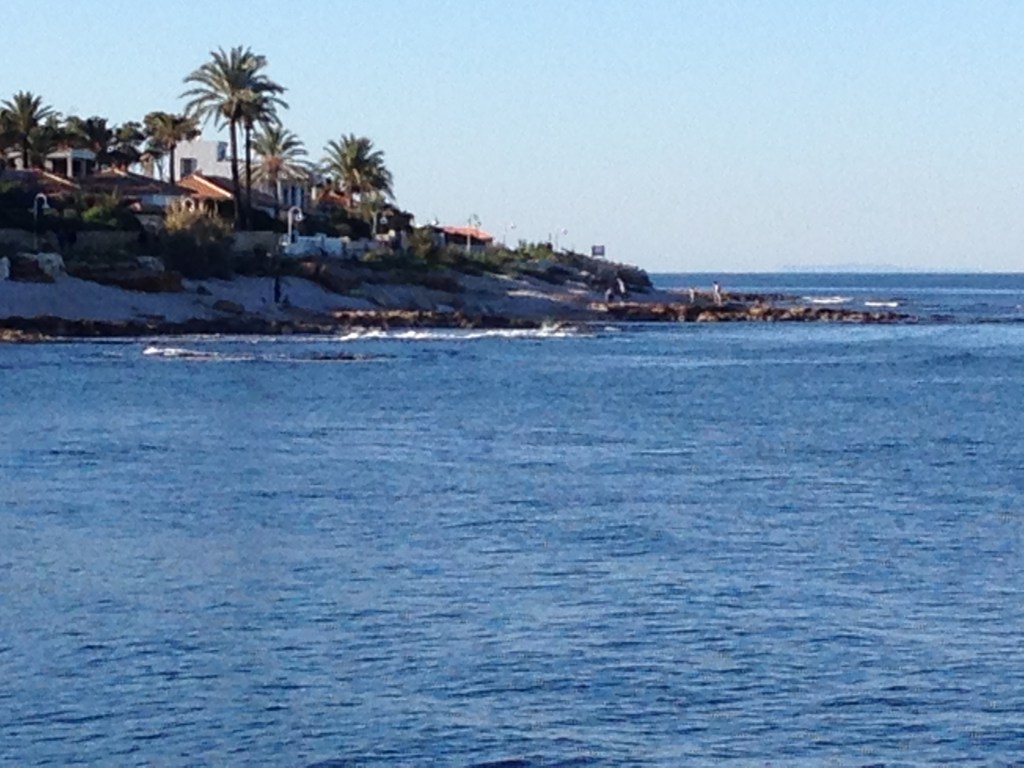
You may wonder what we got up to on the return journey, you know, to liven it up and ring the changes. And our answer is, absolutely nothing. It was a hot day and what we did heading home, was exactly the same as we did coming out. It took us the same length of time to get back, which was a surprise, as we did not try for this result. For us the day was perfection. Why gild the lilly?
NB. In weather and sea conditions similar to the video, this is a very easy trip, which is perfectly suitable for beginners. Like any new activity, it can feel exposed and intimidating at times. If you fancy doing a trip of this kind, it is wise to go with at least two friends, one of whom should be an experienced kayaker. If planning a solo, or two person trip; those concerned need to be proficient paddlers. As a minimum, should you fall into the water, you should be able to hang onto your paddle, return your boats/sit-ons, to upright them and get yourselves going again. Apart from that little warning, jump on or into your craft and go. You will not be disappointed.

What we said to our friends was, “You’ll love it here. The weather’s like a mild summer’s day in the UK. Above us, the heavens are usually crystal clear and brilliantly blue, with just enough clouds to make an artists sky. The sea is every shade of green and blue and so gin clear that, when standing on the rocky shore, fish can be seen swimming in it’s depths. Add to this the tropical palms and banana trees and the oranges dripping from their branches and you have a place that you must visit. Especially as we’re here and we miss you. We will welcome you with open arms. Take care.“
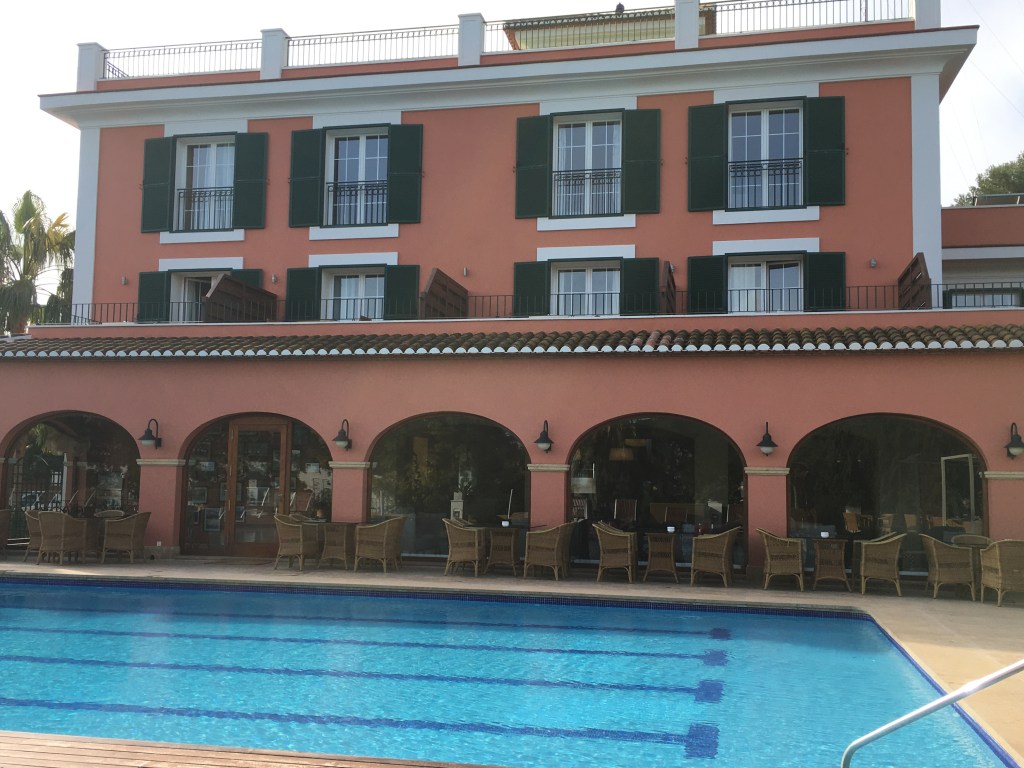
Thus it was that our friends organised themselves to visit. We booked them into a local hotel for a couple of days, followed by a week in a nearby apartment. It was going to be perfect. We could not wait for them to arrive and to welcome them with open arms.
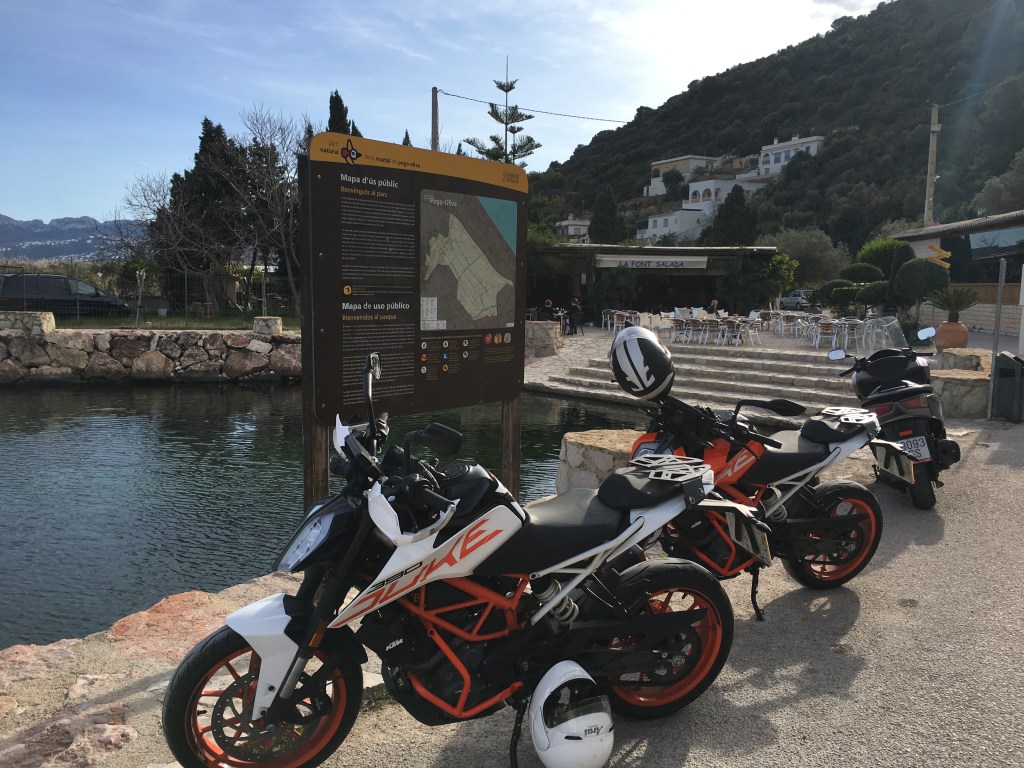
With our guests due on Thursday, we began to plan our itinerary for the week. The weather was about to break, which meant the Monday reconnoitre became a mega ride out on our KTM’s. We were on a mission, checking access, views, restaurants and anything else we could think of that would keep an 87 year old and his 60 year young buddy amused. We got back after dark, packed away anything that was not nailed down, and hunkered down in readiness for the storm that was about to hit us. Apparently, it was going to be a corker. They were flying high and it had been what felt like a long long time since we had seen them.
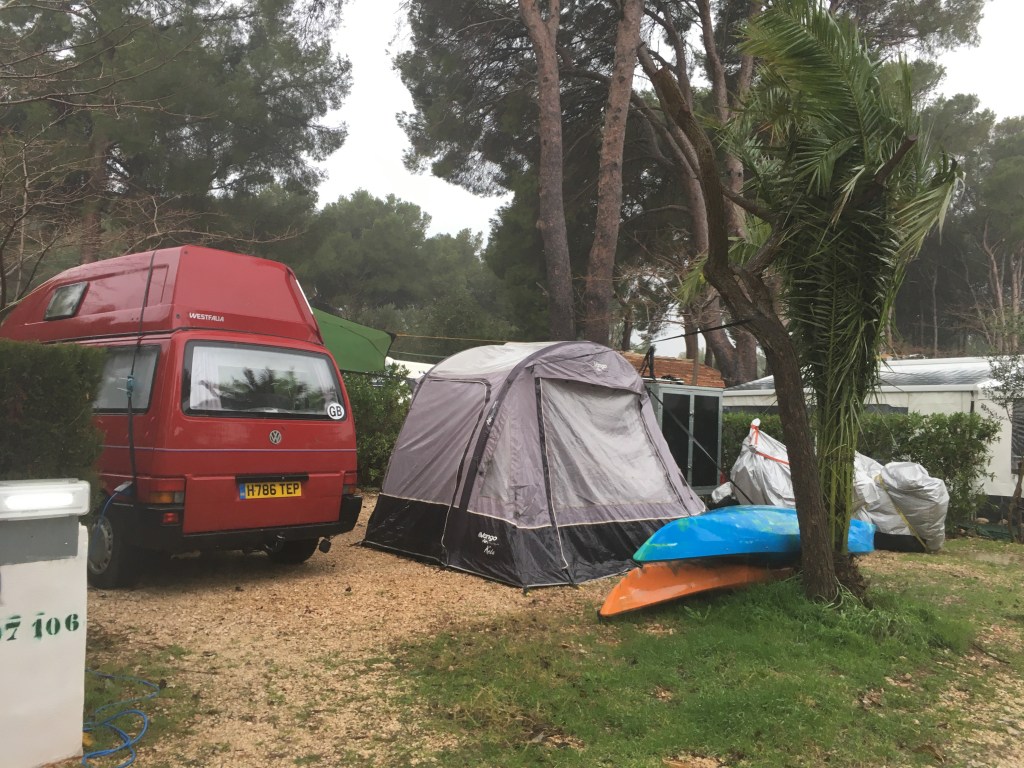
As we were skimming about the mountain tracks on our motorbikes, the campsite staff were asking some clients to move onto pitches that were clear of trees that might fall during the coming high winds. With everyone on the campsite safe and sound in their caravans and motorhomes, the wind strengthened, the clouds gathered and the night became coal black. We snuggled up under our duvet as the storm tried to pound it’s way into our coziness. We went to sleep; in fact we slept like logs.
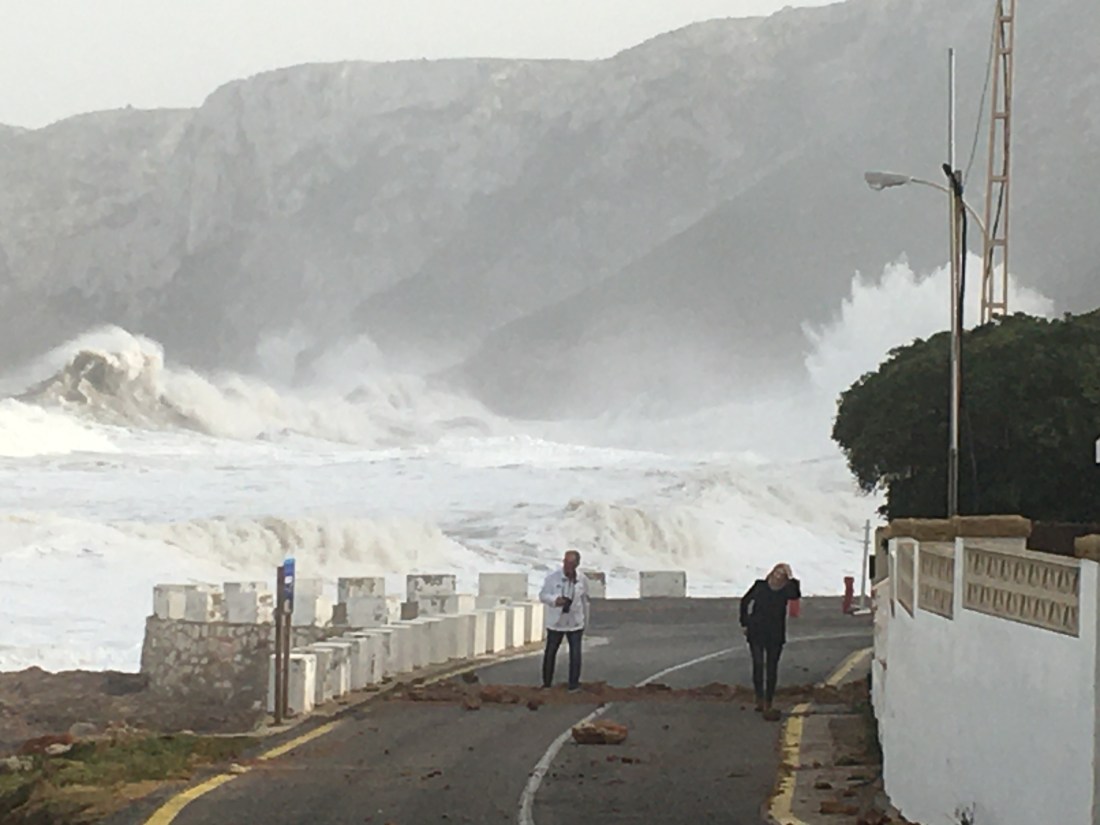
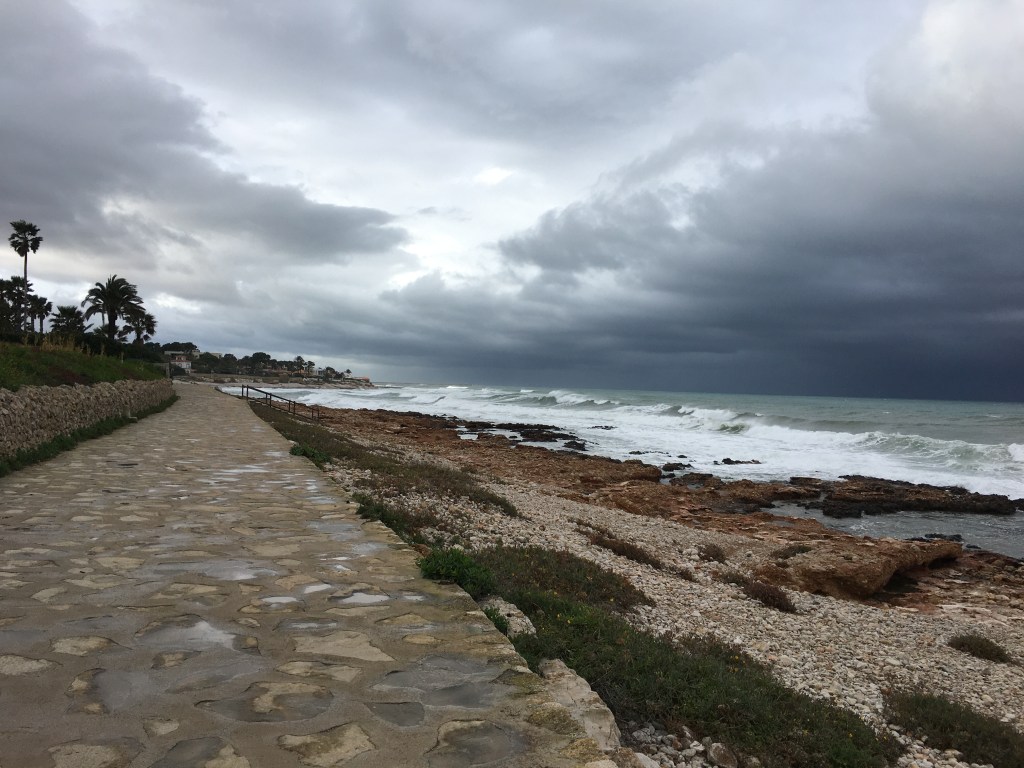
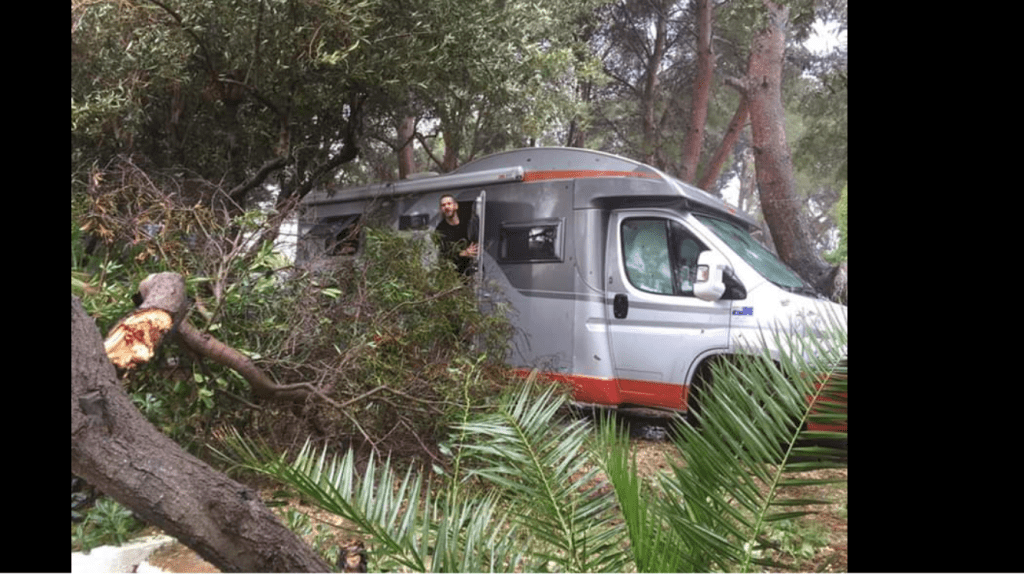
What a difference a night makes. We awoke to Armageddon. Trees uprooted, an awning blown down and one campervan brushed by a large branch as it fell. We had to take care as we struggled to walk side by side to the seafront. We were still in a howling gale. Then we were assailed by a vicious downpour. The water poured down our jeans and into our shoes. We sheltered behind a sturdy wall. The sea was angry, in filthy shades of grey and raging against the shore. Stones, rocks and boulders had been hurled across the promenade, during the night, with the ferocity of Finn McColl in full battle cry. The angry sea had slammed into concrete benches and litter bins, picking them up and strewing them along the promenade. A slight lull in the rain allowed us to squelch our way further along the blasted seafront. Demolished walls, banks of pebbles and access decking were all strewn asunder. Only the brave or foolhardy ventured out, I think we fell into the second category!
A member of the campsite decided to hold a movie afternoon, to calm the nerves and help keep up moral. Four of us headed out to find a restaurant that would offer us a lunch. Most places were shut; lack of utilities, storm damage, closed roads: all good reasons to not open up. We trawled the streets in the rain and eventually we found an eatery. They fed us in high style as we watched their TV with it’s wall to wall coverage of the torrential rain, strong winds, high seas and driving snow. The campsite had been lucky, it had come away with little damage, apart from jangling the nerves of some campers.
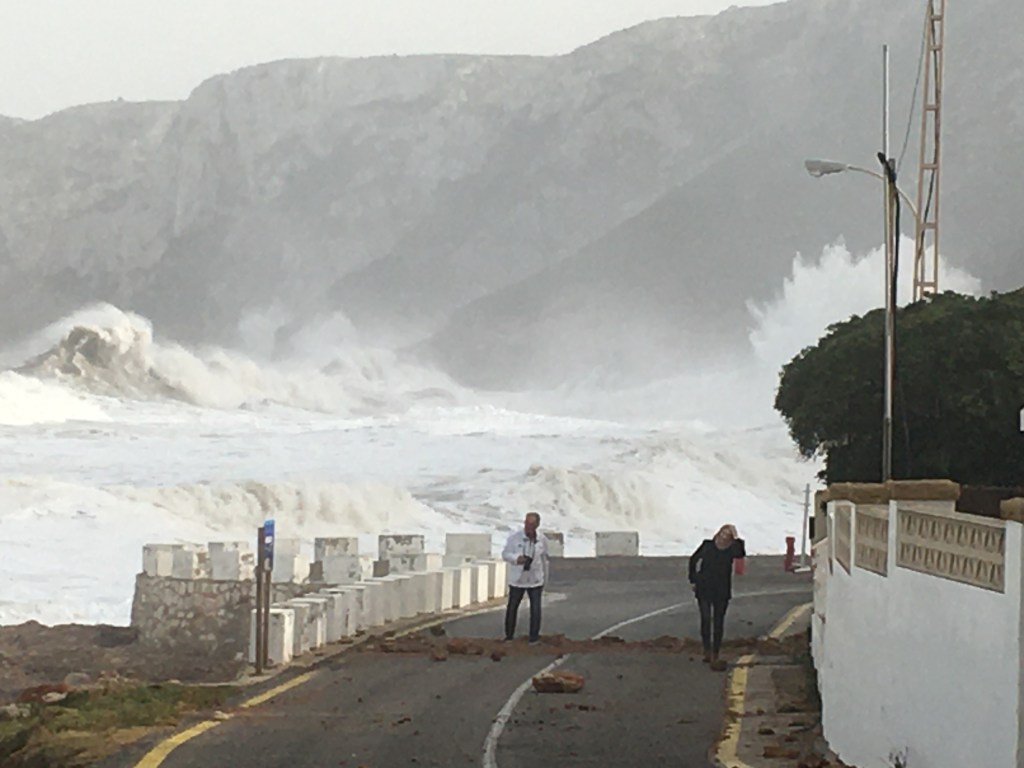
By the next day, Wednesday, the rain had stopped, the wind and sea had dropped to a mere ‘Strong Force 9‘. It is hard to gauge what it had been 30 hours before.

The statistics of this particular storm event makes for salutary reading:
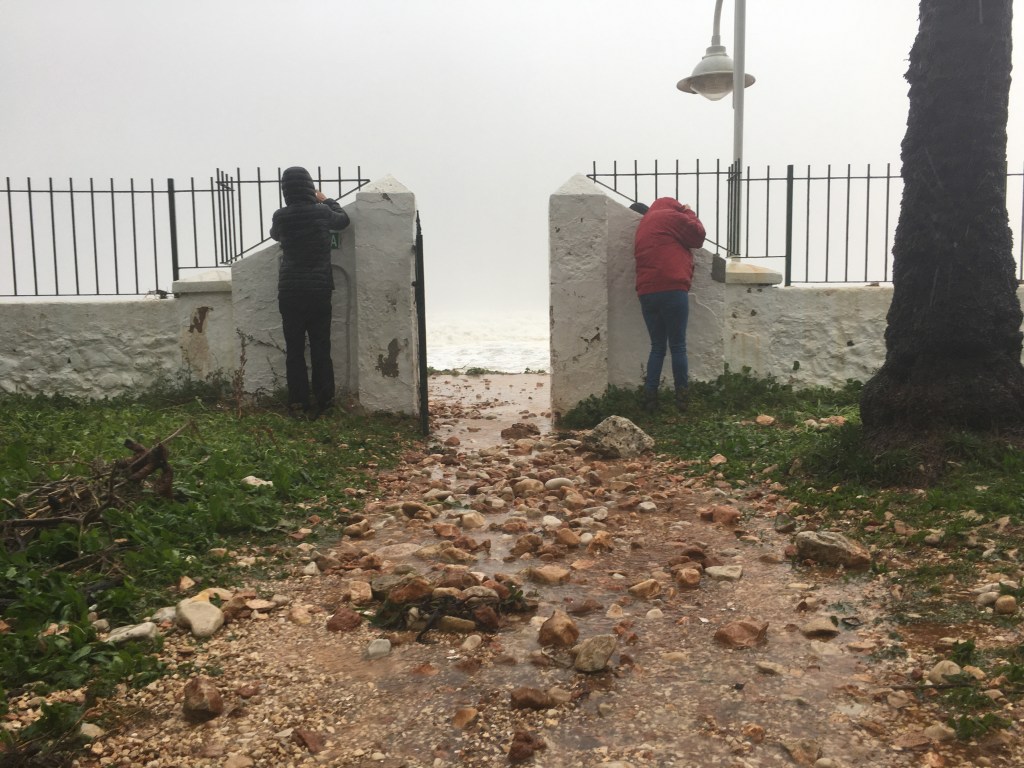
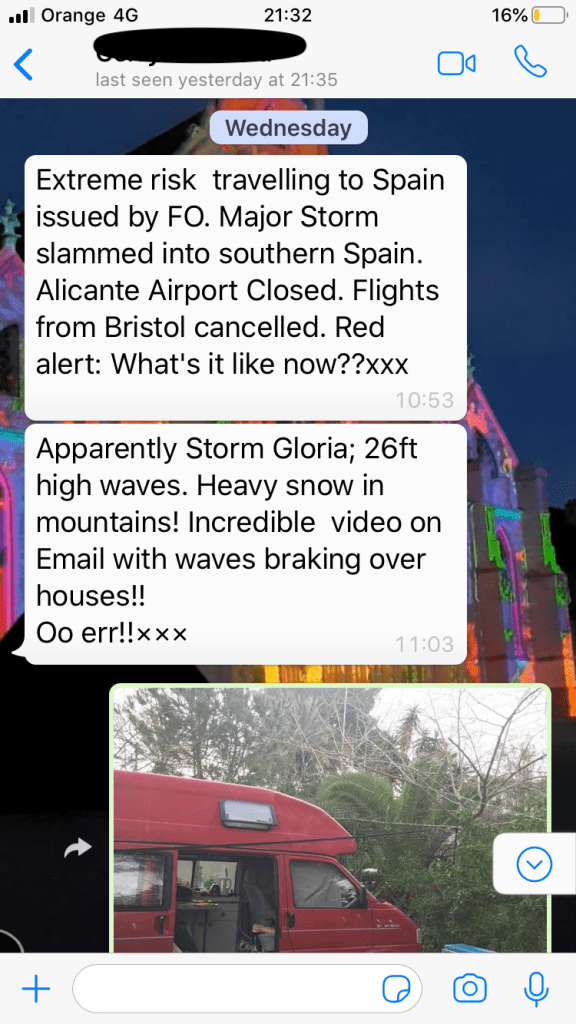
Our visiting friends made contact with us, having seen a travel warning issued by the Foreign Office. We told them it was fine, assuring them that a little storm like that was no barrier to a nice holiday. And so it was that they arrived the following day, Thursday.
In one week our friends had experienced the aftermath of a freak storm; leaden skies, rough seas, challenging temperatures, followed by glorious sunshine and the heat of Spanish winter sun.
A week later, despite feeling, as our friend put it, that, “I may never pass this way again,” he was also insisting he might visit for a month next year.
From the first hello to the last goodbye, we had a ball; but that is a different story.
 The Wandering Wallys