There wasn’t a lot of choice in Morocco for a hungry vegetarian, or so it seemed. Generally we could have a Vegetable Tagine, or nothing, apart that is for a good range of meat and fish dishes, usually served as tagines.
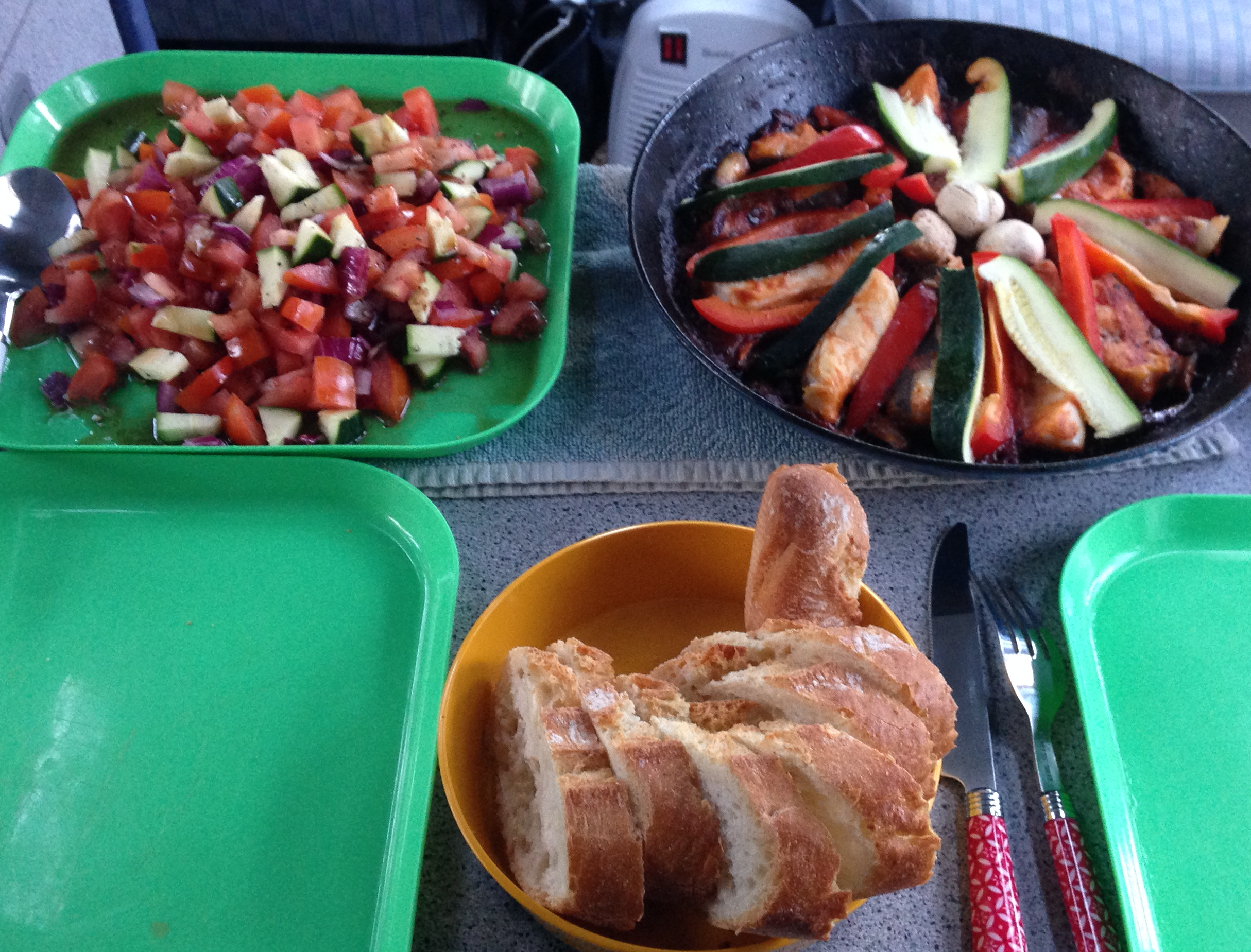
If that sounds a bit dull, it was not, as every Vegetable Tagine was different. The vegetables are those that are available locally on the day and the sauce is what ever the cook decides to use; meat stock, fish stock, vegetable stock, who knows! I expect this is why Wally’s is similar to the ones we ate; but not the same.
Ingredients: For 2 people
*A pint of hot, thin stock, do not worry about the colour, but it must have a good flavour.
*A selection of vegetables cut into 1” by about 5” strips. Choose for colour and flavour. Prepare enough to make one or two layers in your pan, depending on it’s depth and your hunger.
* 2 Tomatoes, part of a red onion, 2ins of cucumber, to make a Moroccan salad.
* A small loaf of bread.
Method
1. Place the vegetable into your cast iron pan so that they radiate from the centre, like the spokes of a wheel, or panels in an umbrella. Arrange the colours so that it looks pretty.
2. Pour over the Stock
3. Put on a lid and simmer until the vegetables are cooked to a meltingly soft state.
4. The stock should go thick and sticky on the bottom. If it gets too thick before the vegetables are done, add a little hot water. If the stock is thin and runny when the vegetables have cooked through, take off the lid and let it simmer away until ready.
While the vegetables are cooking.
*Make your couscous. *Make a Moroccan salad. *Put the bread and knife on a cutting board.
On the day before we left Fes we decided to do a short circular ride-out from Camping International taking in Meknes and a small town called Moulay Idriss. In all, the route was about 120miles in total. The day was bathed in warm sunshine and it was a pleasurable ride. The first 30 miles was on the National Route N6; uninspiring. The road, though well made, was boringly flat, wide and straight for the most part.
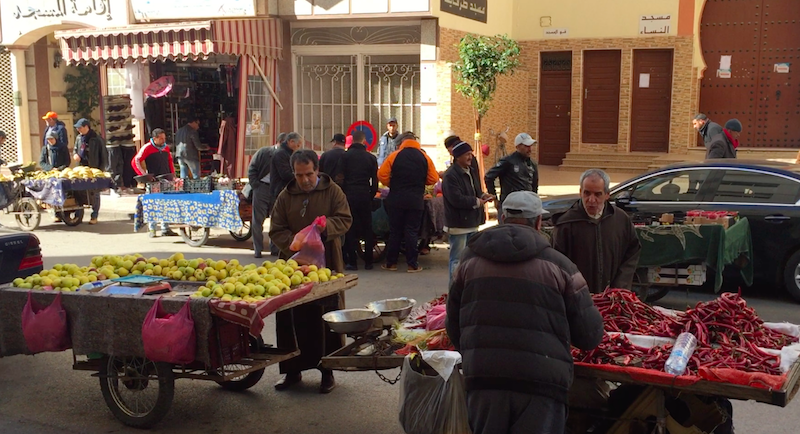
After following a local bus, and absorbing it’s fumes for several miles, we arrived in Meknes. The journey took around an hour. We drifted through the traffic filled streets of this modern city, looking for somewhere to park. After a while we found a vacant car parking space and pulled into it. Immediately we were approached by an official looking, but amicable guy in a fluorescent vest. He indicated that the space we occupied was for cars only, but beckoned to a place on the pavement where we could put the bikes. We still don’t know the official status of these ‘parking attendants’ but they appeared in most of the towns we visited. For the donation of a few Dirhams they not only park you, but will guard the bikes while you are away. Even the helmets were left with the bikes and remained unmolested until our return. Much of the Moroccan economy seems to work this way, begging, though rare, is seen as an acceptable economic activity. It is not uncommon to walk a street and see a series of identically small provision stores virtually side by side.
We had a tea break in a street cafe and considered our options. It had become too hot to contemplate wandering around this modern part of the city, in our biking gear. There was, apparently, an ancient medina, but it was some way off and we had had our fill in Fes. We handed over a few coins to the smiling guardian of parking, mounted our steeds and with the aid of iMaps we were soon out of town.
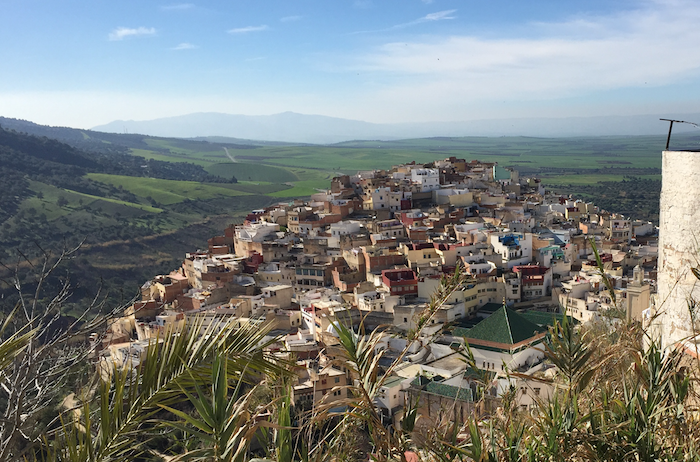
After a short ride we climbed the road winding into the town of Moulay-Idriss. As we approached, we ignored the gesticulating locals and found ourselves a perfect parking spot without any assistance. The day had become warm and sunny, possibly too warm for wearing biking gear, as we wandered into the town. Idriss was typical of the small towns we had encountered, built into the steep terrain with narrow winding streets. We had successfully fended of the attentions of an insistent young man who kept offering to show us the sights and continued to drift around the maze of streets until, after some time, we had to backtrack from the blind alley we had reached. Looking like lost tourists we were easy prey to a pleasant older man who, encouraged by our apparent confusion, latched on to us. He had closed and locked the tiny store he had been supervising and joined us with a smile. The views from the small terraces dotted around the town were spectacular but after 10 mins we were tired and in need of refreshment. The airy town square was encircled by restaurants and shops with a large mosque on one side; a pleasant place to watch the world go by. Eventually we had to return to the campsite in Fes and ready ourselves for decamping and hitting the road; destination Rabat.
Rabat
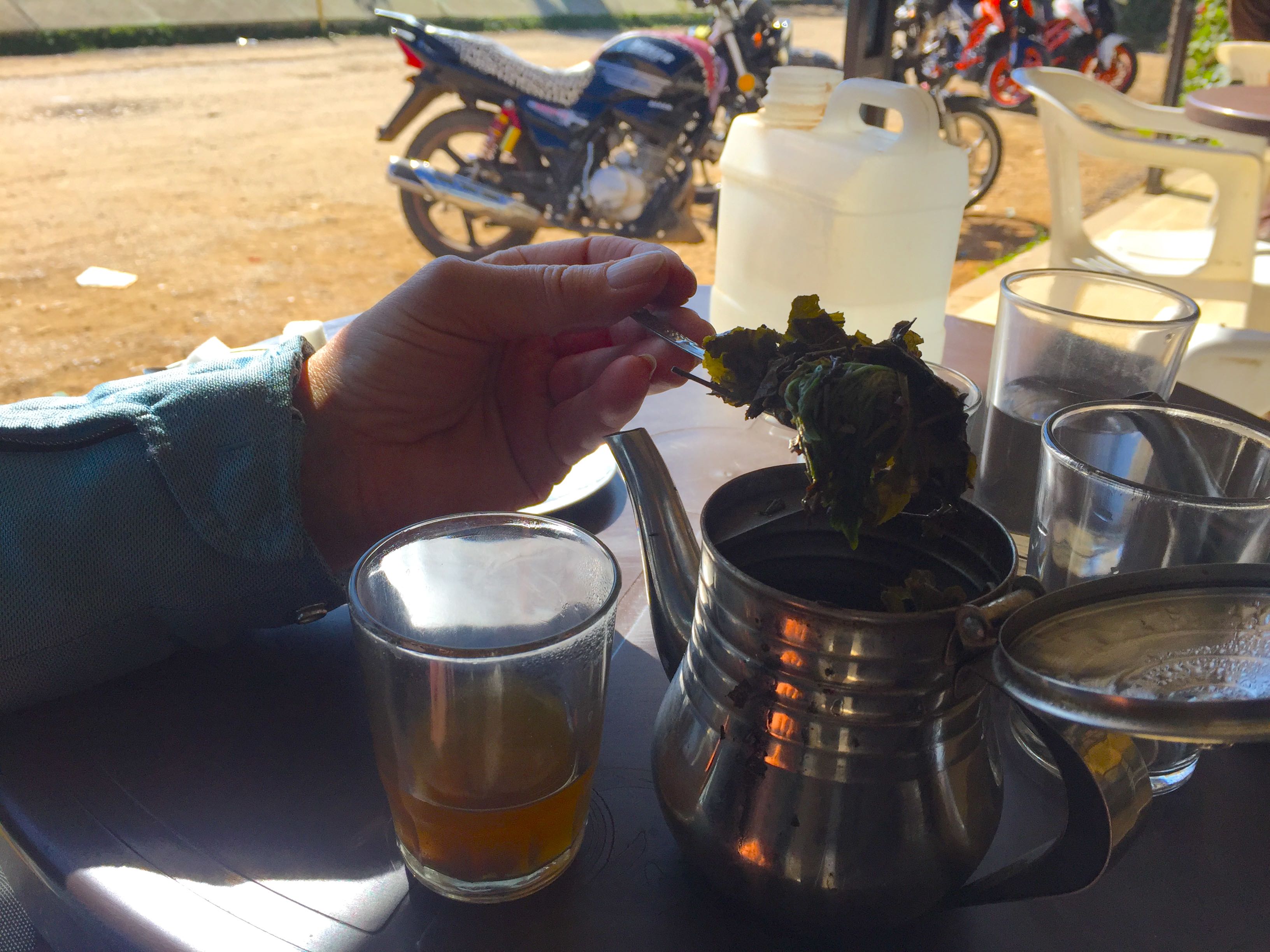
We had decided to avoid the main, and busiest roads whilst traveling in Morocco, and as a result of this policy had found some excellent rural byways. Our route to the Atlantic passed through countryside which consisted of rolling hills of cultivated land. We halted for liquid refreshment at a roadside halt, here we became objects of some curiosity especially, I suspect, when Jen removed her helmet. Although French is the country’s second language, in rural places, Arabic is often the only spoken language. The tea we had ordered, after some confusion, arrived and was a full bodied infusion of various leaves; without milk.
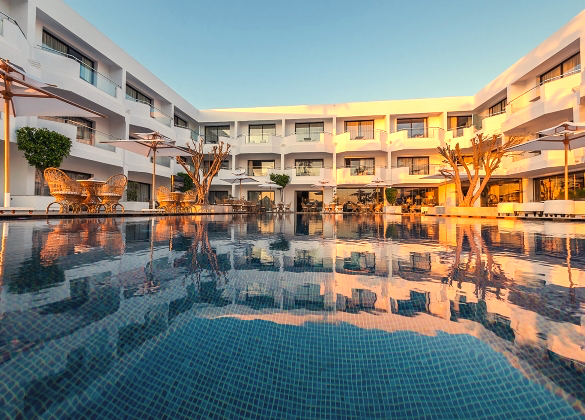
By late afternoon we arrived at the coast, the only campsite we could find was closed; our problems had begun. After being directed to an accommodation; the middle of a roundabout in the middle of nowhere, then riding around looking for an hotel without success, we were rescued by a knight in shining armour, in the unlikely guise of a small delivery truck. The driver, spotting us sitting on a kerbstone, peering into the glowing iphone, commanded we follow him to a ‘good hotel’. A frantic pursuit through the, now darkened, busy streets of Rabat ensued, with us desperately hanging onto the back of a furiously driven truck, finally we halted in front of the opulent sprawl of the Hotel Spa Dawliz. The driver refused, absolutely, to accept any reward. “You are a guest in my country” he proclaimed and handed Jen a chocolate bar. We shook hands and waved furiously as our saviour disappeared. The uniformed guards lifted the barrier and parked us close by, so that they might provide all night security for the bikes. Though thoroughly dishevelled and wearing our grubby bike gear the receptionist was charming, even when she discovered we were ‘walk ins’, without a reservation. The room was huge, the bed was huge and we were hugely knackered. We spread our gear liberally around the room in order to make it more homely and, after a spruce up, went down to the bar for an expensive beer.
The following morning, after an expansive breakfast, we left the hotel and it’s panoramic views of Rabat beyond the adjacent river and turned north away from the city. A perusal of the map had revealed a large,coastal, lagoon about 100 miles to the north of Rabat; we all know that lagoons mean birds, lots and lots of birds. We had decided to use the main autoroute, with it’s tolls, trucks and fast moving traffic. There was a, cold, coastal mist settling on the road and surrounding countryside which rendered the ride uncomfortably unpleasant. After a few hours we were thankful to reach the exit for Moulay Bousselham, the fog had lifted and the day was warm and sunny as we rode the handful of miles to town.
Moulay Bousselham
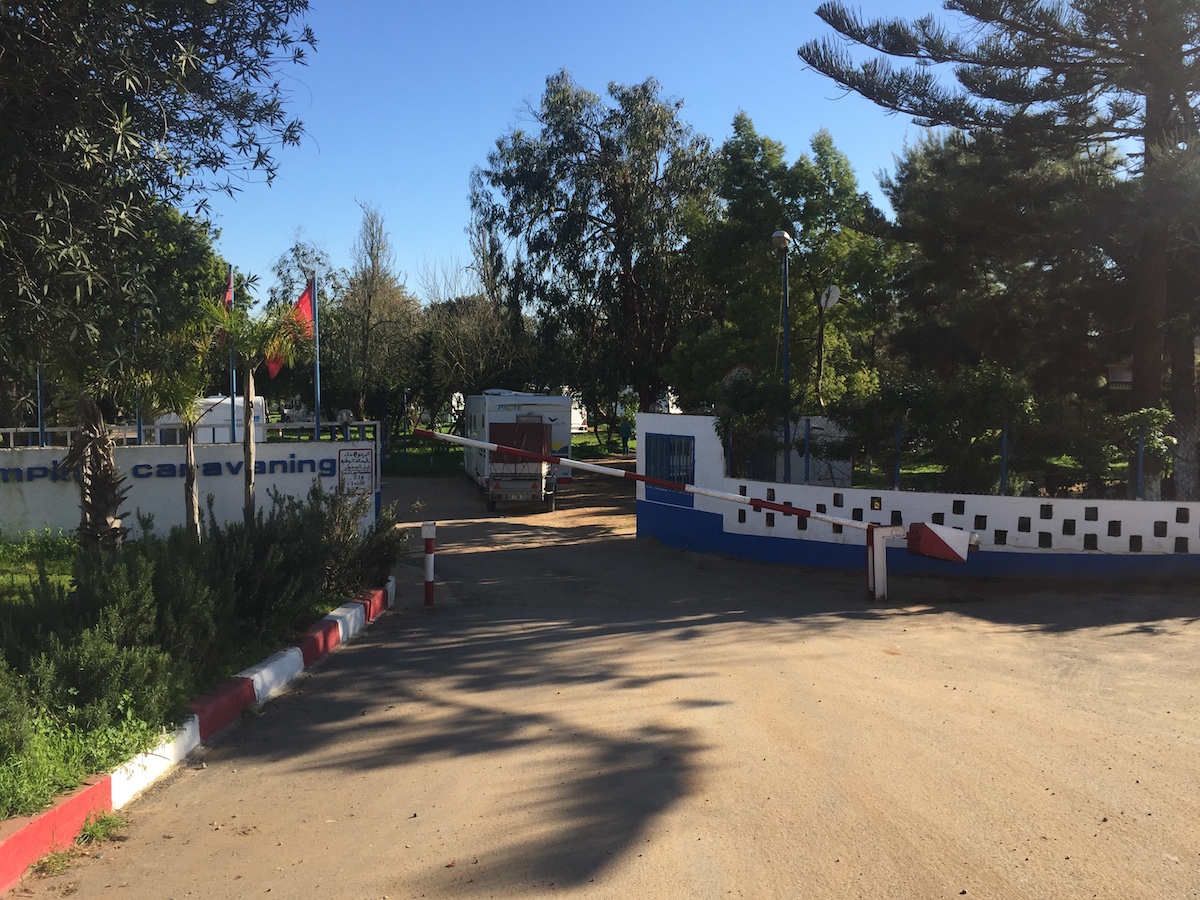
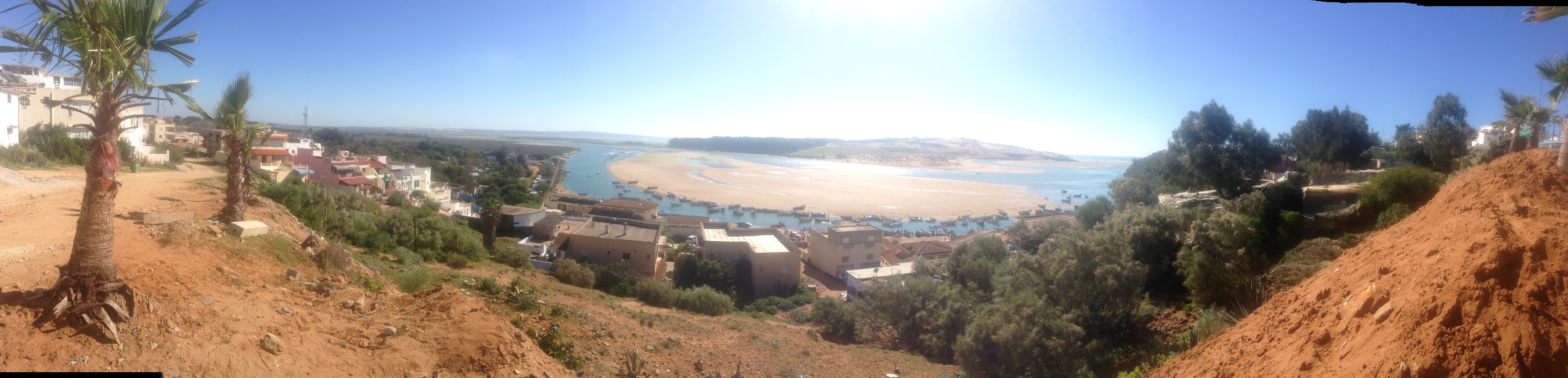
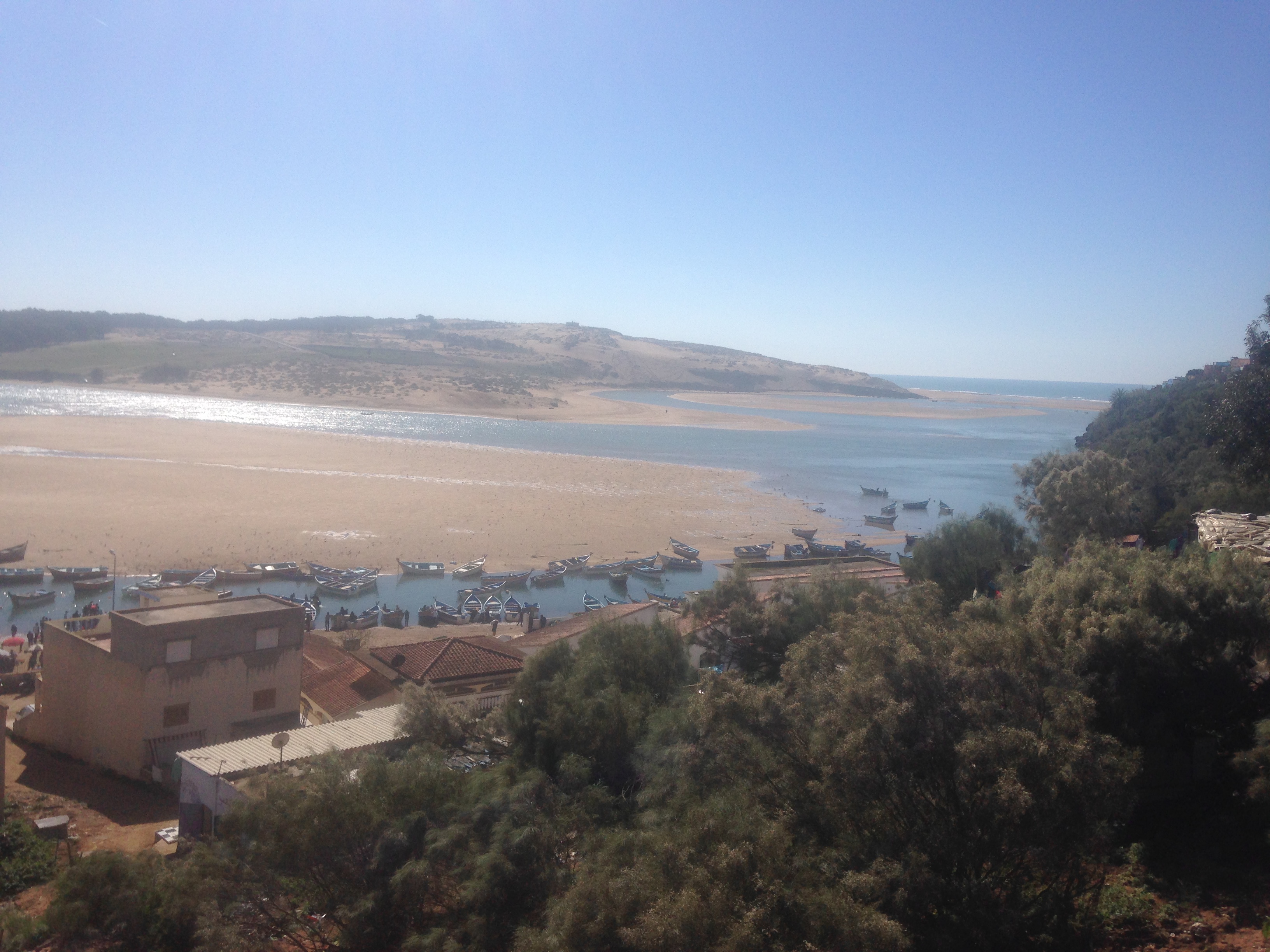
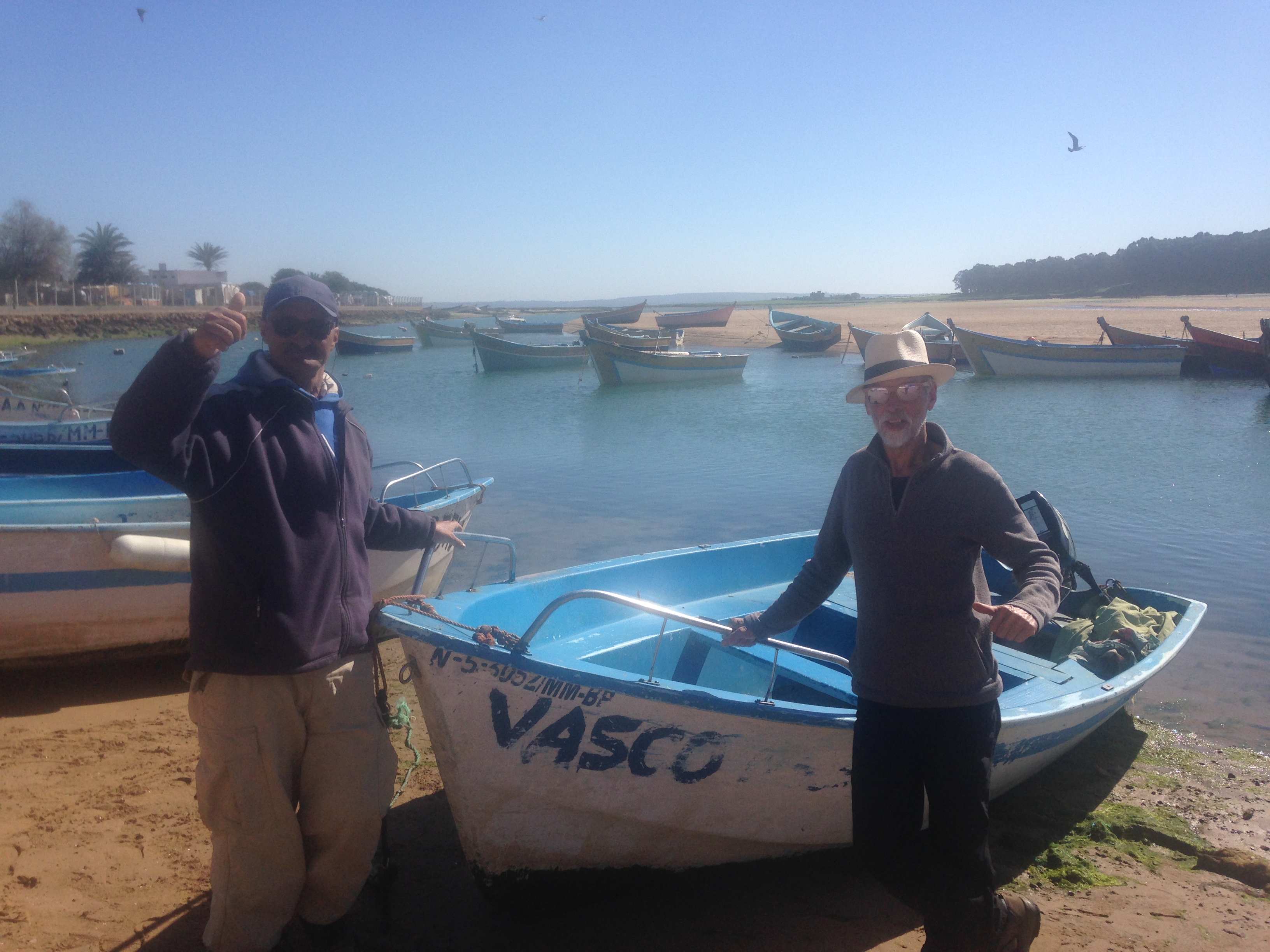
Moulay Boussalem is a small fishing port with a natural, protected haven at the seaward end of the lagoon. There are floating moorings where numerous sturdy looking open boats are stationed. The moorings are shielded by a large sandbar almost separating the lagoon from the Atlantic beyond, with a small natural channel allowing access to the fishing grounds. The boats, with their high, sharp prows, are able to punch their way through the shoreline surf to reach the bounty beyond. From tiny sardines and sprats to large tuna and sharks the variety of the fish landed is vast. What cannot be sold on the beach is carted away on the ubiquitous three wheeled pickup trucks to local markets and beyond. The campsite is adjacent to the beach where the catch is landed, a tranquil field with sheep and horses replacing lawnmowers. The services are a little archaic and the hot water supply intermittent, but the atmosphere is slow paced and relaxing. A small on site restaurant and it’s smiling young manager, supplies mint tea, delicious food and wifi.
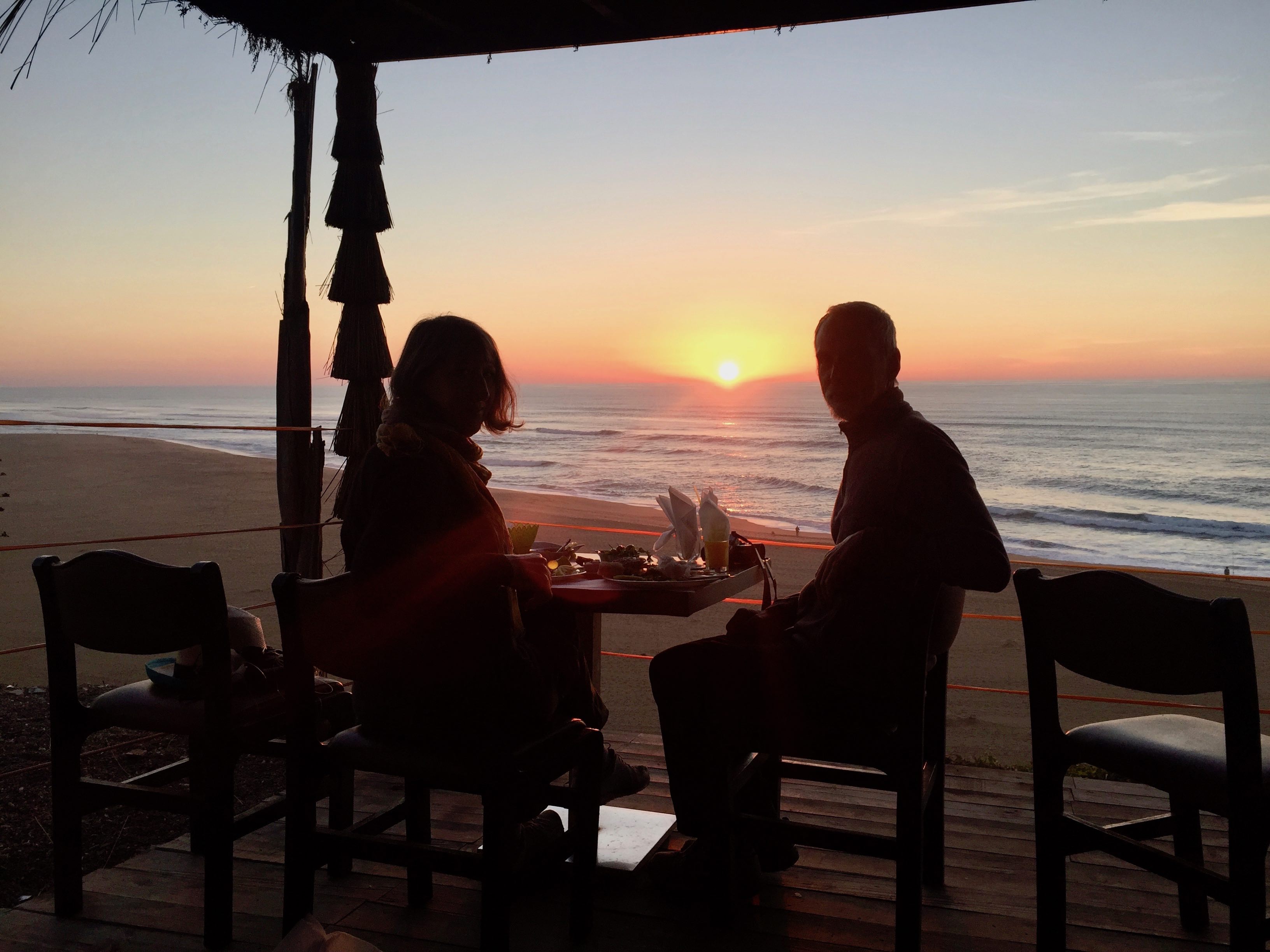
Much of the town sits on the cliffs overlooking the beach and lagoon. Several restaurants supply a variety of food and a small market behind them sells fresh fish, vegetables, fruit and ‘cook while you wait’ street food. We ate at one restaurant, sitting on a rickety wooden terrace, a lookout to the western horizon, the sun was setting with one of those vivid displays that sear the memory, as well as the retina.
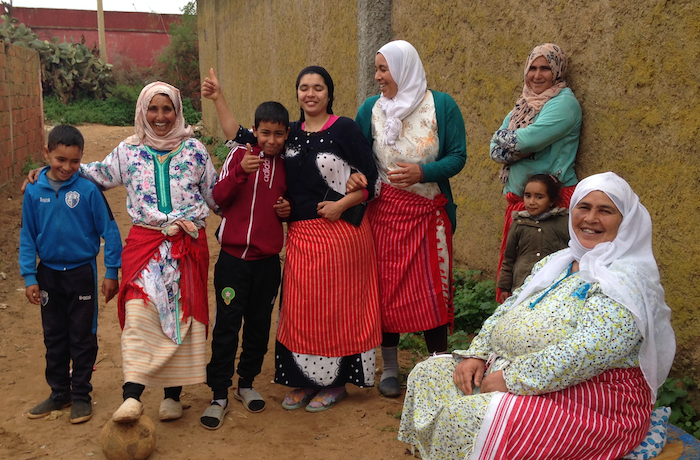
During our stay we met Omar and his extended family, took a trip around the lagoon, shared a fresh fish BBQ with John from the UK and had an in depth political discussion with a ‘comrade’ from the Chinese royal family. These are the magical things that happen when you extend your horizons. At times you will feel unsettled, or anxious ,or even fearful; more often you will feel welcomed, sometimes admittedly for your wealth, but also because people want you to be happy and safe in their country.
We had finally to tear ourselves away from Moulay Bousselham and head for Spain. This would be our last full day in Morocco and rather than trek around the coast we decided to enjoy our last day in the hills. We had booked a B & B in Ksar-es-Seghir 5 minutes from the port. Unfortunately it was very windy which rather spoilt the ride. This was more than compensated for by the comfort afforded by the ‘Villa Marine’, attentive staff, great food and the bikes under lock and key.
Tangier Med
Okay the ferry was more than 5 minutes away; by about two minutes and we did spend much of the day shivering in the windy docks (see our other blog posts). We finally boarded late in the afternoon, after arriving dockside before ten in the morning.
Summary
Would we recommend Morocco? Short answer is ‘without doubt’. You will feel gently hassled on occasion, but many of the people that approach you are just trying to get by. The Moroccans are very tolerant of anyone trying to earn a crust and we tried to be the same. We saw very little begging, we also met many people who were trying to redistribute some of our wealth to their benefit. Try not to loose a sense of proportion or humour. Do not, as I did, get stroppy over being charged the equivalent of less than two quid for two teas! Smile a lot, learn the Arabic for hello, please and thank-you. Sometimes paying a guy, £40 for seven hours of his time, is a small price to pay for better understanding of his culture. The people of Morocco, at least most of the ones we met, are happy, helpful people. Like the good socialist I am, I say ‘share the wealth brothers’.
At the end of this post, why not enjoy the 2 minute video of our boat journey through the lagoon.
Sometimes an insignificant little dot on the map, conveniently positioned for a stop over during a journey, reveals itself as a magical destination. And so it was with little Moulay Bousselham.
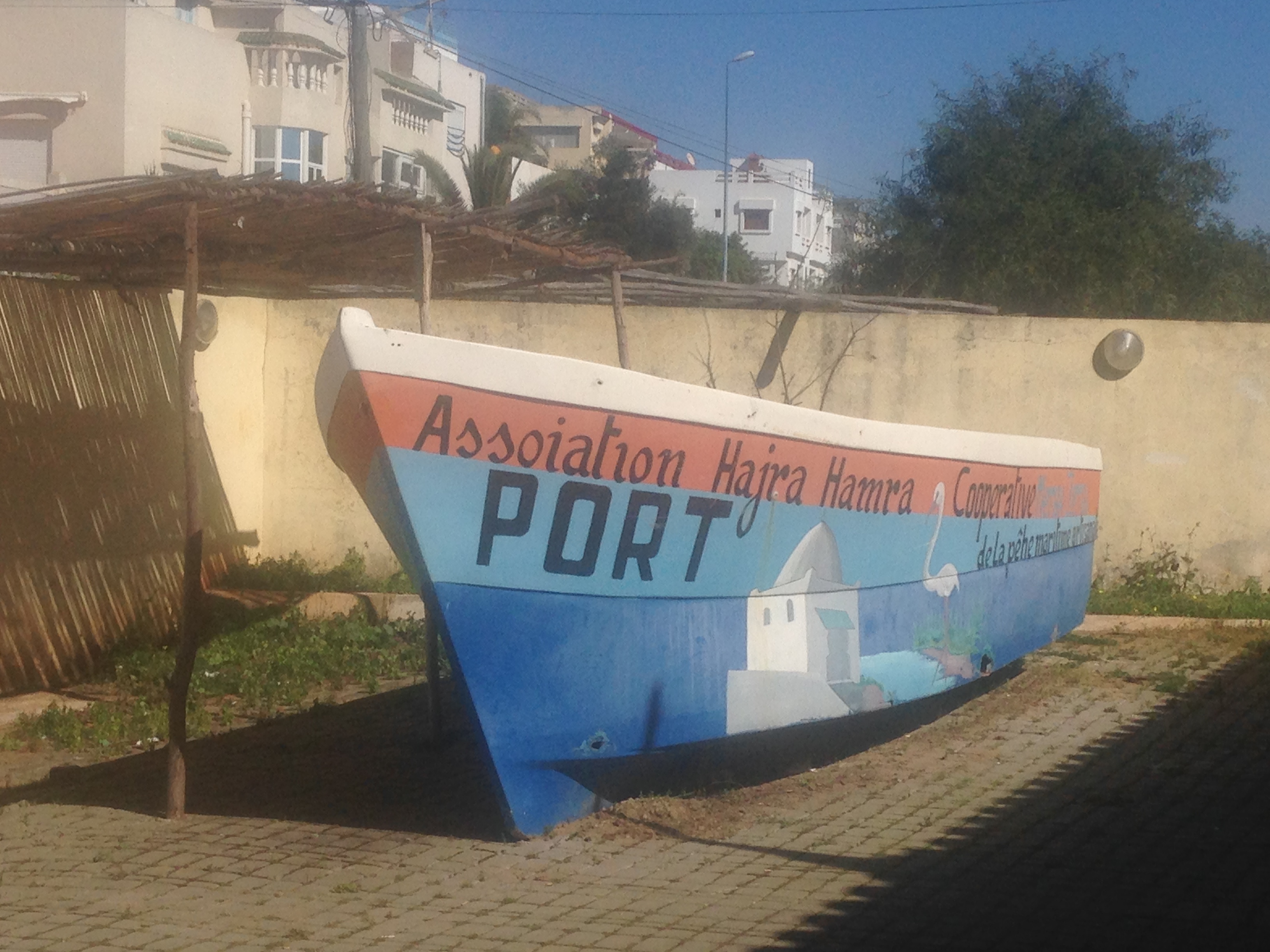
A display boat outside the fish auction at Moulay Bousselham.
The campsite is verdant and huge. Motorhomes and tents park where they want, in a random muddle. Electricity points are everywhere and none of them look as if they should work, but they do. The service water is cold, except in the showers where hot water prevails!
As if all this was not a miracle in a country where campsites are usually closed, closed down, or so well hidden they might as well be either of the former, this site overlooks a stupendous marine view; a staggeringly beautiful and vibrant wonder. Our road map had indicated, by dint of a tiny blue splodge, that there was a largish body of water here, slightly set back from the sea; probably a lagoon. In terms of wildlife, a lagoon is always worth a look.
The moment our little tent was up and filled with our bedding, we were off. The sight that greeted us as we strolled the one minute from our tent to the shore, was of sparkling blue and and glistening damp, golden sand, with red parasols dotted about. Yellow striped boats were coming and going and some had been hauled safely onto the shore. A large gang of rowdy gulls were wheeling about, crazily screaming at each other and fighting any bird that had so much as a scrap of food. A great number of people had gathered under the parasols, some were stooped and deep in conversation, others were milling about. Everyone was here for one purpose, the buying and selling of the freshly landed fish. Boxes and buckets of fish arrived with every little boat that made it’s way into this stunning safe haven. The surf, about a convoluted, sand-barred mile away, was clearly in an aggressive mood and yet these tiny boats are perfectly able to cope. They are a design classic. Their high, curved bows punch their way through the breakers as they leave the safety of the lagoon and then ride the waves, pell-mell, towards the strait that joins the two bodies of water. There is a rip area that appears from time to time; lucky the crew that catches the tide at this time, as the waves part allowing an easy channel from the breakpoint to the lagoon entrance. The large outboard engines easily power the little craft up onto the plane and they zip over the water as if weightless. I’ve never wanted a boat more then I want one of these.
A diverse range of fish was landed. We saw sharks; four feet long, tiny pilchards and all sizes in between. Shell fish were also present in high numbers.
A couple of sharks, to be purchased right here on the beach by any passer by, or taken to the fish auction behind the beach.
We needed to get out on the water, and with no boat, we had no choice but to hire.
The local, surf riding, wave punching, sea going craft. All you need add is an outboard and courage.
Having pottered around the little town, where a market sold everything you could possibly need; please note, I did not say want. As in Fes there were eels for sale, seemingly a commonly available food source . The sight of eels on sale surprised me as these European Eels (Anguilla Anguilla) are in massive decline in the UK, becoming a red list species. They were sold for eating, both as glass eels and chopped up adults. We sauntered back towards our campsite and were accosted by a chap who was keen for us to take a boat ride around the lagoon to see the flamingos. Sounded good to us and a couple of days later we joined our guide for a nautical treat.
Our guide to the wildlife and work life on the lagoon.
We set off in late afternoon in order to make the most of the tide, and I suspect, to allow some of the frenetic water traffic to subside. Bird life was evident immediately, Sandwich Terns and Mediterranean Gulls were present in large numbers on the sandbars, along with the usual range of other gulls.
Mainly Spoonbills in this fuzzy shot.
It is a big lagoon, with almost every part of the terra semi-firma worked by people. A scene reminiscent of old travel accounts unfolded as we pushed deeper into the furthest recesses. Territories were haphazardly observed by the inhabitant wildlife, Spoonbills worked alongside Little and Great Egrets and Heron, with Cormorants holding their own court in another area. Flamingos shimmered, pom-pom like, above ground level in the miraged distance. People had their work zones, where whimbrel, curlew, Redlegs and Turnstones padded about amongst them, wary, but keenly sharing the hunting grounds.
A few Little and Great Egrets
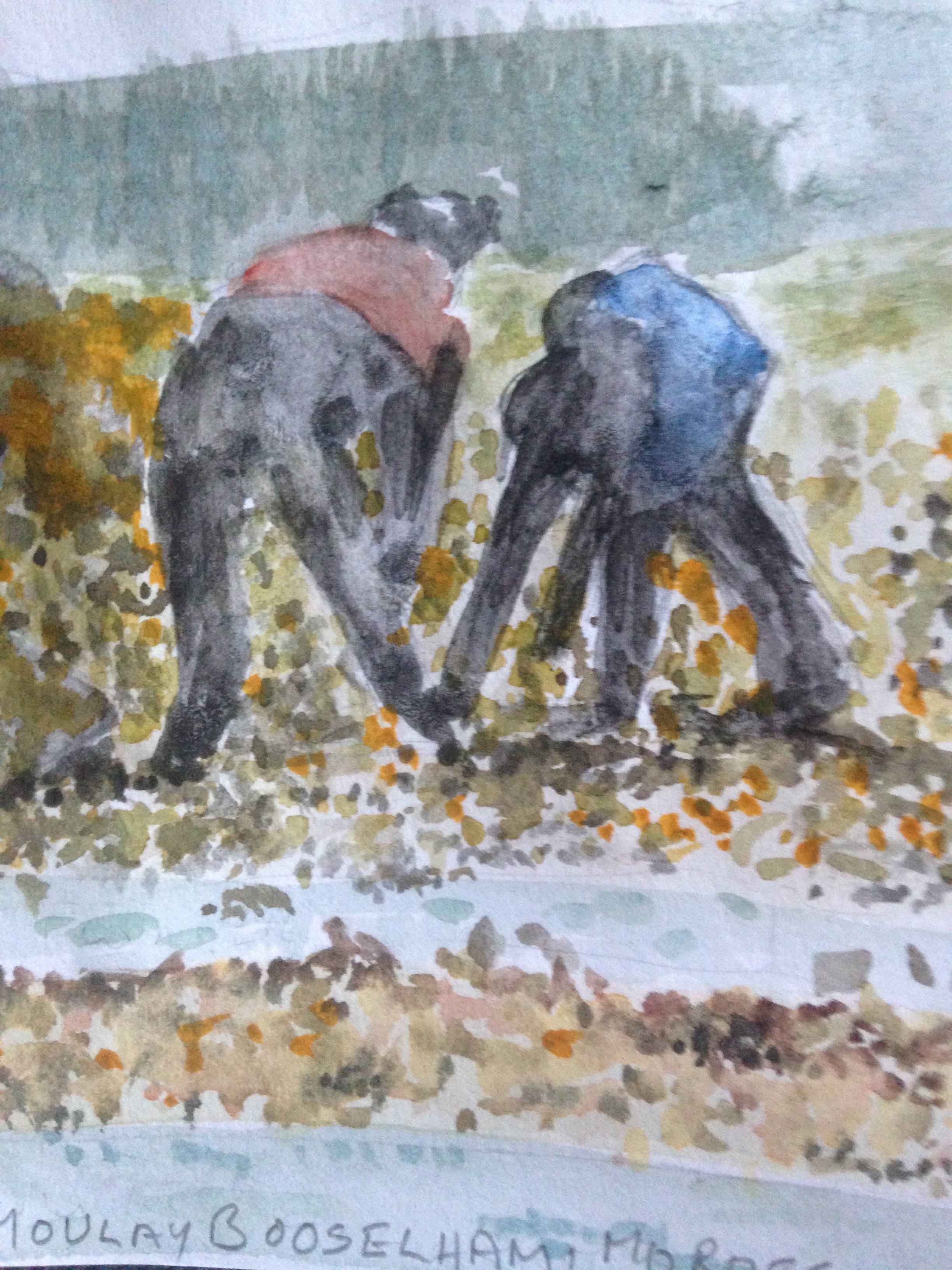
The people bent to their work, which was varied according to their prey. All were muddy and wet and pursuing their tasks relentlessly. Drag nets and eel nets were in use in the water and on the land, as were draw hoes, mattocks, forks and bare hands. I could not grasp the sheer scale of the plundering that must go on here, by both the wildlife and the people. And yet this shimmering, monochrome landscape appears to support both colonies. It doe not seem possible.
People digging for bait
Overhead Golden Plover repeated flashed silver then dark as they careened about the sky in a roller coaster gangs’ day out. An Osprey tantalised us with a distant flypast. Then a Hen harrier, and a Marsh Harrier followed by that Osprey agin, this time languorously wafting low and slow over us, making sure we could not miss a single detail; this was not a moment for a pair of binoculars, or breathing. Time stood still.
At about £30 for the two of us, the boat trip was expensive for a Moroccan excursion, but well worth it. The journey lasted a couple of hours and our guide offered us binoculars and he had a couple of English language guide books, but no Collins Guide. If we pass this way again, I’ll gift them a few Collins Guides, as the boat handlers are all keen birders, spending moments with their binoculars up to their eyes, enjoying, what to them is an everyday experience.
Shell fish pickers.
In terms of wildlife, we did not see anything that was new to us. What we did see was something so achingly gorgeous, as a visual spectacle, and raw in witness, to the extraordinary lengths people will go to in order to live decent lives: and that has to be worth £15 of the boundless wealth of any Northern European.
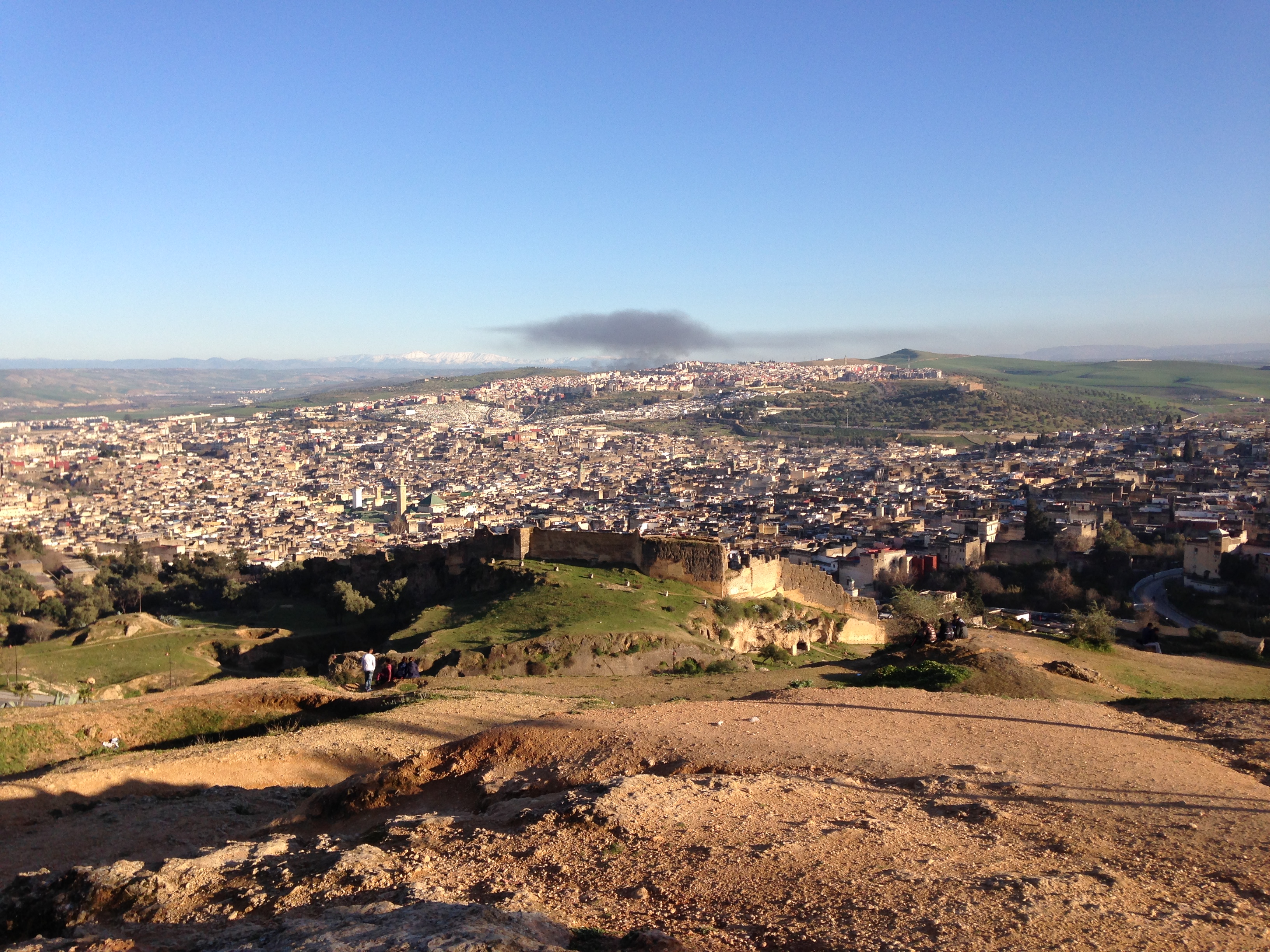
From the high ground to the north of the medina the three cities of Fes can be seen. The University area with its’ rash of cranes and building projects, modern football stadium and new, free access, teaching hospital. The ultra modern business zone, a glass and concrete crenelated skyline. Finally the old city, with it’s Medina, like a dull pimple, barely rising from the sprawling town, looking like the contents of an enormous bag of so many white and earthy coloured Lego bricks dropped onto the valley floor by a careless child. The boundaries between dwellings are indistinct; the narrow passages separating them indiscernible from this distance.
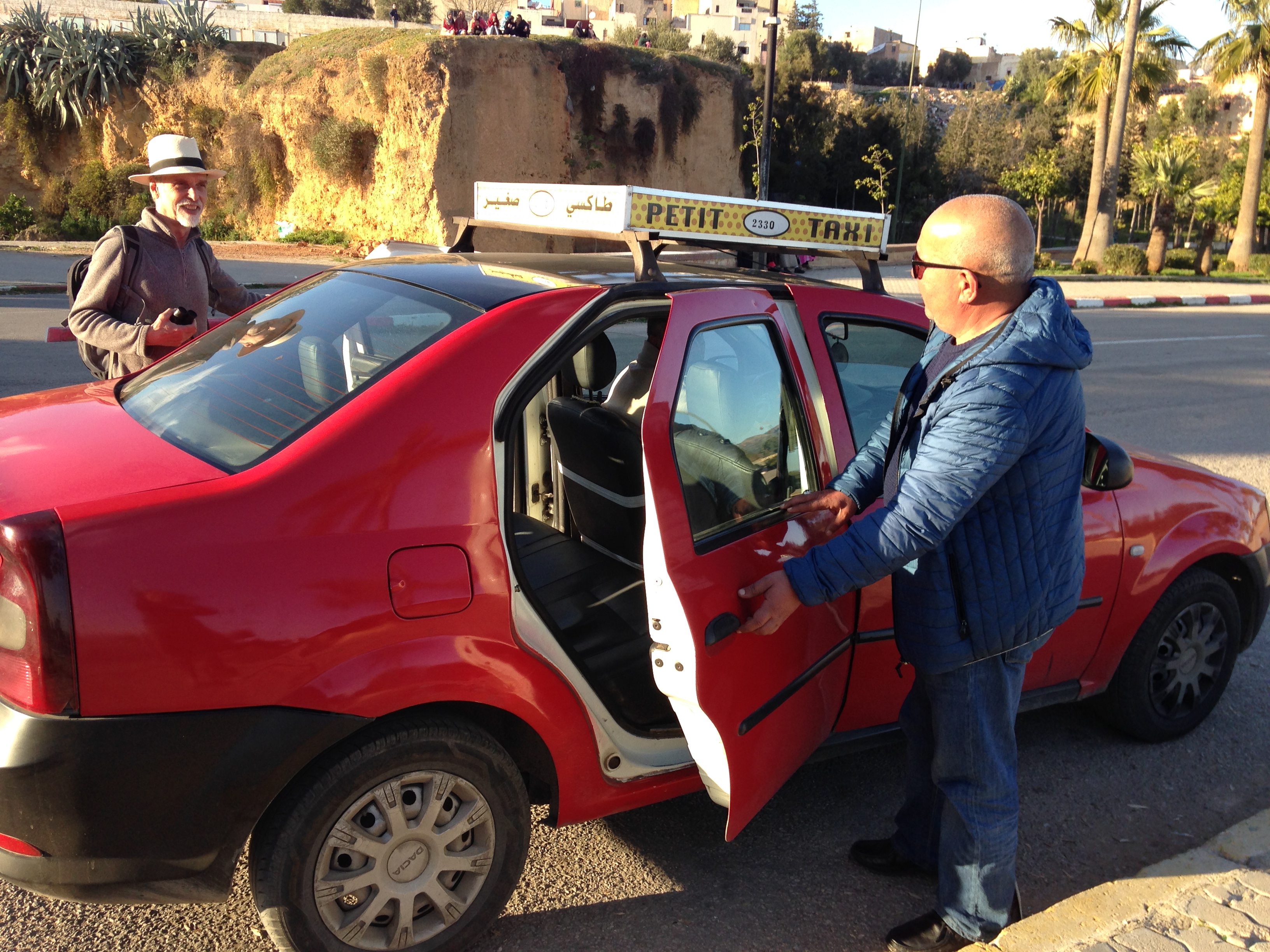
Every city has it’s own colour for it’s Petite Taxis: todays’ taxi is red, so we must be in FES.
As with most cities the dominant sound is that of the traffic, a constant drone punctuated by the horns of ‘Petite Taxis’, scooters and 3 wheel delivery pick-ups, each demanding right of passage through the tight streets surrounding the medina. Several times during the day an indistinct hum may be heard a sound that slowly builds until the chants of individual performers can be divined. Each voice, distorted by crude electronics, and by ageing vocal powers, joins a cacophony of chanting. These 5 or 10 second wailing phrases, each snapped at the end, are followed shortly after, by the next mournful cry. The effect, heard from a distance, is quite powerful, almost threatening, it commands your attention and draws you to it.
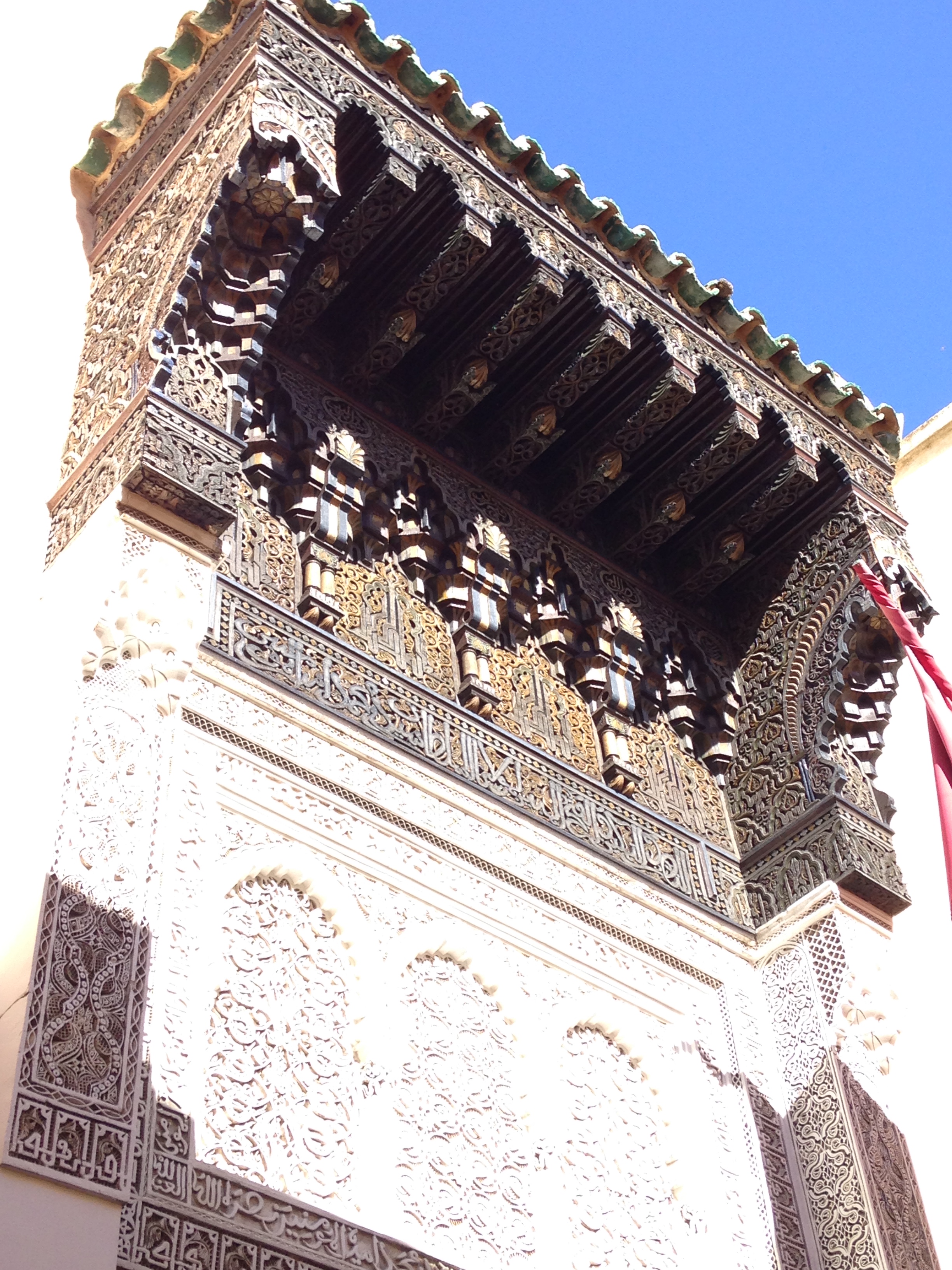
This monumental gate, built in AD 1204, leads into Al Andalus Mosque, built in AD859.
Like other Moroccan cities, Fes has a heart bounded by gates and walls, the limits of the Medina, that powered vehicles do not transgress.
A gateway into the Medina. No powered vehicles beyond this point.
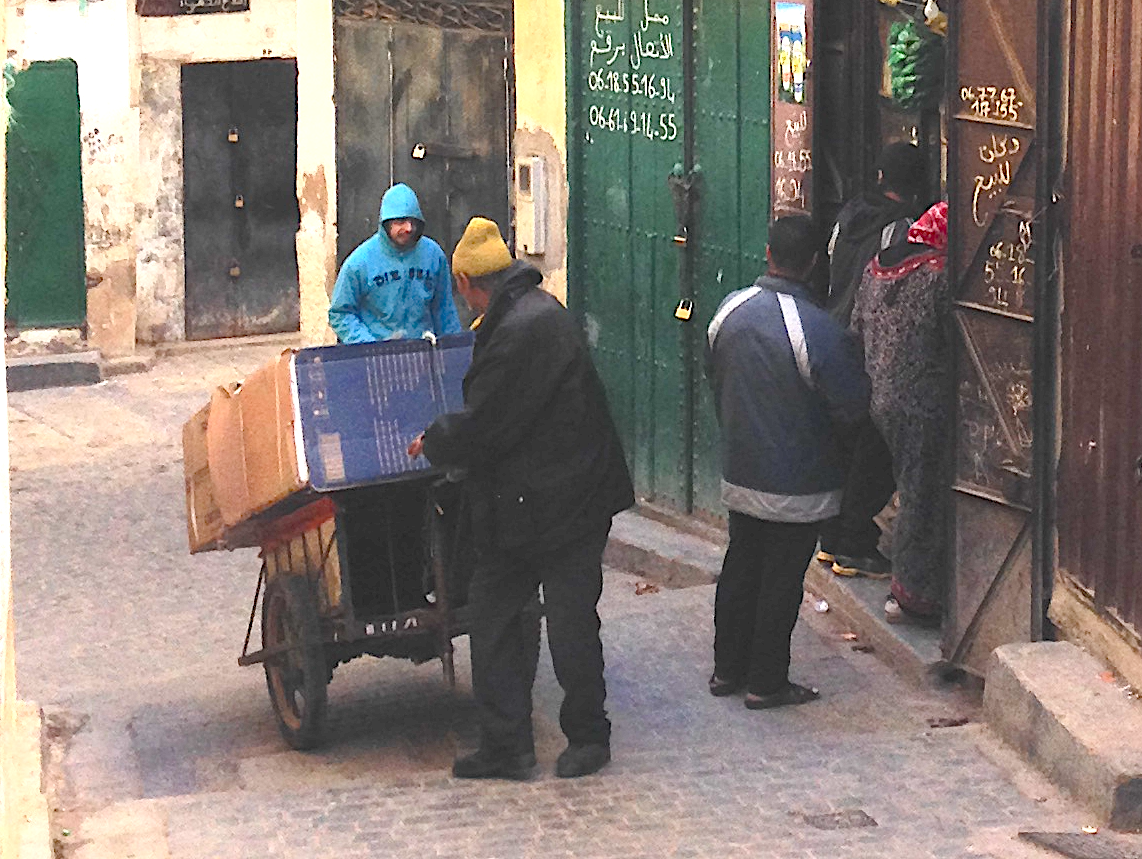
Handcarts and donkeys are the trucks of the Medina, steadfastly moving through the tightly crowded alleyways, stoically unfazed by the oppressive crush that is their daily lot.
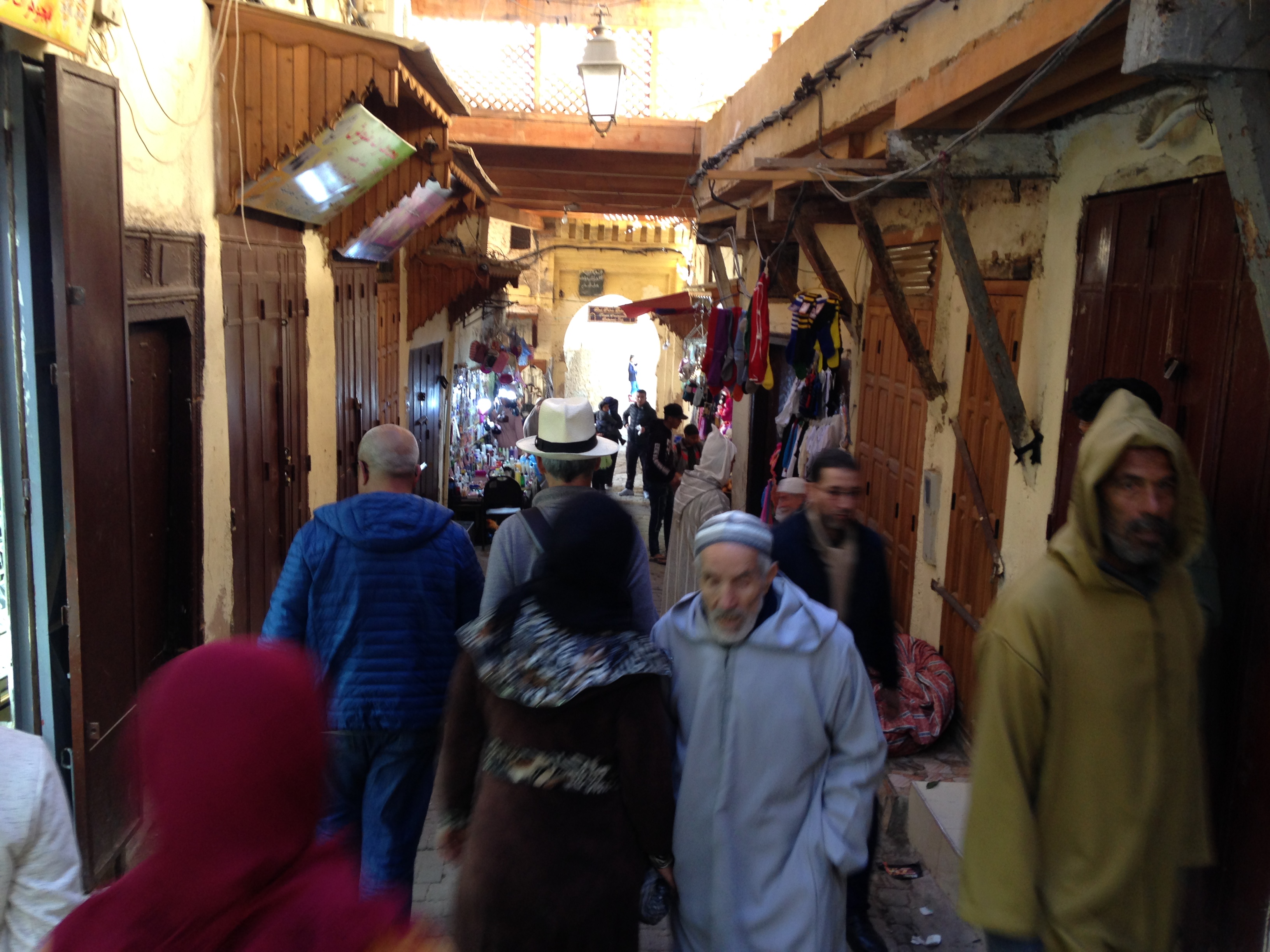
This is the domain of the artisan and the retailer. Nobody is still. Any person entering the ancient Medina is preordained to make, sell or buy something. If you are not there for one of these functions, then you will be out of place. No matter why any person thinks they are coming to the Medina, if they are not earning their living there, then they will be there to spend their money.
Every nook and cranny, within the Medina, uninvolved in direct selling, is taken by people who are turning raw materials into sellable items. There are chickens kept on the upper floors of an old ‘inn’, which was used in ancient times by camel caravans. Originally the downstairs was used to stable the camels and is now used for the sale of animal feed, much of which is bought by the chicken ‘farmers’ and the donkey truckers. The upstairs bedrooms, once occupied by the camel drivers, is where the chickens now roost. They are sold in the Medina as live meat, once their egg production has dropped off.
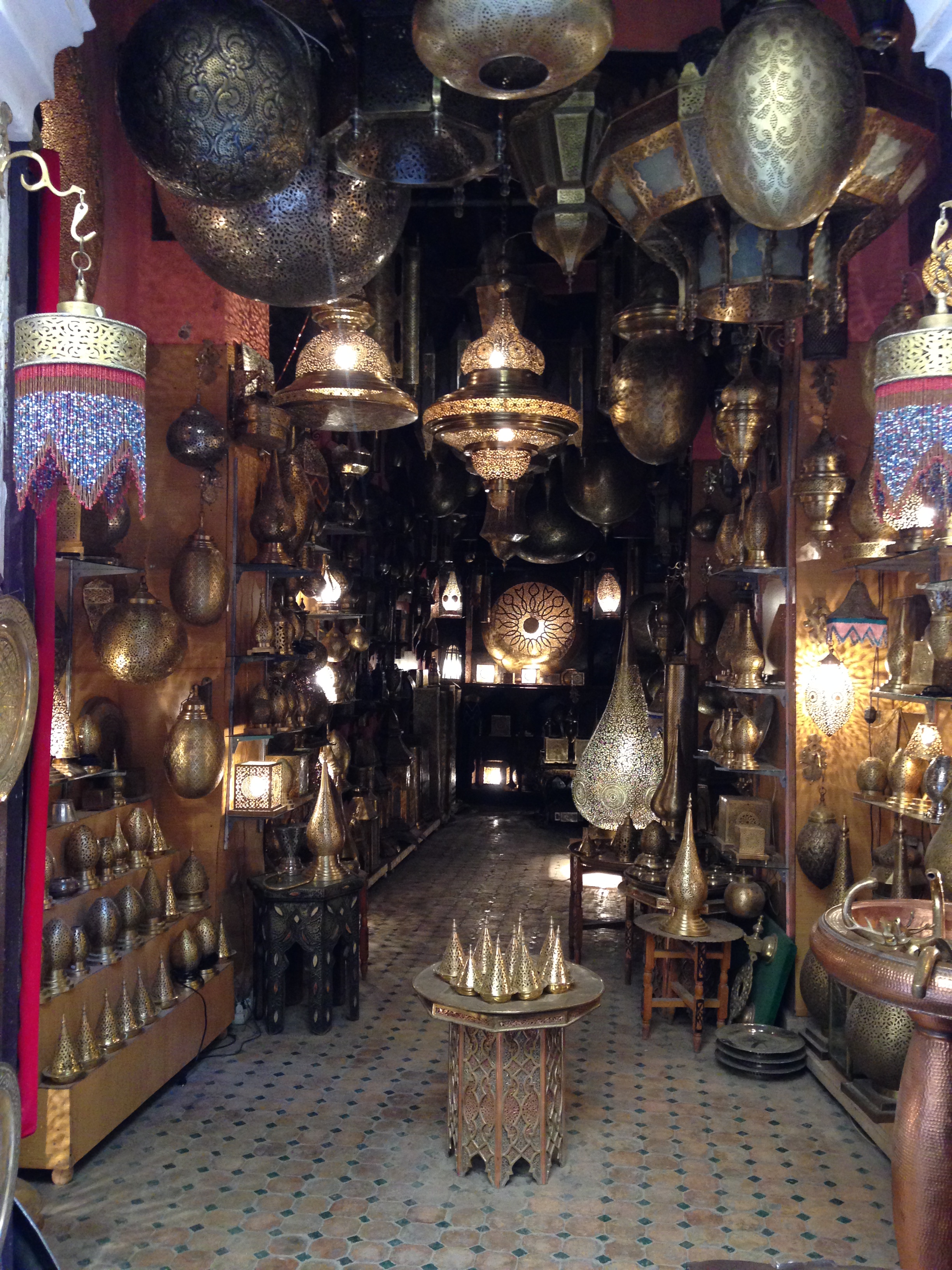
The finished brass lamps.
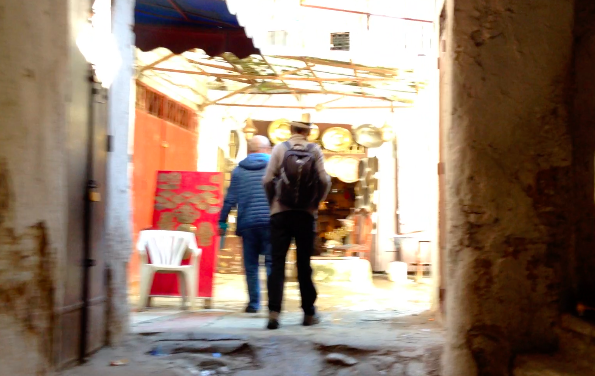
Another ‘inn’ is now used by artisans as light and sunny workshops, where the ubiquitous pierced brass lamps were being made in every shape and size by men sitting on the floor and using the simplest of hand tools. These inns are accessed through uncompromising narrow arches in otherwise blank walls. To poke your head through one of these entrances takes a certain amount of nerve; it feels like a transgression into a private area.
Passing from the alleyways into an ‘inn’ where peirced brassware was being made.
Once through the portal, a large semi-circular courtyard fans out, open to the sky, enclosed by a curved two story wreck of a building. There were a good number of these old ‘inns’ in the Medina and it was not difficult to imagine a long, heavily laden caravan of camels forcing its way between the dark, restrictive, walls to reach their stabling. Here the camels could rest and feed, whilst their drivers haggled for the best prices for the goods they had brought to the market.
All life can be found beyond the doors in the walls.
In the Medina every wall presented doors and behind every door, you could bet that there was a surprise in store. This miserable, dirty, crowded, shadowy place is, in fact, a sham. There is light to be found but, you need to know where to look for it; in the homes, ‘inns’ and mosques. The light is reserved for ordinary lives lived behind the doors that punctuate the dun coloured walls. People toil in the relative cool of the Medinas’ lanes, with the buying, selling and making all taking place in the intensely cool shade. People live and pray in the intense glare of sun light, which pours in through once open and now glazed roofs,.
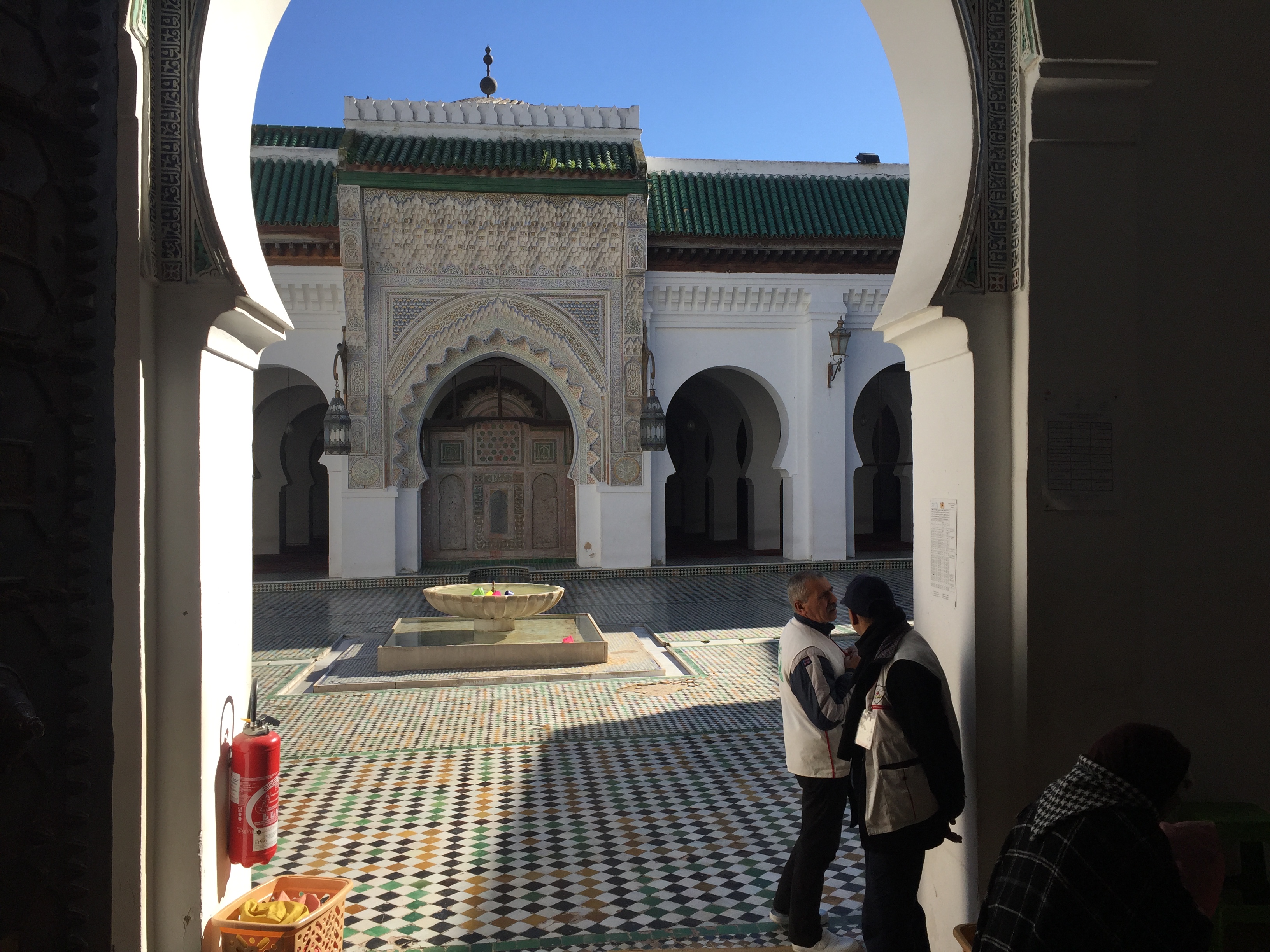
Looking through the open doors of a Mosque in the Medina. A haven of spotless space and light.
Fes is three cities in one and the Medina is two cities in one. Having visited both, Chefchaouen and Fes, the I could reflect on the age difference between the two cities, which is nearly 700 years, with Fes being the oldest. I cannot say that I liked ancient, darkly tanned, weather beaten Fes, shored up by it’s many wooden crutches with walls spragged by stout timbers.
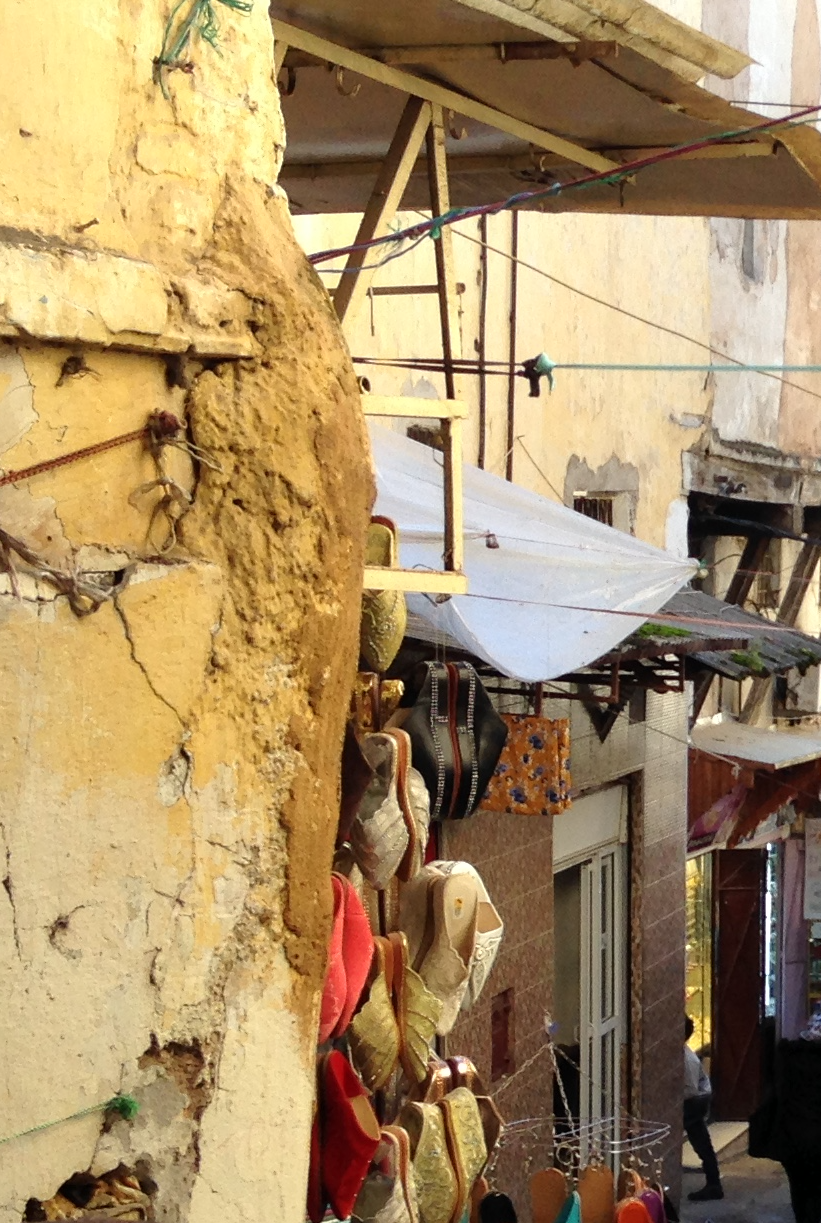
No matter where you look in the Medina, buildings are propped.
I can say it was interesting and a world apart from the young, bright and undeniably pretty Chefchaouen, with it’s colourful buildings and much wider lanes and it’s youthful ability to stand up unaided.
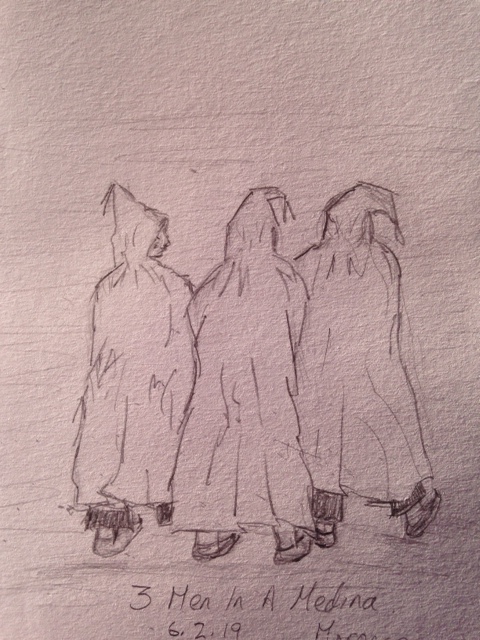
Traditional dress, worn by men, over their clothes. Underneath, often a smart suit and tie, other times … it was hard to tell; maybe nothing underneath.
Don’t miss the 3 and 2 minute videos towards the end of this page.
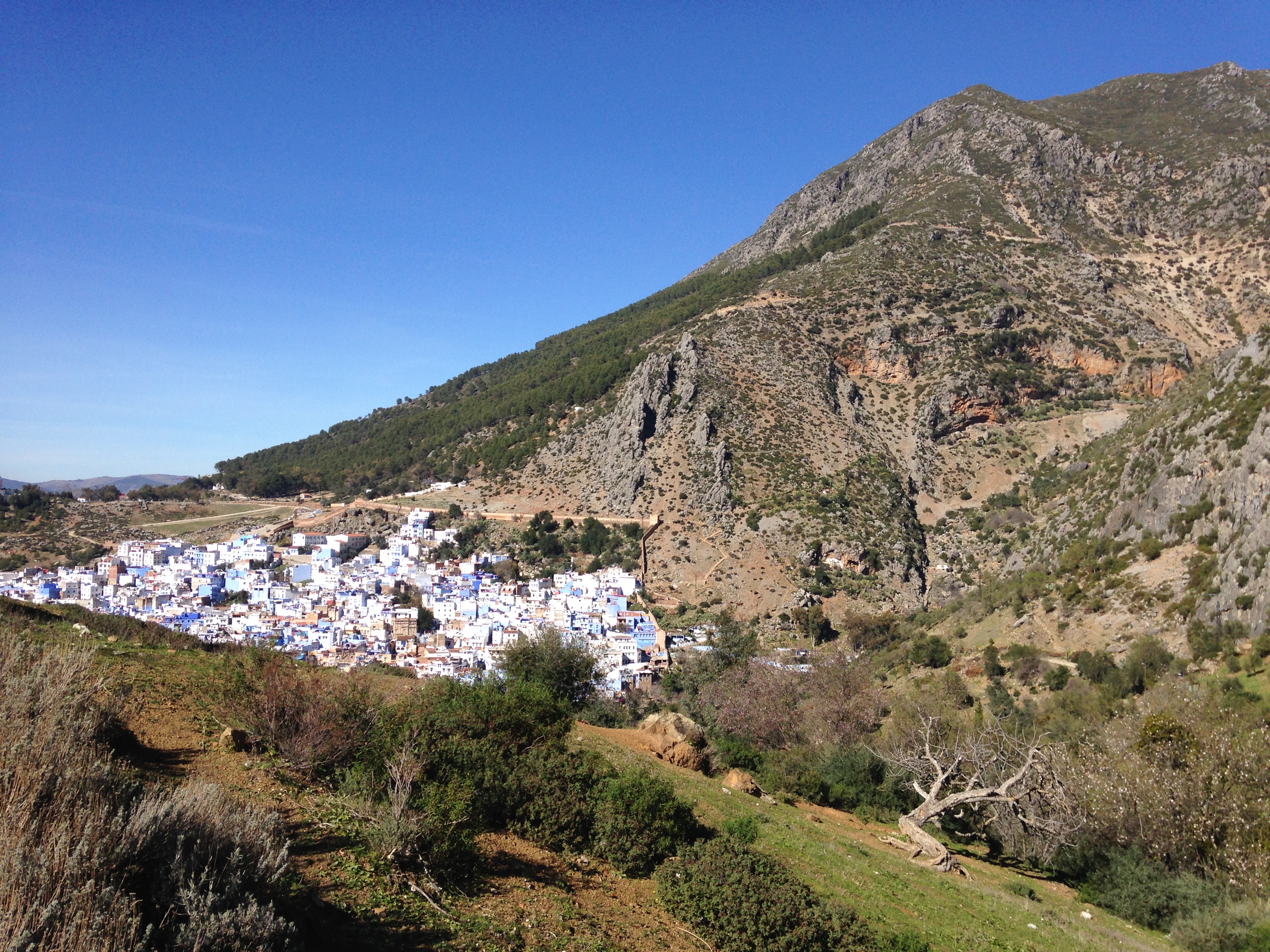
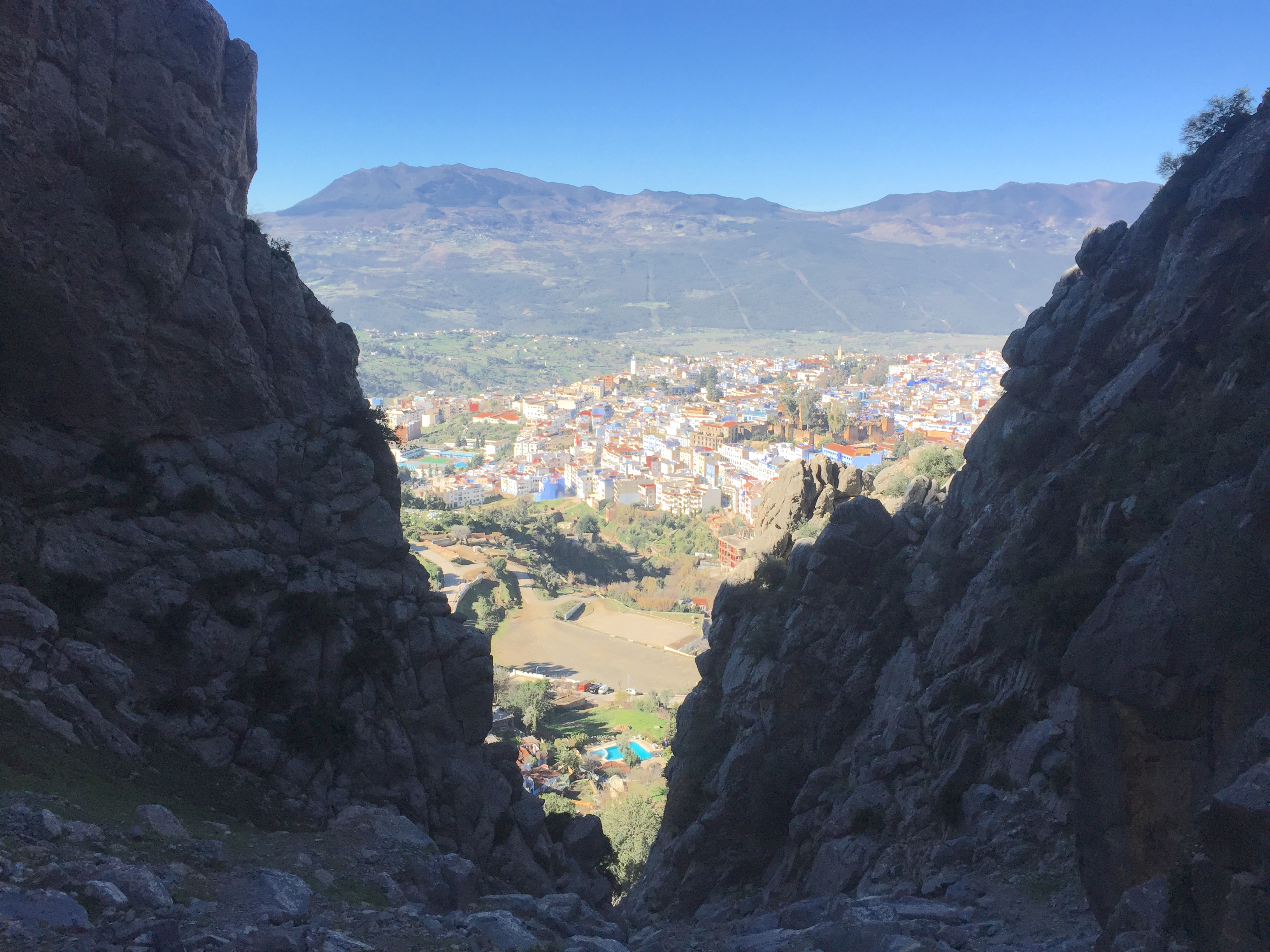
A nestling Chefchaouen with it’s city walls clinging to the Rift Mountainside.
Morocco is different to England. For some visitors, it can feel alien and intimidating, to others it’s more like a warm and welcoming bath. Often, the difference is down to your first real stop over. With any new country, you’ll want to ease yourself in gently and walk away with happy memories and Chefchaouen, the Blue City, lets you do this in spades.
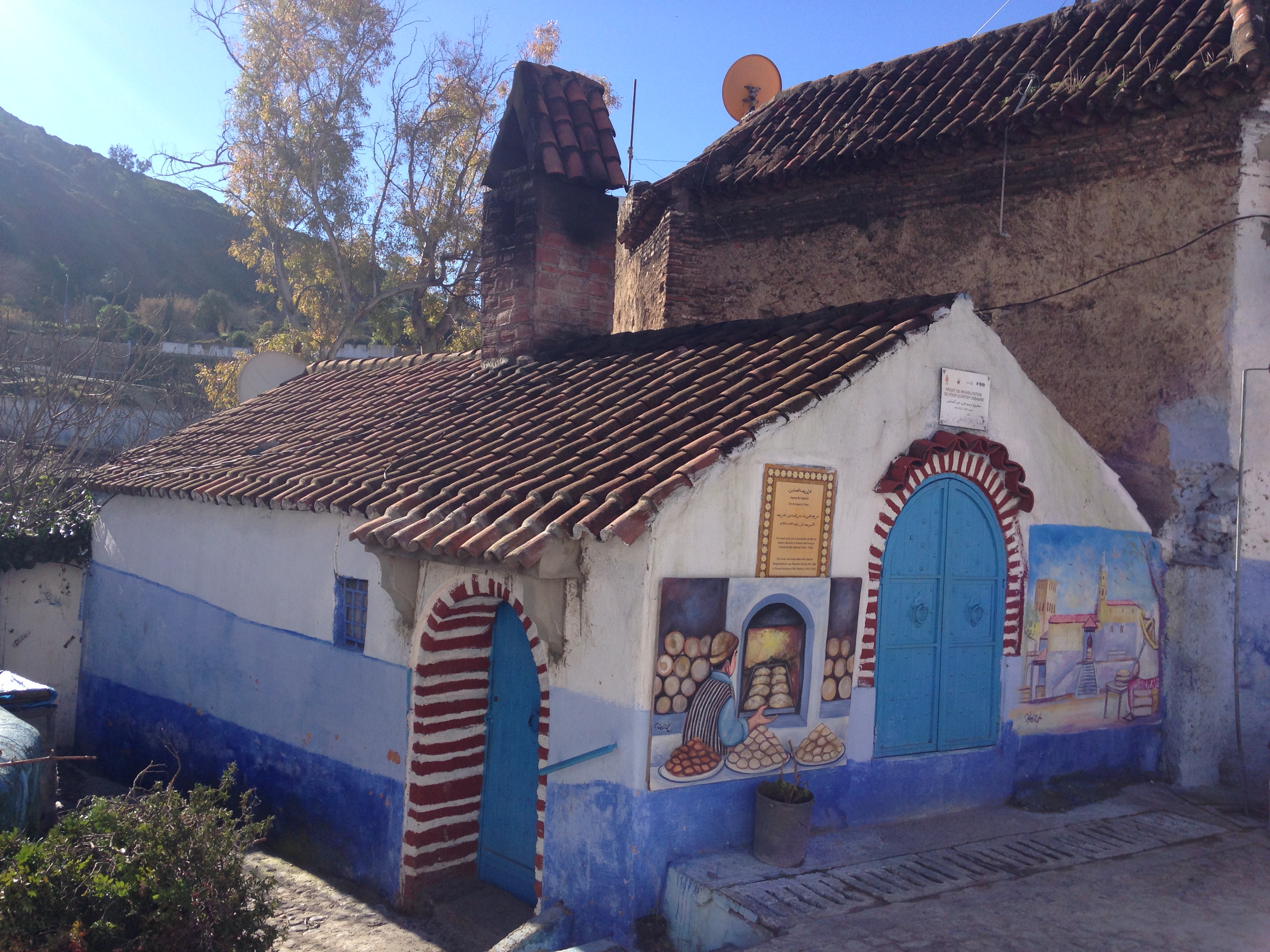
Our Local Bakery
As the town is in the north of the country, a shortish road trip from the ferry port of Tangier Med, it made sense for us to try it as our first encounter with an African way of life.
Swimming In A City Of Blue
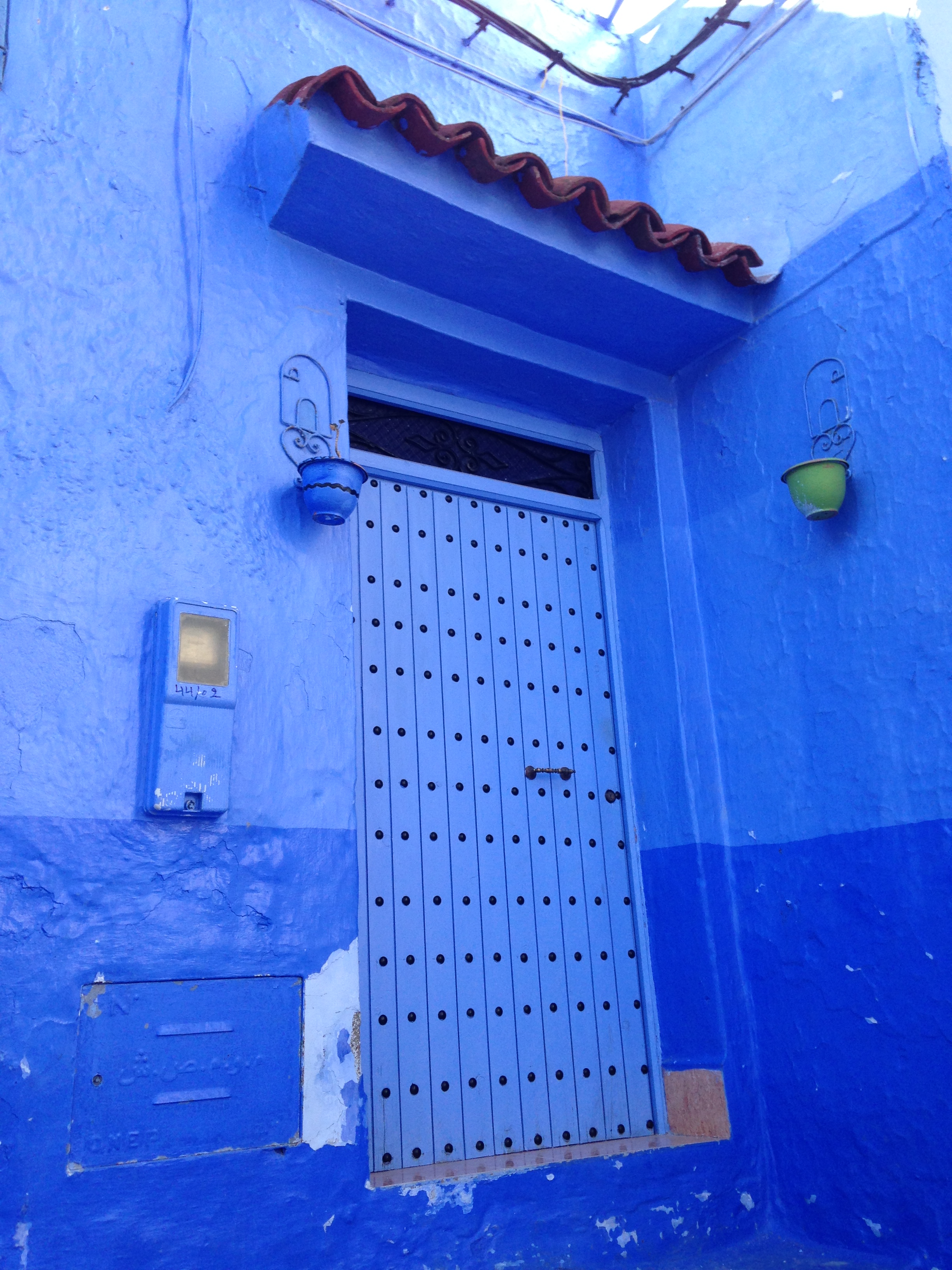
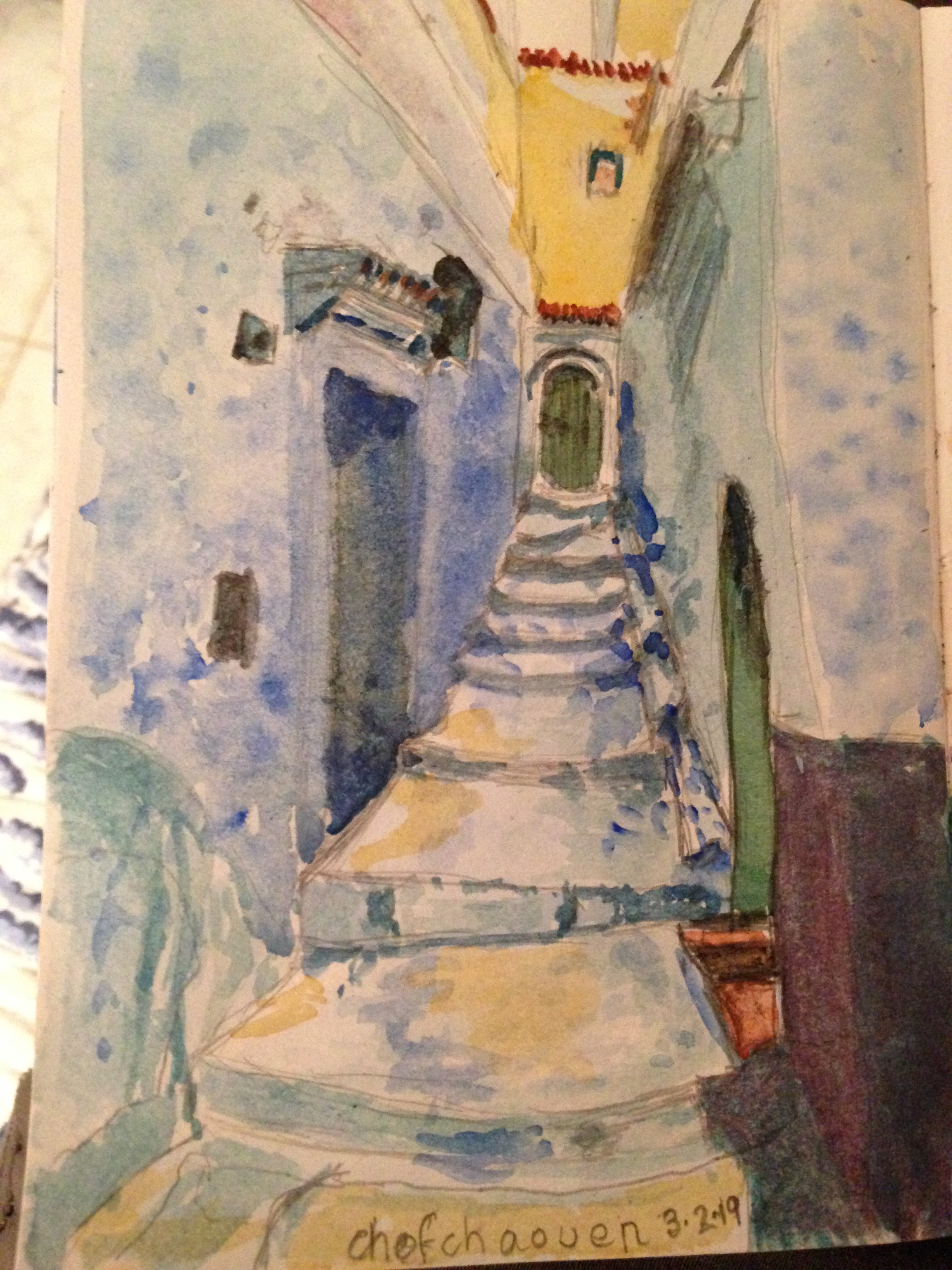
Why is the ‘Blue City’ blue? Some say the mosquitoes do not like the colour, or that it was to do with the Jewish population here? We were given these and any number of reasons, which means that nobody really knows. I reckon a local simply painted their place blue and everyone thought it looked nice and copied it. Now the whole effect is a remarkable spectacle.
A Walk From The Top Of Chefchaouen To The Bottom Of The Medina
After three days here, we felt this place had slid under our skin. It’s quiet serenity and lack of grasping touts and guides who, elsewhere won’t leave you alone for a moment, makes it a rarity as a Moroccan tourist trap. There were other visitors here, a mass of Chinese people, who were making the most of the Chinese new year break and heading to a country that welcomes them and their money with open arms. Chefchaouen’s main square had been decked out with Chinese lanterns to honour these high rollers. It made for a fascinating juxtaposition of cultures.
If, like us, you like nothing more than a bracing jog up a mountain, step right up, because this area is bounded on one side by he Rift Mountain range, which tops out at a respectable 2000m. The rugged peaks that run alongside the town are somewhat lower, similar in height and feel to the Snowdon range. We did not actually jog, but we did hike up one of the many obvious paths and admire the town as it snuggled in tight to the lower slopes.
We can’t recommend this town and the French owners of our gorgeous, simple hotel highly enough.
A Stroll Through The Dah Dahlia Hotel
Start your Moroccan journey here and you’ll want to keep going and see much more of this country.






 The Wandering Wallys