We understand that some people are thrilled that the UK is leaving Europe.

Wandering about in space and time.
We understand that some people are thrilled that the UK is leaving Europe.

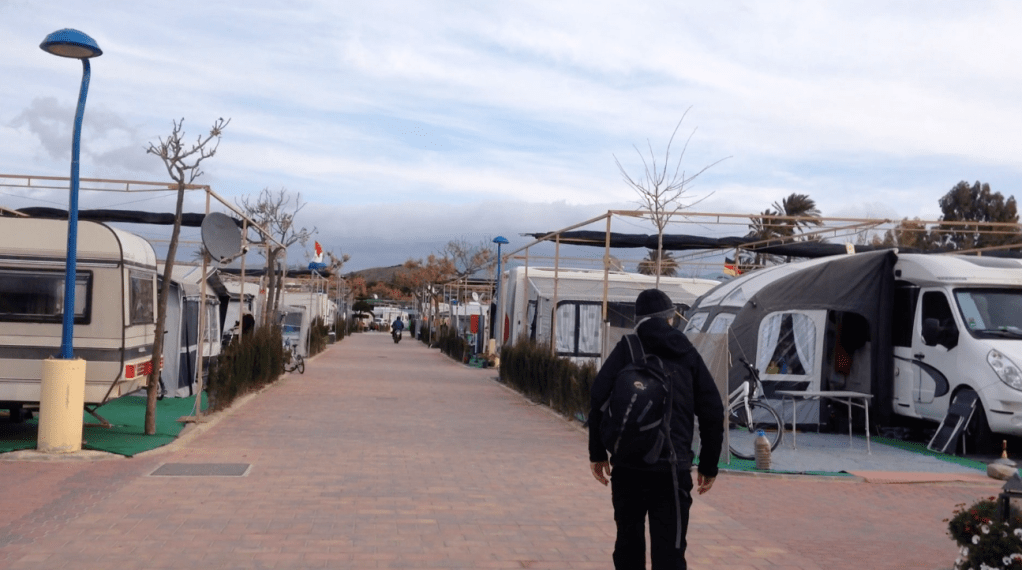
Windless February days along the Mediterranean coast, bring a golden dusting of pollen that rains down from the pine trees. On breezy days it billows about in great khaki coloured clouds. When the wind is up, it flies, thickly, horizontally, until it rams into the crevices in vertical surfaces. Nothing and no one is spared. It even finds it’s way into sealed containers. No part of a motorhome, camper van, awning, car, motorcycle, canoe, bicycle, or body, is spared. The dust is released so consistently, that the moment it is cleaned away, more lands. Gleaming surfaces recede into distant memory. A romantic dream of halcyon times, when the world and those who people it, were not a dusty and jaundiced yellow.
The old trope that no part of a pine tree is poisonous is no consolation for a small minority, for whom this is a tissue issue. It is boom time for the local pharmacy, as sales of antihistamines rocket. Misery ensues. Inhalers whizz.
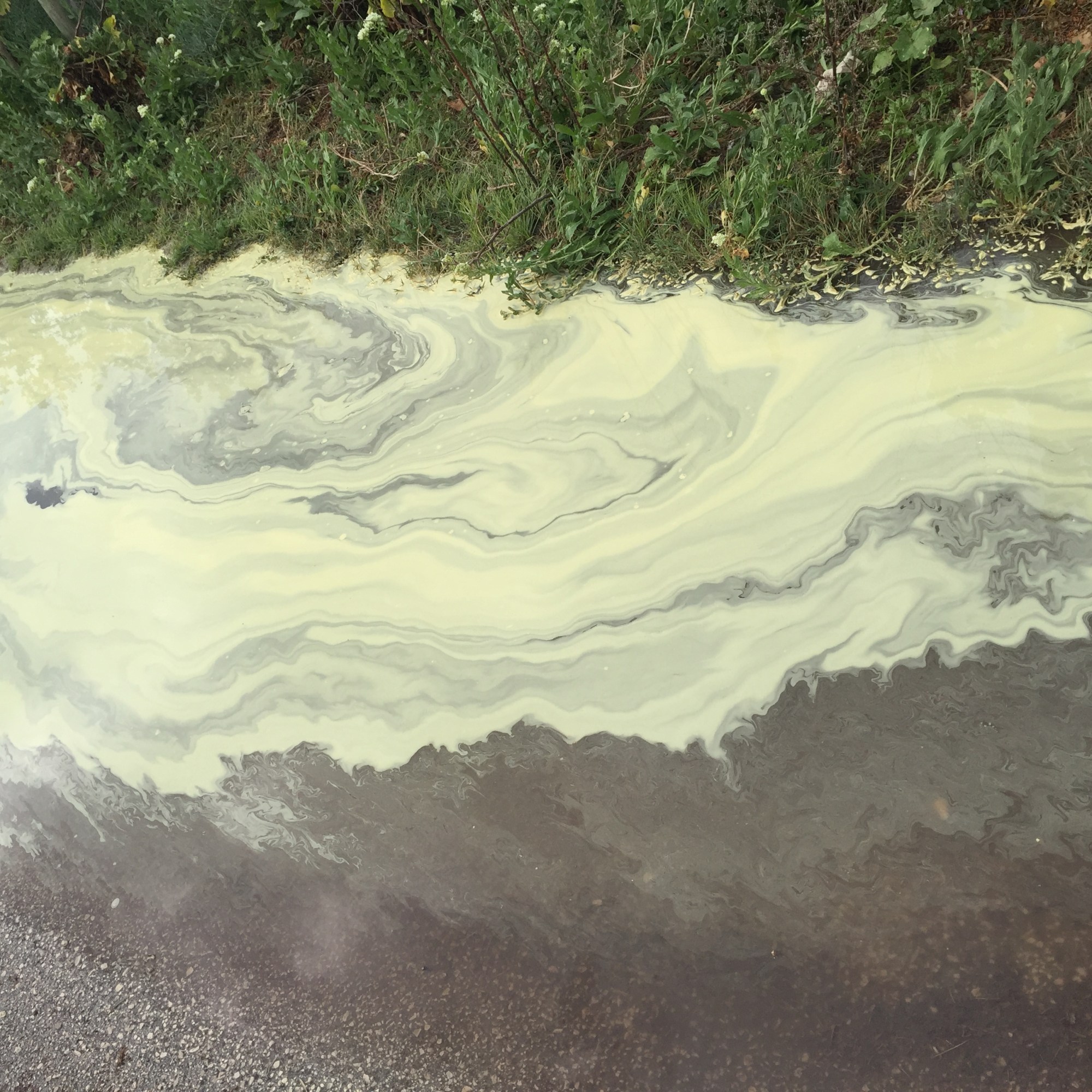
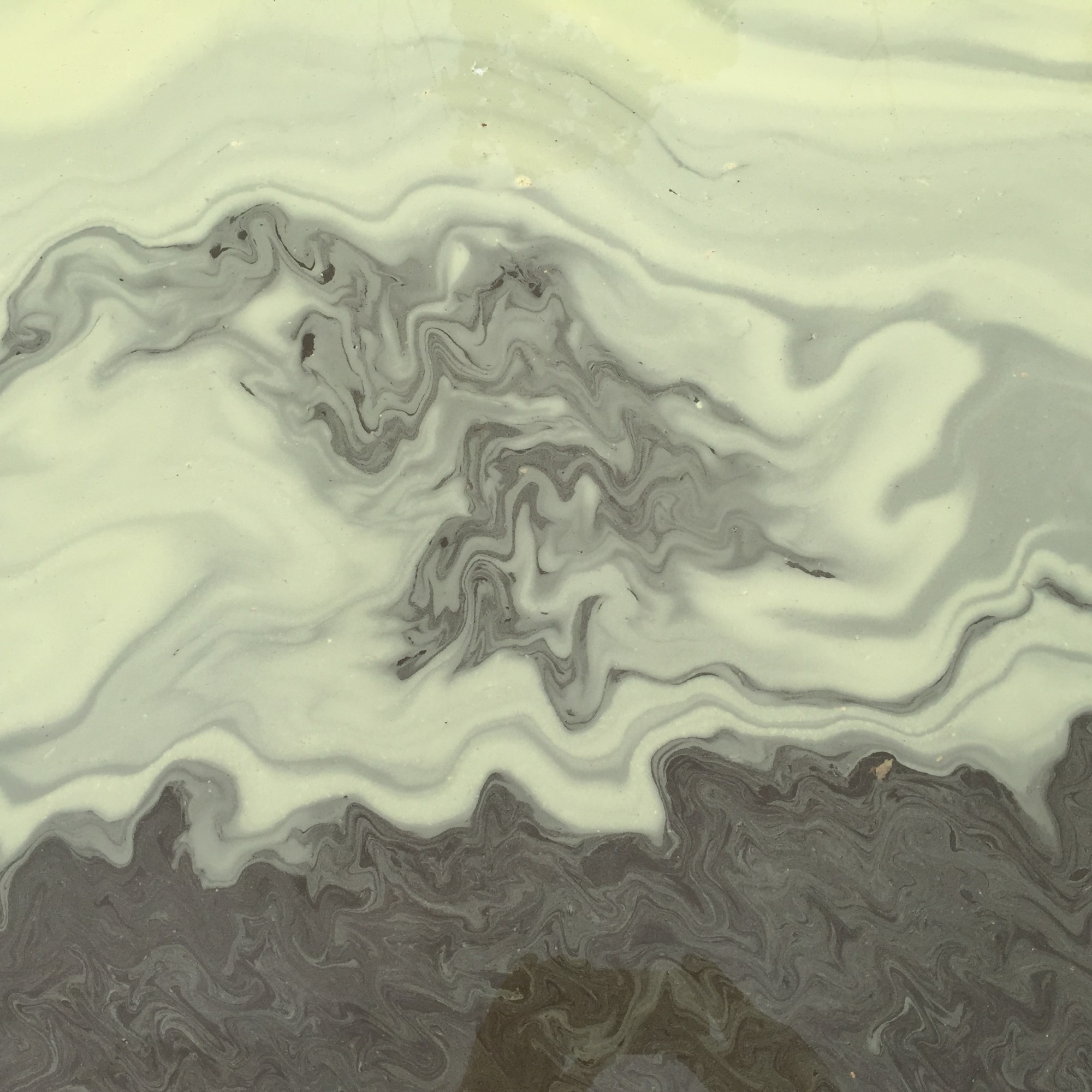

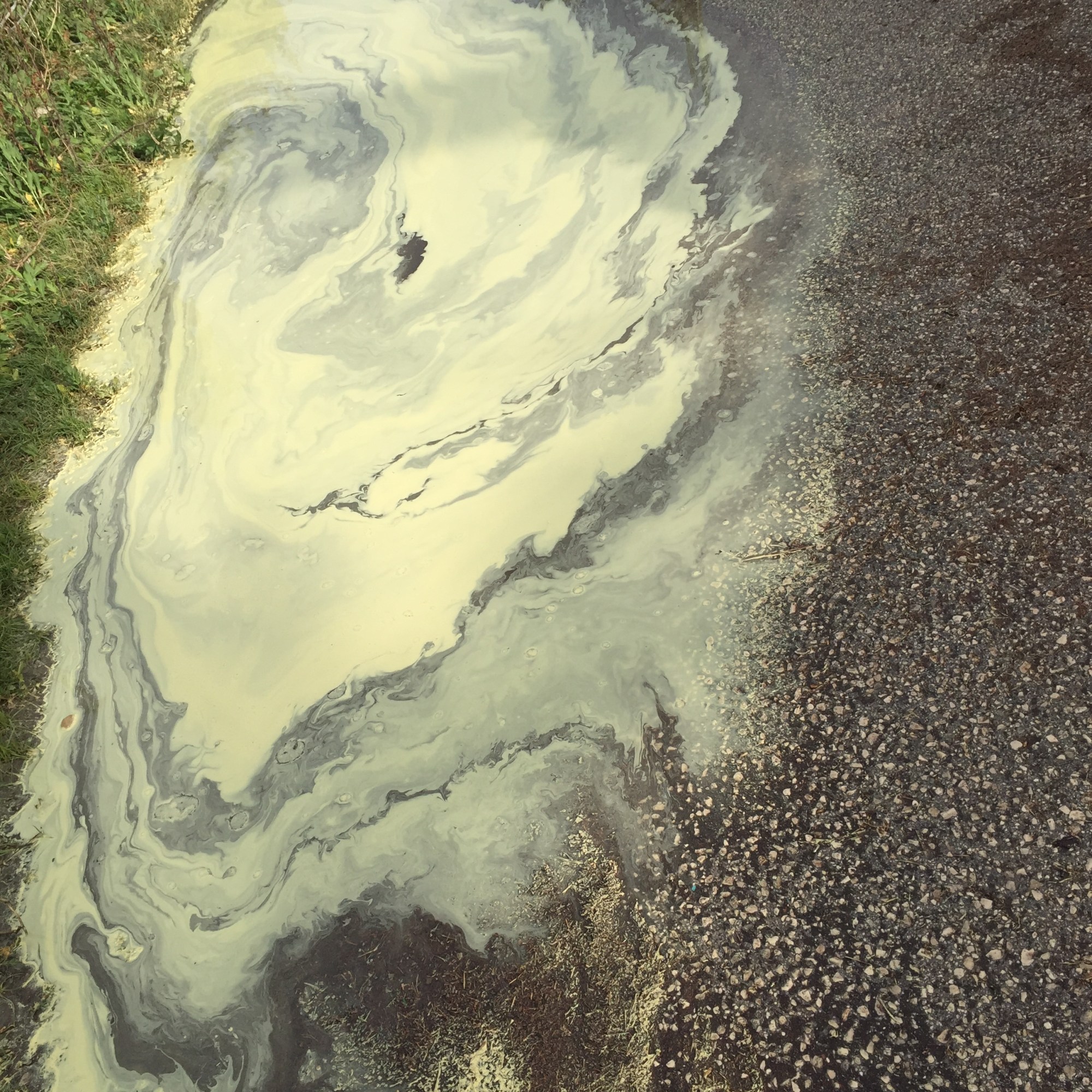
Pollen on a puddle of water.
After a few weeks, the pollen stops falling and we all breath a sigh of relief, apart from the allergic gang who still cannot breath. By now there is a thick, puce green meets yellow, layer of pollen on every possible surface and without rain, it is whipped up into the air with every puff of wind. It is nature battling to assert itself, one pollen grain at a time, in the face of the might of millions of pounds worth of huge, shiny white, diesel guzzling, planet destroying, motorhomes hunkered here on this tiny site of 109 pitches. The final assault is the ‘attack of the maggots’. Bucket loads of small male cones, the spent remains of all that masculinity, fall, pitter-patter, onto every surface. The final fling of the campsite sentinels.
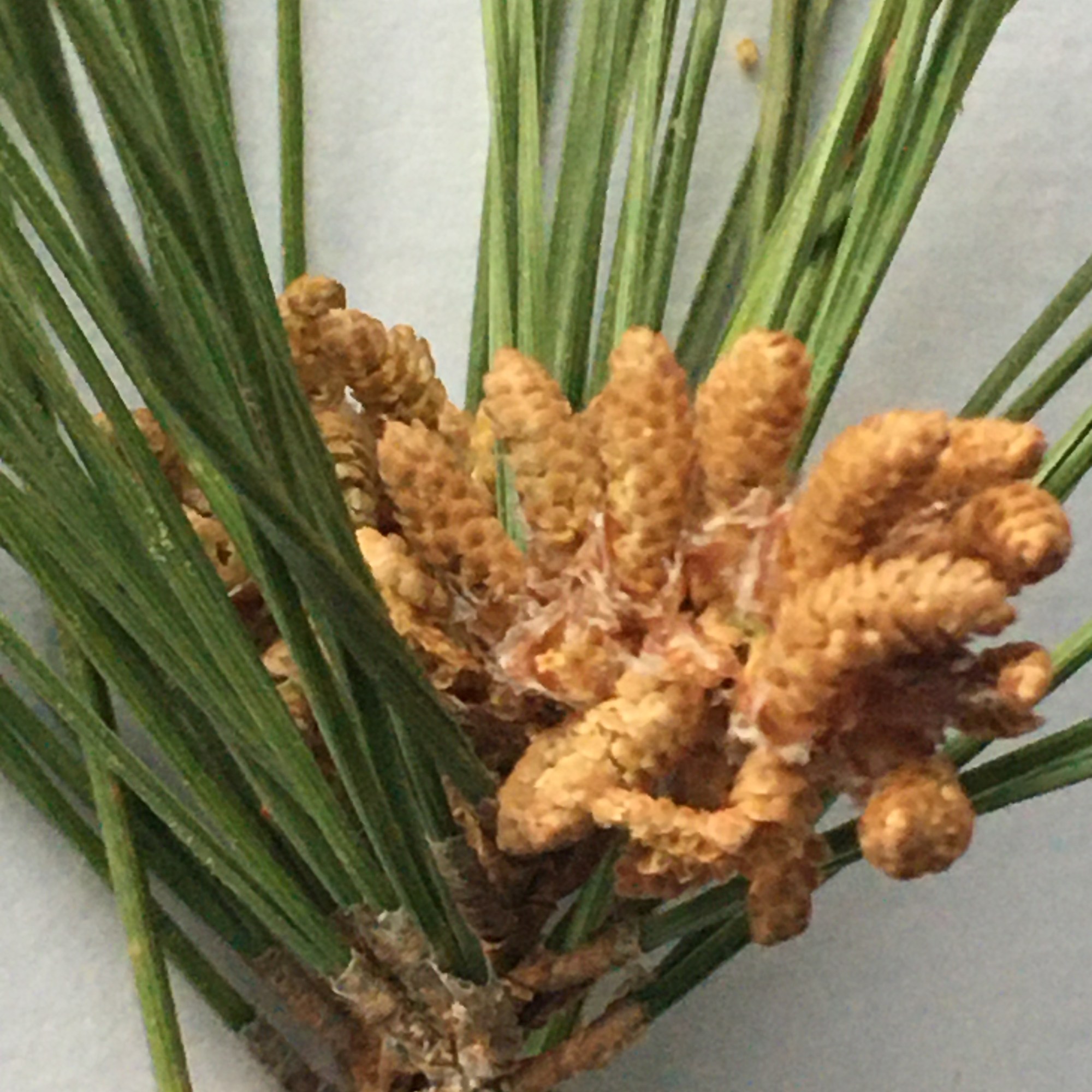
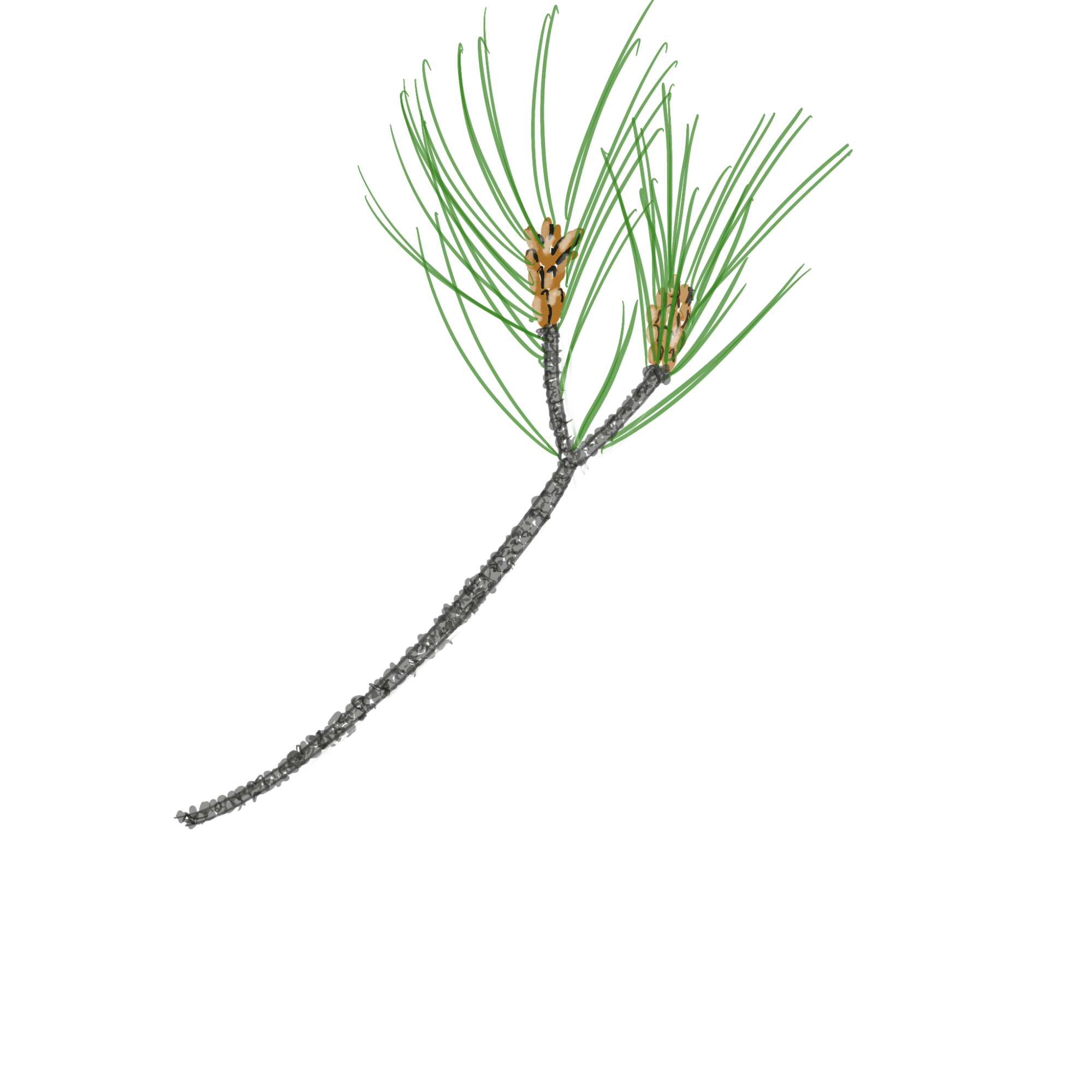
‘Maggots’ (male cones), spent of their pollen and ready to fall to the ground.
Of course this rather tatty, basic campsite could go the way of many on the Spanish Mediterranean and cut down all trees, spread tarmac, add sun screening in the form of giant, overhead, horizontal blinds and pack in almost twice the number of vehicles in neat ranks. Seasoned travellers call this type of campsite a ‘car park’, because that is how they look and feel.
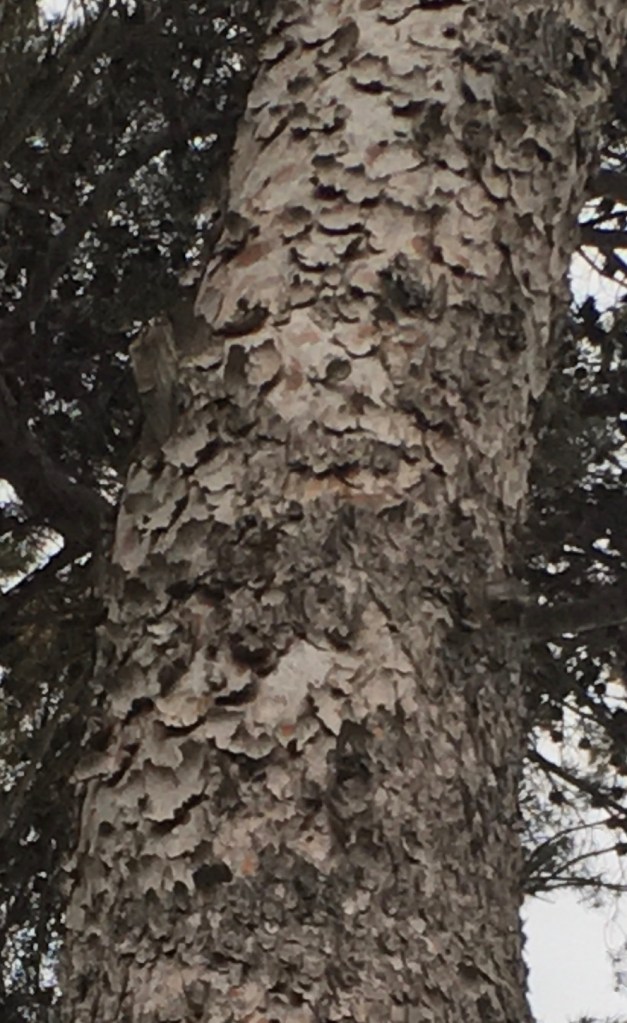
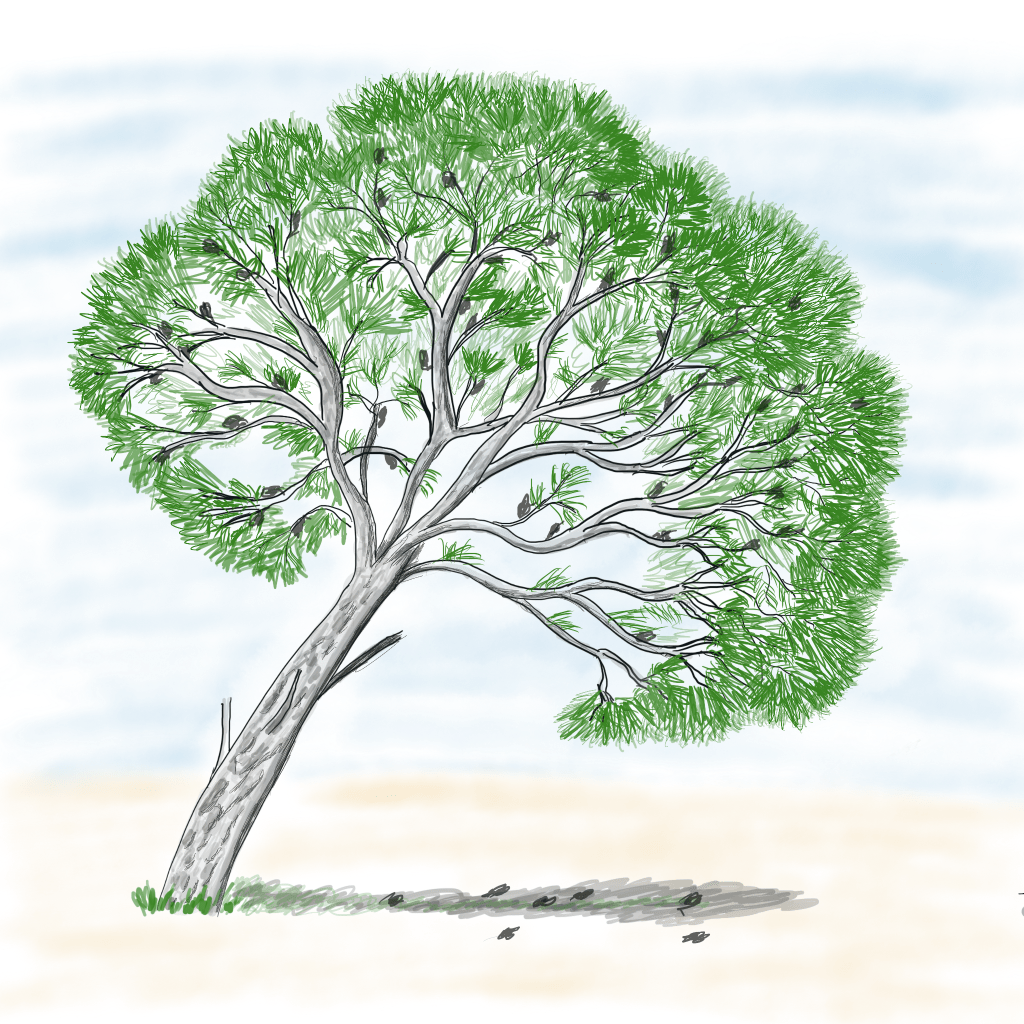
In fact, our site cannot chop down it’s pines as they are protected by law. The pine here, the Stone Pine to the British, Pino Pinonero to the Spanish and Pinus pinea to the overly interested, has to stay put, or else. They are a very tall, hard wooded, but light-weight, useful tree and can totter on for about three hundred years. With their parasol shaped tops and long, shingled trunks, they are a prehistoric beauty. The site owners could quite easily get rid of them, storm by storm, tree by tree, until there was nothing left. No one would be any the wiser. Thankfully the owners love the trees as much as the regulars here: despite the pollen and the ‘worms’.
Ancient species are always food for something. The Western Conifer Seed Beetle (Leptoglossus occidentalis) an American immigrant, is a sap feeder and deprives the baby cones of nutrient, which makes them drop off. The other pest is our old chum, the Processionary Pine Moth; more about his little house of horror here.
These are the trees that give us the uber trendy, uber expensive pine nut. It has been a food source for us for about 6000 years. Around the time that some of the local, neolithic cave art was created. These inventive people were collecting the cones from high up in these trees for the little seeds inside. A very long pole with a hook in the end and, I imagine, good eyesight are the tools of the trade.
The cones are gathered whilst still immature, at about three years old, they are large, tightly closed and often still green. They are stored until they open up and release the hard shelled seed. The shells are broken open to reveal the fat and protein packed nugget within. A valuable resource to early peoples and us to us modern sophisticates alike. Some things never change.
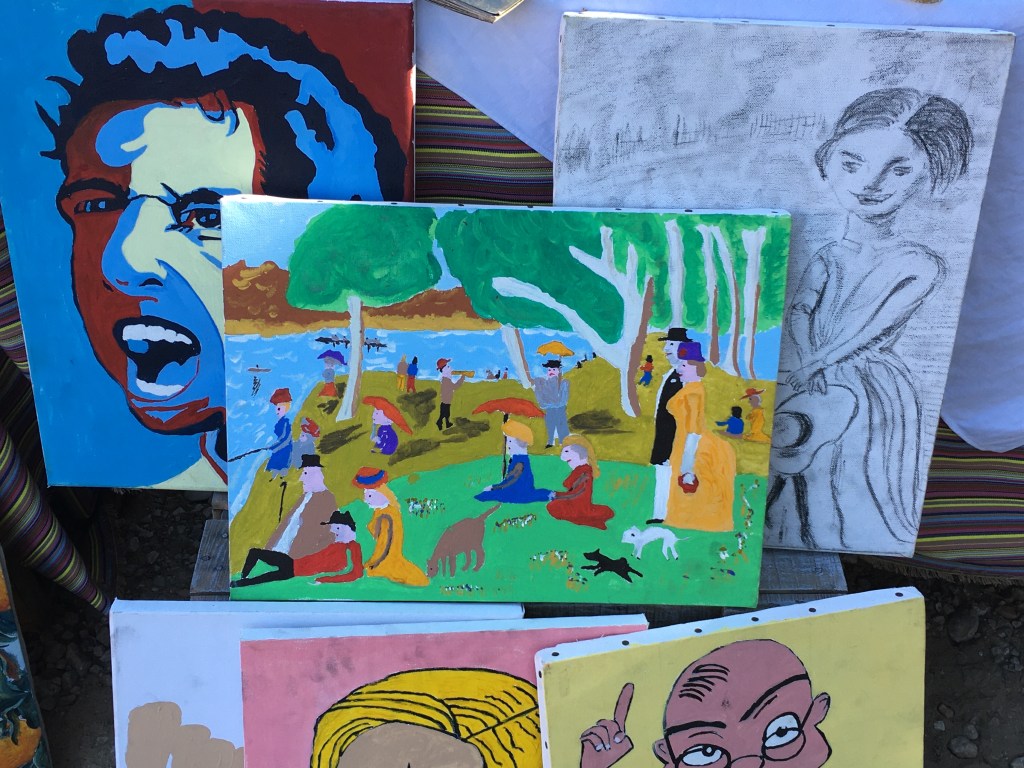
We got the impression that the artist was so impressed with the impressionists that s/he decided to to paint their own impressions of them and then offer them for sale to see if we, the public, would be impressed. And we were.
This is the first of 3 walks we are going to offer you that head to the top of Montgo. This is the most demanding of the three, but for us, it was the most fun, which is why it is the first one to be covered here. We filmed it just under a year ago. Take a look at the video at the end which gives an idea of the surprisingly committing nature of this undertaking!
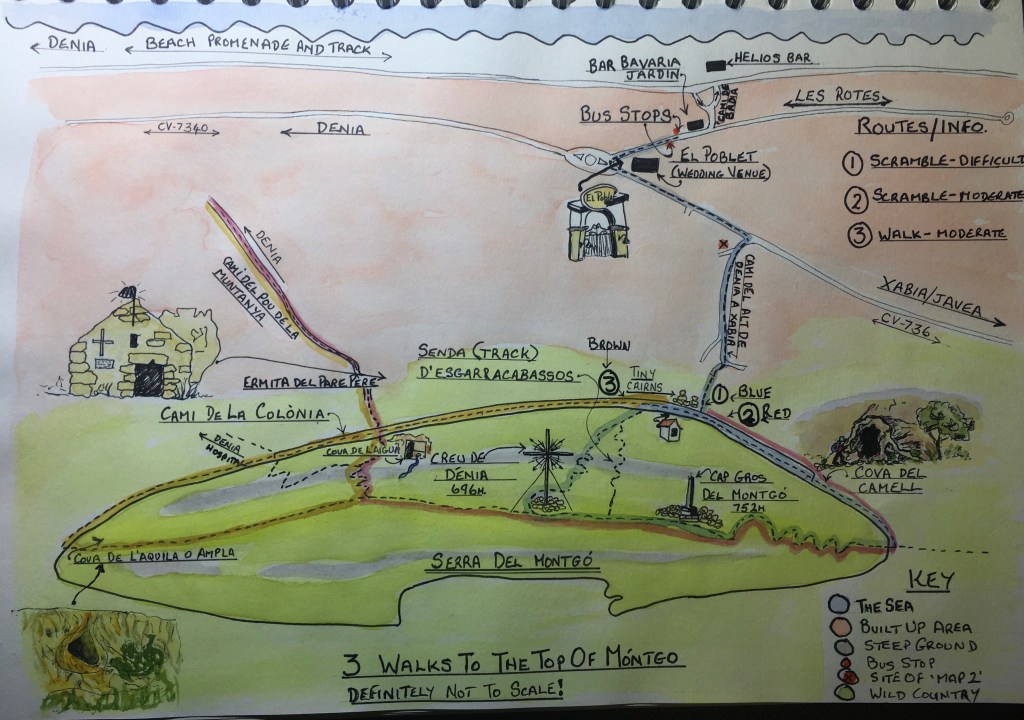
On this first walk, us deviants are true to our nature and leave the beaten path to one side. If you decide to join us, you will have to pick your own route up the mountain. If this type of walking and scrambling, the terrain and the possible exposure are new to you, this walk is best avoided until you have developed a heightened level of stupidity, just like us Wallys. There are plenty of less worrisome routes to choose from that will take you to the top of Mongo, emotionally and metaphorically. Allow a full day. If you have knee problems, or suffer from vertigo, it may not be the walk for you. Remember it is the coming down that tends to make vertigo worse, so always be prepared to backtrack and if you feel things are getting to a point where you wont be able to reverse, stop and go back while you still can. Remember GRIEM (Spanish Mountain Rescue) charge for their services. Google the scale of charges and then hail our British equivalent, all volunteers, who will turn out in all weathers, to all in need, at all hours, at no charge. They are always glad of funds, so please donate a little something every time you hit the hills. On that salutary note, I guess we should sally forth.

Take the ‘Las Rotas’ DeniBus (bus) from beside Denia Marina, almost opposite the main shopping street called Marques de Campo. The bus will be pointing the wrong way, as in the photo; do not worry about that, it will turn around just after setting off. The bus leaves on the hour, starting at 8am; there is no 3pm bus. Get off the bus at the bus stop beside El Poblet, wedding Venue. The return bus is diagonally opposite, outside the Bavaria Jardin Restaurant, and leaves at quarter past the hour, but, again, no bus at 3.15pm.

Time to get those walking legs going. Follow Map 1 above until you arrive at the the ‘X’ on Map 2, below.
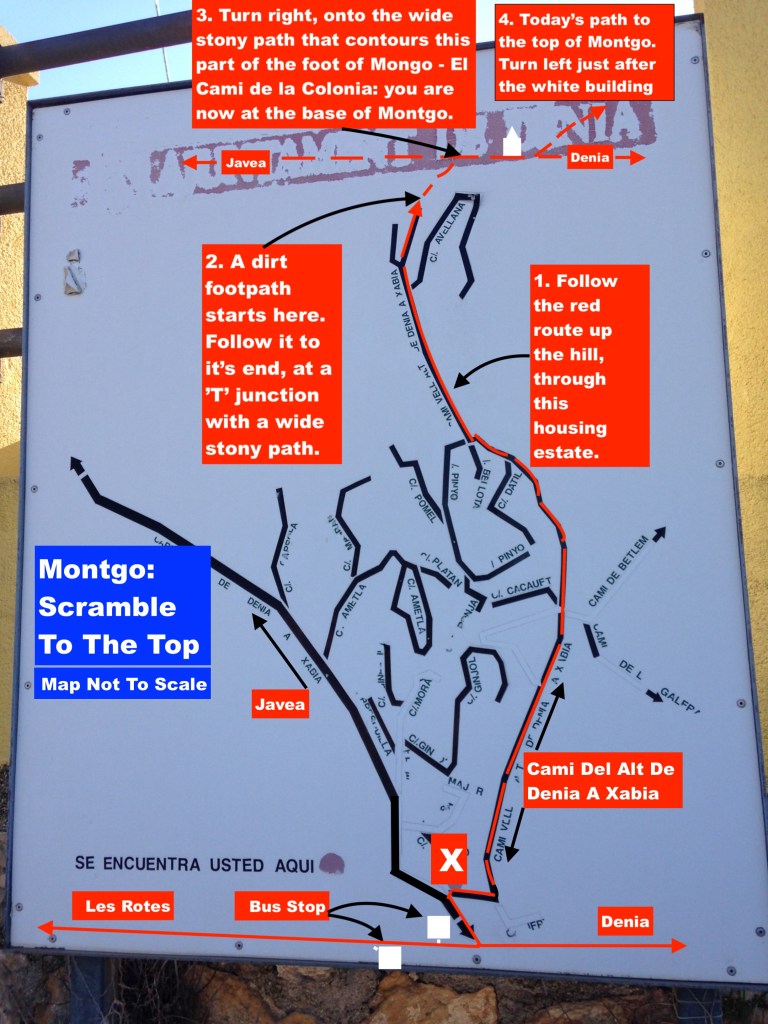
Follow the red route, on Map 2, through this steeply up hill housing estate. It is possible to drive to the top of the estate and walk from there, but the final bit of road is very narrow, the locals get quite upset about lazy walkers leaving their vehicles in the way. Better, if you drive, to leave your car well within the estate, on one of the wider roads. The path begins at the top of the estate and runs off to your right, towards Montgo Mount.

Follow your nose until the narrow, ruggedly rocky path ends at a wide and well maintained track, the Cami de la Colonia. Turn right, walking towards the tiny white building that sits beside the path.
Just past this building is an indistinct, unmarked path that can be seen forking off on your left. Take this path.
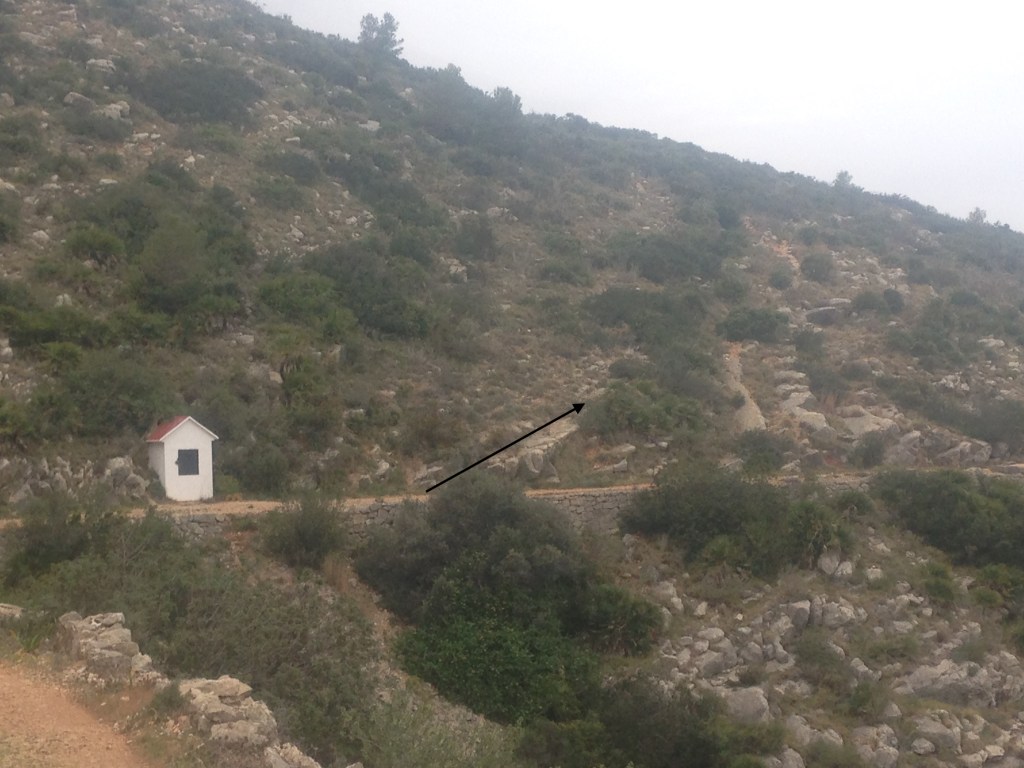
Stay on this path as it rises very gently across the lower flank of Montgo. You will arrive at a scree slope. The Senda D’esgarracabassos really starts at this point and is a classic scramble route to the top of Montgo. You can see the well worn tracks left by keen walkers. We are not taking this route today, we are taking a punt, seeing if there is another scramble route up; and there is!

Make your way across the scree slope. Go right to the other side. This is where the fun begins.
Our strategy was to head right on the plateaux (level/shelf like bits) and up where the rock faces were about scramble height, usually that is no more than 3 times your height. Any higher and it feels more like a rock climb, and we do not want that, do we?! There are no paths here, and no sign posts. You are very much at your own devices. As long as you stick to today’s rule of moving right on the level, green bits and moving up the lowish rock faces, you should be fine.
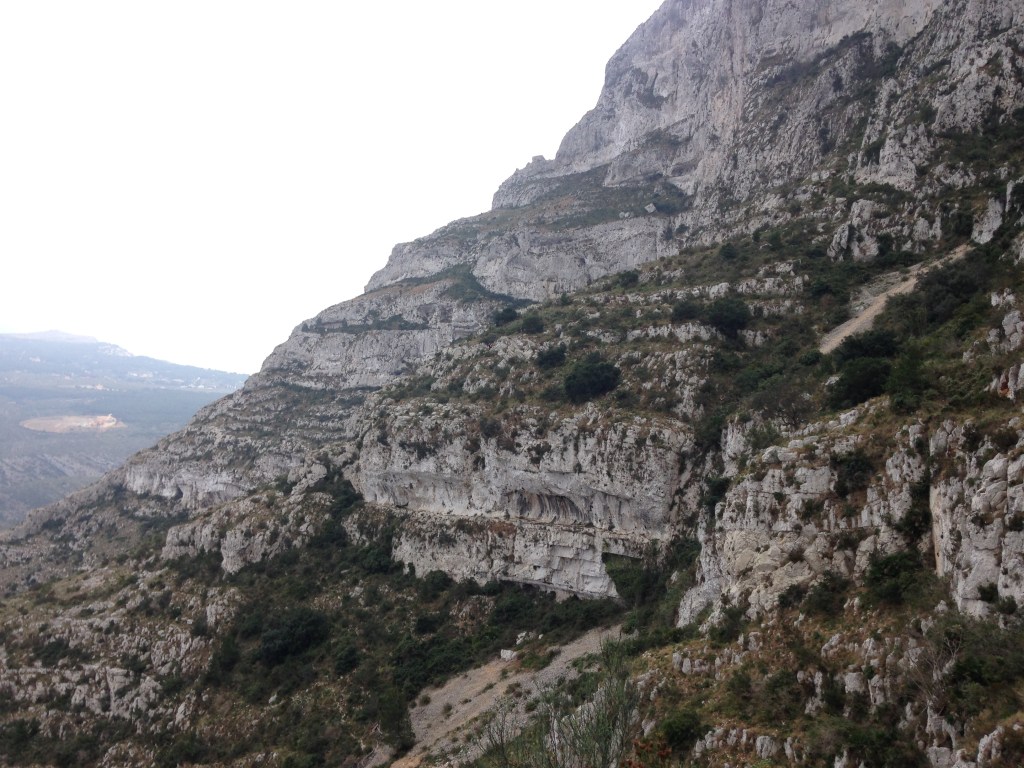
If you prefer, you can take the classic scramble route; it is well worn, you will not get lost and the scrambles are good. If you choose to take this route instead, keep to the well worn path up the side of the scree slope and follow your nose. If this all looks a bit too much, head back down to the Cami de la Colonia and enjoy walk 2 or 3 on the map. The views are awe inspiring. Your day will still be superb.
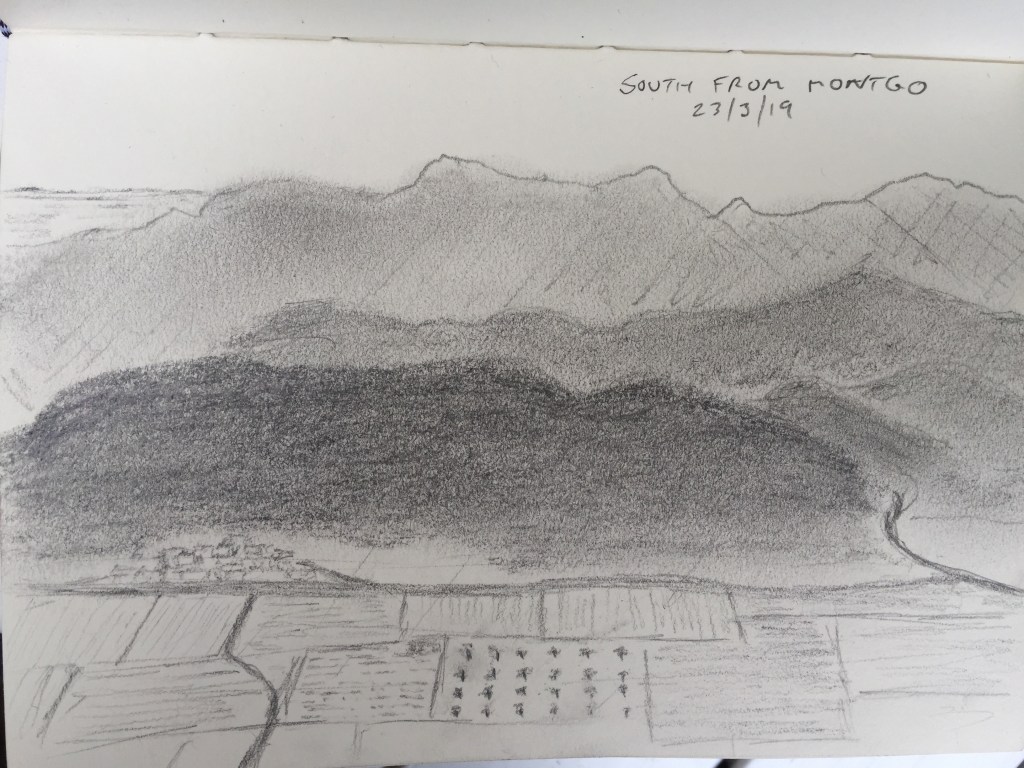
We stopped on the way up for a little lunch and finally topped out some way to the left of the Creu de Denia (the cross).
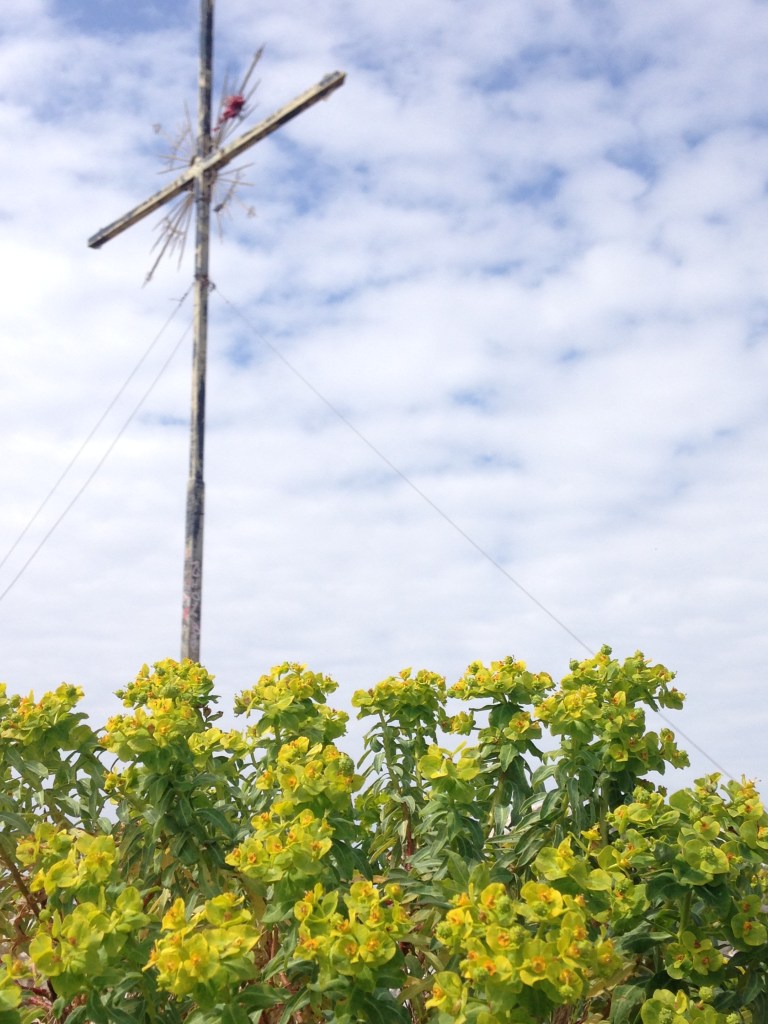
The route is now straight forward. Walk to the cross and admire the views, and then retrace your steps and keep walking ahead along the path and onto the Cap Gros del Montgo (trig point). Please make sure to linger long enough to take in the stupendous views along the way.
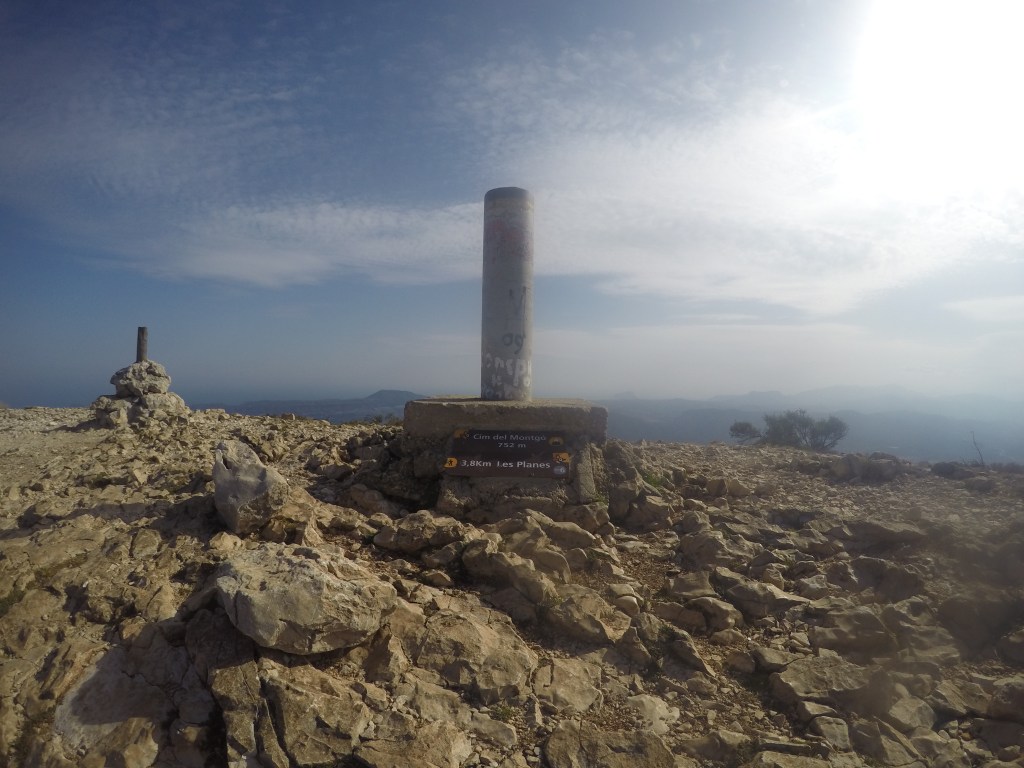
Once you have tired of the views, head for the rocky exit that overlooks Javea. You may need to take a look around to find it, but it is there and is very well worn. The initial way down is a gentle scramble followed by a pleasant zig-zag path to the bottom.

Once at the bottom of Montgo, turn left onto the well made up path and then right to follow a well signed, small path that will lead back onto the Cami de la Colonia.
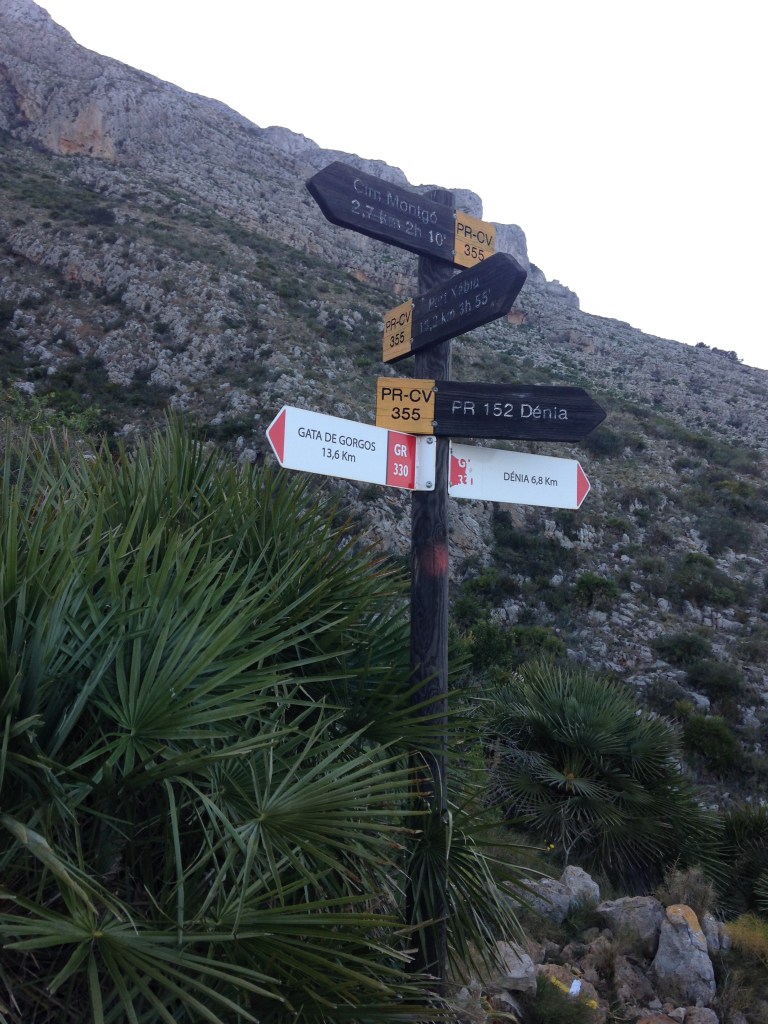
On the way back to the Cami de la Colonia, take time to visit the well sign posted Cova del Camell (camel cave). It is a very short detour, so why not?
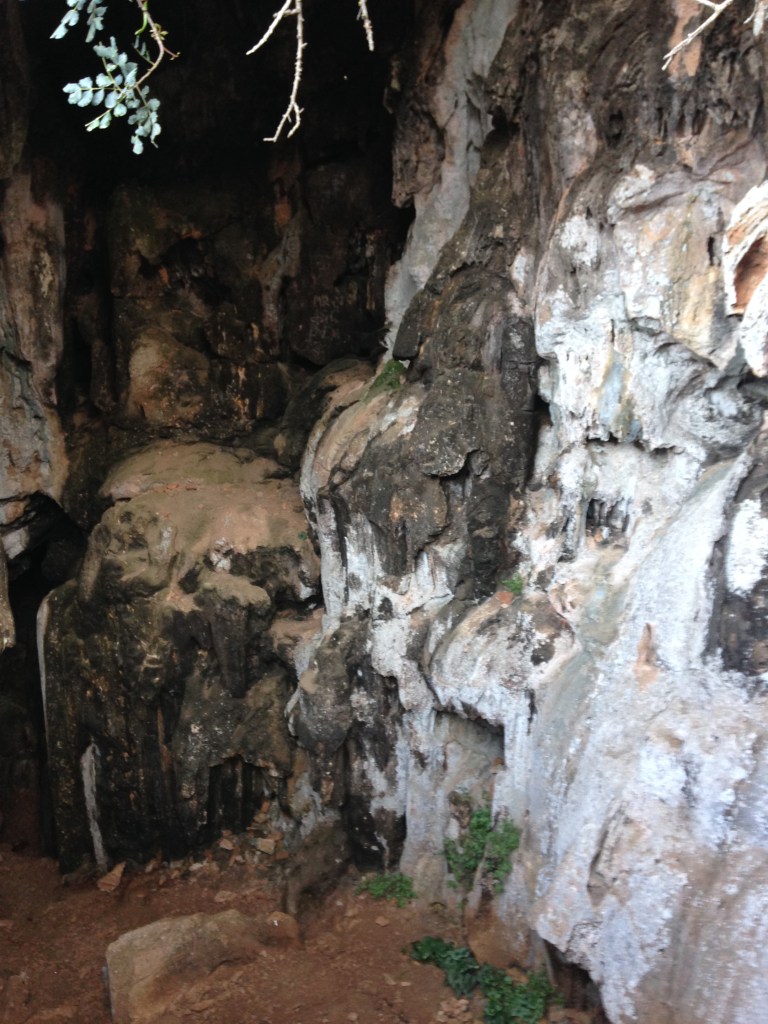
Shortly after the cave you will leave your current rather rough and narrow path and rejoin the very obvious and welcome Cami de la Colonia. It is an easy walk from here back to the junction with the housing estate path, on your right.
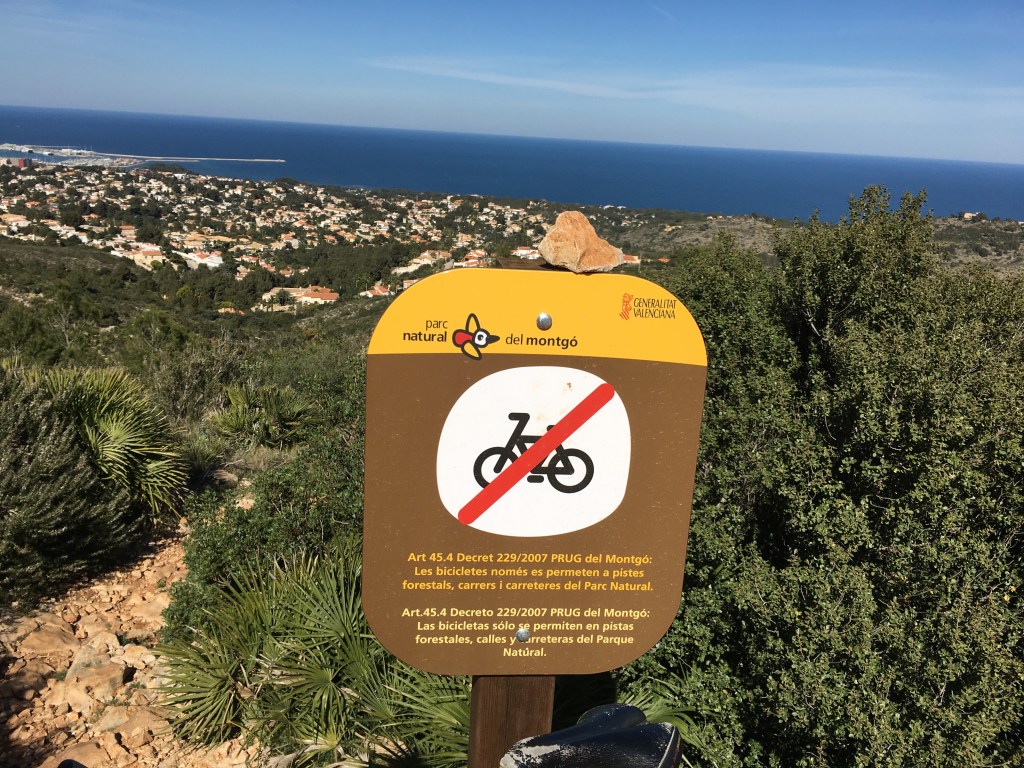
If you reach the little white building, you have, as you know, gone past the path junction you are looking for. Go back and take another look.
Retrace your steps to the bus stop. If you are too early for the bus, or simply fancy a breather before leaving, there are two options. The Bavarian Jardin bar/restaurant makes a great place to have a drink as you wait for the next bus back to town. Sadly, it is not open during the winter. Alternatively, Take a very short stroll down the Cami de Badia and have a drink in Helios Bar. Here you can sit on the terrace overlooking the sea. It is open all year round. Last bus into Denia is at 9.15pm.
This delicious coconutty soup hails from Malaysia. We make the simplest version possible. Feel free to add anything that takes your fancy. There are dozens of variations on the internet.
Follow the recipe stage by stage and it will be a doddle.
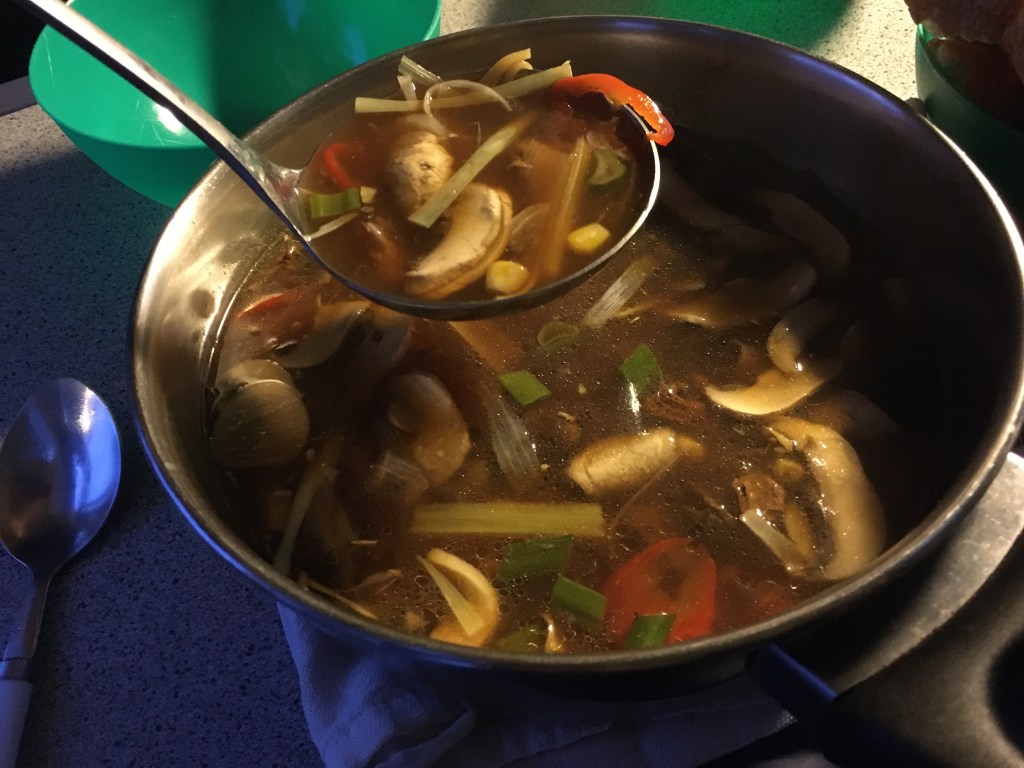
The vegetables should have some crispness. You can add salt, but remember soy sauce can be very salty.
This is often served with coriander leaves, halved hard boiled eggs and finely sliced and raw spring onion, some, or all, placed on top of the soup. When cooking, turmeric powder can be added, as can curry spices, as this is very often served as a curry soup. All variations are based on the basic recipe above. Some ingredients are often wizzed together to form ‘Laksa Paste’ and then pre-fried.
 The Wandering Wallys