The Ghost Town of Denia, Spain.

Check out the video at the end of this post.
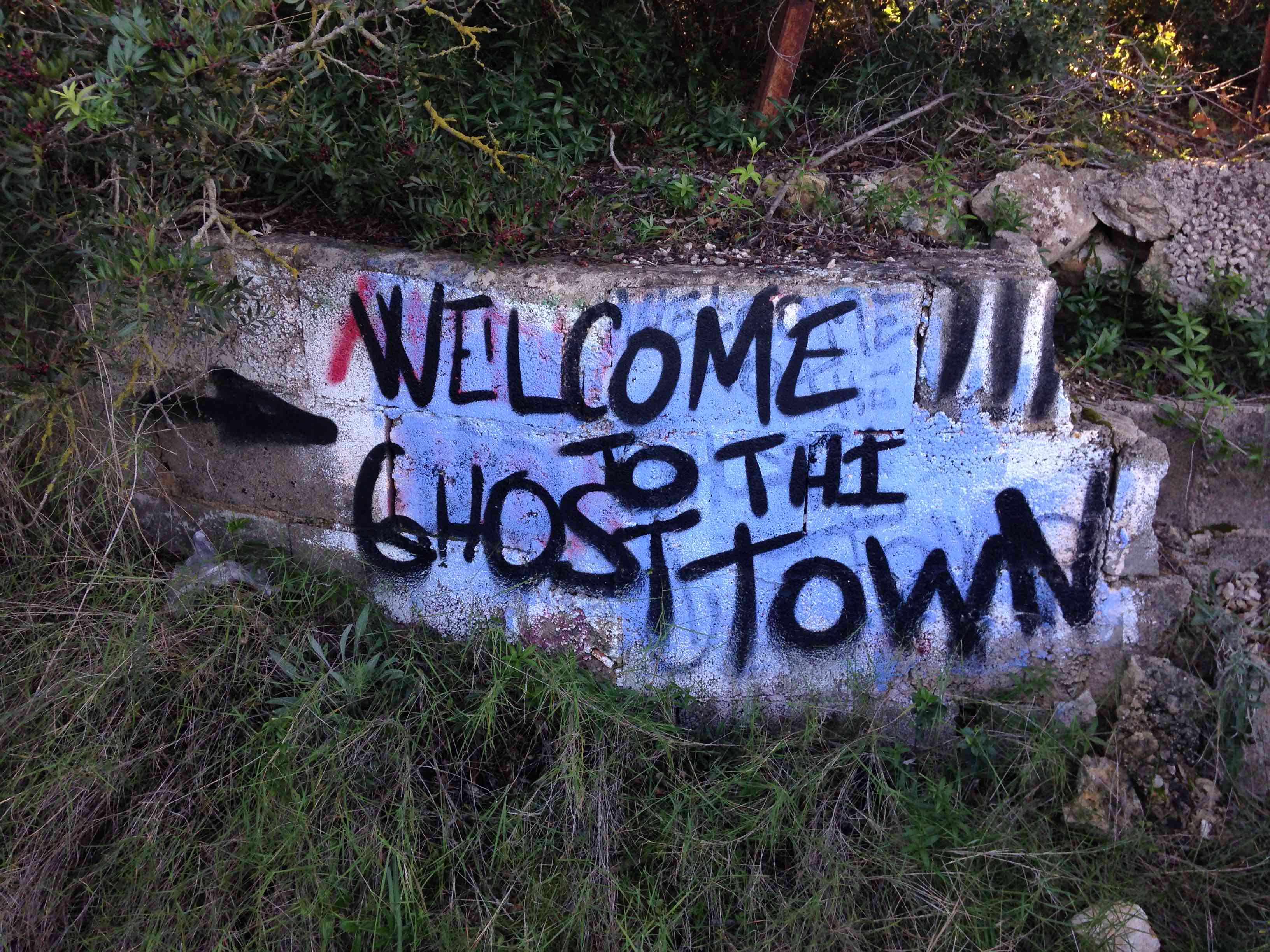
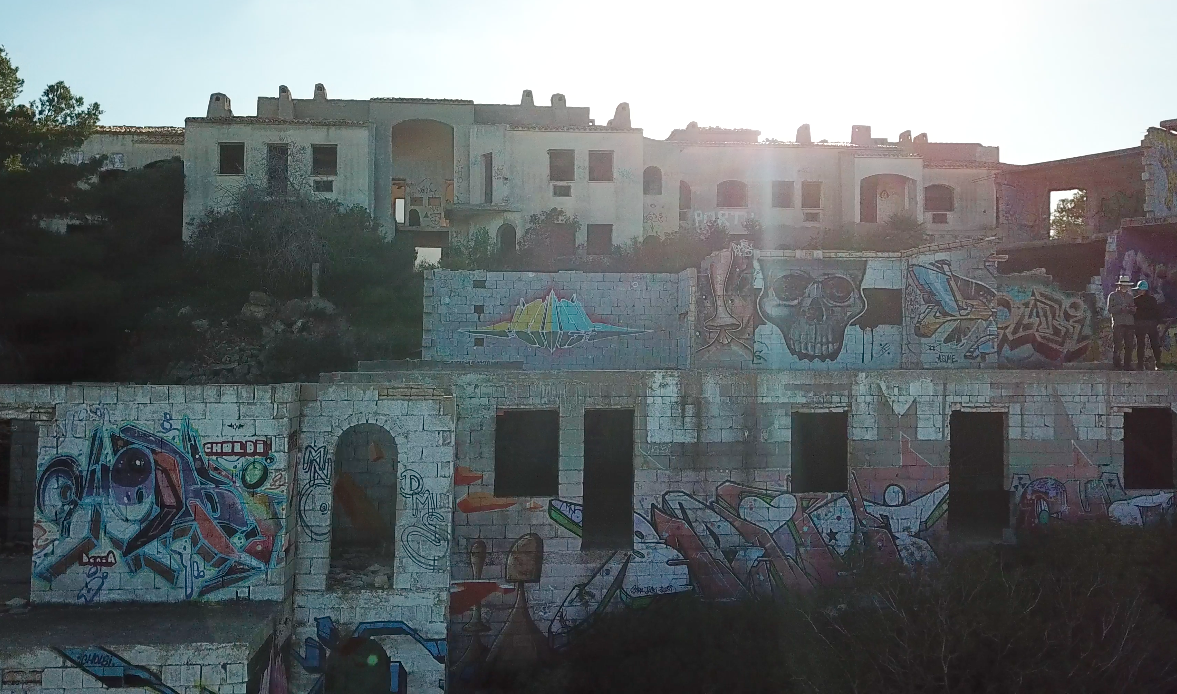
At the end of the seafront promenade that runs from the port town of Denia to the cliffs topped by the Gerro tower, there is a Ghost Town.

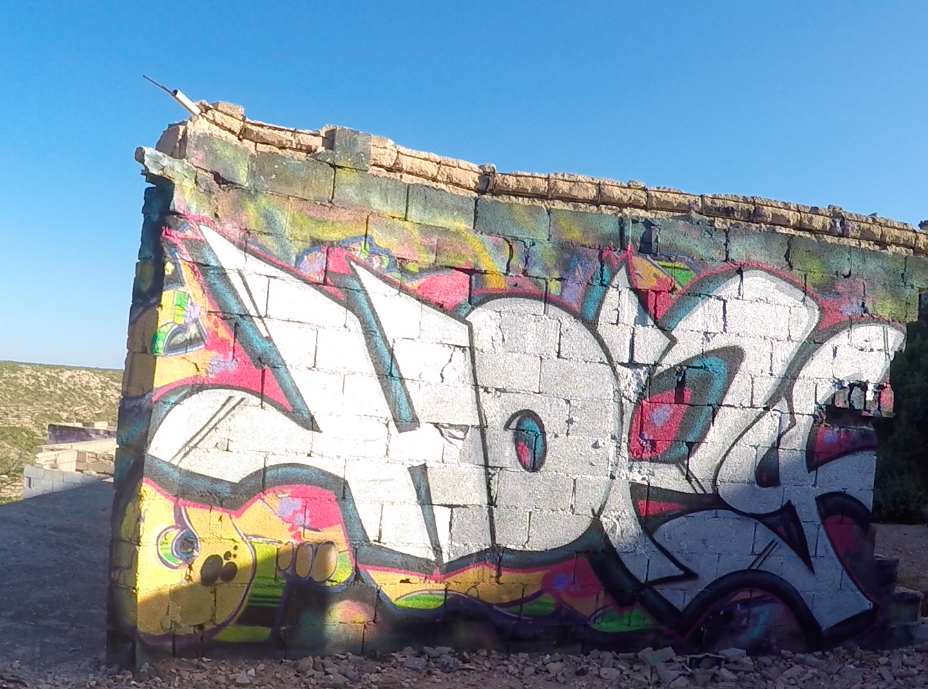
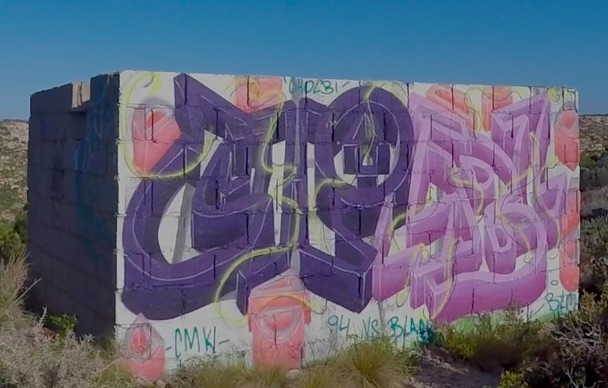
This amazing, ramshackle, wreck of a building site has become home to the flora and fauna of the Costa Blanca, as well as a canvas for local artists. It looks like a filmset for an apocalyptic tale, seemingly designed to appear aged and decayed.

Everyone who visits wants to know the story of this hauntingly enigmatic place. Is it simply the result of a developer going bust, as so often happens during financial downturns, or is there a history with meat on it’s bones that we can enjoy gnawing at?

Given that I have nothing else to do with my empty life, I took it upon myself to find the facts and pop them here for you to read and marvel at. I cannot guarantee that all the information is correct, nor have I included every twist and turn of the tale; it is a forty six year saga, and I could feel my life slipping by as I picked my way through the detritus of this glorious mess.
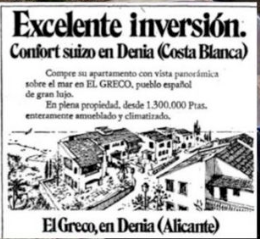
In 1973 Denia city council granted planning permission for a Swiss group of financiers (The Society of Financial Studies and Real Estate Transactions: SEFI) to build 616 homes on a wild and prominent ridge that has deep valleys on either side. The building plot was 60 hectares of virgin land, with sea views on two sides and Montgo mountain on a third side. It is a stunning location, as the developers knew and they also knew that it would be a popular location for anyone wanting to retreat to the Costas. A premium site of this kind would mean great profits.

The project was, and still is, called Urbanisation El Greco, but locally it is always referred to as The Ghost Town.

Unfortunately, having thrown up 111 properties, with 40 of them completed, the building company (Dragados y Construcciones), given the task of erecting this small town, fell into dispute with the developers. The argument has never been settled and the whole project ground to a halt.

Here the dates are a little garbled, so I have gone for the most popular facts:

In 1987, the local authority designated the Mount Montgo area a Natural Park, whose boundary encompassed the 60 hectares of land earmarked as Urbanisation El Greco. It is is an ‘area of special protection’ and although the plans for the 616 properties had been approved and acted upon, all future work on site was banned. Even where properties were finished, they could not be inhabited.
In 1993, a new company, Valcomar SA (Valencia based) bought the project; by my reckoning, there was no chance that they could now build in this area. These new owners have been unable to reverse this decision.

1998 A study was commissioned to assess the feasibility of the demolition and reinstatement of a natural environment. The study was finished in 2008 but still demolition awaits! Over the years, responsibility has been passed from department to department.

1999, and Denia city requested the right to acquire the site by bringing it into public ownership, and then to demolish the structures and return the whole site to it’s original natural state. The Ministry of the Environment promised to discuss the matter with the owners. All went quiet.
In 2008 the Environment Ministry ordered the demolition of the site as it was outside planning laws. It was estimated, at that time, that the cost of demolition and re-naturalisation of the site would cost 400,000 Euros. No official bodies had that kind of money to spare. Naturally the Swiss contingent had vaporized and the new owners were fighting any order that might make them liable for the bill.

And so, there it sits. The local authority do not have enough money to pay for someone to look through the documents and work out who is liable to foot the demolition bill. I cannot begin to guess how much public money has been wasted on this fiasco to date.

I will lay my cards on the table. Yes the Ghost Town generates rubbish as kids leave litter behind. This litter can be blown across the Natural Park and can find it’s way into the sea. There are also concerns over the possible leaching from rubbish left on site. But here is a place that offers an outstanding visual impact, no less startling and abrupt than Mount Montgo. Starting from this point in the history of this place, there must be a better solution than that impossible dream of re-naturalisation.
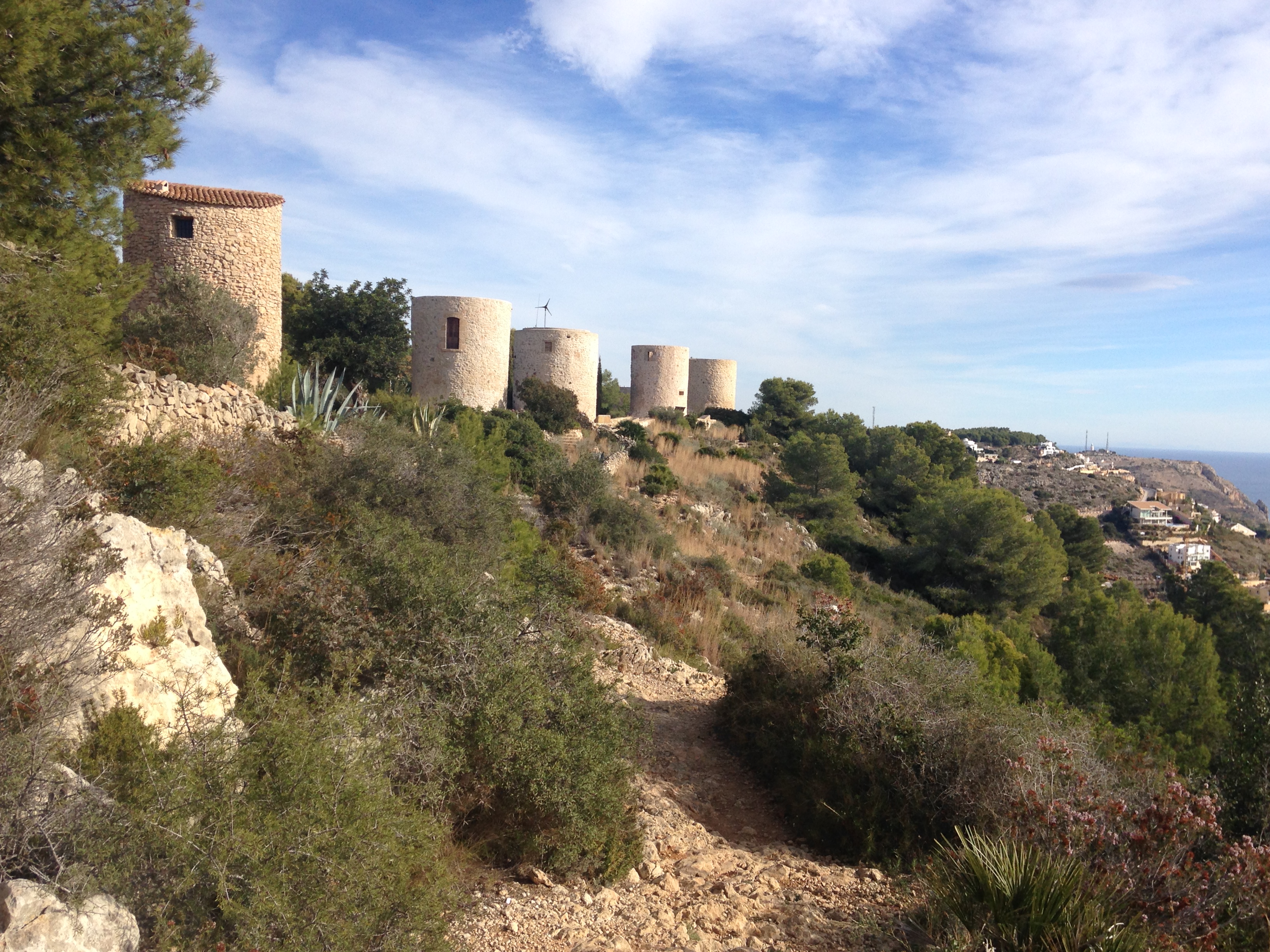
All land, no matter how wild, how pristine, will carry the scars of human life, as we protect ourselves; Gerro Tower, we feed ourselves; Molins DeLa Plana, and we house ourselves; Urbanization El Greco. None of these places is natural, as witnessed by the extensive terracing within the Montgo reserve, and yet they give us an understanding of the land and it’s history and make us wonder at a wilderness where our structures can be comprehensively dwarfed by nature.

Simply knocking down buildings because they are in the wrong place seems unimaginative. People visit this area for many reasons and are fascinated by this ‘Ghost Town’. Why not put up an interpretation board for the tourists and hold Graffiti Art events on site for all comers? This must be a good time to help people understand the ways in which nature is reclaiming the town, and the reasons why it was decided to stop chasing the money needed to level it and look at ways to celebrate it in all it’s crumbling glory.

The more the place is used, the less it will be abused.
Don’t forget to add your comments etc.

A Stroll to The Windmills

A walk from near Denia to near Javea, Spain.

Distance: 7miles

Difficulty: Easy

At the end of this item, you will find the 2 minute video of this walk. Please enjoy.

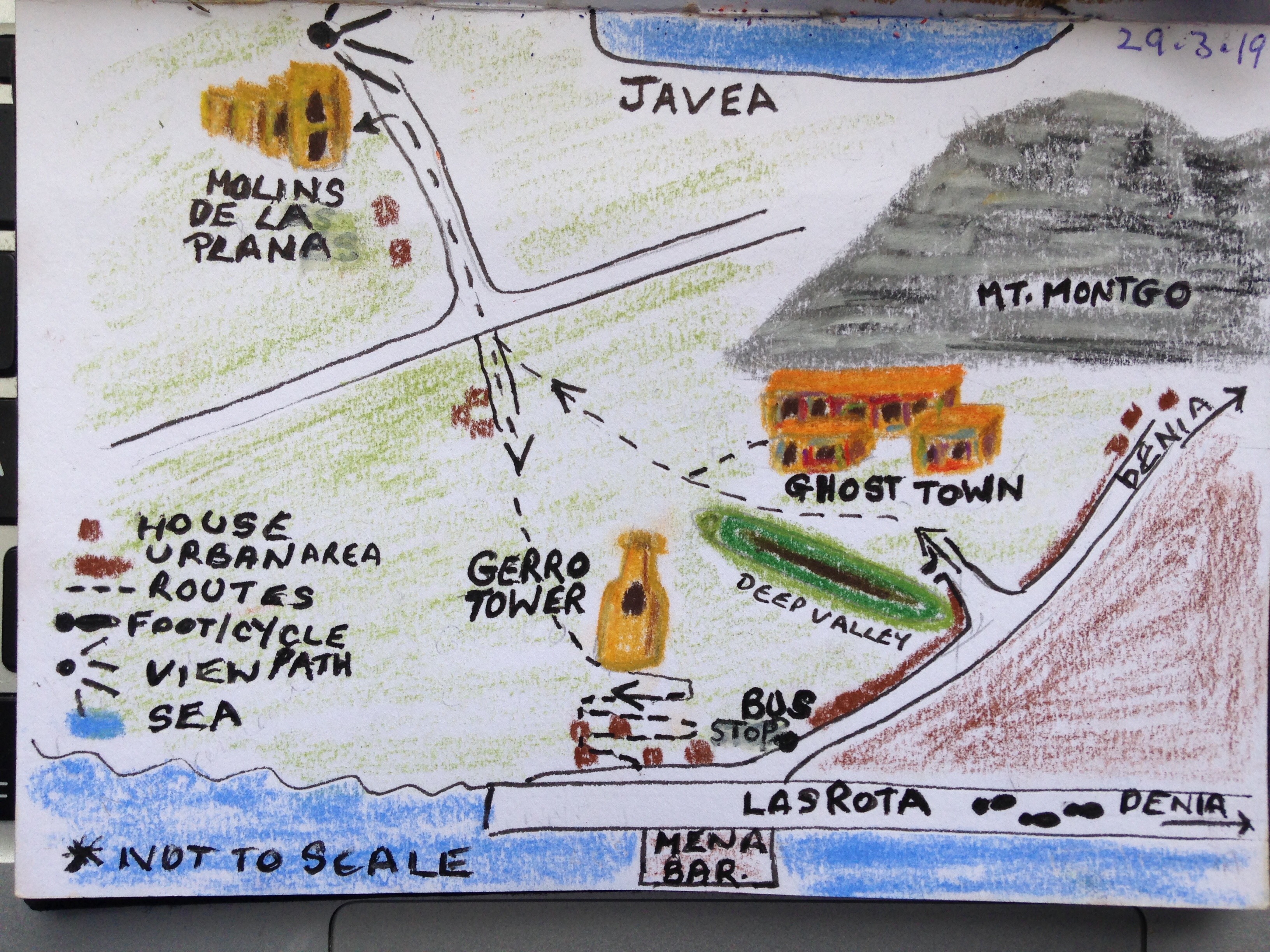
This is where we headed on our bright, shining day.

A gang of us walked to the Windmills that overlook the seaside town of Javea. We used a circular route, more or less.

We cannot guarantee that this map will get you there, but you will have fun trying!

It’s another follow your nose route. What could possibly go wrong?

The land around the Ghost Town and the Gerro Tower is very rocky, with clear paths that thread their way through; it is a slalom, with time to take in the the passing scenery. Once past the Ghost Town, you are onto a plateau, but with a terrain that is very uneven and broken. Wear shoes with a solid sole, as you’ll feel all those rocks with every step and your feet will be hurting by the end of your stroll. There is no scrambling or climbing, only walking.

The Ghost Town

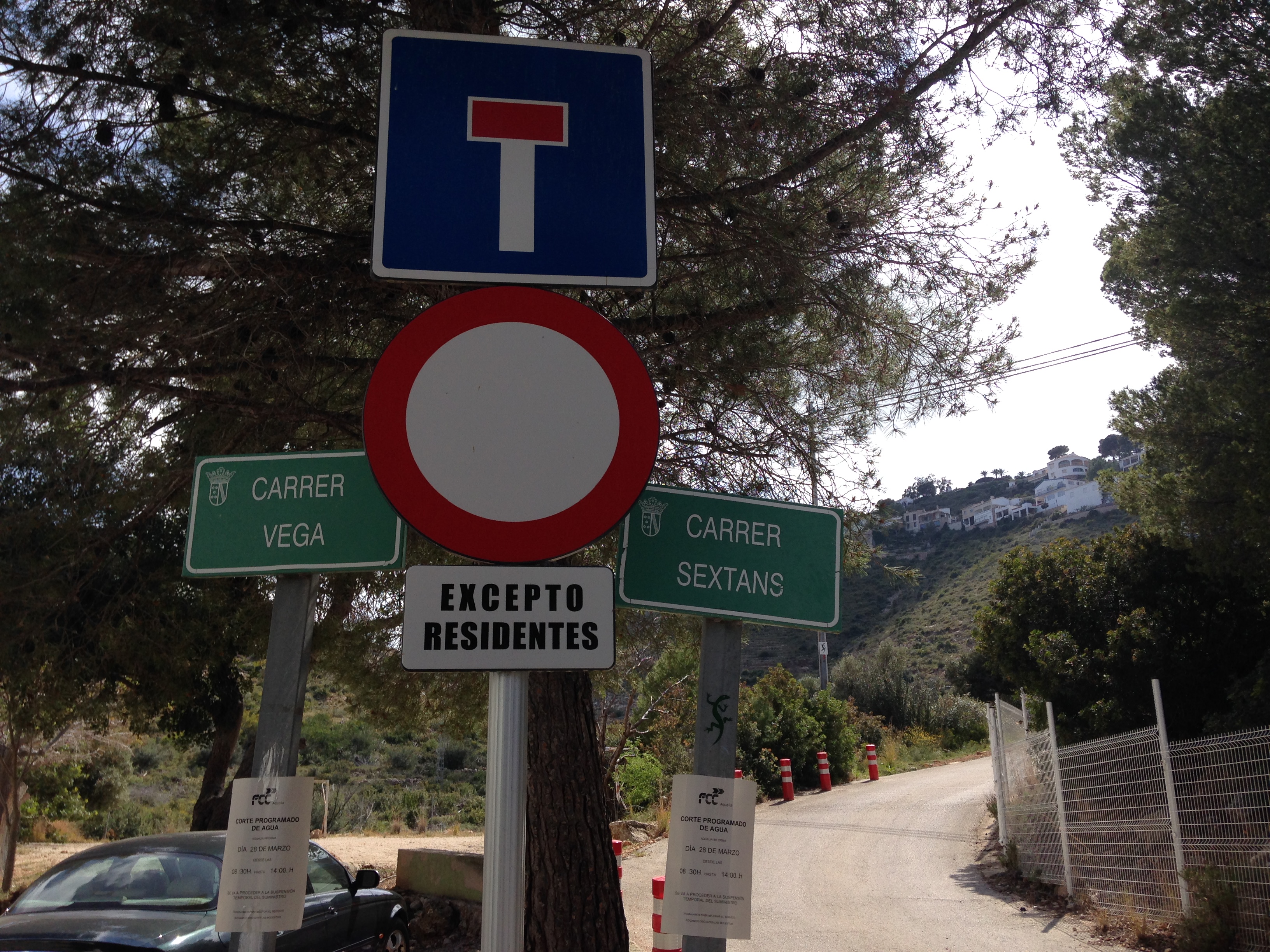
From Denia, walk along the Rota (seaside promenade), or catch a bus to the end of the Rota/Mena restaurant. Stand with your back to the restaurant, and walk up the road in front of you, passing the bus shelter on your right side. Take the first left turning; and then, after 30 yards (ish), the road splits into 2, take the right hand road, Carrer Sextans. It becomes a rough cement lane and then a very rough track within a minute or two. The track slopes up away from you at a steady incline.

Bear right here and then keep straight on. Easy.

From here you follow your nose, and the map, until you find yourself at the windmills.

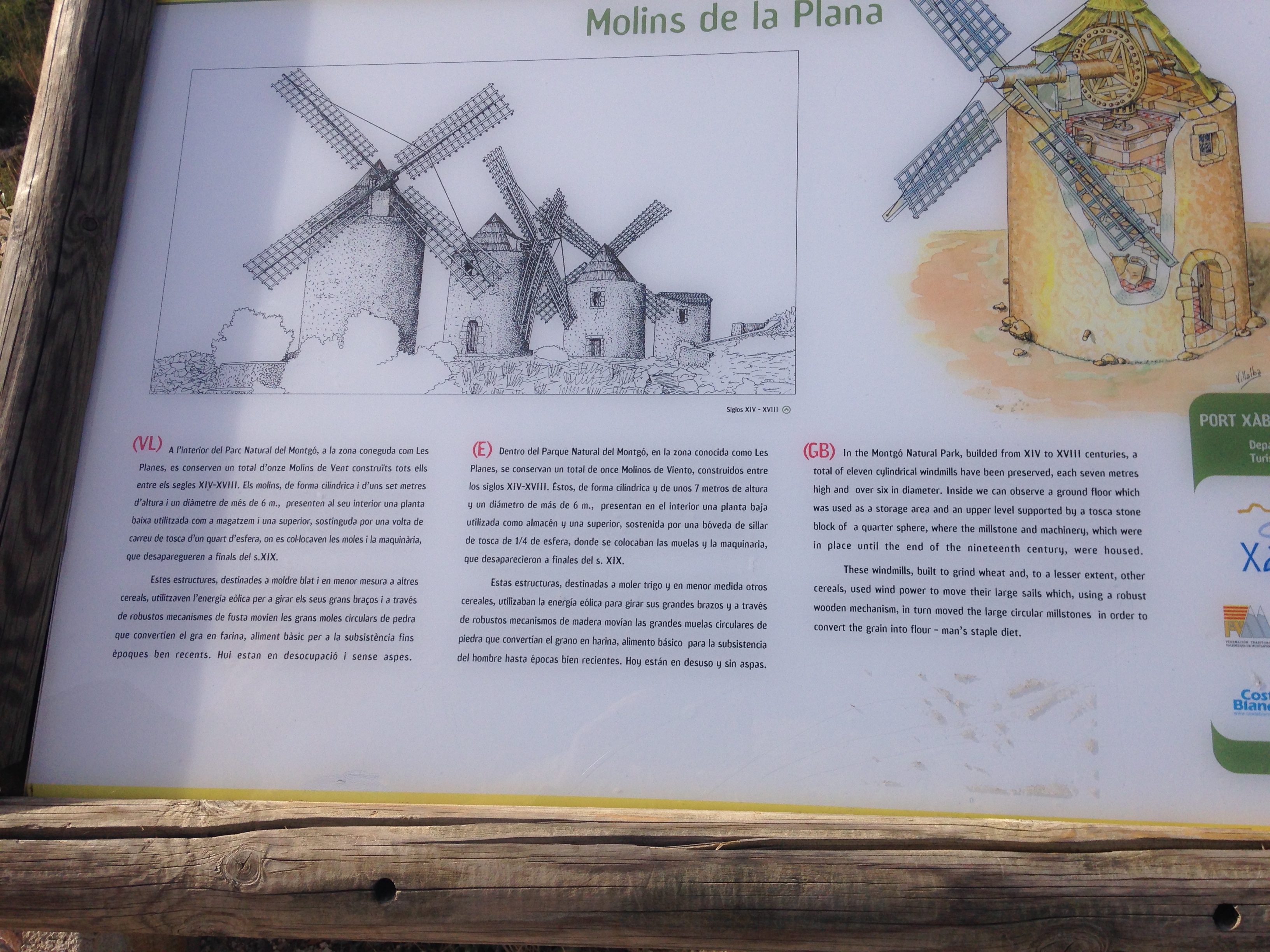
We thought you might like to swat-up on the Molins before you set out.

The view from the terrace that the windmills are built on, is stupendous, which is why we all have our backs to the camera and our cheerful, rosy cheeked faces to the bay of Javea.

What a gorgeous bunch of walkers we are.

Once you have filled your boots with your gourmet lunch, and the sumptuous vistas, you can either walk down into Javea and take the local bus back to Denia, or retrace your steps. Today, we retraced our steps to just beyond the eco houses and the end of the lane. Rather than bear left and walk back to the Ghost Town, we walked nearer to the sea, with that deep valley to our left side and the sea to our right; the path is obvious.

The Gerro Tower marking the end of the walk.

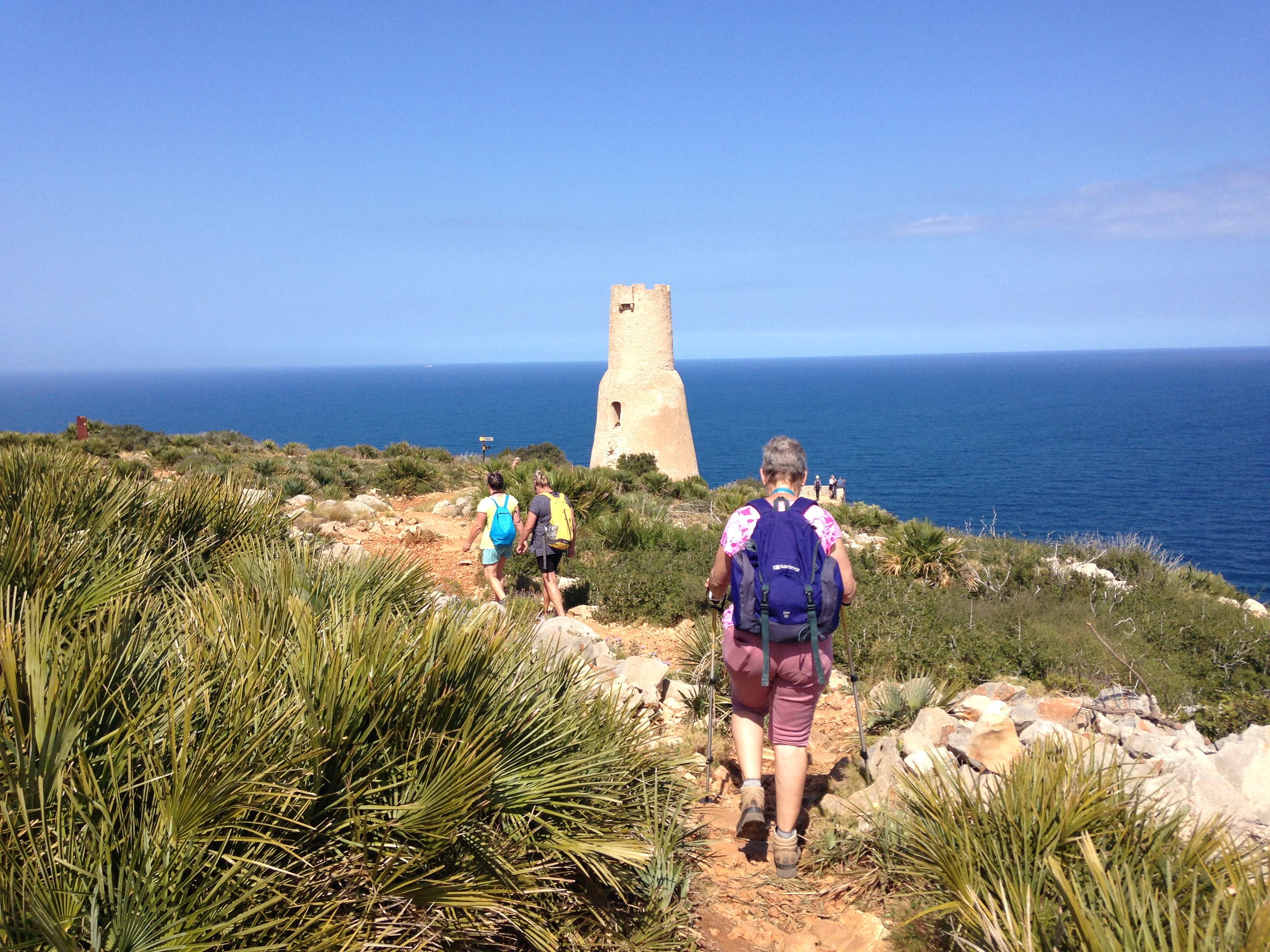
You can see the Gerro Tower for much of the final half of the walk, which makes navigation a doddle.

Our gang at the Gerro Tower; as I saw them, in their bright clothes, with their colourful rucksacks, on this sizzling hot day.

All you have to do now is wander down the zig-zagging path to the seafront and then back to Restaurant Mena where we recommend you have a well earned drink on their sunny seaside terrace.

Please feel free to leave a comment.

The Happy Hoeple Grouple

The Dutch have a word for Hula Hooping, Hoeple, it sounds like hoople.

All it took was one person to turn up to a yoga class with a hula hoop and a group of old birds got into a flap; instantly. Why would anyone bring a hula hoop to a yoga session? Who knows. This was the moment that marked the start of what became The Happy Hoeple Grouple.

The Happy Hoeple Grouple

At ten every morning we would gather to hoeple, roping in any passing, or gawping person who was daft enough to make eye contact with a Hoeple Grouple member. Men and women, old and older, from all sorts of European nations were press-ganged into giving it a go, with varying degrees of success and much laughter.

Our tiny gang of English people burgeoned to include a Dutch beginner. It seems that what us plucky Brits take for granted, the enforced hulaing at infant and primary school, is a British preserve. For the rest of Europe, hula hooping is a novelty, like stilt walking or unicycling, best left in the circus ring.

Hoeple Grouple Movie

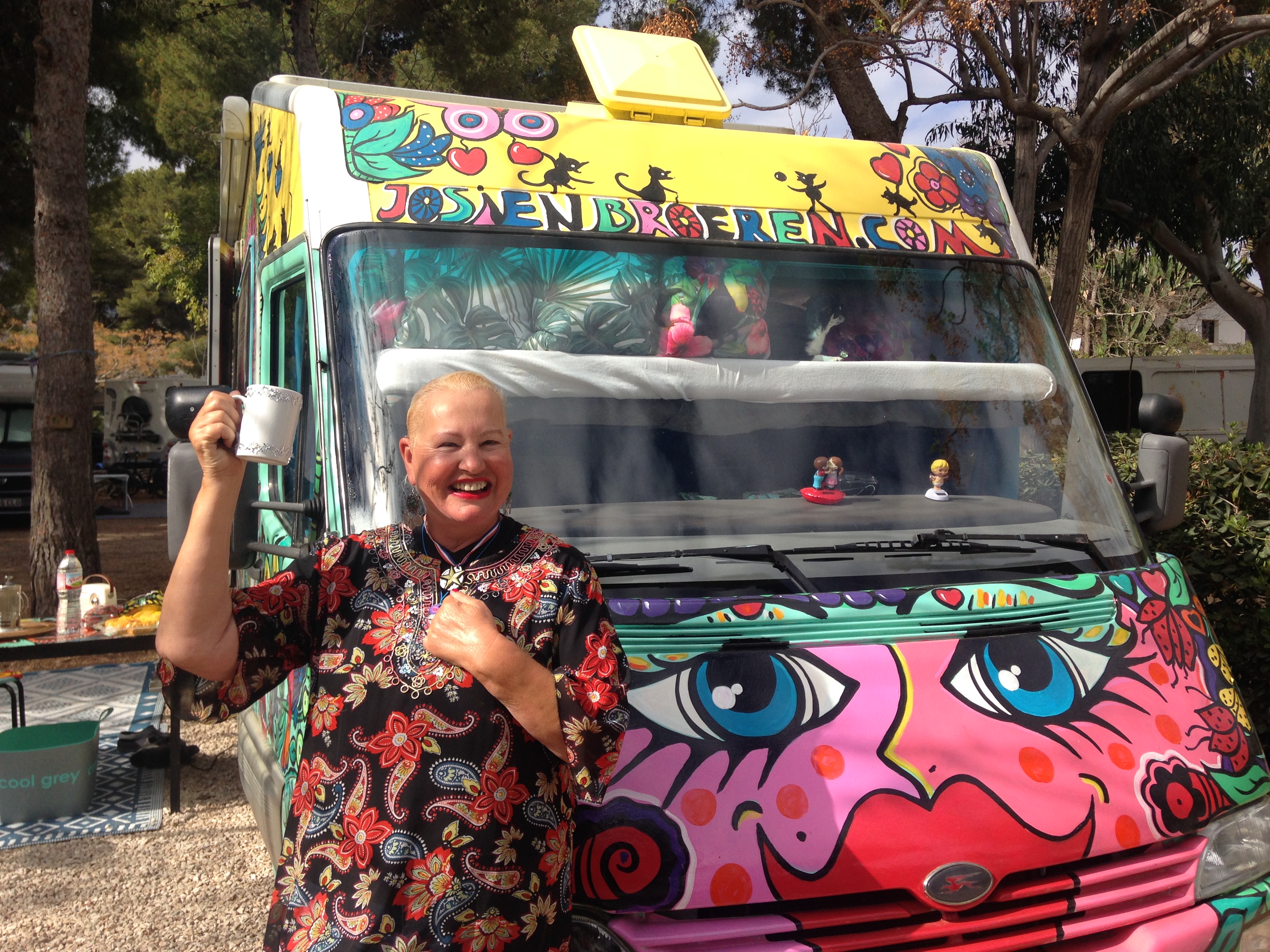
Our Dutch beginner took four weeks to learn to hula with grace, which meant she became our; Happy Hoeple Grouple Star Pupil 2019. She says she will lead the group next year, but not in hoepling, but in art. And when you take a look here at Josien’s work, you will understand why we are all as giddy as old goats about our next winter here, learning to paint beautiful handbags like a pro.

Artist and Houple Grouple Star Pupil Josien Broeren

Wally Dancer

When backpacking, ‘like what we were’, there is very little space for anything but the bare necessities. Wally washed a small amount of smalls and got to grips with drying them in the smallest amount of time. In his defence, he is saving the world, one handkerchief at a time.

The result is this flawless interpretation of that ancient art, Morris Dancing; unfortunately.

Moulay Bousselham will never be the same after this.

The Communal Baker of Fes

As we wound our way through the dark and forbidding passages of the ancient Medina in Fes, our guide repeatedly pushed us poor goggle-eyed westerners through doors. Almost invariably, once inside, we would be transported into an alternative world, wonderfully light and colourful and brimming with human joy and energy.

This doorway was different.

It was low and, as far as I recall, there was no door to open. I had to stoop to pass through the arch and step down into the smokey and blackened cave of a room. My eyes could not make out very much in the enveloping darkness. Our guide chatted to a dismembered voice that emanated from a raging fire set part way up a wall.

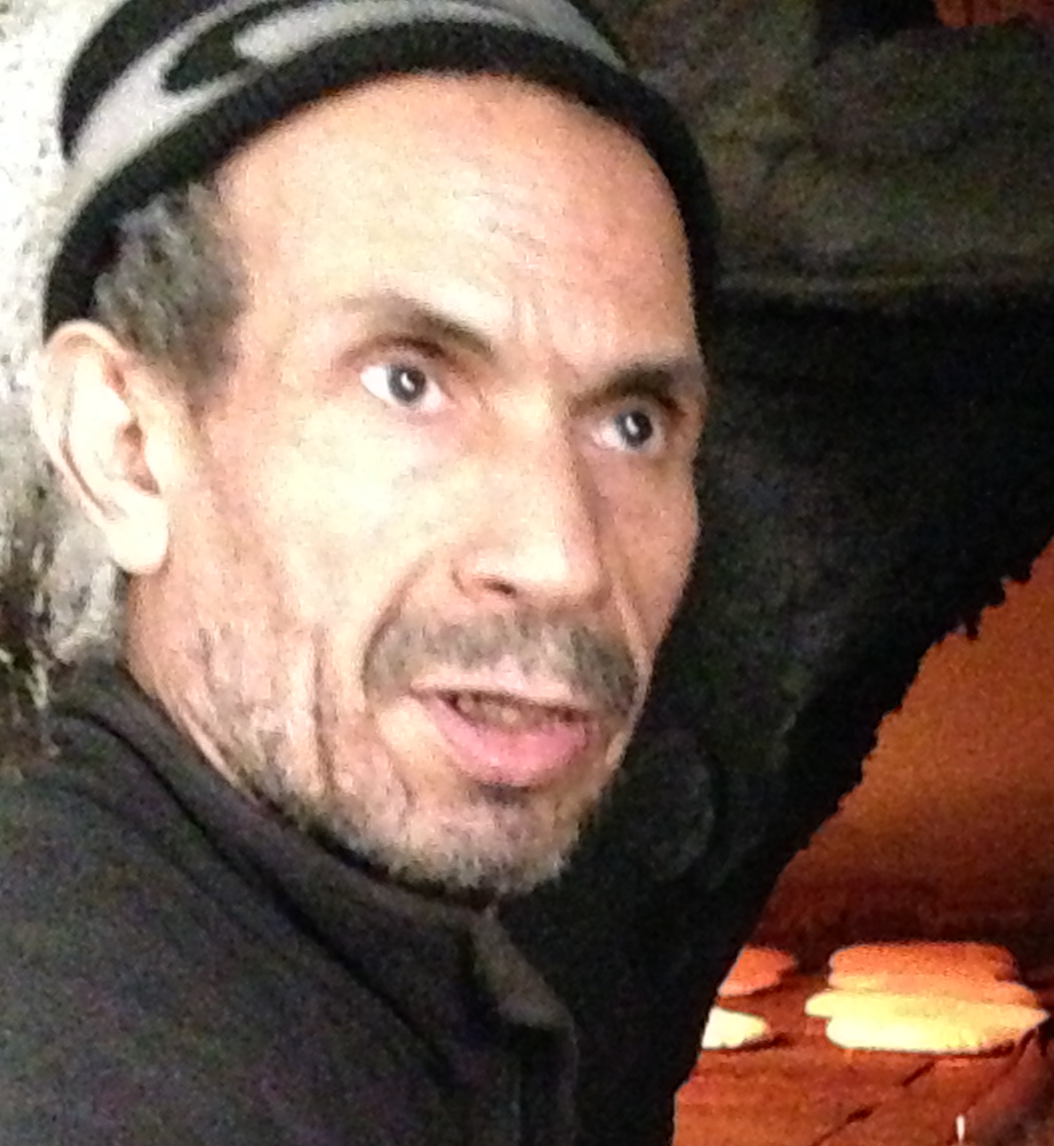
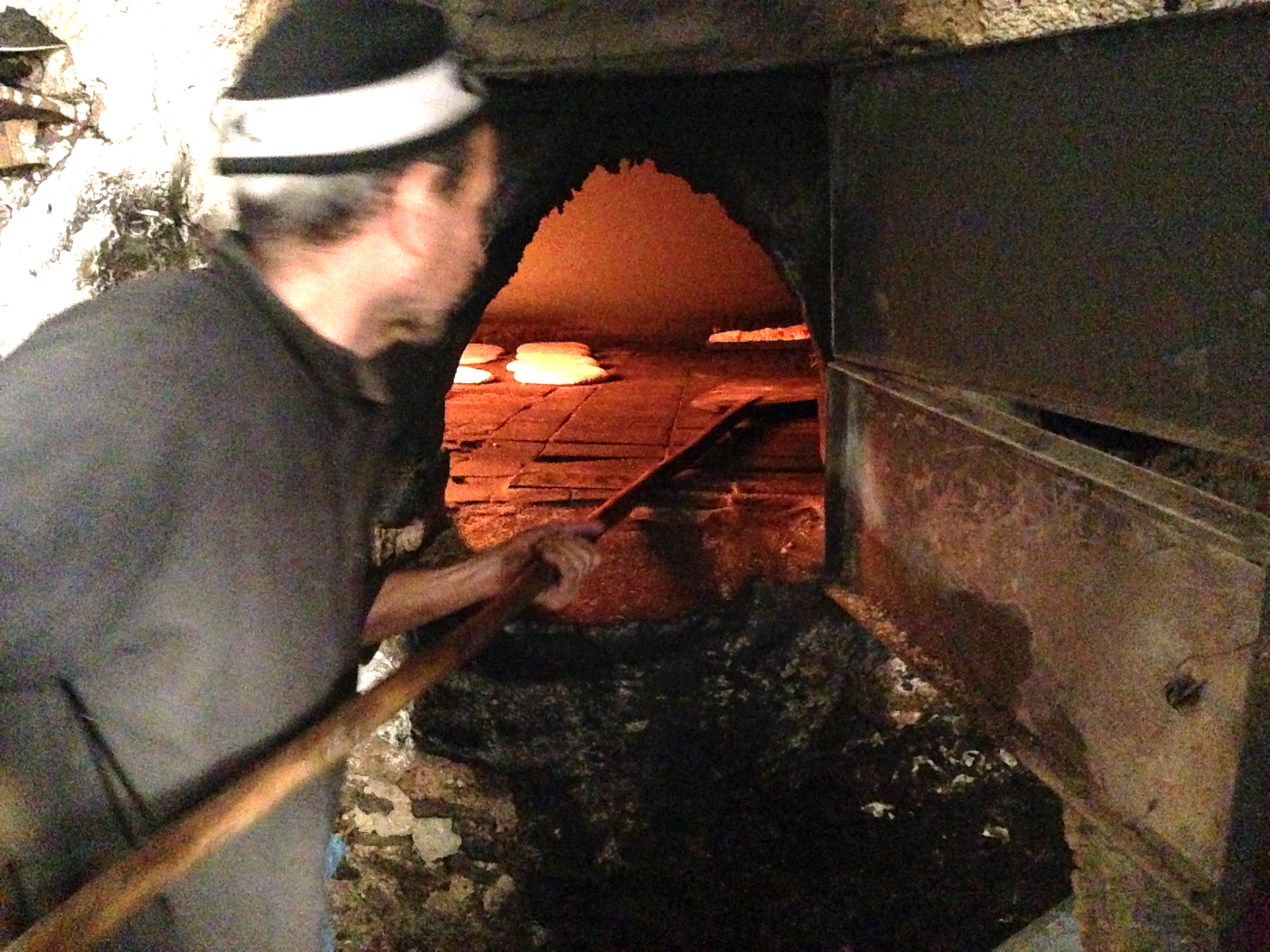
As my eyes adjusted, I was able to discern a wiry man crouched low on his haunches, on a grey, dust carpeted floor. He was wielding a very long handled peel, in front of a simple, gaping, wood fired oven. He deftly removed several flat round loaves of bread from the furnace, and placed them in a small number of baskets and trays that were on the floor behind him. Then he turned his attention back to the oven and began to move the embers about, making sure the base of the fire was clear of debris and ready to receive the next batch of bread. Our guide babbled on, explaining exactly what we were seeing. He need not have bothered. I knew what this was and I was transfixed. If I had ever bothered to write a bucket list, I now realised that this moment would have been right at the top.

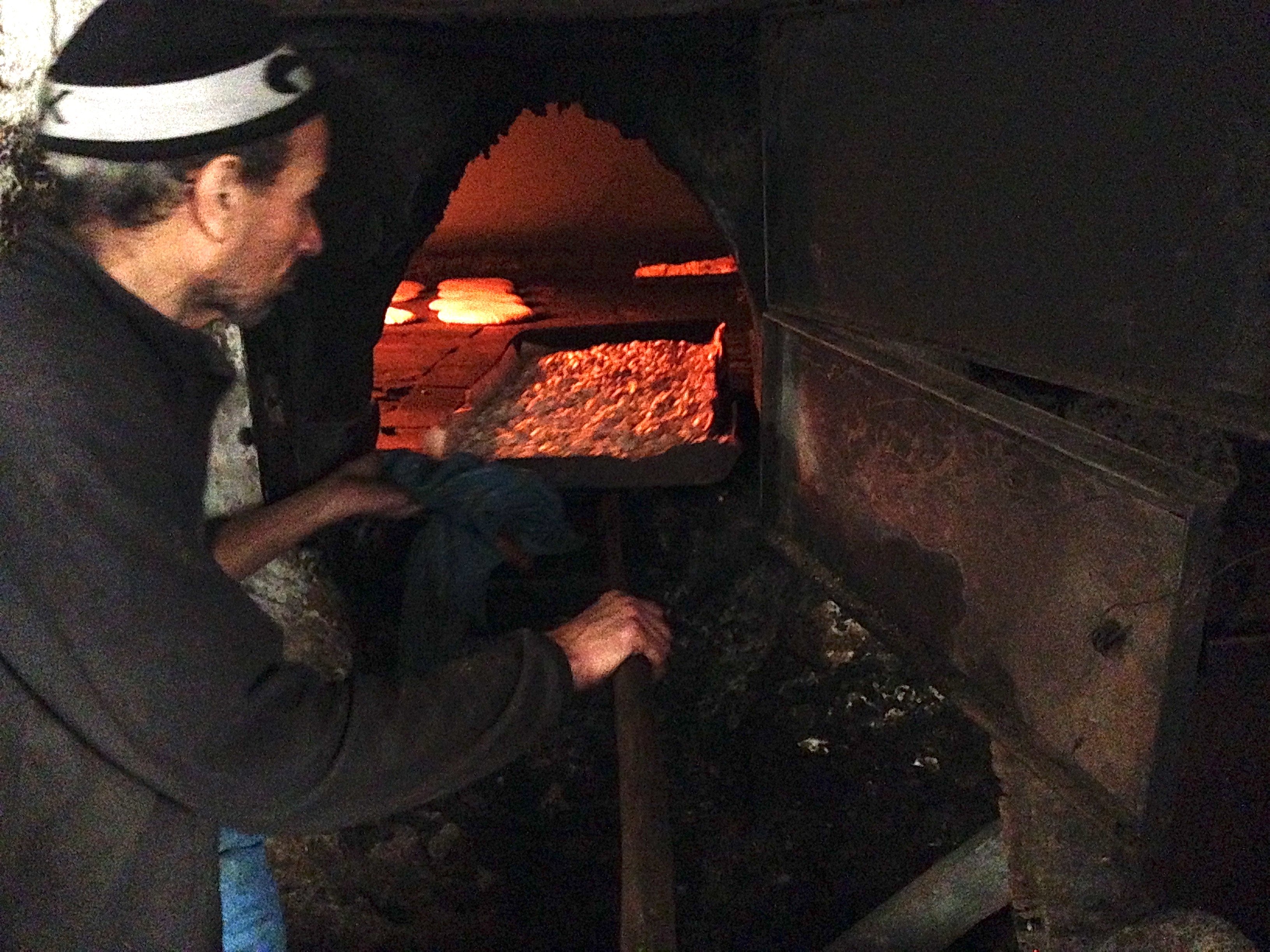
Eventually I managed to tear my gaze away from the flames and take in the rest of the tiny room. Deep shelves lined a couple of the walls and a mess of wood, much of it broken furniture and twiggy bits, was piled, floor to ceiling, against another wall. The shelves had a number of trays, boxes and baskets on them; bread awaiting baking, or collection. The wood, I was told, is purchased by the baker and not, as I had assumed, donated by the community members in part exchange for this service. This man runs a business.

A very blurred (!) picture of the bread oven: even the camera had trouble adjusting to the darkness.

The bake house works like this; local residents bring their home made, shaped, proving, but un-risen loaves, that have been carefully covered in spotless cloths. The job of the baker is not only to bake the bread, but also to make sure that every batch in his charge is allowed to rise to the perfect point for baking. Once baked, at this precise moment, he must make sure that everyone receives their own loaves when they call to collect them. He must never muddle up his customers’ breads.

If you know me, you know I have a bit of a bread fetish. I eat it, I make it, I love it. It is such a simple thing that can keep your gut biome so healthy and, when fresh and warm can bring a group of strangers into friendship, as they rip off lumps, dunk them into a simple unctuous sauce and eat. There is nothing like it, that costs so little and yet offers so much. Knowing this about me, you can imagine my gushing, girly, response to the realisation that I was in a communal bake house. I still come over a bit wobbly at the very, heavenly, thought of that moment.

As a sideline, this hard grafter also bakes daily trays of nuts to sell in the Medina and he will bake almost any food for a fee. People here do not have ovens, preferring to cook on simple burners using bottled gas. The communal Baker comes from an ancient tradition that still, to this day, suits everyone.

I have to admit that I nearly did my Captain Oates impression that afternoon, “I’m just going outside and may be some time.” Only Wally and our guide could go outside and leave me for some time. I was such a happy bunny.