The Happy Hoeple Grouple

The Dutch have a word for Hula Hooping, Hoeple, it sounds like hoople.

All it took was one person to turn up to a yoga class with a hula hoop and a group of old birds got into a flap; instantly. Why would anyone bring a hula hoop to a yoga session? Who knows. This was the moment that marked the start of what became The Happy Hoeple Grouple.

The Happy Hoeple Grouple

At ten every morning we would gather to hoeple, roping in any passing, or gawping person who was daft enough to make eye contact with a Hoeple Grouple member. Men and women, old and older, from all sorts of European nations were press-ganged into giving it a go, with varying degrees of success and much laughter.

Our tiny gang of English people burgeoned to include a Dutch beginner. It seems that what us plucky Brits take for granted, the enforced hulaing at infant and primary school, is a British preserve. For the rest of Europe, hula hooping is a novelty, like stilt walking or unicycling, best left in the circus ring.

Hoeple Grouple Movie

Our Dutch beginner took four weeks to learn to hula with grace, which meant she became our; Happy Hoeple Grouple Star Pupil 2019. She says she will lead the group next year, but not in hoepling, but in art. And when you take a look here at Josien’s work, you will understand why we are all as giddy as old goats about our next winter here, learning to paint beautiful handbags like a pro.
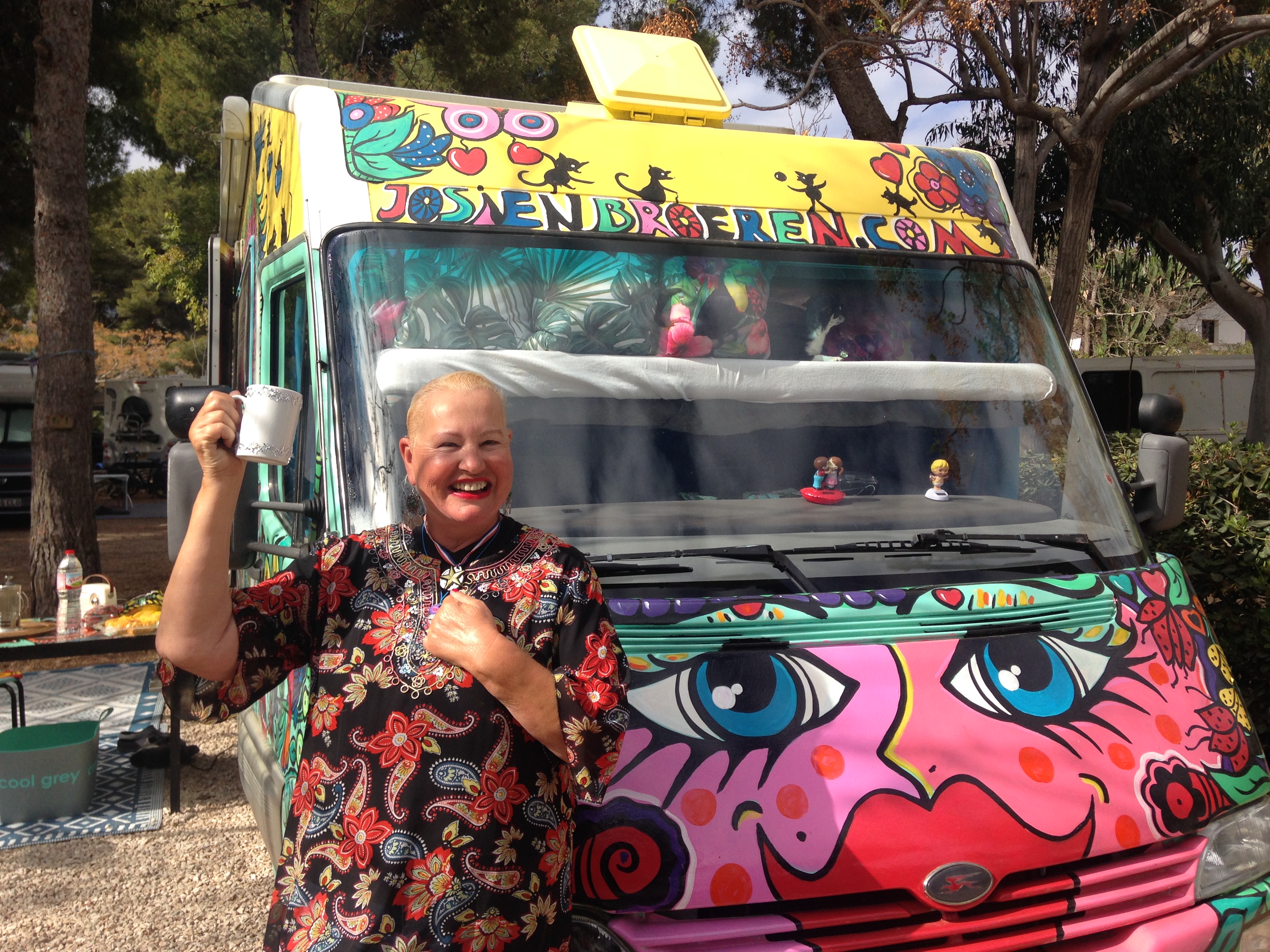
Artist and Houple Grouple Star Pupil Josien Broeren

The Road To Morocco

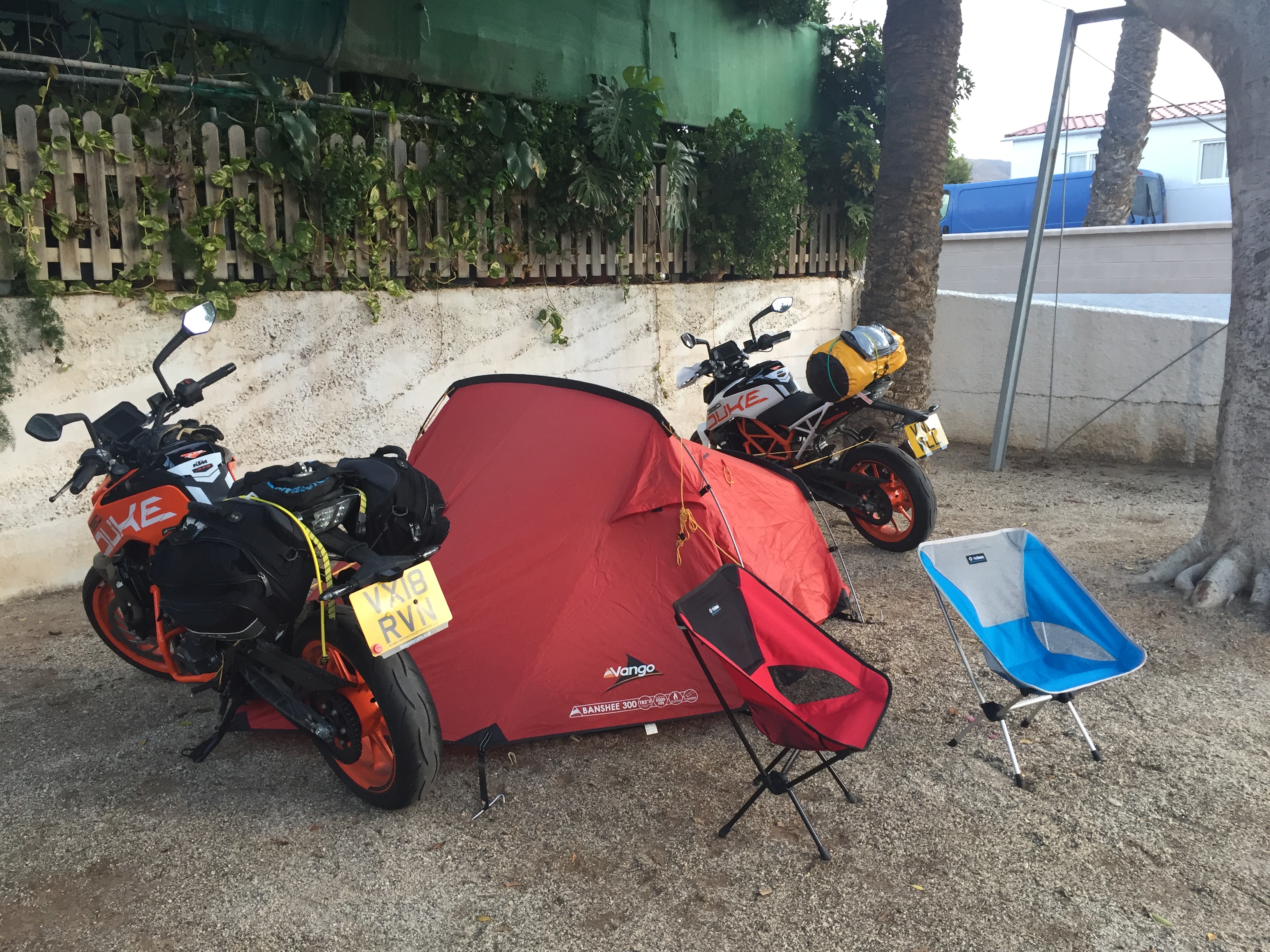
Imagine, you want to spend a couple of weeks in Morocco. You’ve never been there. It’s a 400 mile ride from your base on a Spanish campsite to the ferry port; and the weather is fine.

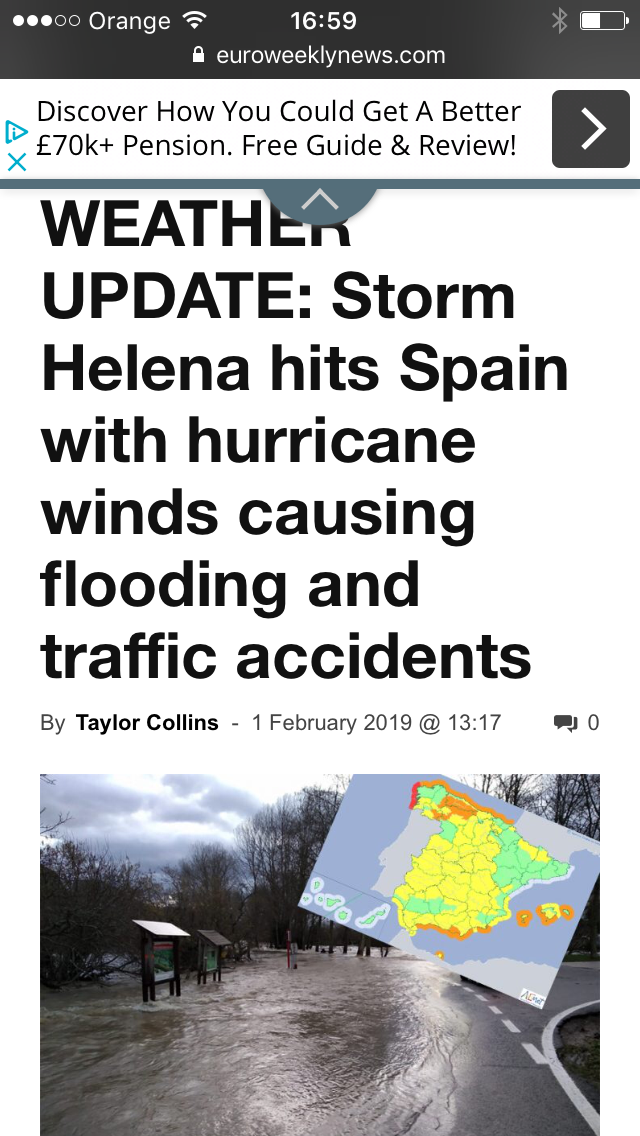
How is it, that on Wednesday, almost the moment we locked up Barri the VWT4 camper bus and left him and our fondly waving friends behind in the campsite, the weather began to change. Not enough, you understand, to make us rethink our ‘plans’. No. Just enough to make the first couple of hundred miles, shear murder. The wind blew stronger and stronger and gusted wildly. We ended up at a steady crawl and hanging onto the handlebars like silly puppets on strings as the wind attempted to lift us off our saddles.

Overnight, we had a sheltered spot for our little tent and the bikes, but we could hear the wind howling all around us, all night. At least it didn’t rain and the evening slipped by quickly, helped by the folks in the campsite bar who were very welcoming.

Thursday came, grey and easily as windy as the day before. We set off, fresh and enthusiastic. The moment we hit the main road, the A7, it started all over again. Just like the previous day, the scenery was jaw dropping in it’s diversity and rugged beauty. The sea on one side and mountains on the other; the reason we chose this route. Were we able to enjoy it? Not a chance. We settled on stopping every hour to recover; Jen for hands and Wally for his white finger, which the bike seems to provoke mercilessly. What a pair of crocks. The wind increased massively as the day went on. We took to slip streaming behind trucks for a bit of stability. It was remarkably noisy all the time and pretty frightening to ride some of the time. Could it get any worse? Hell Yeh! It began to rain. Why us? Peering through my road grease, rain smeared visor, a sign loomed large; Deer. We wondered what else nature could throw at us.

It took us 3 hours longer than our estimate to get to the edge of the port city Algeciras and the agent who would set up our paperwork so that we could get into Morocco without hiccups.

Enough was enough. We headed for the nearest hotel (not the one next to the agents!) and luxuriated. No boats sailing Friday, the sea state was an issue. It seems we’d decided to ride 400 miles in hurricane force winds. No wonder we were tired.

What a pair of numpties.

Unexpected Pleasures

When we washed up on this campsite last winter, cold, bedraggled and unhappy, we thought we were running away to a CAMPSITE. And I guess we were. But this is no ordinary campsite as todays blog will attempt to demonstrate.

People come here for a variety of reasons. Like us, I’m sure you assume it’s to keep warm and live longer. Well, you are spot on there, but you win no coconut Sherlock. Once here reason goes out of the window and over the months and years, a real village community has formed, which some fully embrace, whilst others brush up against this bubble and bounce off onto pastures new and less invasive.

Like many people, we sit somewhere in between. We know that we will want to keep coming back, as there is something deeply appealing about a fully formed and welcoming community. It would very easy to fall into the habit of being here, year in, year out, but we doubt that we’re ready for the quiet life just yet.

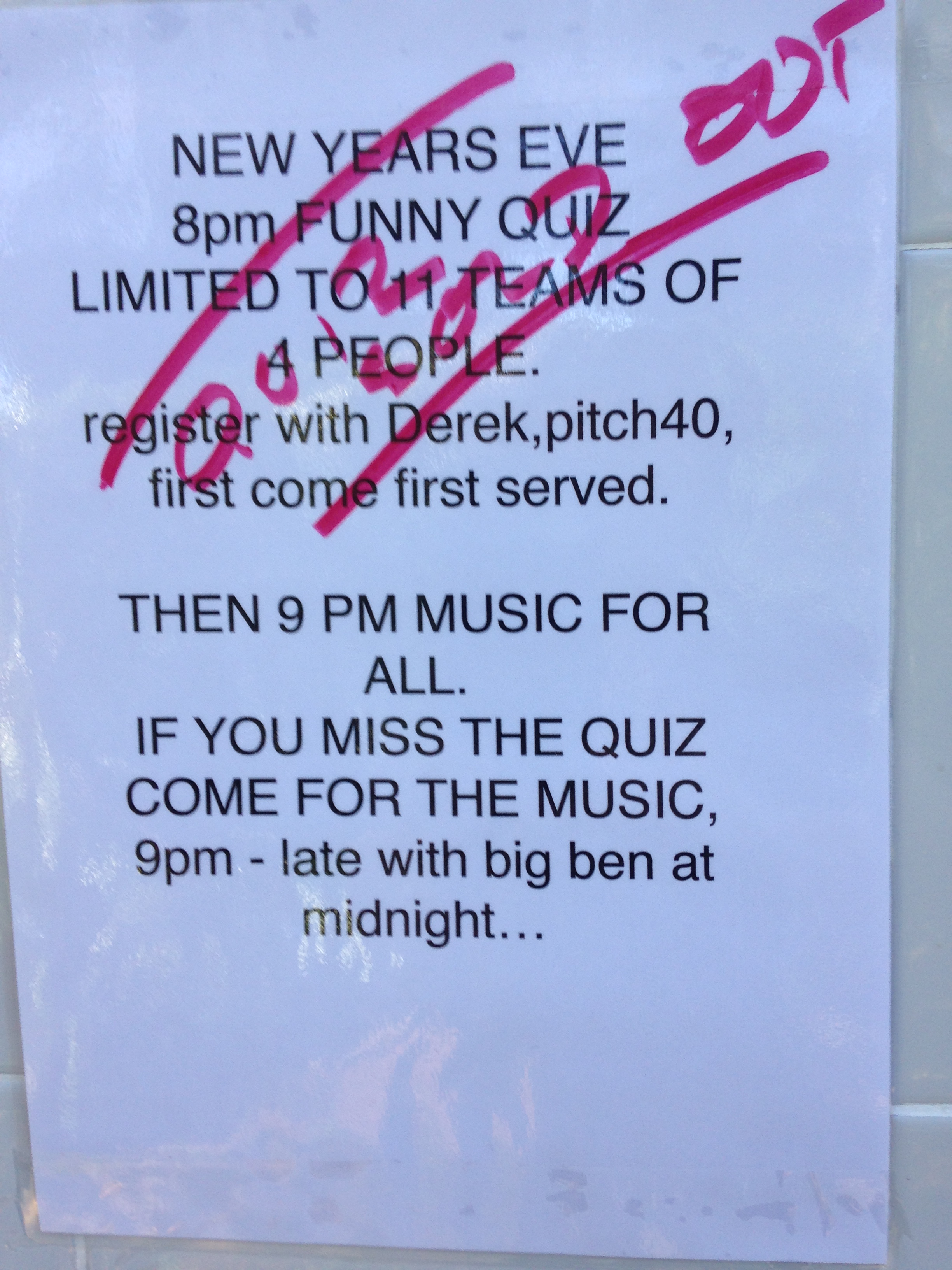
Today, better late than never, we bring you a 4 minute video about the new year here as celebrated in our parallel universe.

The Campsite As A Nature Reserve

With about 100 pitches, our campsite is small. It’s also fairly basic, sporting three shower/loo blocks, a laundry room, two places to hand wash clothes and a couple of sets of sinks to do the dishes. Apart from that, there’s not much here, other than the owners house, which also accommodates the small bar/shop and the social room. Like many campsites along the Spanish Mediterranean, it doesn’t need much more. Except, shade in the summer. On this site that is provided by a good variety trees and other tall plants.

Over the winter the clientele want as much light as possible and so the Eucalyptus trees are heavily pruned and yet still put on about a metre of growth a month. Buy the start of the high season the trees have a full canopy again, thus offering the goldilocks formula of summer shade and winter sun.

It turns out that this site is rather unusual, as the original owner, the mother of the current management, called this caravan park her garden and took great pleasure in selecting just the right plants for each pitch. Her first job was to give the land a skeleton, by marking off the boundary of each pitch with some low shrubs. She then had to punctuate the garden with some statement plants and to do this she hadto have date palms, the sign of a hot, sub tropical climate and so exotic to her northern European clients. The choice of a large number of Eucalyptus trees for their tolerance of the heat, their cool grey green colour, their aroma, and their shady, dappling canopy was inspired. She also picked trees for their berries and seeds and indigenous trees too.

As an underplanting, there are a range of succulents, including the sweet fruit and vicious needle bearing Prickly Pear. Beneath all these tall plants there are pots of plants absolutely everywhere.

When the ‘garden’ was planted, people arrived with modest caravans, small camper vans, or tents. There was no real struggle to negotiate these little homes around the the site and onto a pitch. Times have moved on, as has the motor industry. Caravans and motorhomes are generally much bigger than they were 20 years ago, when many of the regular campers first began to come here. Watching a modern vehicle or radio controlled caravan, shunting back and forth in order to turn a very tight corner bounded by four or five mature trees is a real treat for us.

What has all this got to do with nature?

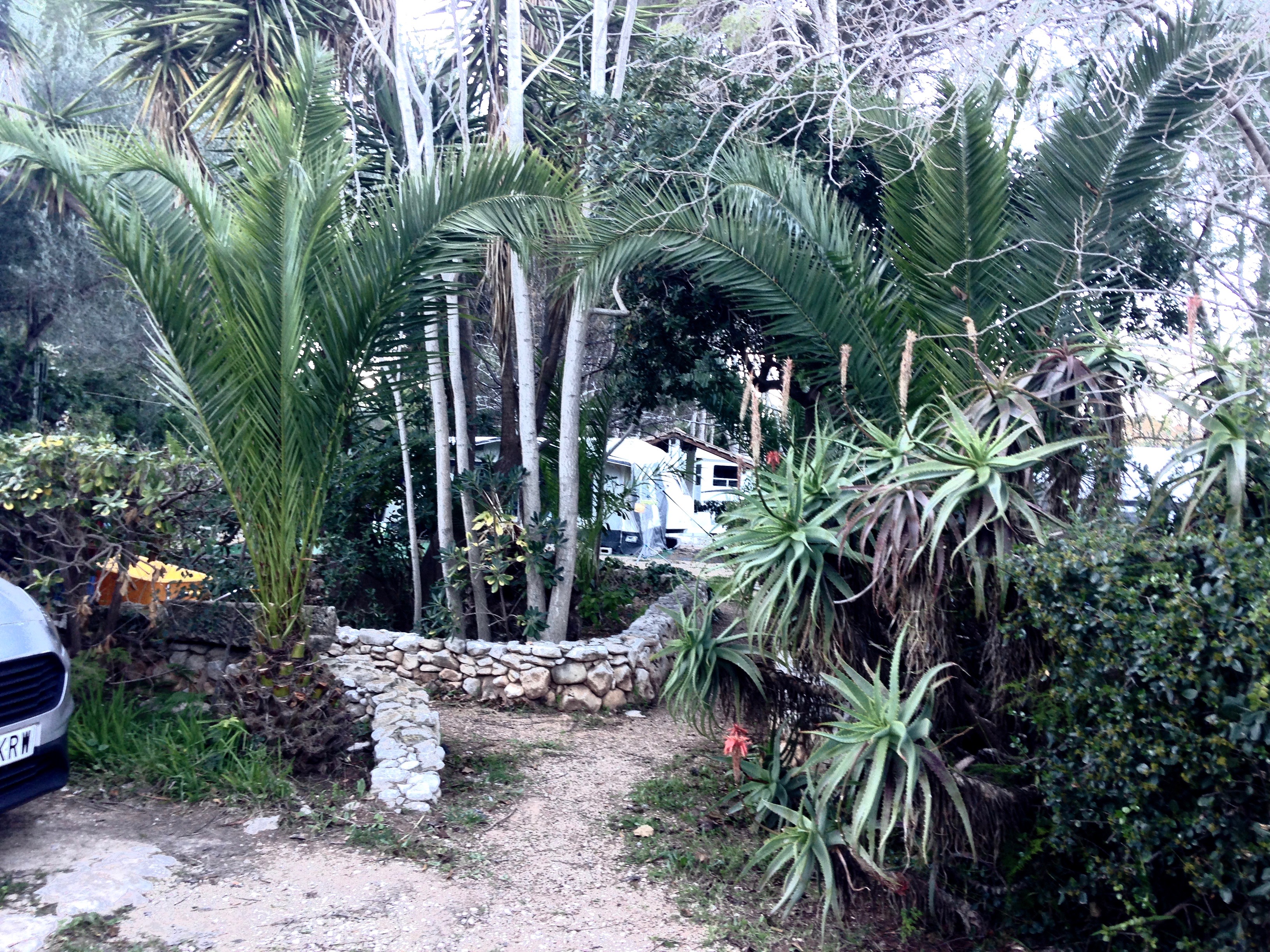
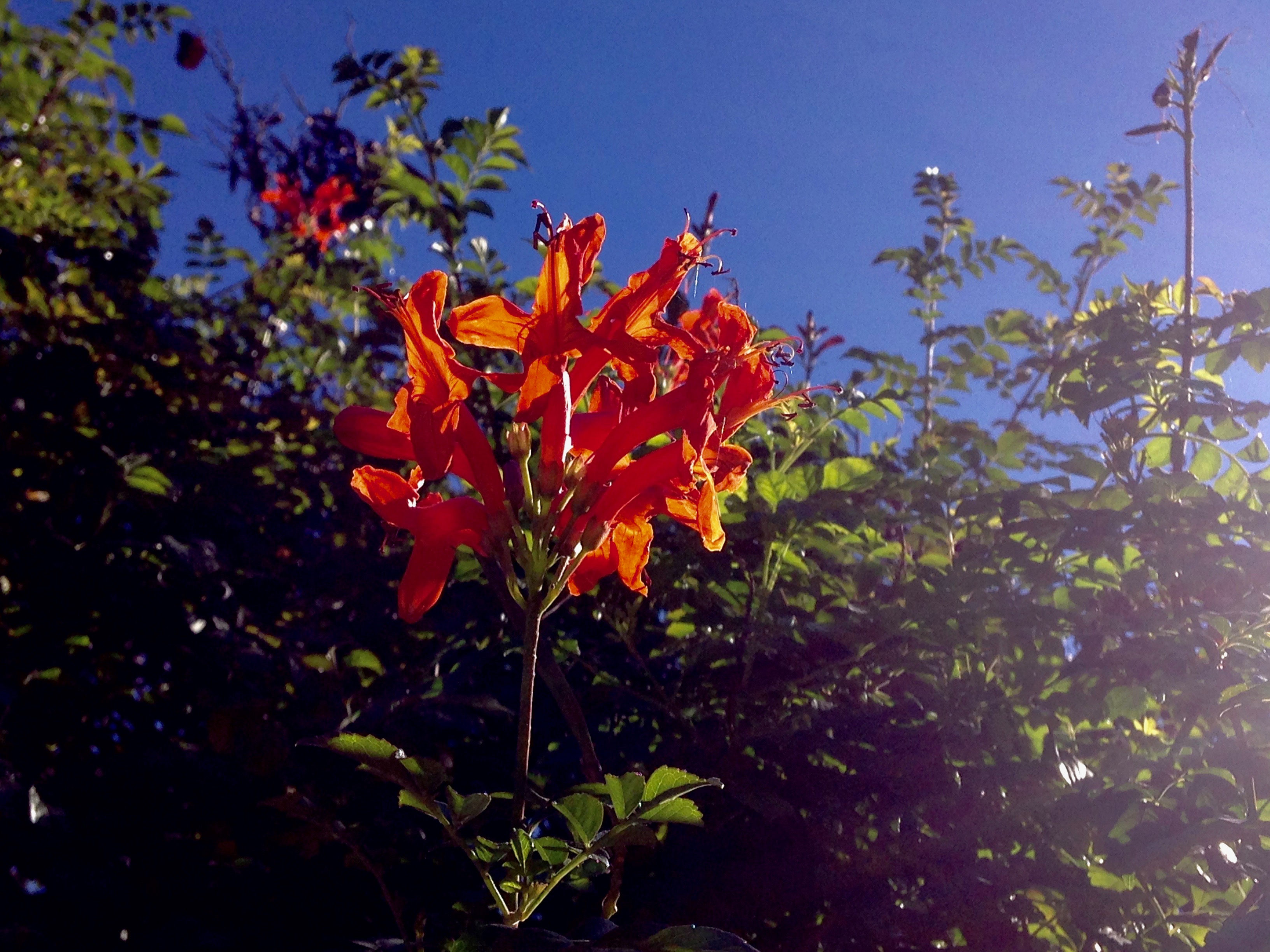
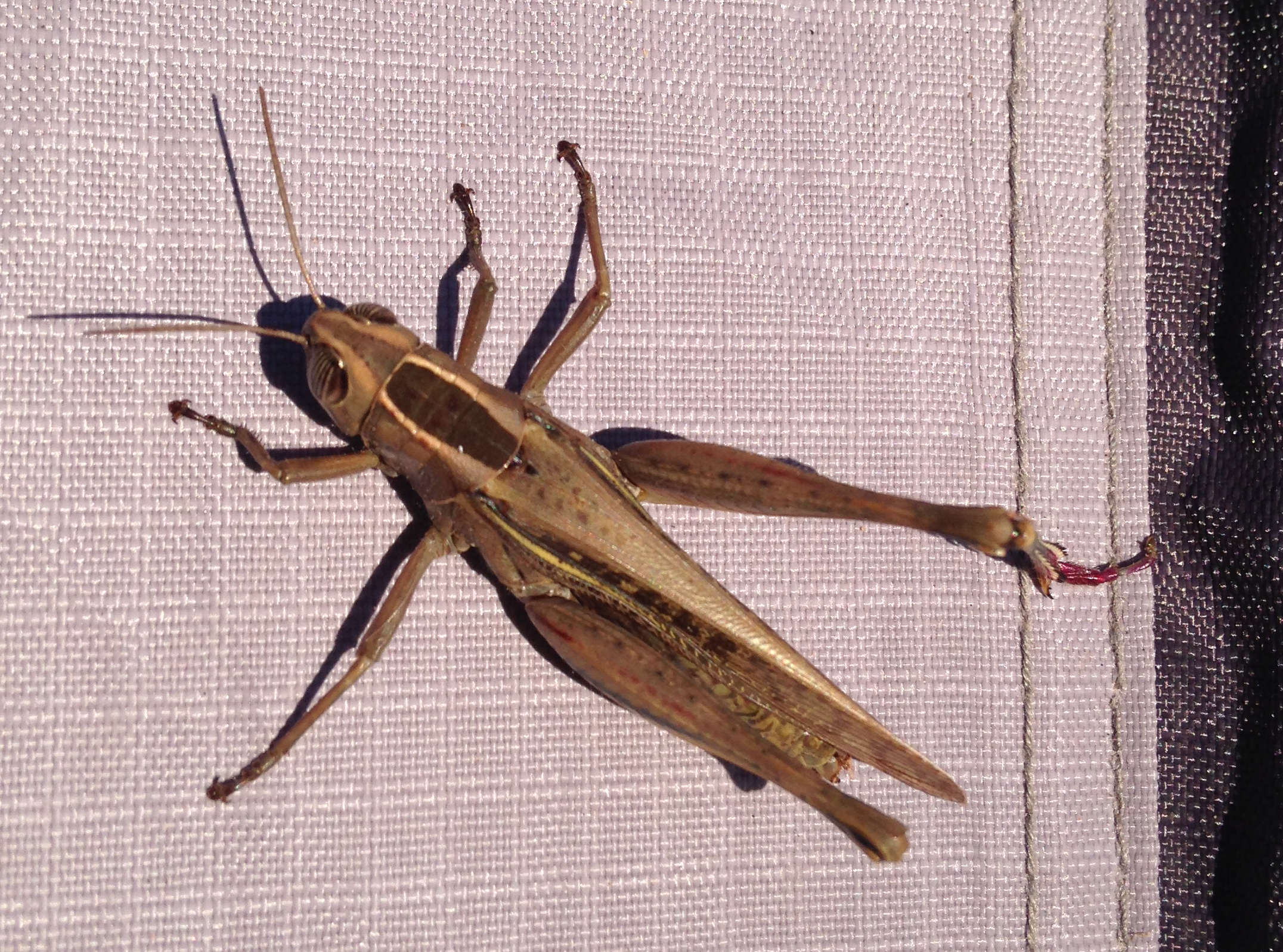
The owners have created a lush garden that happens to be a campsite. Where there is a garden, there is life and this place proves that, as do the images throughout this post.

Montgo Low Level Loop

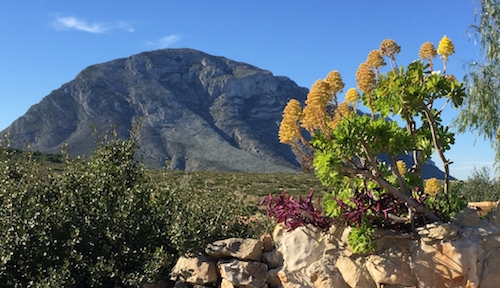
Montgo

12 kilometers, 4 hours, 200 metres climbing.

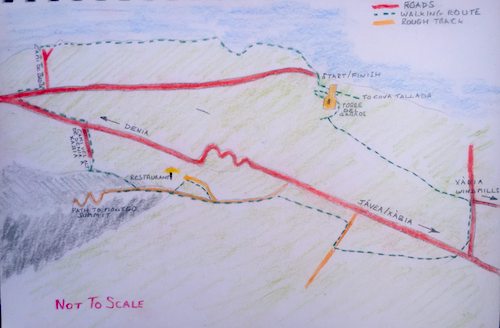
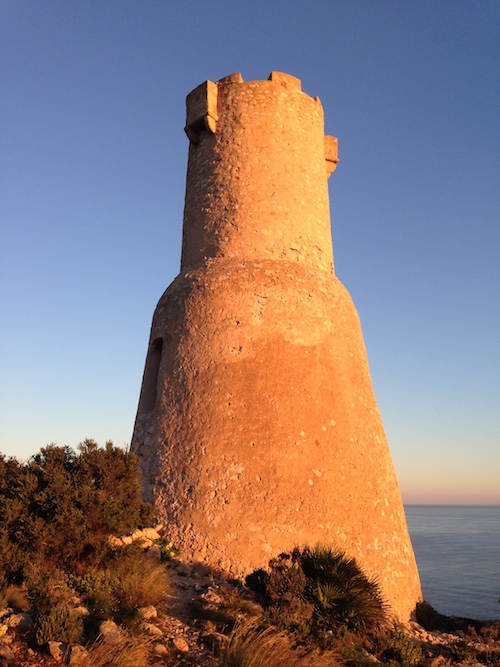
The climb to Torre Del Garros is the only true ascent on this walk. Standing 150m above the Mediterranean shoreline the tower commands spectacular panoramic views. The walking is on rough stoney paths and cart tracks with a small amount of tarmac roads. There is some parking at the end of the Care del Mohya les Arantes just past the Mena restaurant. It can also be reached by bus from Denia. This is the start point.

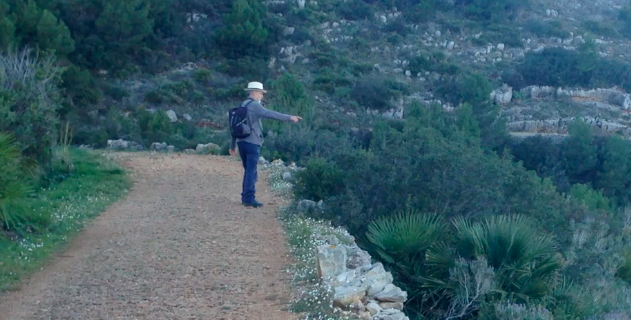
Take the road marked as a walking route for the Cova Tallada and follow the switchback road until you reach the Torre Del Garro. Pass the tower and take the obvious track turning off to the left. The path is well used though quite rocky and continues like this for around 3k. On the right you have the fortress cliffs of Muntgo below which you will see the so called ‘Ghost Town’, an abandoned holiday development. 

Settlement

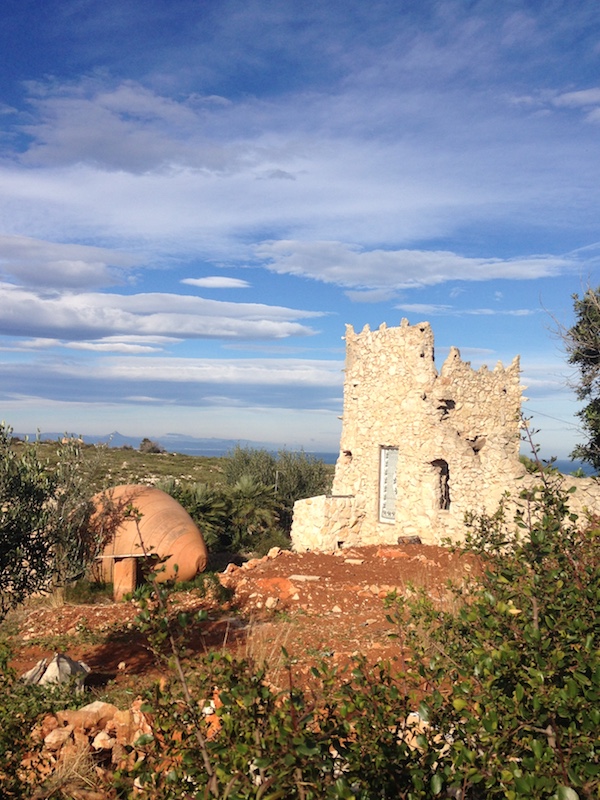
After 3k you pass through a small settlement and join a wide gravel track, follow this until it meets a tarmac road. Straight over leads you to the Moulins (windmills) at Javea, our route leads you along the road to the right. After 500m you will meet the Denia to Javea road which you cross and a woodland track continues beyond.

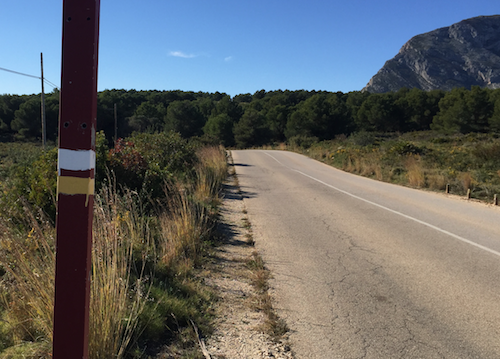
White and yellow route marker

This track continues until it meets another gravel track. Turn right and, after another 500m, left onto another woodland track. After a short time you again meet a gravel path and turn left. Montgo now appears to rear up in front of you so you may feel the need to make a 500m detour, right, to the nearby restaurant for refreshments. Otherwise carry straight on at the barrier. You can rejoin the route from the restaurant area if you want.

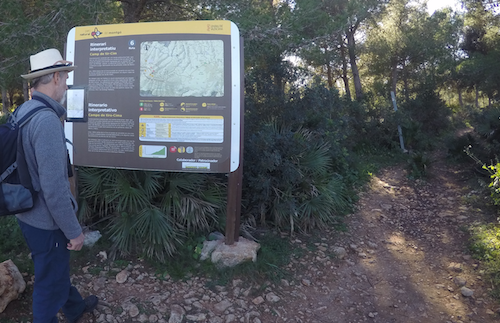
Information board near restaurant

1k from the restaurant there is a finger post indicating the Cova del Camel; take this narrow track. Eventually the track drops into a narrow gorge and at the far side of the gorge, you will see the broad track called the Carrer de la Colonia. Make your way with care and reach the Colonia. After 500m there is a small track dropping away to the right and in the distance a development of whitewashed houses. Take the track until it joins the Cami Vell Alt de Denia A Xabia. At the end of the Cami Vell a right turn leads you to the Denia to Javea road. Denia is within easy walking distance to the right.

Look for the return track here

To return to the car park, walk toward Denia and on reaching the Hotel Poblets, turn right onto the Carre Barrone del Mohya les Arantes. If you turn down the first road on the left, the Cami de Badia, you can make your way to the coast. Finally turn right for a pleasant seaside walk back to the car park.

Note Xavia/Javea are the same place.

From the tower look out for:

Valencia to the north.

Distant Ibiza to the east.

Cap de Sant Antoni to the south east.

Montgo to the south.

You may see:

Crag Martins hunting in the gorge below ‘Ghost Town’

Sardinian Warbler

Black Redstart

Stonechat