Morocco Trek (part 1)

Port Tangier Med to Fes
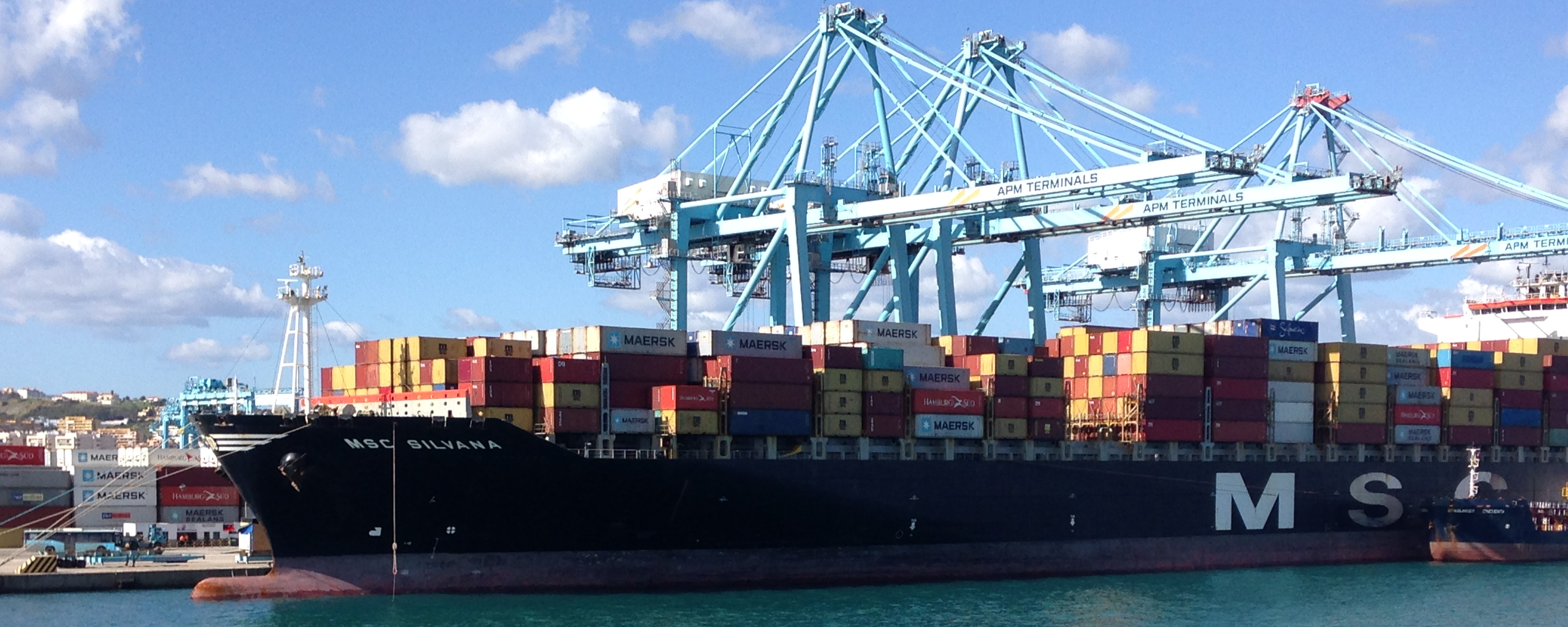
We finally crossed the Straits of Gibraltar, after a long delay, and landed in Morocco in late afternoon. Next the dreaded customs formalities, endless queueing for the inevitable paperchase…..or maybe not? We breezed through in half an hour, including exchanging money and arranging motor insurance (900 dirham or about £75). We felt our luck had just changed.
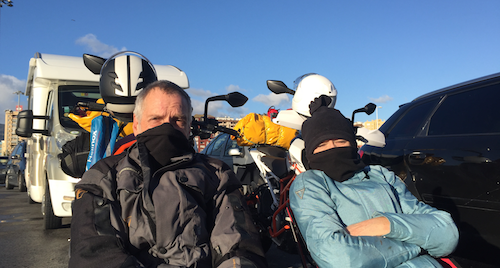
Waiting for the ferry in Algeciras

The original plan was to ride to Chefchaouen, about 2½ hrs from the port, and find a campsite. It was however, already 4 p.m. and we didn’t want to arrive in the dark. We decided to wing it and stop as soon as we saw something suitable. Apart from Jen getting blown off her bike, we arrived at an hotel about an hour later without a major problem.
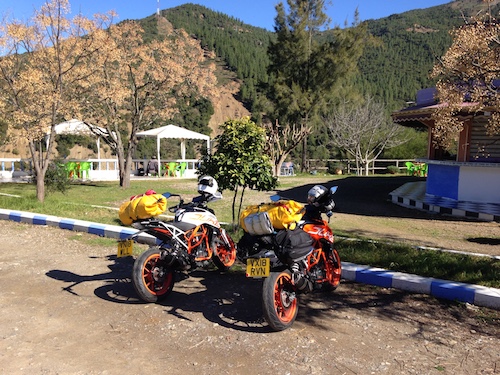
Time for a tea break

Up early the next day, or as early as Jen could cope with, we packed and set off towards Chefchaouen, about 50 miles away. We were feeling quite smug that we had survived our first day in Morocco. Too smug, too soon I think. The next town, Tetouan, was meant to be a dot on the route; a dot that we hadn’t planned to visit. We had momentarily got off route and pulled over to check the map. A motor scooter pulled up alongside. The spiel is generic, someone must have written a guide for Moroccan touts.

“Hello my friend, I have a brother/sister/cousin/son who lives in London/New York/Paris.”

Insert the relative and capital city of your choice.

“You are in luck my friend, it is a special Berber market in Tetouan today, only once a month.”

I faltered and was easily hooked.

“Follow me, safe parking”
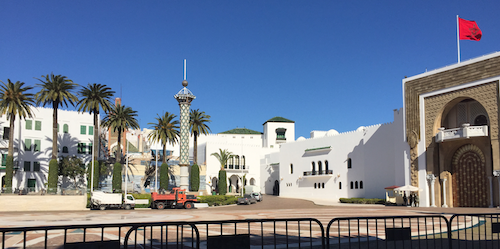
King Mohammed VI’s summer palace.

We didn’t buy a ‘one of a kind’ Berber carpet or a white metal teapot, nor did we get away scot-free. We just about left with our dignity intact, our guide less friendly and decidedly grumpier than when we first met. His tip was a bit lower than he had hoped for and he had no sales commission either.

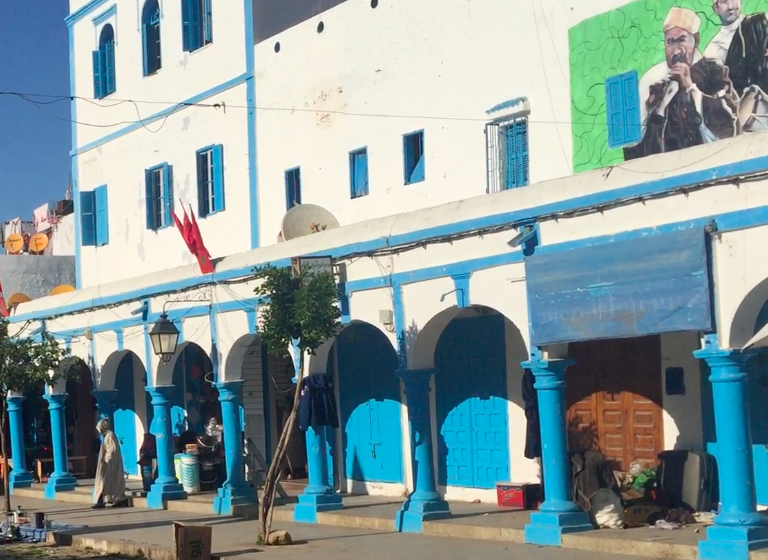
The citadel Chefchaouen

We had pre-booked an Hotel in Chefchaouen, the Dar Dalia. When we arrived, probably looking lost and confused, we were again accosted by another chancer. Mohammed directed us to a secure parking and after some explanation, offered to show us to our hotel. Mohammed was a much less pushy and a more endearing character than Abdul in Tetouan. We wandered through passageways and climbed numerous steps and were eventually deposited in front of a small and unprepossessing, blue painted building, sporting a sign announcing the Dar Dalia Hotel.
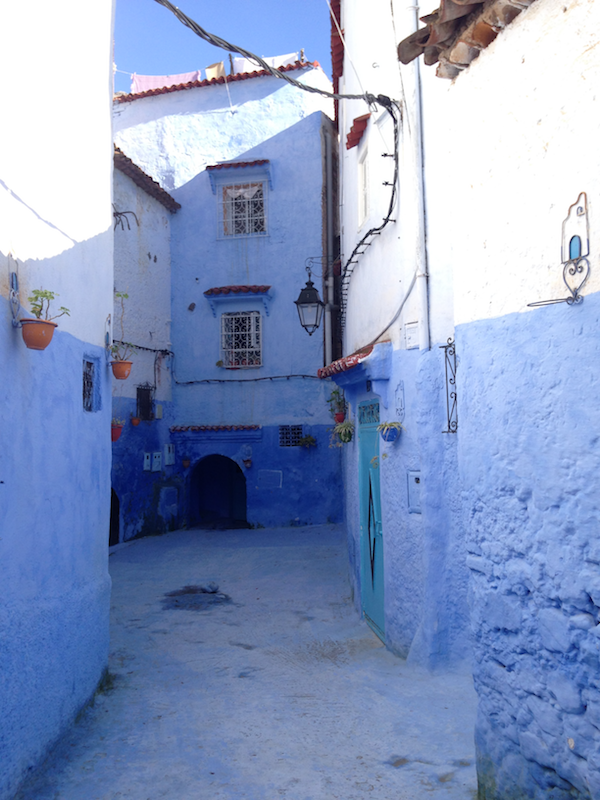
A typical Chefchaouen street

We were a little earlier than had been planned and a knock on the door produced no response from within. Miraculously a tall, imposing man with an official looking ‘maillot jaune’ appeared and proceeded to phone the hotel manager. He handed the phone to me. The voice on the other end said,

“You’re a little early, I’ll be there in 9 minutes.”

The hotel was a gem, 5 minutes from the medina and beautifully appointed. For the duration of our stay, the ‘maillot jaune’ guarded the bikes around the clock and even disguised them with local drapery.
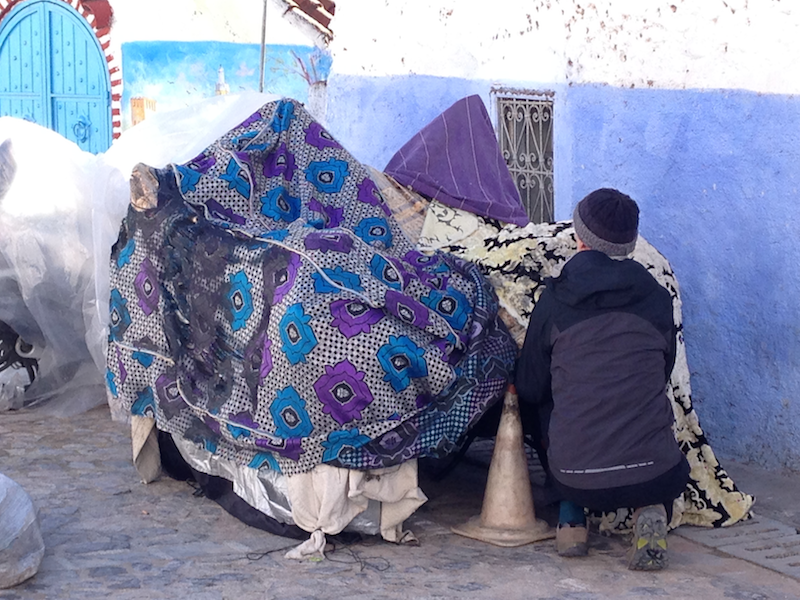
Stealth bike covers

Chefchaouen, ‘The Blue City’ was, possibly, the best of introductions to Marocco. The town was both tranquil and busily welcoming. Simple food could be found throughout, with a variety of small restaurants clustered around the main square of the medina. To the east the mountains reared up a thousand metres above the city. In celebration of the Chinese New Year bright red lanterns decked the palace walls.

Naive street art

After 2 restful days, in Chefchaouen it was time to move on, to Fes. We had coordinates logged into the phone, the route mapped out and fuel in the tanks.
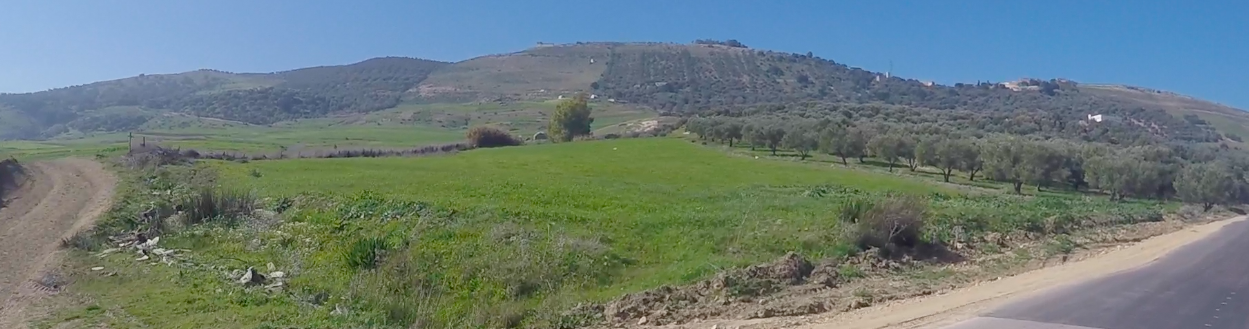
The north of Morocco is verdant with crop production everywhere and a seemingly endless supply of water. The road was in a good state, mostly, which meant that we could relax and enjoy the ride in sunshine and perfect temperatures.

When we arrived at the Fes campsite, we were in for a disappointment, ‘closed for the winter’, we were informed by a young man guarding the entrance. A quick search on booking.com found the ‘Hotel Agapanthe’ some ten minutes away. About an hour later, after some too-ing and fro-ing we found it. At the end of an unpromising dirt road a modern hotel presented itself. Tired and aching we were relieved and grateful and, after an acceptable meal, we slid between the sheets of a king sized bed.
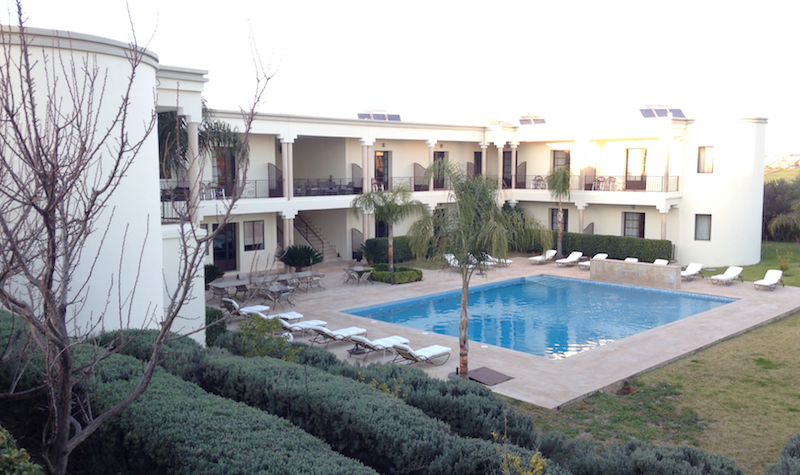
Hotel Agapanthe

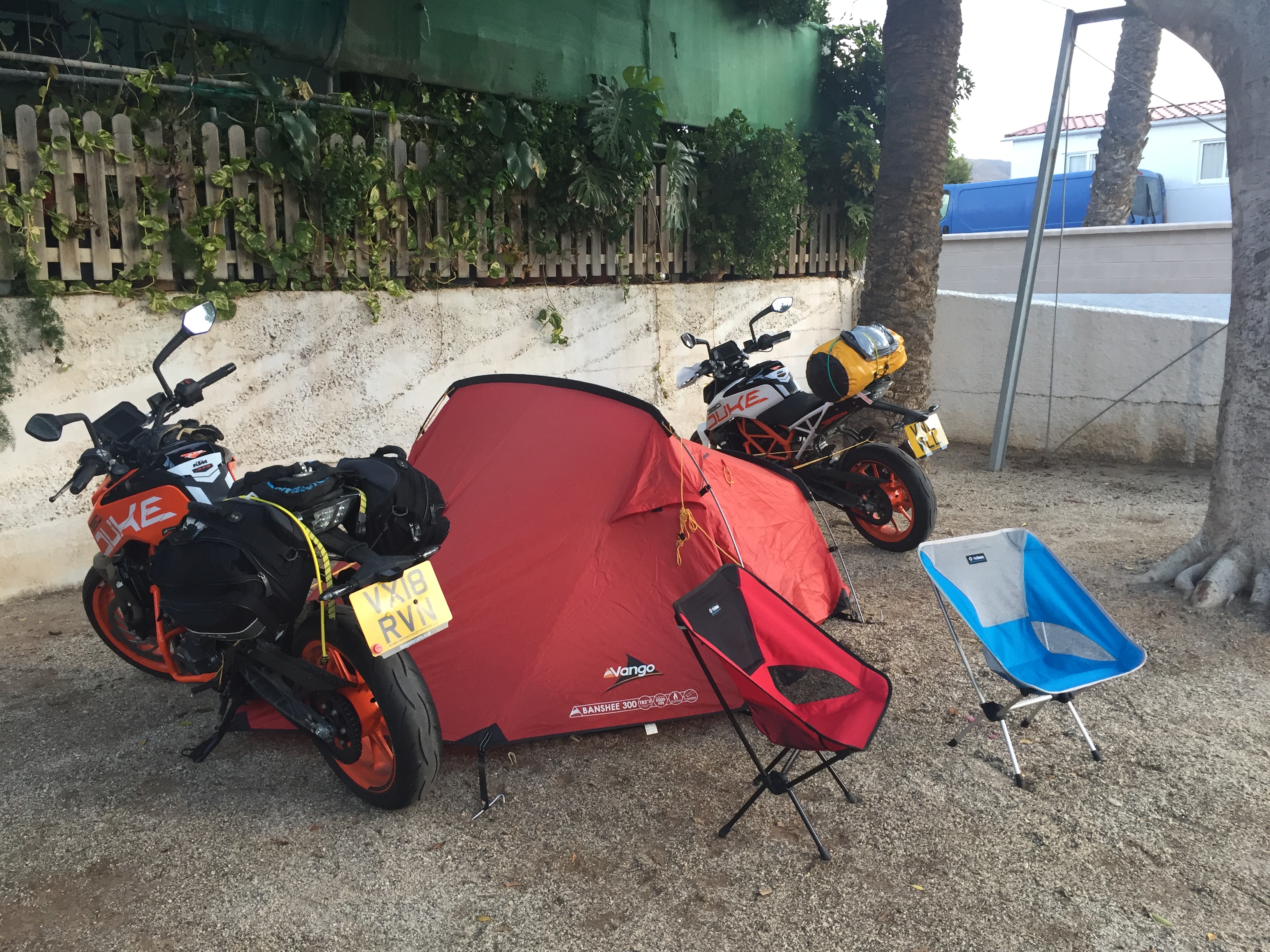
The plan for the following day was to find another campsite, this turned out to be the simplest of tasks. At the end of the dirt road from Agapanthe turn right and then turn right again, voilla, the Camping International, Fes and it was only 10.30 in the morning.

Camping International, Fes

The guy running the campsite organised a guide for us for 1.00 p.m.. At the appointed time he arrived; by scooter. Abbi flagged down a ‘Petite Taxi’ and we were off. Fes is difficult to describe and for this part of the blog a short vignette will suffice. The centre (medina) is an innumerable series of tight lanes and passageways bounded by brown plastered walls rising vertically. The walls often stretched three or four stories above our heads, blocking out all direct light. Reach out your arms and your hands are able to touch the buildings on either side of the street. The walls are punctuated by stout doors, wooden for the grand entrances, metal for the kitchens, and few windows to be seen. The view from any window would be muddy brown, due to the proximity of the walls of adjacent buildings and would afford little light to the interior, rendering them redundant. Most buildings have an inner courtyard open to the sky, letting light flood the interior.
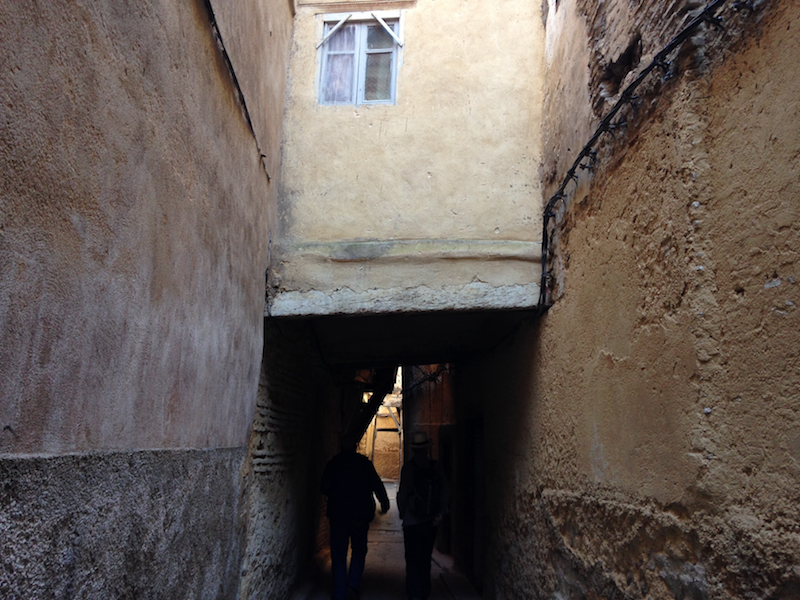
Gloomy canyonised street in Fes

The medina is a place of numerous artisanal activities. Raw materials are brought in on donkey carts or small wheeled push carts. Carpets, leatherwork, metal household goods and numerous other products are created within the secretive walls of Fes. The smallest nook would house a tiny workshop, large courtyards within a building may contain a complete production line. All done by hand, without the aid of powered machinery.

The best saucepan maker in Fes

After two nights at the Campsite International Fes, we finally turned toward the coast and the capital city of Rabat.
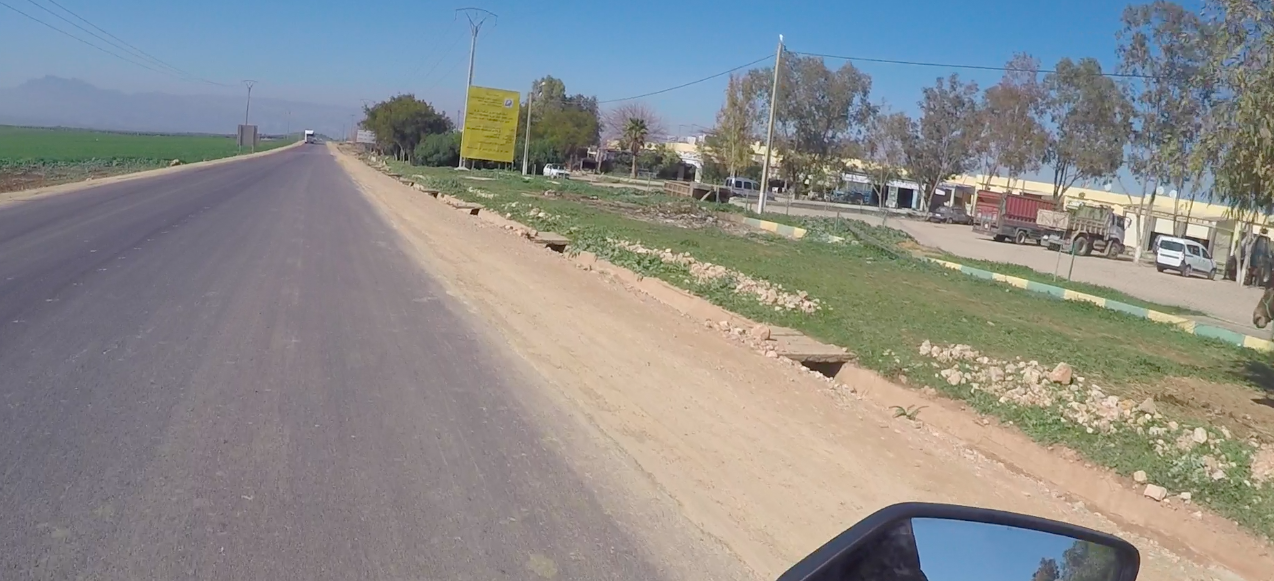
The road to Rabat

To be continued

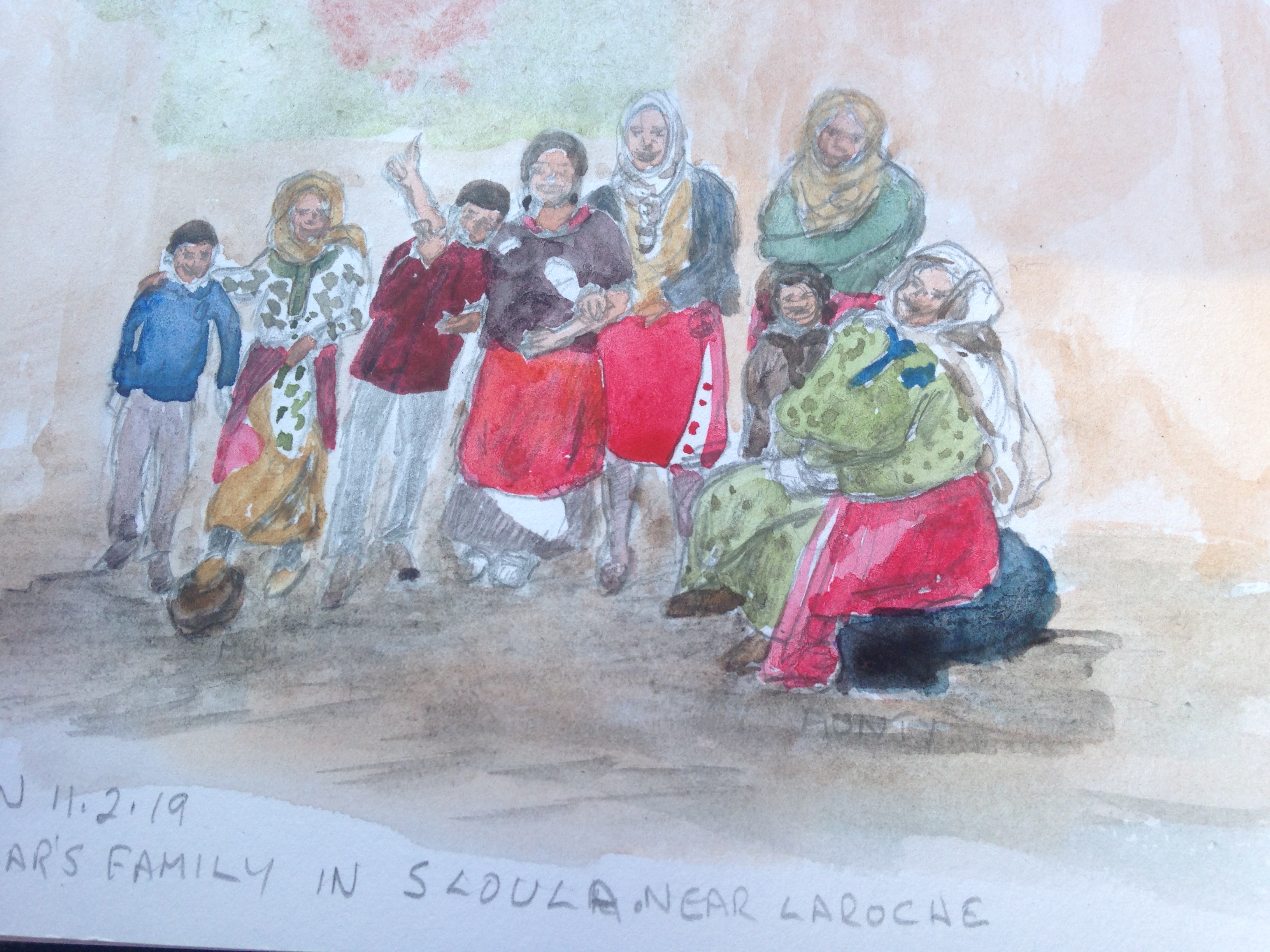
Omar

Don’t miss the short video at the bottom of this page.

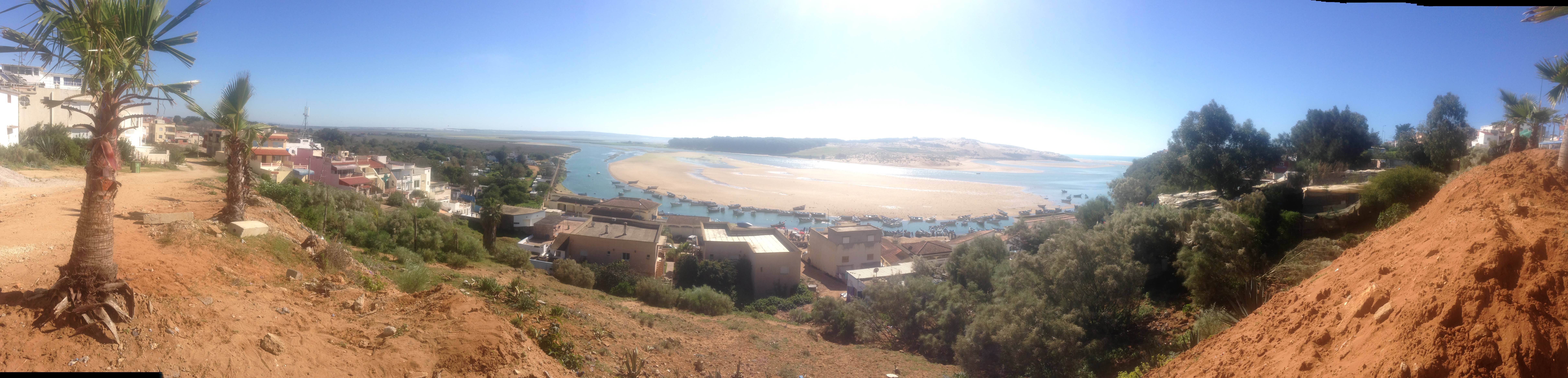
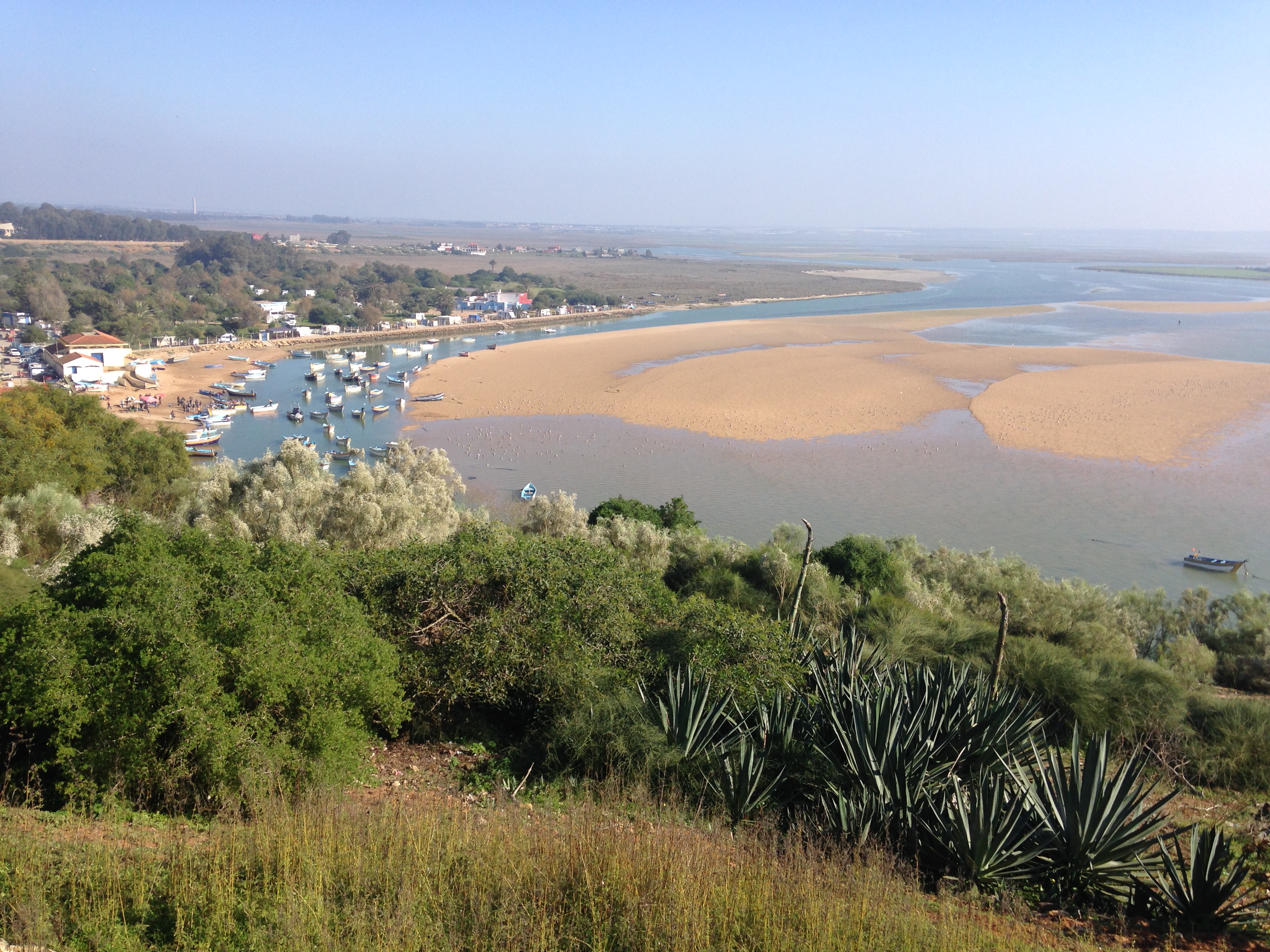
We’d not long arrived in Moulay Bousslham after a day sitting on our bikes and we needed a walk. We headed for the lagoon, which is beside the campsite, followed by a breathtaking walk. After no more than an hour, we found ourselves on the end of a sand spit, with the wild Atlantic on one side and the serene lagoon on the other. A fast flowing channel joined the two.

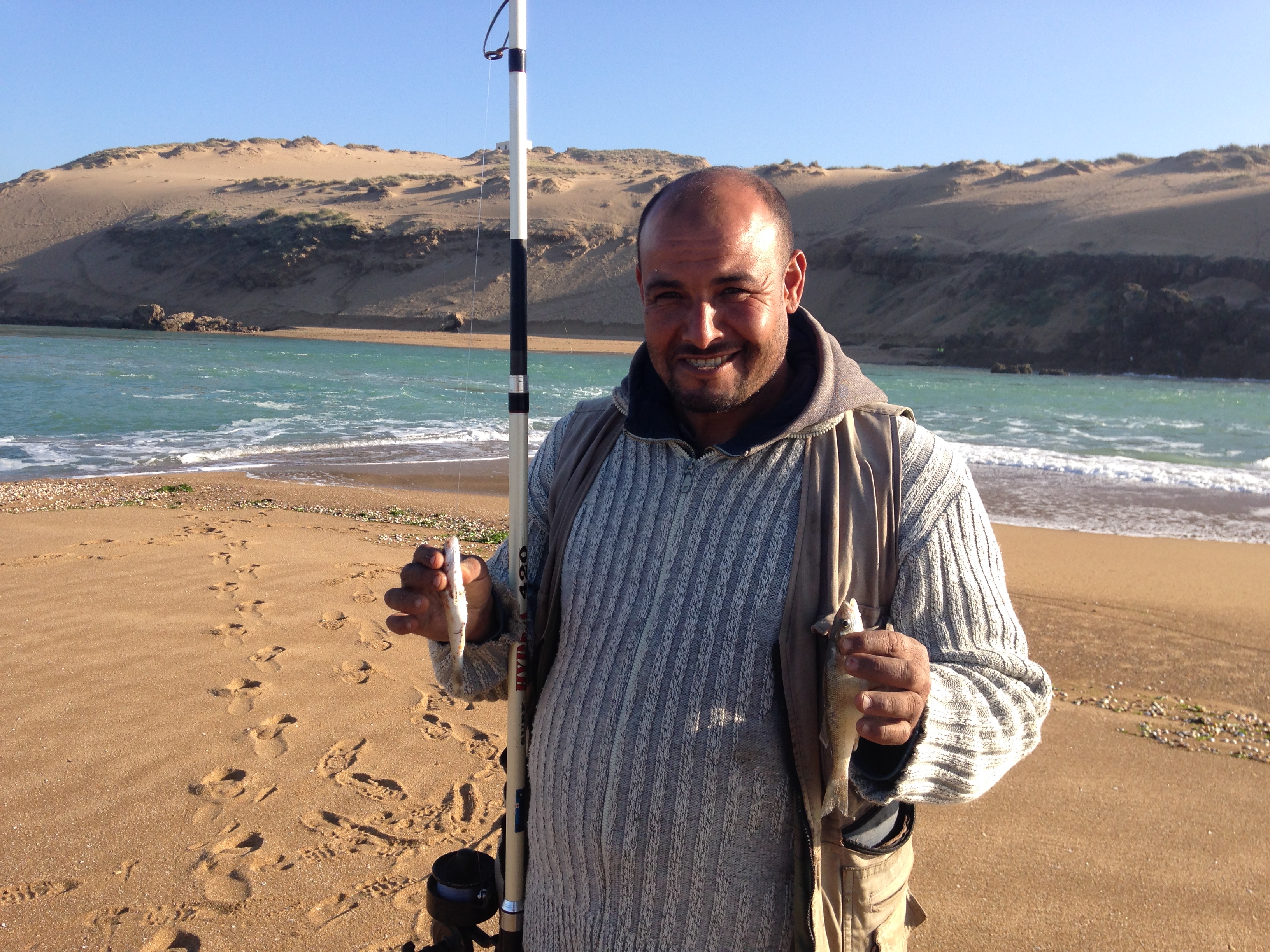
As we meandered about, picking up shells and watching the little fishing boats ride the surf and then the narrows to return to safe harbour, a man caught my attention. It was Omar, who had spent the day line fishing and wanted me to take a picture of him with his meagre catch. He spoke as much French and Spanish as me; so, not much!

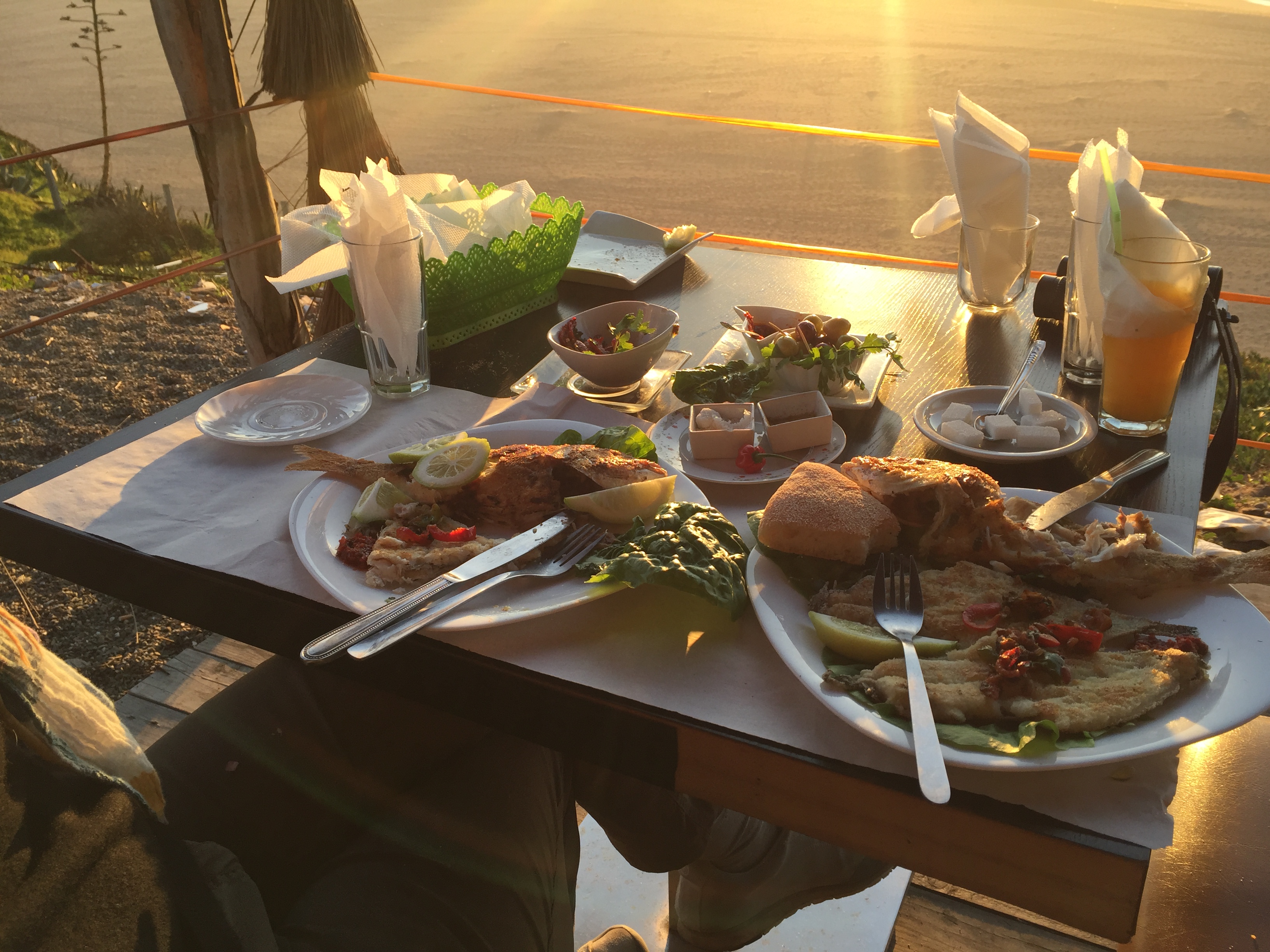
We exchanged phone numbers, so that we could send the photos to his smart phone, which he kept at home. That evening, after a great meal in one of dozens of fantastic and cheap restaurants here in town, we sent off his photos.

Our evening meal, overlooking the sea.

The next day dawned misty and cold and we headed off to a small town an hour away for a huge local Sunday market. Two hours later we arrived, but that’s another story. When we got back we checked our messages to find Omar had invited us to his home the following day. After a couple of WhatsApp video chats, everything was set. He would pick us up at 9.00am, we would buy food, eat at his home, look at his village, go to Larache, a beautifully elegant seaside town, and then be returned to our campsite. It was a risky opportunity and we accepted graciously. We were now ‘Omars Amigos’.

The campsite service vehicle, emptying the bins.

The next day went to plan. We were picked up, we shopped in Omar’s local town for fish, vegetables and fruit and then whizzed off to chez Omar, deep in the Moroccan hinterland.

Shopping in Omar’s nearest town

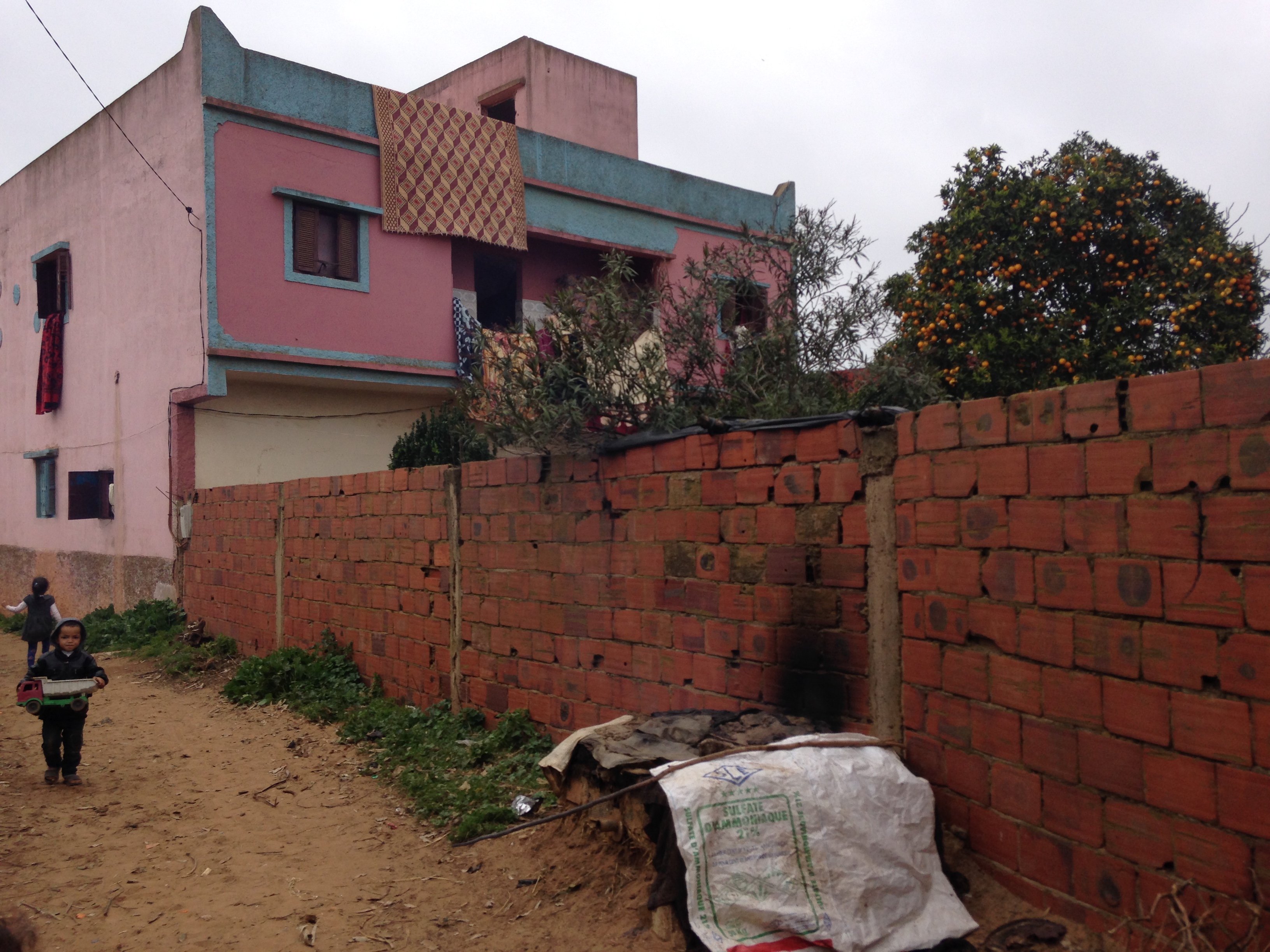
His little village; cart wide mud tracks, no tarmac, well water, jury rigged house electricity, small junior school and a small mosque, buildings limewashed in pinks, sand and blues. The whole place feels like a warren of tunnels. Behind the ubiquitous 2m high, walls and double steel gates, was the milk seller, behind others, their father, brother, cousin (mi prima/o), uncle. Suddenly the lanes dissolve into a clearing and there is a tiny shop, bustling with buyers, and someone repairing a vehicle, horses and carts ply their trade; and then we squeeze back into the maze. It all flashed by so fast.

Omar’s uncle’s house.

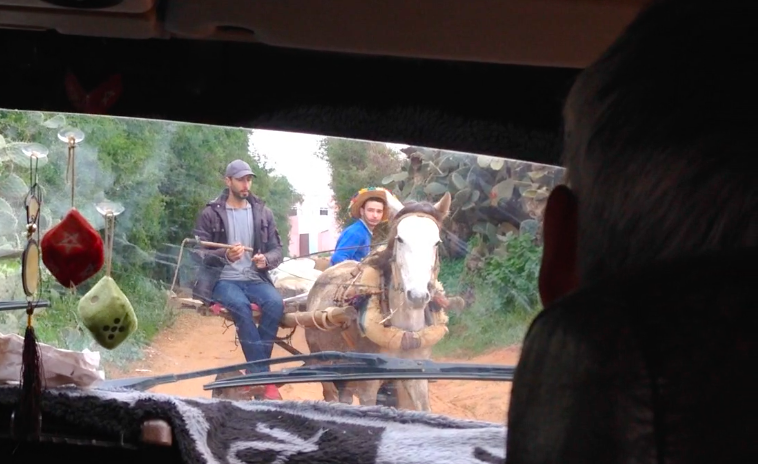
Here the horse and cart rule. For Omar to own and run a car is a status symbol and a source of income. He ferries people to and fro within the dirt track system that he calls home. It is a place no ‘Petit Taxi’ dares to enter, for fear of the damage that would be done to the cars suspension.

The more usual transport here, horse and cart.

We had to wait for the food to be cooked by the women of the family. The men and I chatted and drank tea and water, in a pristine sitting room, as Omars mother presided. Mum and I wandered in and out of the man space and gave a hand with the food preparations. It was a chance to meet every one else.

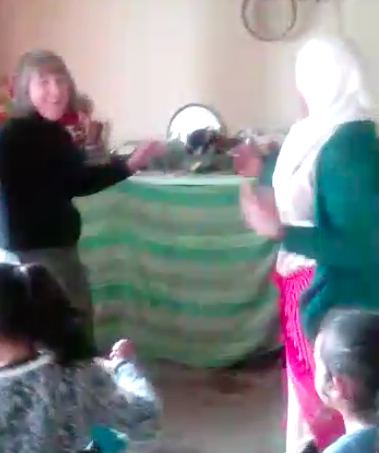
Dancing in the kitchen with the women and children.

After our meal, eaten with no cutlery, in a different, equally beautiful room, whilst sitting on softly upholstered, ground level seats, at low level tables, I was dragged away by mum. The women and children had cleared the kitchen and it now it became a disco. And we danced.

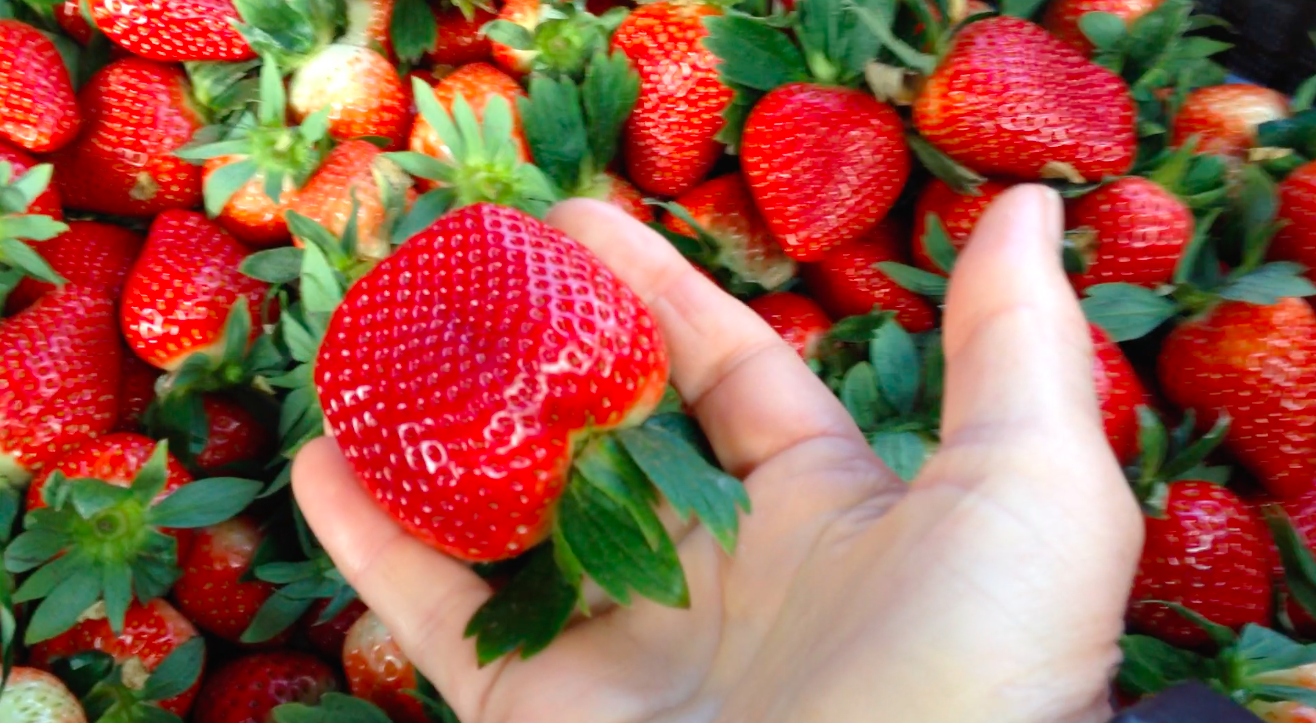
Locally grown strawberries.

Soon Omar turned up and dragged me away from the party; I seem to be popular in these parts. It was time to head off to Larache and then afterwards back to the campsite.

We recommend Larache. The influence of the French is evident. This place has it all, sandy beaches, fishing port and market, ancient Spanish fort and a fading charm that is hard to resist.

Larache.

We were returned to the campsite to find the Chinese Emperor and the German couple gone. We now have a new neighbour. Let’s see what tomorrow brings. 

The Road To Morocco

Imagine, you want to spend a couple of weeks in Morocco. You’ve never been there. It’s a 400 mile ride from your base on a Spanish campsite to the ferry port; and the weather is fine.

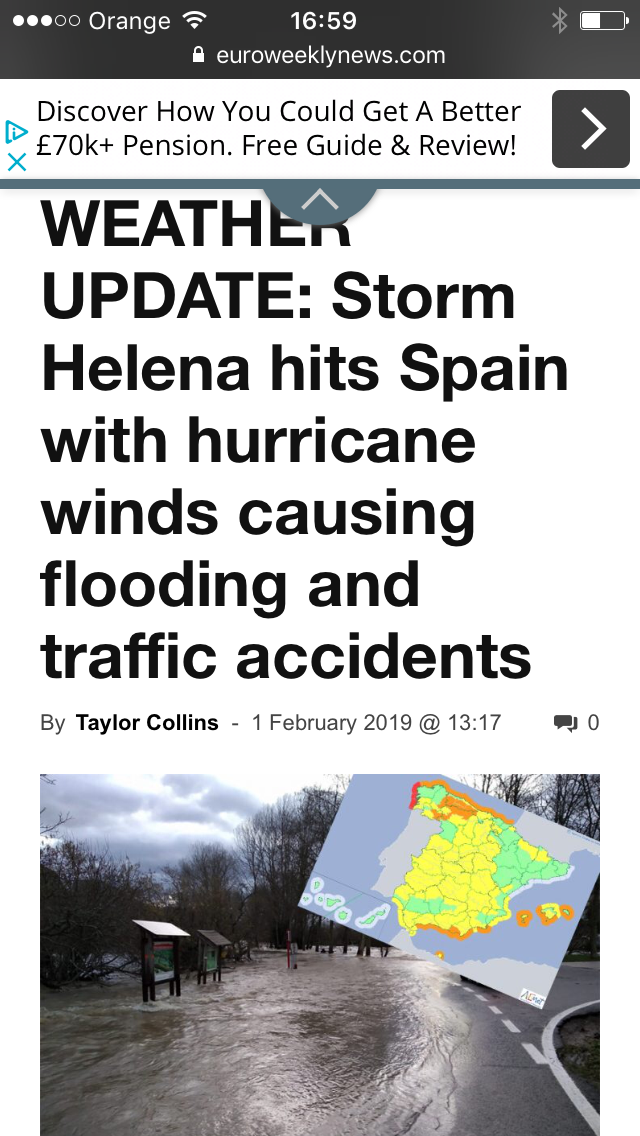
How is it, that on Wednesday, almost the moment we locked up Barri the VWT4 camper bus and left him and our fondly waving friends behind in the campsite, the weather began to change. Not enough, you understand, to make us rethink our ‘plans’. No. Just enough to make the first couple of hundred miles, shear murder. The wind blew stronger and stronger and gusted wildly. We ended up at a steady crawl and hanging onto the handlebars like silly puppets on strings as the wind attempted to lift us off our saddles.

Overnight, we had a sheltered spot for our little tent and the bikes, but we could hear the wind howling all around us, all night. At least it didn’t rain and the evening slipped by quickly, helped by the folks in the campsite bar who were very welcoming.

Thursday came, grey and easily as windy as the day before. We set off, fresh and enthusiastic. The moment we hit the main road, the A7, it started all over again. Just like the previous day, the scenery was jaw dropping in it’s diversity and rugged beauty. The sea on one side and mountains on the other; the reason we chose this route. Were we able to enjoy it? Not a chance. We settled on stopping every hour to recover; Jen for hands and Wally for his white finger, which the bike seems to provoke mercilessly. What a pair of crocks. The wind increased massively as the day went on. We took to slip streaming behind trucks for a bit of stability. It was remarkably noisy all the time and pretty frightening to ride some of the time. Could it get any worse? Hell Yeh! It began to rain. Why us? Peering through my road grease, rain smeared visor, a sign loomed large; Deer. We wondered what else nature could throw at us.

It took us 3 hours longer than our estimate to get to the edge of the port city Algeciras and the agent who would set up our paperwork so that we could get into Morocco without hiccups.

Enough was enough. We headed for the nearest hotel (not the one next to the agents!) and luxuriated. No boats sailing Friday, the sea state was an issue. It seems we’d decided to ride 400 miles in hurricane force winds. No wonder we were tired.

What a pair of numpties.