L’Albarda Garden, Pedreguer, Spain

Pure paradise with some very special twists.

In contrast to the English National Trust’s overstocked, over co-ordinated and over primped gardens for the over wealthy, L’Albarda is a garden on a human scale. Intimate, balmy, exotic; inspirational. In fact only a year ago, it seemed to be all a garden should and could be, but, as it turned out, there were secrets hidden within it’s walls. Following this first visit, we determined that we would be back.

One year after our first look around this slice of heaven, an opportunity came for our second visit, which would be guided by a local professor of botany. Immediately, we said yes. And that is how we found ourselves heading out, in the warm winter sunshine, with a group of cyclists. We had all skimmed through the Spanish countryside on our bicycles, many of which were electric. Us two fools were on ancient, borrowed, bikes that were somebody’s cast offs. One had an ridiculously inadequate, back pedal brake and both were woefully shy of gears. From the East of Denia we cycled towards a place called Pedreguer.

It was to be a day of surprises.
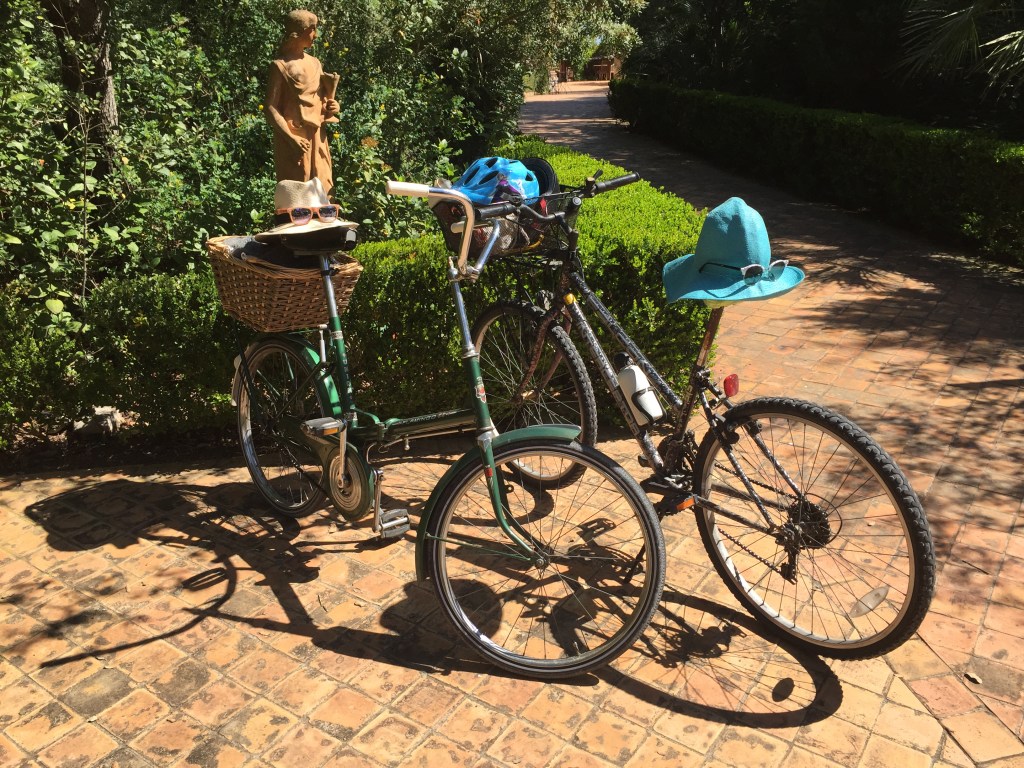
Billy and Brittany our blooming bicycles

What was surprising?

You are right to ask.

The first thing is that we made it there at all. Having avoided cycling for about 10 years, we were truly chuffed to find we were able to force our arcane steeds to their limits. In turn they certainly pushed us to our limits. At our age exercise is important, but the only very steep climb of the day, to the garden gate, felt like a killer; though, here I am, alive and well to tell the tale.

Another surprise? This garden is more than gorgeous, it turns out that it hosts a nationally important collection of native plants. It is a wildflower haven maintained using organic methods. We had noticed that the place had weedy areas here and there; and in a way it does.
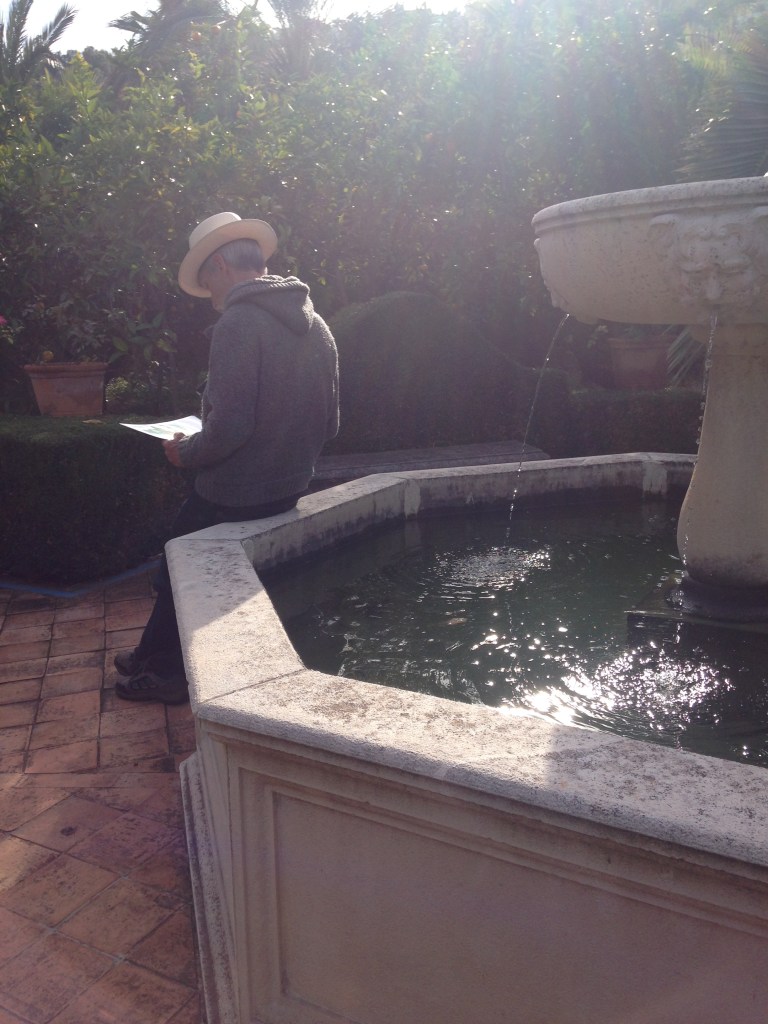
As the sun sinks, take time to sit and look closely at what surrounds you. Sketch, meditate, let your mind flow away.

Top off the first two surprises with a sleek, low, ground hugging auditorium, that is being constructed especially for operatic performances and this becomes the garden that keeps giving. Imagine on a warm summers evening being immersed in green lushness, with glimpses of sweeping, crystal clear, mountains soaring beyond the garden walls, the setting sun showering the firmament with the glowing embers of the day. All this before being called to step inside with your glass of Champagne in hand and with your charming escort accompanying you to your seat where you will be consumed by a whirlwind, goose bump raising, performance.
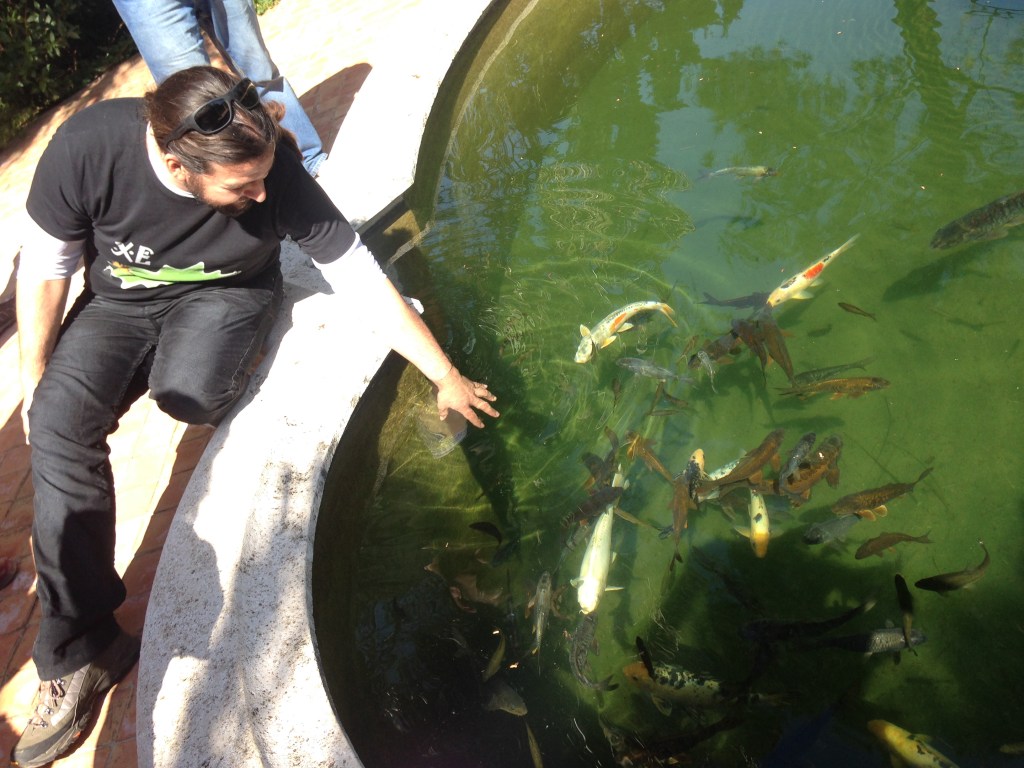
Our Professor for the afternoon.

Our Professor walked us through the grounds, chatting along the way about the things we were seeing: Wormwood, used to make the drink Absinthe and another plant very similar to Thyme that is added to alcohol to enrich the flavour. We could all see where this was going.
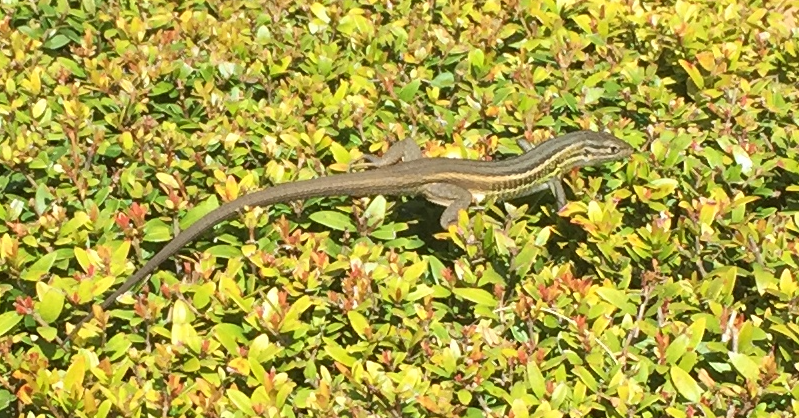
Usually we know what we have seen. Our eyes take in everything and our brains grapple to make an accurate interpretation, which we accept as fact. Surprisingly little input is needed for our view of the world to change. In a couple of hours, this chap had caused a paradigm shift in the way we perceived the garden. Yes, it is an absolutely gorgeous spot, any fool can see that, reason enough for dawdling through it’s leafy calm. And yet, it is so much more than the sum of it’s parts, because of the owner’s higher aims to preserve and understand native plant life and to encourage others to embrace the importance of caring for our biosphere.
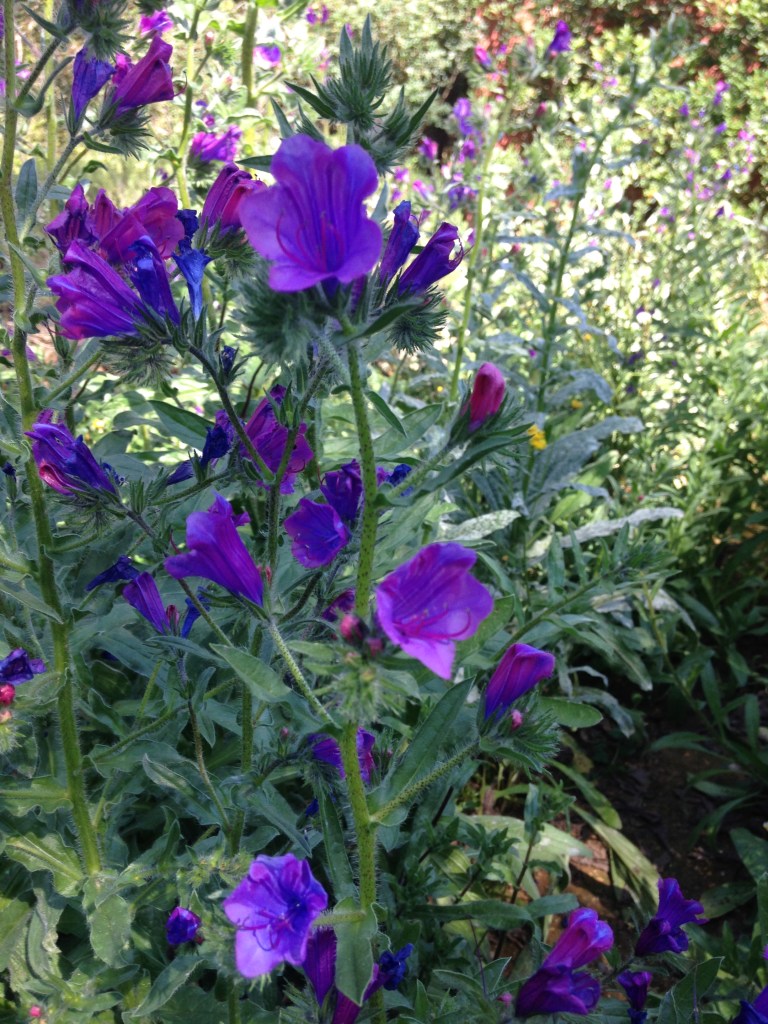
Limonium emarginatum, ‘Statice’ ?

The guided tour ended. We thanked our guide and said our goodbyes. All that was left for our merry band of cyclists to do, was to head home. We pushed our bikes to the garden gates, mounted up and hurtled straight downhill. With one of us having to pedal backwards in a vain attempt to moderate the speed of the bike, and the other with no back brake, we gave up trying to slow our bikes. Instead we hung on like devils on horseback all the way to the bottom, where we were greeted by the safety of a level cycle way.

Heavily scented Jasmin, growing against a blue outbuilding in L’Albarda Garden.

Oh how sweet the ride home, with memories of L’Arbada Garden lingering in our minds.
If you would like to leave a comment or question for either of us, please write it in the ‘reply’ box below. Thank you. Wally and Jen

HOW TO BUTCHER AN OCTOPUS

Watch our fascinating video for a glimpse into an ancient skill that is still used daily in Spain.

Strange Fruit

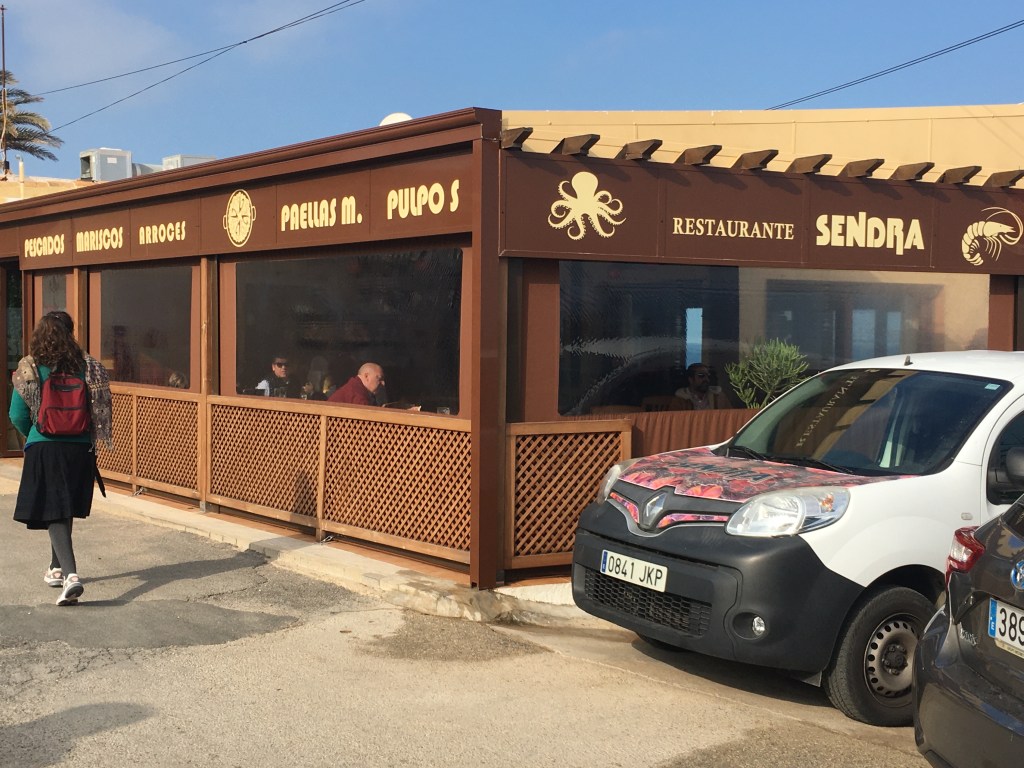
Rising stolidly out of the beach, with the waves often lapping at it’s walls, is the Restaurante Sendra. It is a Mecca for seafood lovers the world over, because it takes great care of it’s basic ingredient; seafood.

Restaurante Sendra rising out of the sea

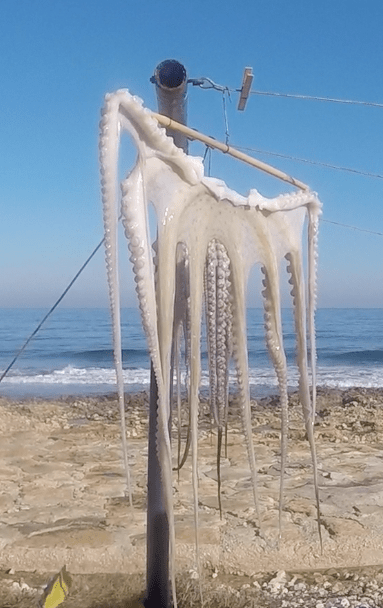
You know this place is special before you walk in. In fact you would be amazed if it were anything but the best. The translucent Octopuses hanging to dry on the beach and swaying in the fresh, salty sea air, is all the clue needed.

Octopuses drying in the Mediterranean Sun

We wanted to know a little more about the place and asked a member of staff if he would demonstrate how he prepares octopuses for drying. The result is the very short video below:-

How to butcher an octopus, an age old Mediterranean tradition.

So there you have it; Restaraunte Sendra may look a bit dull from the Rotes beach path, but it is well worth lingering over.

It may be a dull brown colour, but this restaurant is truly vibrant.

For more about the lives of Octopuses click this link.

If you have enjoyed this blog, please let us know by dropping us a line using the reply box at the bottom of this page. Thank you from The Wallys.

My Mate The Octopus

Many years ago, I was working in Spain. Well, I say working; it was only for a few weeks. Helping out three friends, I suppose you might call it. The company paid for the flight, but did not pay me. I was more than happy, because the task in hand was well within my comfort zone, as was the May weather.

So, there we were, four happy water sporters, winching a speed boat out of the water and onto it’s trailer. I felt something all together wrong about my left ankle, which was under waist deep water. Puzzled by the sensation, I shook the offending leg and got on with my job. There was nothing see down there through the rippling water. It really felt odd; no pain, but a gentle, firm, tightening sensation and heavy. With each turn of the windlass the boat and I moved up the beach a little, which meant, it was soon possible to lift my foot clear of the water’s surface; as long as I did a full Tiller Girl. The only problem was, my leg felt so heavy that it would not lift above knee height. We all continued pushing, pulling and winching the boat up towards dry land, me steadying the back of the boat with my hands, whilst dragging my leaden foot along the sea bed. Now with the sea at upper shin depth, I called a halt to the winching for a moment. I needed to take an urgent look at the cause of my numbing, paralysis. Lifting my foot above the surface, the banter stopped abruptly. Laughing faces hardened into rictus grins. There, wrapped snuggly around my left ankle and lower calf was an adult octopus!

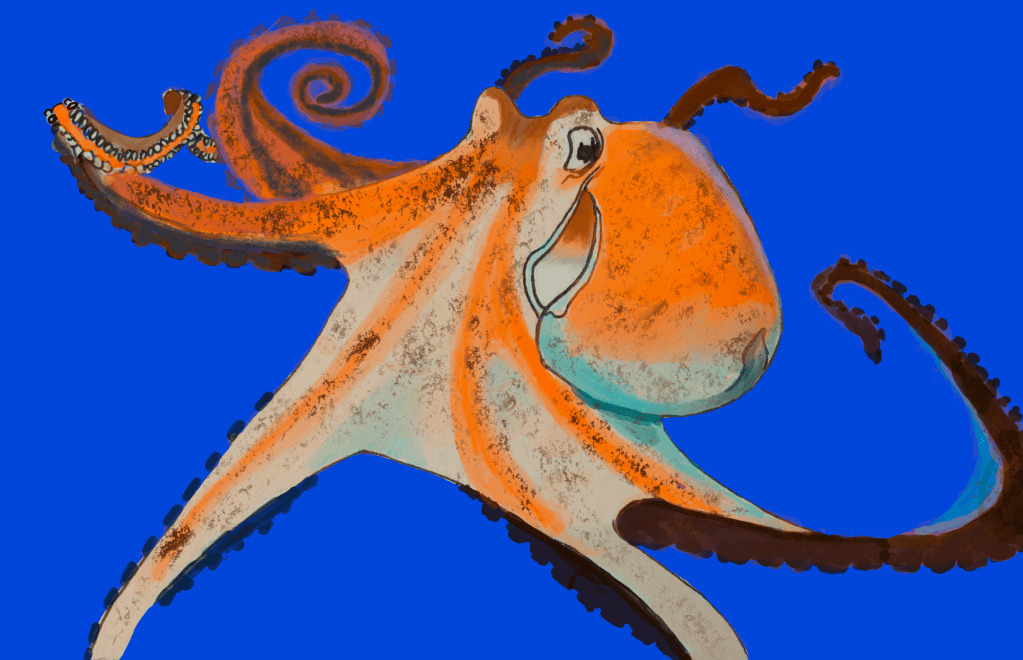
Drawing of a photo in a BBC article, Octopus:the thief of the deep: click image for link to BBC website.

Seeing it there, that was a shock, but the moment it caught my eye it took my breath away. It gave me a hard, fixed stare, let go of my leg and slipped back into the water.

It is not the only member of it’s family that I have met over the years. Where Weymouth meets Portland Bill in the lush, green county of Dorset, UK, there is a seaside cove with a pebble beach. Off this beach there can be so many cuttlefish in the sea that it boggles the mind. These alien creatures with their ability to change their skin colour, in waves, across their bodies, and their large eyes taking everything in, swim up to divers and snorkelers for a closer inspection. They are friendly and inquisitive and remarkable to spend time with. If you are lucky you might also bump into a Squid. Octopus, also want to check us out, but a swim at night with a decent torch is an important factor, as they are nocturnal and cannot resist checking out a light source after dark.

I love Cephalopods. They are beautiful and weird masters of their world. They hunt and are hunted.

In Spain, as with the rest of the Mediterranean, the relationship of people to this family of animals is very different to mine. Cephalopods simply are nothing more or less than food. Click here to take a look at the ancient skill of preparing Octopuses for air drying.

Now I bring you all we should know about my buddies, the Octopuses, in the hope you might think twice about scoffing them.

OCTOPUS NOTES

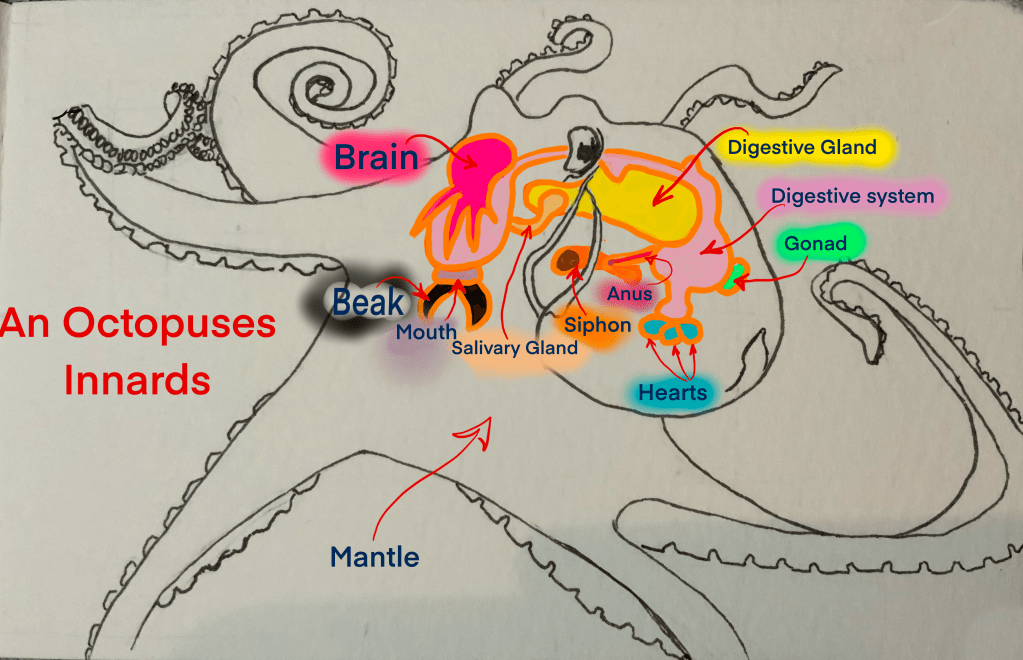
Ink sac not shown! (Info gleaned from this brilliant website Octopus body plan/how stuff works, click picture for a link)

INTELLIGENCE AND CHARACTER

Octopus’ have a large brain to body size, proportional to some birds and mammals

Octopus’ have a main brain which gives orders such as, catch that food, as well as a brain in each tentacle. The tentacles can get the job done autonomously. The main brain is then free to do other tasks.

Under laboratory conditions, octopus’ have been shown to have individual characters

QUICK CHANGE ARTIST

Octopus’ imitate other marine lifeforms – matching shape, texture and colour

The upper surface of an octopus’ body is covered in three types of cell:-

Colour changing cells – chromatophores – each cell has has 3 colour packs to choose from

Light reflecting cells – iridophores – these mirror surrounding colours

And, papillae, like the fur on your tongue, can change size and shape to alter the texture of the skin

ESCAPE ARTIST

Octopus’ have very good eyesight, similar to humans

Octopus’ are mostly muscle

No bones, so Octopus’ can squeeze into small, tight and irregularly shaped spaces

Octopus’ have eight arms that are strong and flexible, with suckers for gripping

Each arm is autonomous, with it’s own nervous system, completing tasks as it sees fit

Octopus’ have a strong beak and a drill

Don’t forget that big brain

Octopus’ are adaptable thinkers

Octopus’ are jet propelled; forcing water through a tube (siphon) gives speeds of up to 25mph

Ink, held in a sac inside it’s body, can be deployed; to confuse the enemy, or for discrete escape

For a while ink ruins the enemy’s ability to taste and smell. It contains the chemical tyrosinase

LIFE, SEX, DEATH

Sperm is passed from male to female on his hectocotylus, a 1m long adapted tentacle. Sperm is placed either direct into the female, or the hectocotylus (arm) is snapped off and given to female to use at her leisure

The male lives for up to 2 months after mating

The female cares for her eggs until hatched.

The female stops eating after egg laying, dying just after the young hatch: 2 -10 months

Young put on 5% weight increase per day!

Adults weigh a third of the weight of all the food they have ever eaten.

Octopus’ live for 3-5 years

Octopus’ blood is blue – copper based, ours is iron based

Octopus’ often move home weekly.

Octopus’ are nocturnal.

Octopus’ are predatory and all have poison, one is very poisonous

There are about 300 different species of Octopus world wide

Please feel free to let us know what you think of my love of the Octopuppy and its cousins – simply jabber on using the reply box at the bottom of this page. We love to hear from you. Thank you from the Wandering Wallys.

The Gravity of Having a Bird Brain

The other morning, during the Tea Ceremony, I lazily stared out of the window, and noticed a gang of sparrows feasting on some crumbs we had thrown down. They scratched and rummaged through the gravel, garnering tasty morsels along the way. This is an everyday, rural scene, though one that is simply pleasing, I kept watching. I wondered who, apart from me, was top bird, and who was the bottom bird. Was there a gender bias between the top and bottom birds? Was there any more tea in the pot?

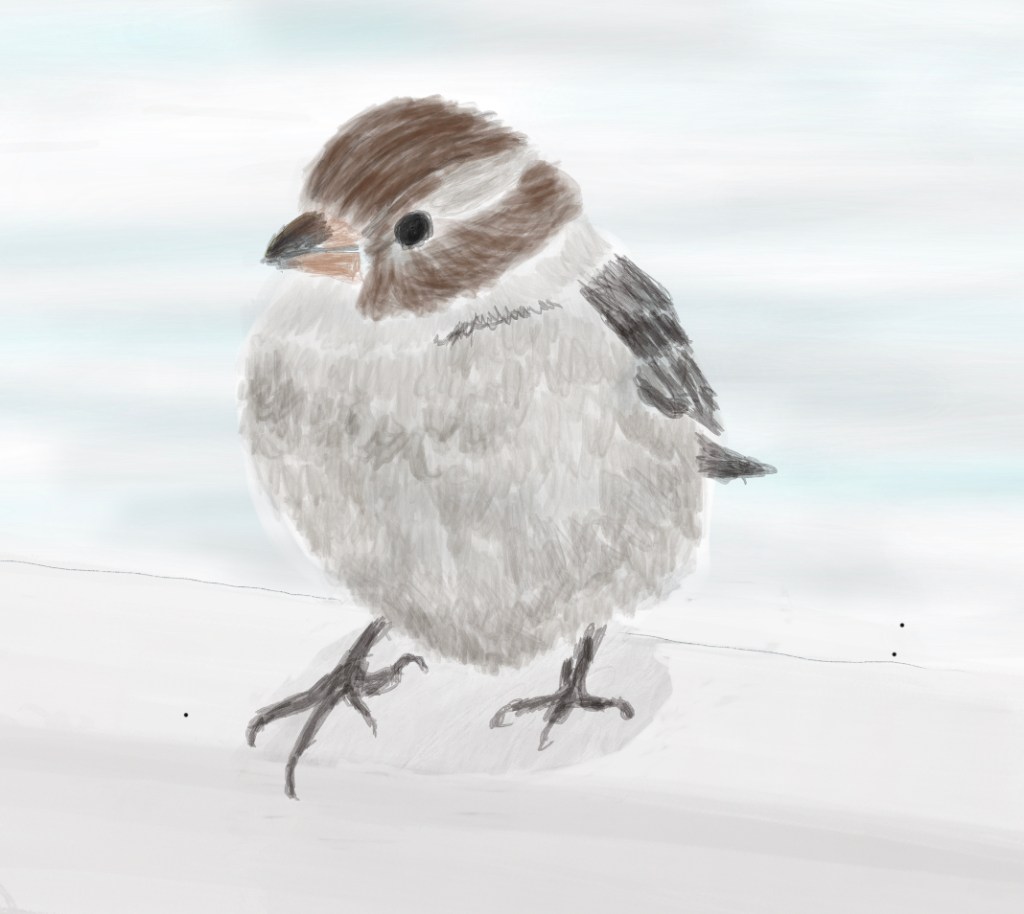
One lucky little lady Sparrow found a monster sized crumb, just shy of an inch around, that’s 2.5cm in new money, and off she flew. Aerodynamics is a precise art, even for a fluttering bird, and that swinging prize had hugely affected her flight accuracy. The crumb was dangling, precariously from her beak, as she clumsily attempted to alight on one of the many twigs at the top of the nearest hedge. As she made footfall, that crumb let go and crashed down through the hedge and on to the ground.

Now, here is the thing. She immediately noticed that crumb’s loss and looked around for it. At no point did she look down. I cannot say for sure whether or not she looked up, but she definitely looked all around, as if expecting that crumb to be hovering at beak level.

I thought this was fascinating, because I, as top bird, would look down, following that crumb’s obvious line of travel. So, why did my little Sparrow simply look in one plane?

Having given this a teacup full of thought the realization came to me; I do not fly. If attempted, I fall out of the sky, much like crumbs. It is a bit of an inconvenience, but there you have it. The little Sparrow does fly.

My experience is that when I, or anything else is lifted into the air and released, it always falls to the ground. I know, where to look for those things; I look downwards.

Birds have a different gravitational experience. They fly. Their fellow birds fly. They do not fall out of the sky. Even food on the ground, can be picked up and flown away with. To a little Sparrow, flight is normal. To the little Sparrow, that crumb should have stayed around the place it was dropped, up in the air. Why not? That is how the world is seen by a little Sparrows eyes.

Now, if only I can figure out why toast always falls butter side down……..

Where did I put my cup?

Please feel free to leave your mark by jotting a comment in the reply box at the bottom of this page. Thank You

BAD, BAD BARRI

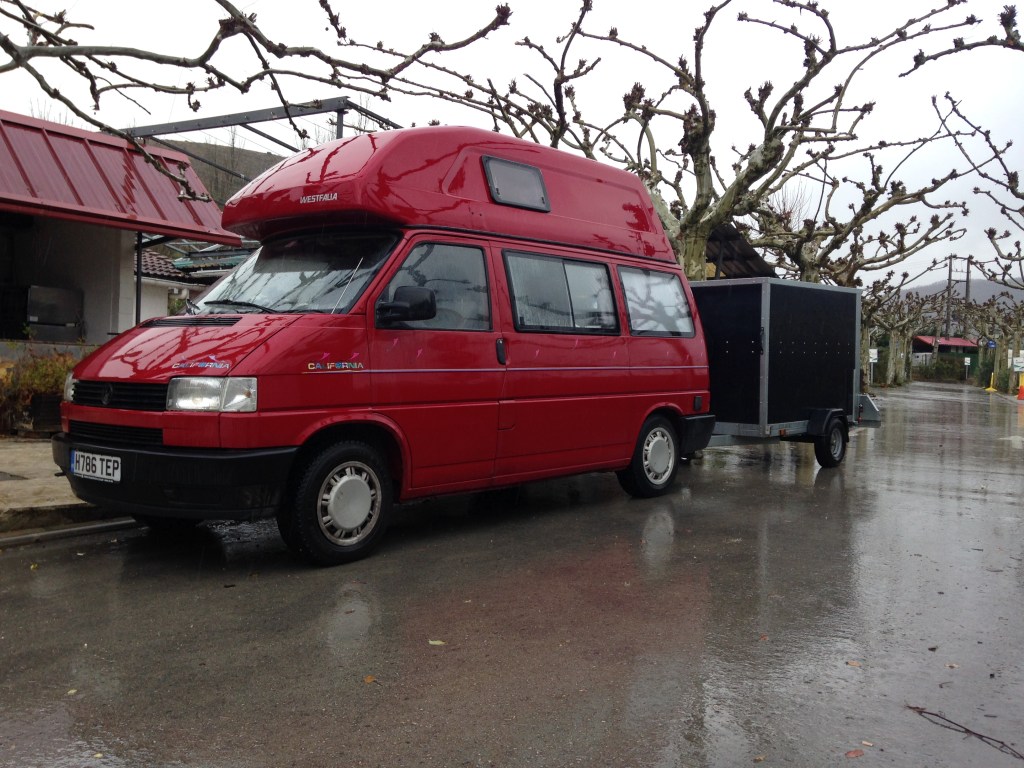
Our winter in Spain, cooped up in a space smaller than the average prison cell; without the slop bucket, had gone remarkably smoothly. At home some friends have tents that are far bigger than our camper bus, who we call Barri. But no tent is as cute, inside or out. We were justifiably proud and smug in equal measure.

The beautiful Barri, gleaming in the rain.

Pride always comes before a fall, they say; so some might say that we probably had it coming. Our cheap, chi chi, beggar on a beach of gold lifestyle was about to come unstuck; spectacularly.

We thought Barri needed a wash, and a wash was what he was going to get. Off we went, on the road, with Barri leading the way. Marvellous. Out of the blue, we noticed a smell of burning oil. We noticed smoke. We noticed we had ground to a solid, seized-up-engine stop. Oops!

Why here? Why now?

Barri returned, ignominiously, to the campsite languishing on the back of a breakdown truck to be dumped, unceremoniously, on our pitch for the night. We were the talk of the campsite. Everyone came to call, to find out what had happened and to give us advice. Word of mouth travels faster than a cold in a playgroup.

We had until the next morning to sort ourselves somewhere to sleep and somewhere to send Barri for surgery. We sought the advice of the campsite’s old guard who know all things Denia. We needed a very good garage, as the engine was almost certainly totalled. Our fellow campers consistently proffered the name of just one company, Auto-Tecnica Mecanicos, Denia. That was the easy part. Removing from Barri all that we needed for about three weeks of living in a tent was rather more thought provoking.

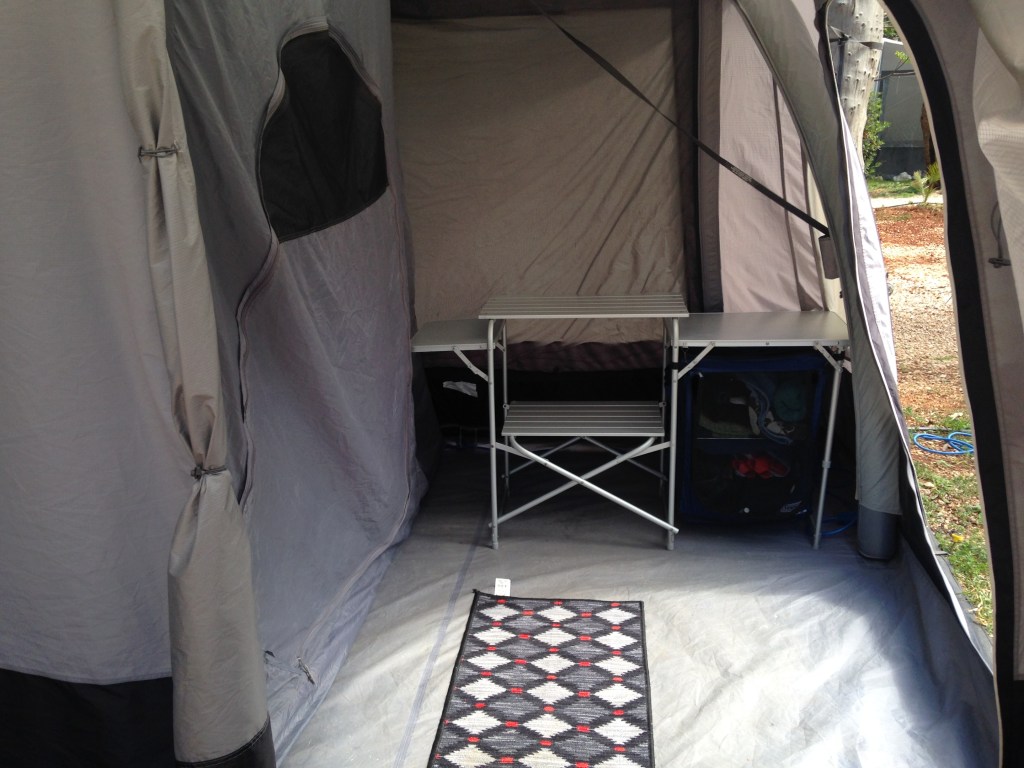
Our awning, cleared out and ready for us to move into. It didn’t stay tidy for long

Mobile phones in hand, we chatted to the garage owner, Mark, whose English was amazing: perhaps unsurprising, him being an ex-pat; Barri could go straight there in the morning. We slept easy that night, despite knowing that we had no way of getting ourselves and all our junk home, our return was due in a few short weeks. But, Ho-hum, what can you do?

Part of the marvellous Auto-Tecnica team.

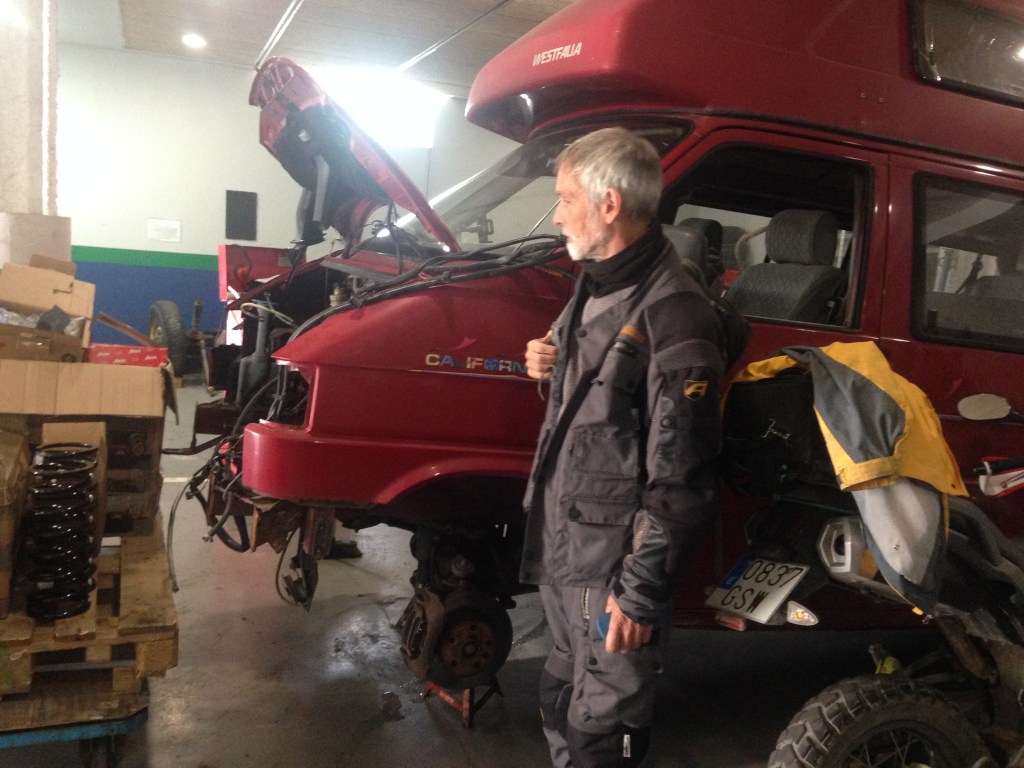
Our diagnosis was proved right. The rise in temperature in the engine did not show on the instrument panel, because the temperature sensor had blown out of it’s housing and was hanging, uselessly from its’ wiring, allowing all the coolant to disgorge in our wake. In an almighty hurry, the engine had cooked solid. Barri would have to be fitted with a reconditioned replacement engine. Mark, and the mechanics, were happy to take on the work and we were happy with their approach to Barri’s predicament. As we left the garage, over my shoulder I felt Barri’s pain as he cried out, “I need a miracle.” Wally insisted I was imagining things, but, was I?

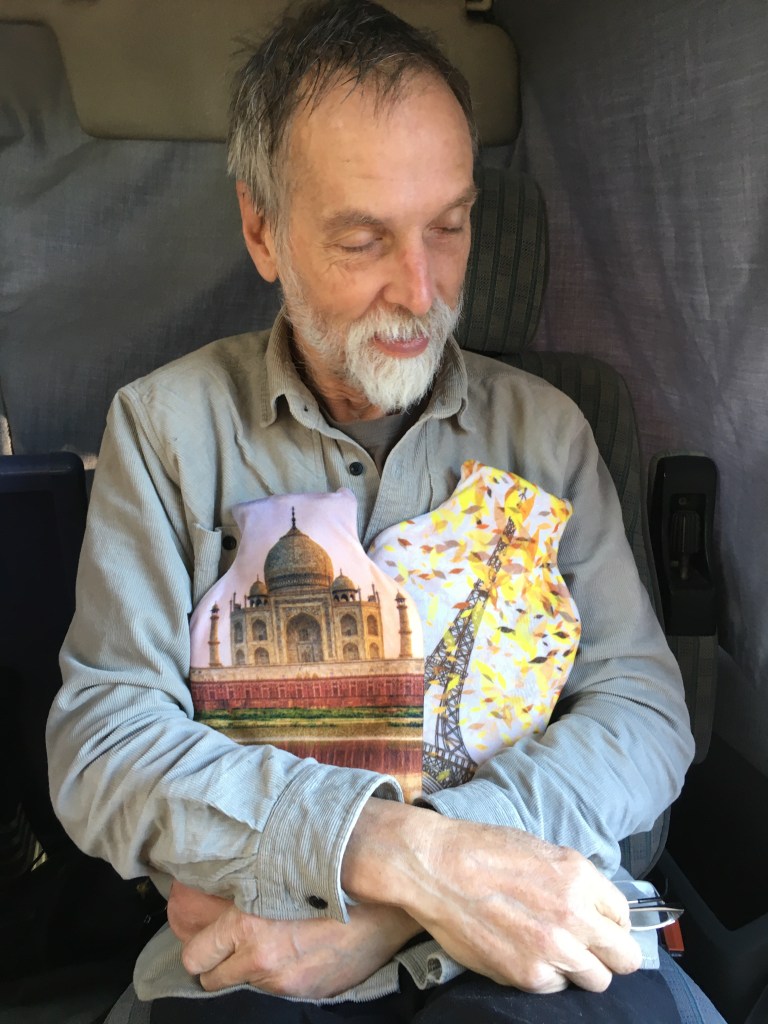
So here we were. Mid February 2019, sleeping in our awning, with a terminally ill camper van in an induced coma and an ever increasing set of invoices. There was nothing for it but to settle in for the longish haul and buy a couple of hot water bottles to keep the chill of reality at bay.

Fellow campers brought us little gifts and offerings and though we were in no need of any of it, it was a very lovely and welcome demonstration that folks cared.

To cut a long long story short, we ordered a top notch reconditioned engine from a Spanish company who are based in Madrid, Tecnicas Del Motor (NEVER order an engine from this company). As a sign of our commitment, and because it was required of us, we sealed ourselves into the deal by putting down a large deposit. Tecnicas Del Motor (NEVER order an engine from this company) had several engines ready to go and they could get one to our garage within a couple of days. The amazing Mark and Chris, our British mechanics, got to work. Open heart surgery was needed. With surgical precision, they began stripping out everything that could be re-used. They checked, repaired and refurbished anything they could easily get at whilst the engine was out of Barri’s torso. We were going to have a brighter, better Barri, with all his diseased parts removed, re-fettled and replaced.

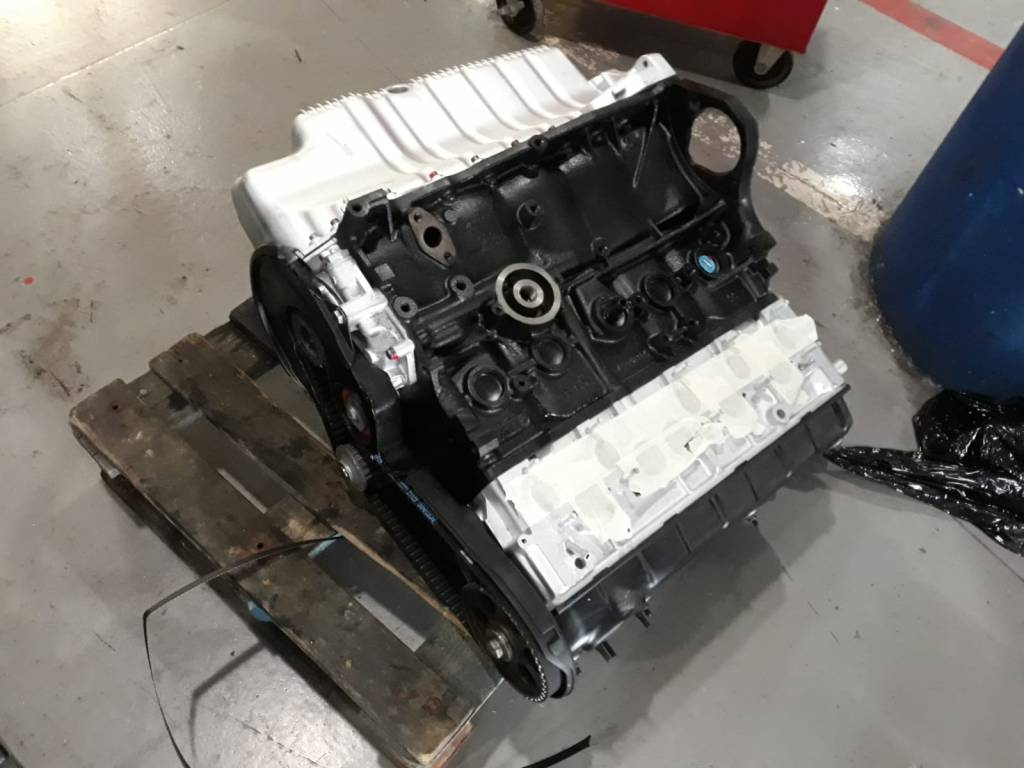
Dead engine.

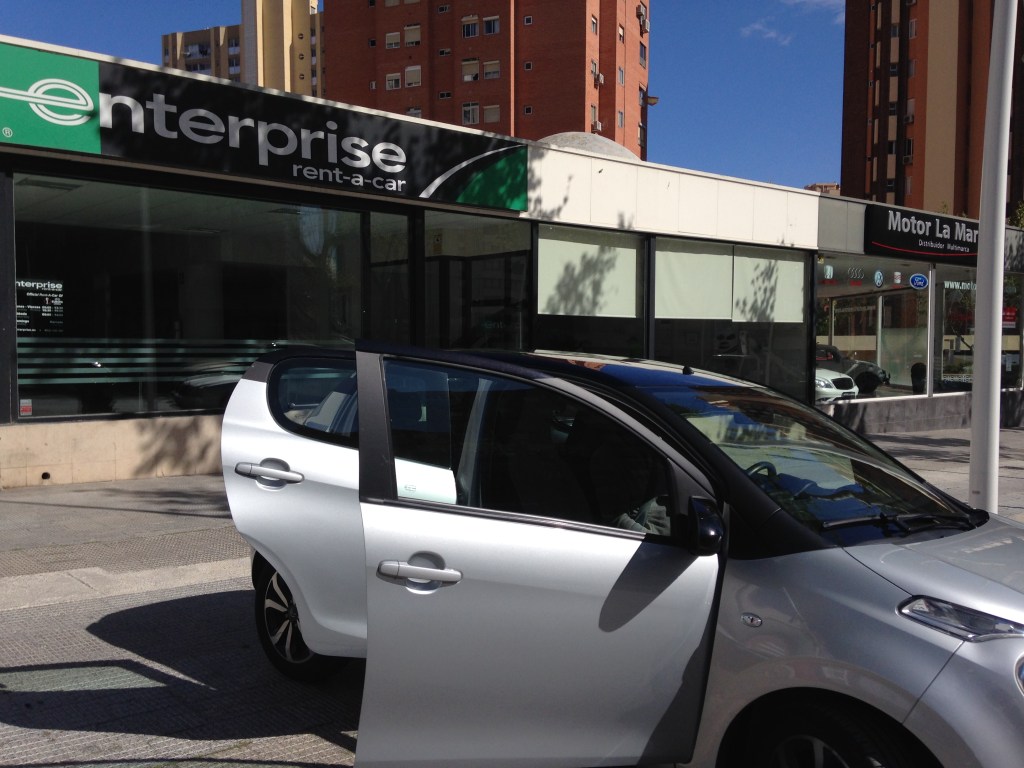
February, and March, came and went. April saw us heading to France for snowboarding; made possible by the RAC, who hired us a car for the journey. At this point we were supposed to be on our way home to the UK in Barri, but we had to rush straight back to Spain, as the engine was about to arrive. Really.

Our hire car, supplied and paid for by the RAC.

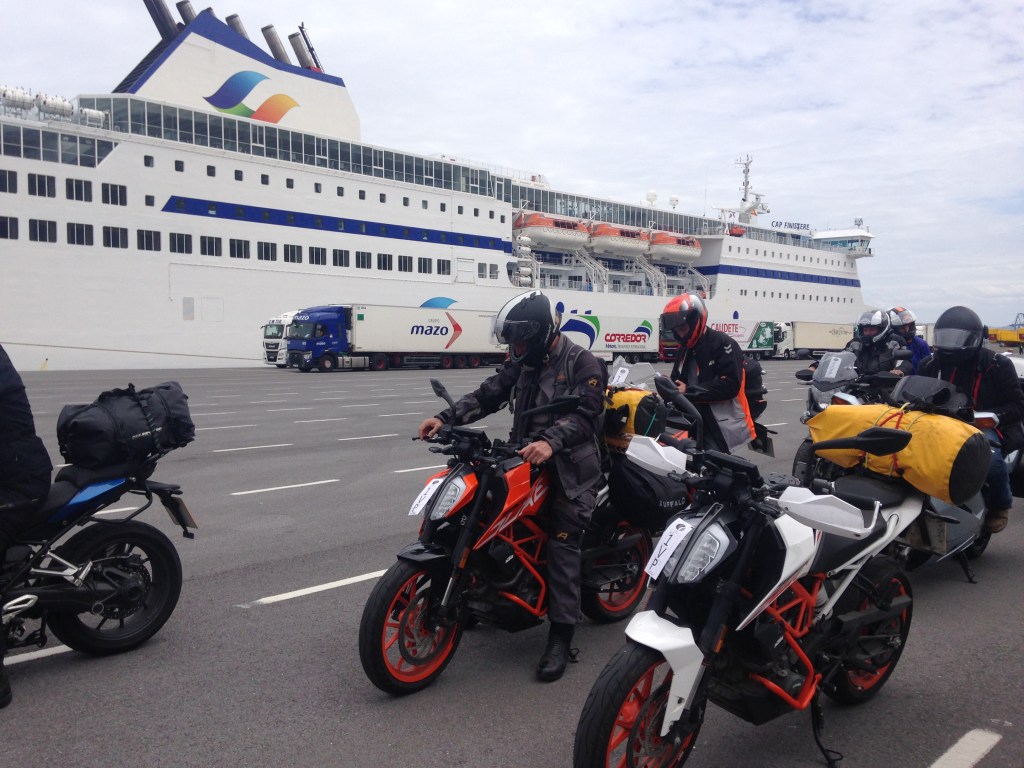
However April, went, as did most of May. Still no engine from Tecnicas Del Motor (NEVER order an engine from this company) and we had to be back in the UK. Commitments. Once again the KTMs were loaded up with camping kit and we rode along the back roads, up through Spain to Bilbao https://wandering-wallys.blog/2019/12/17/spain-from-the-mediterranean-sea-to-the-atlantic-ocean/. From there, the boat took us back to Old Blighty. It was probably one of our most enjoyable trips, ever.

Almost the end of a fantastically enjoyable ride up through Spain. Click the image for a link to our journey home using the back roads and lanes of Spain.

A month later and with June half gone. We had a message. The engine had left the factory! Almost 4 months to the day that the engine builders had originally said it would arrive at the garage. Spanish time is a thing of wonder.

When it arrived, the replacement engine was all that we had paid for, thank goodness.

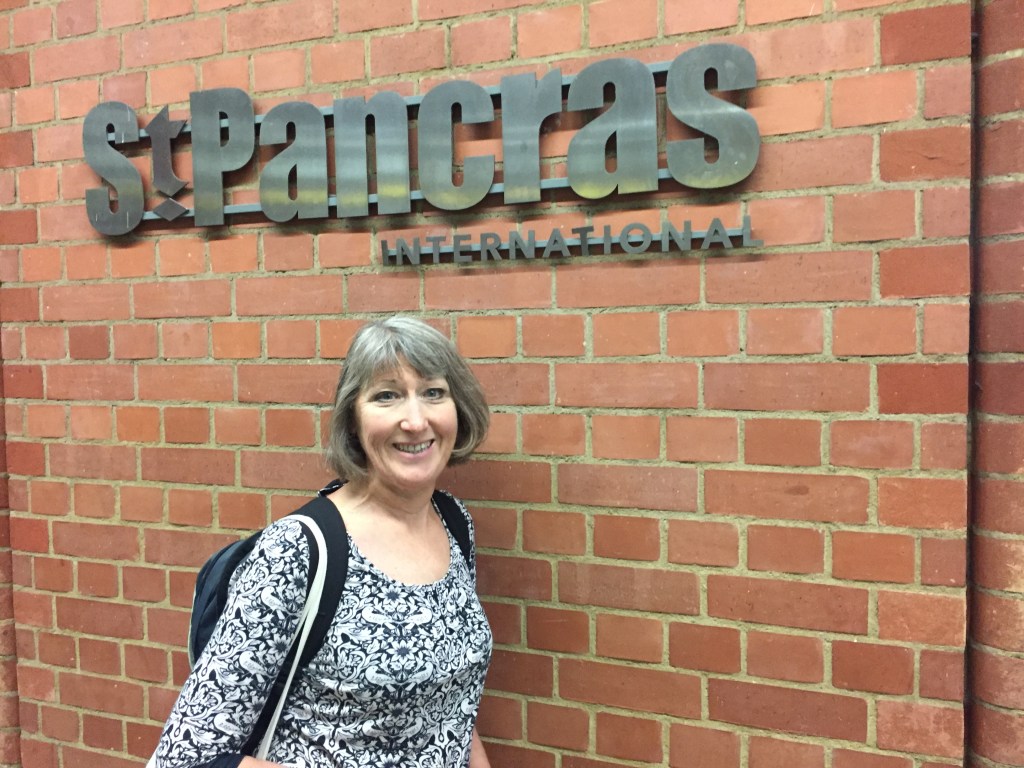
We hopped on the train from St. Pancras and after a romantic night in Paris, found ourselves back in Denia via Barcelona and Valencia.

Off we go again.

In no time at all, Mark and Chris had fitted the replacement engine and Barri was defibrillated back into life. Frankinbarri was arris. Obviously, this new Barri was not going be silent running. His voice had lost that deep walrus of love Barri rumble, and now sounded more of an even, smooth, lounge lizard Barri Manifold. Nice.

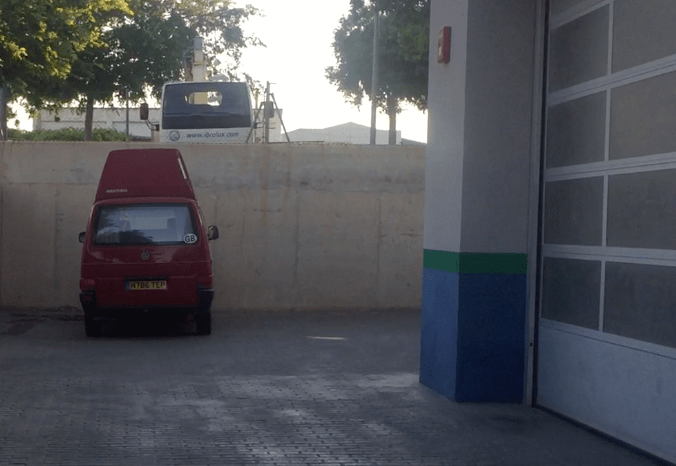
Having spent months inside the Auto-Tecnica garage, Barri is well enough to get some fresh air.

As part of his physiotherapy, we took Barri to all the old Spanish haunts he had loved before his sudden illness. His rehab was to be completed before returning to his specialists, Mark and Chris, for a final sign off. Then he would be free to head for England.

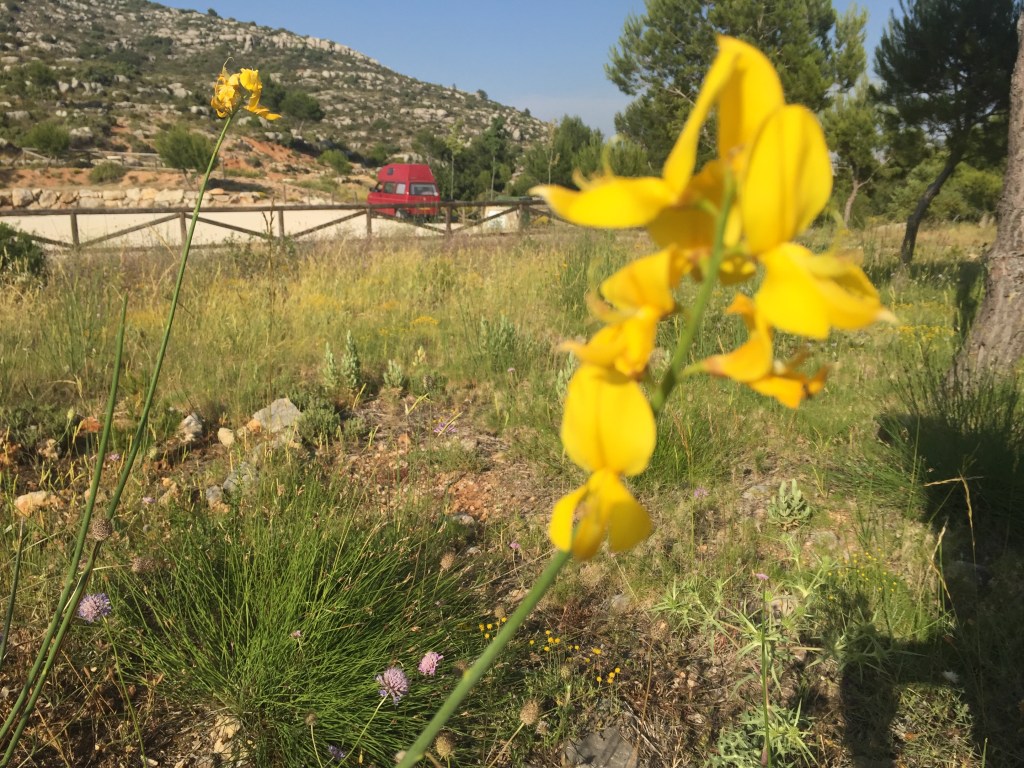
Barri’s physi0 and rehab programme took him to some pretty places.

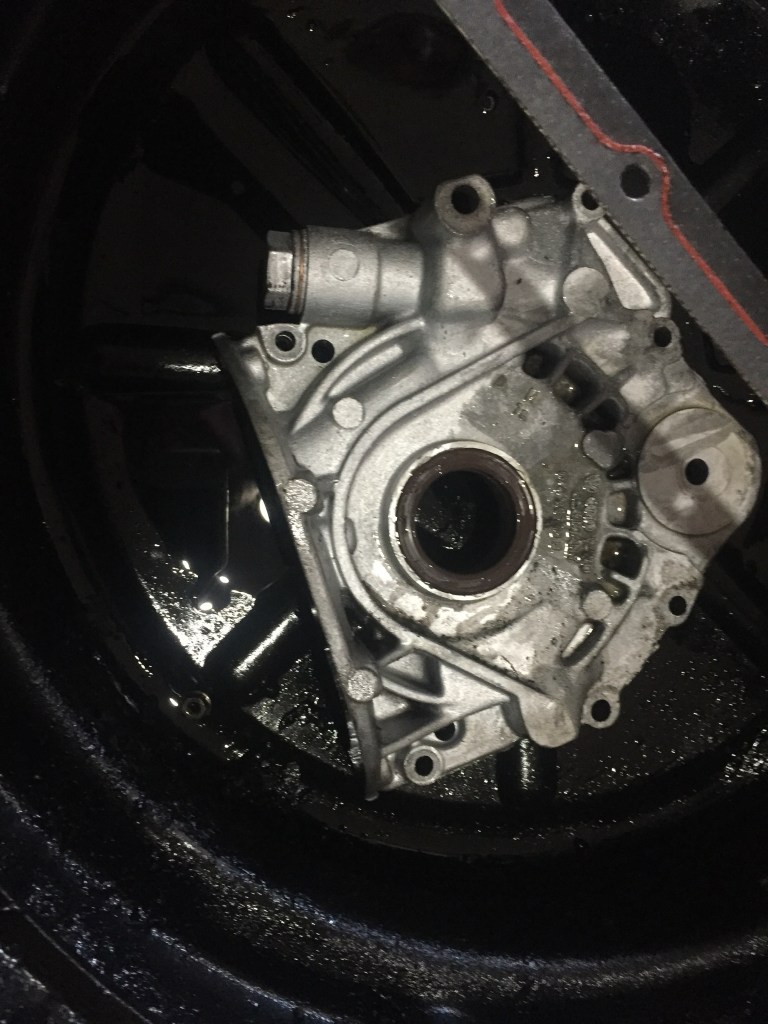
The only fly in the ointment? The Madrid based engine builders, Tecnicas Del Motor (NEVER order an engine from this company), had charged for a new oil pump, but had fitted a spruced up, used one; with no gasket. They said they had run out of time. Luckily it was spotted before Barri had run out of oil. It was a problem that was easily solved, though not without raiding our bank account.

The new old oil pump supplied by that cheeky Madrid based company Tecnicas Del Motor ( NEVER order an engine from this company).

We finally arrived home two months late, several thousand quid worse off, with a VW T4 California that runs like a dream….. until the next time …..

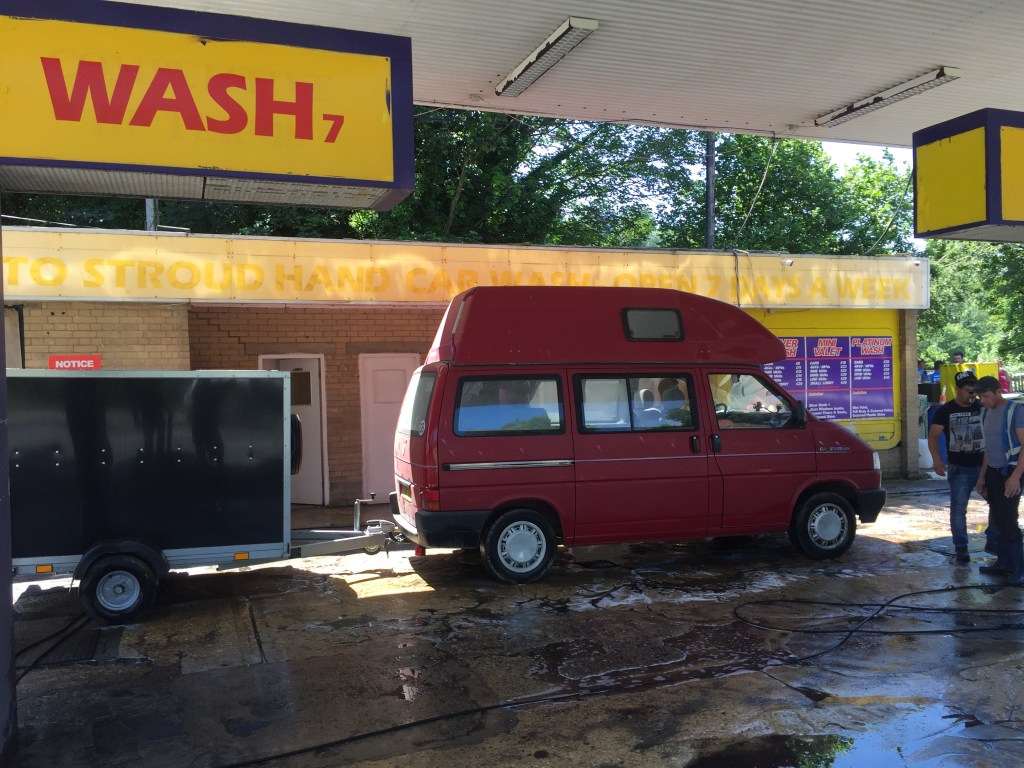
Four months late, Barri has his wash; in England.

Did all that really happen?

FRANKENBARRI MANIFOLD
The best garage EVER.

If you have enjoyed this post, and, perhaps, spotted our little pop trivia game hidden within, please leave us a reply using the box at the very bottom of this page. Thankyou.