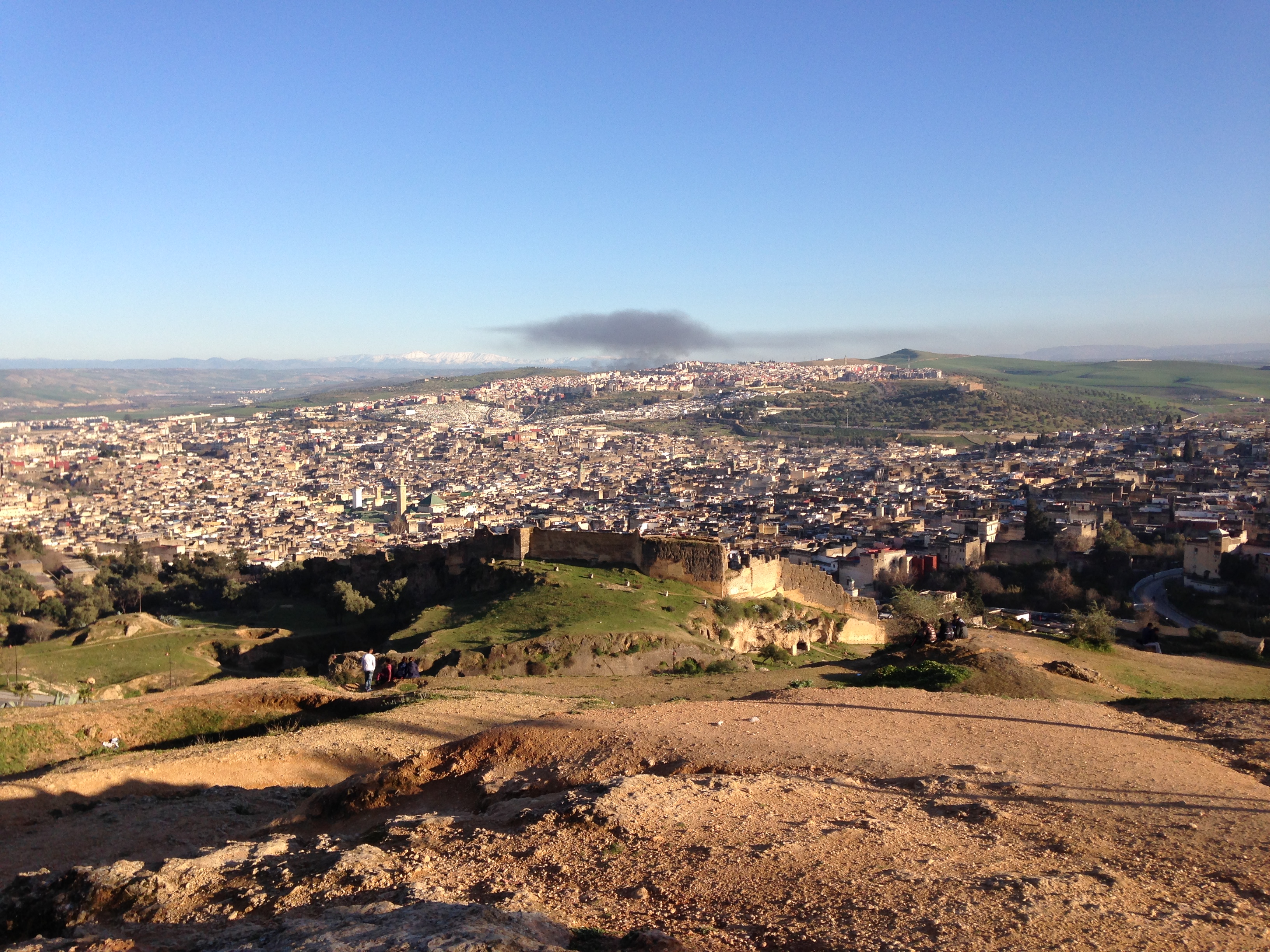
From the high ground to the north of the medina the three cities of Fes can be seen. The University area with its’ rash of cranes and building projects, modern football stadium and new, free access, teaching hospital. The ultra modern business zone, a glass and concrete crenelated skyline. Finally the old city, with it’s Medina, like a dull pimple, barely rising from the sprawling town, looking like the contents of an enormous bag of so many white and earthy coloured Lego bricks dropped onto the valley floor by a careless child. The boundaries between dwellings are indistinct; the narrow passages separating them indiscernible from this distance.
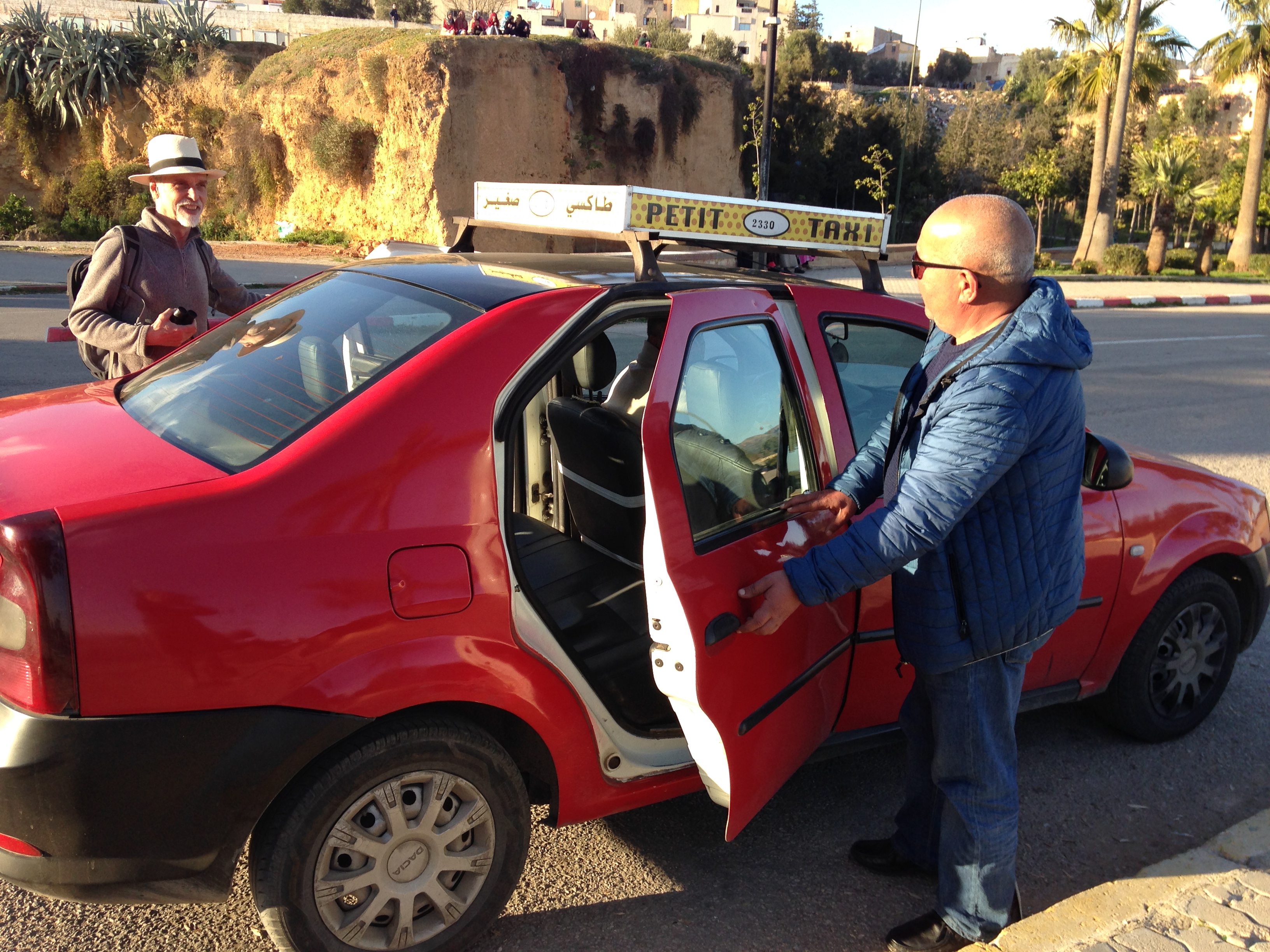
Every city has it’s own colour for it’s Petite Taxis: todays’ taxi is red, so we must be in FES.
As with most cities the dominant sound is that of the traffic, a constant drone punctuated by the horns of ‘Petite Taxis’, scooters and 3 wheel delivery pick-ups, each demanding right of passage through the tight streets surrounding the medina. Several times during the day an indistinct hum may be heard a sound that slowly builds until the chants of individual performers can be divined. Each voice, distorted by crude electronics, and by ageing vocal powers, joins a cacophony of chanting. These 5 or 10 second wailing phrases, each snapped at the end, are followed shortly after, by the next mournful cry. The effect, heard from a distance, is quite powerful, almost threatening, it commands your attention and draws you to it.
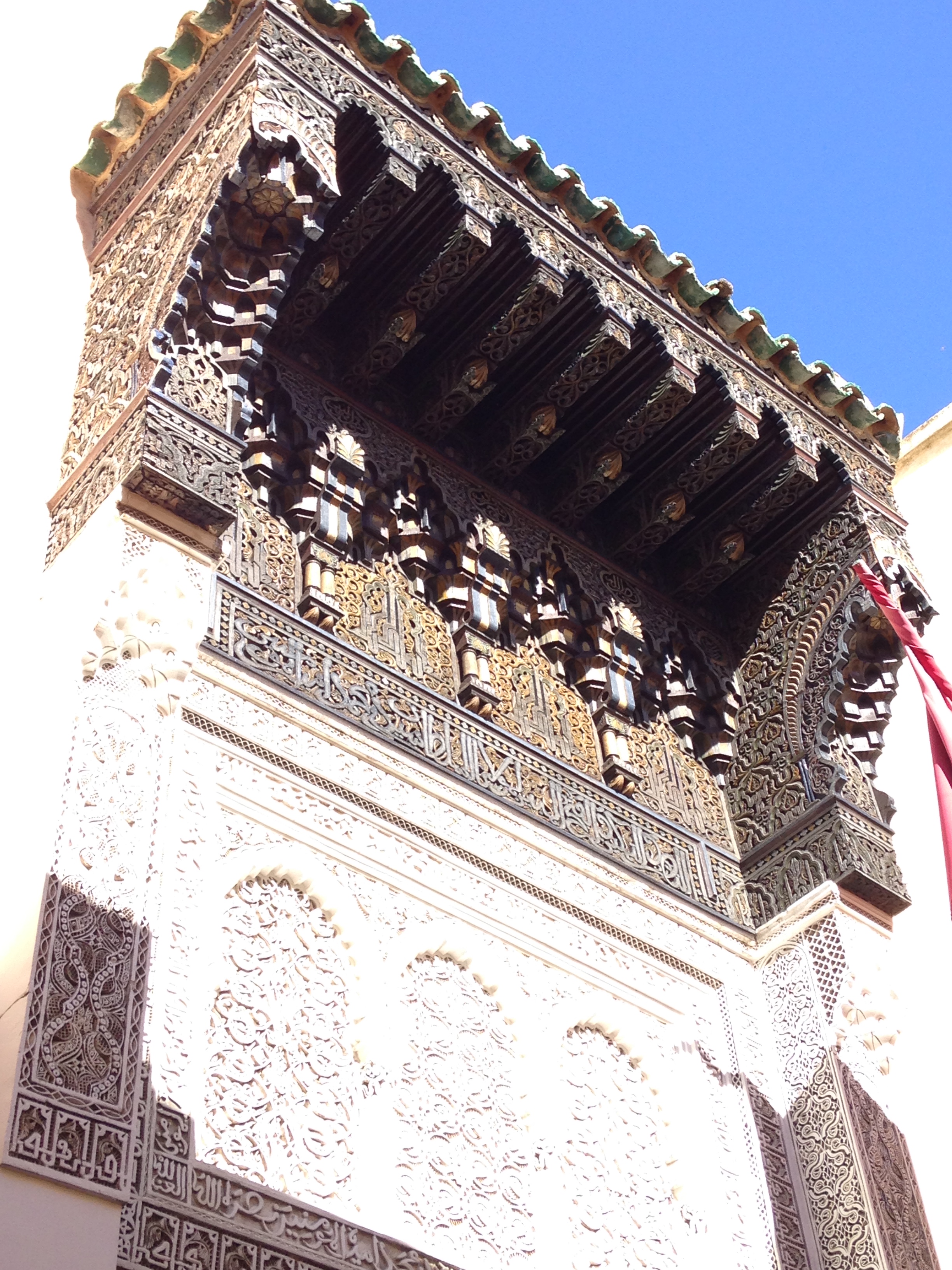
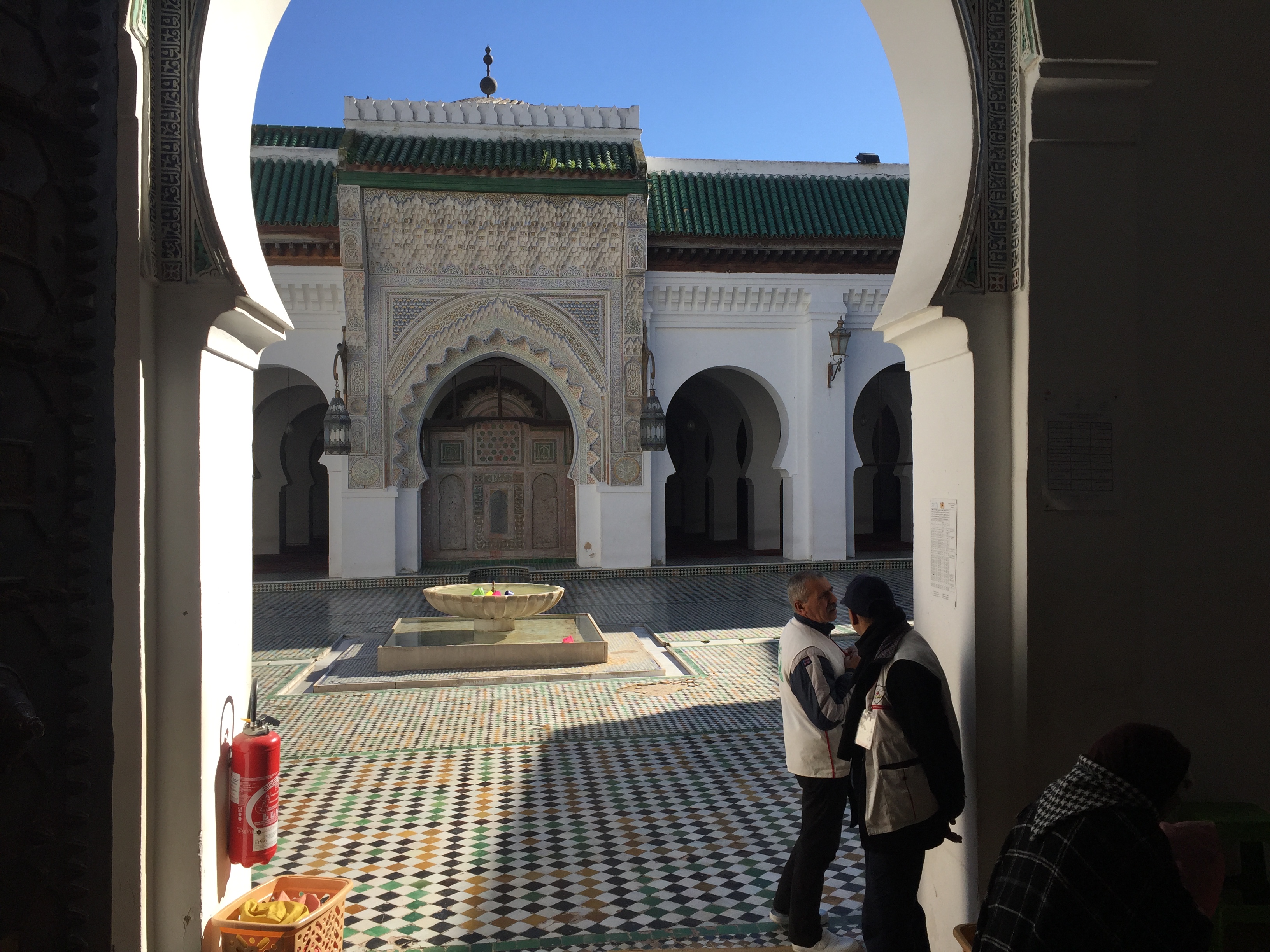
This monumental gate, built in AD 1204, leads into Al Andalus Mosque, built in AD859.
Like other Moroccan cities, Fes has a heart bounded by gates and walls, the limits of the Medina, that powered vehicles do not transgress.
A gateway into the Medina. No powered vehicles beyond this point.
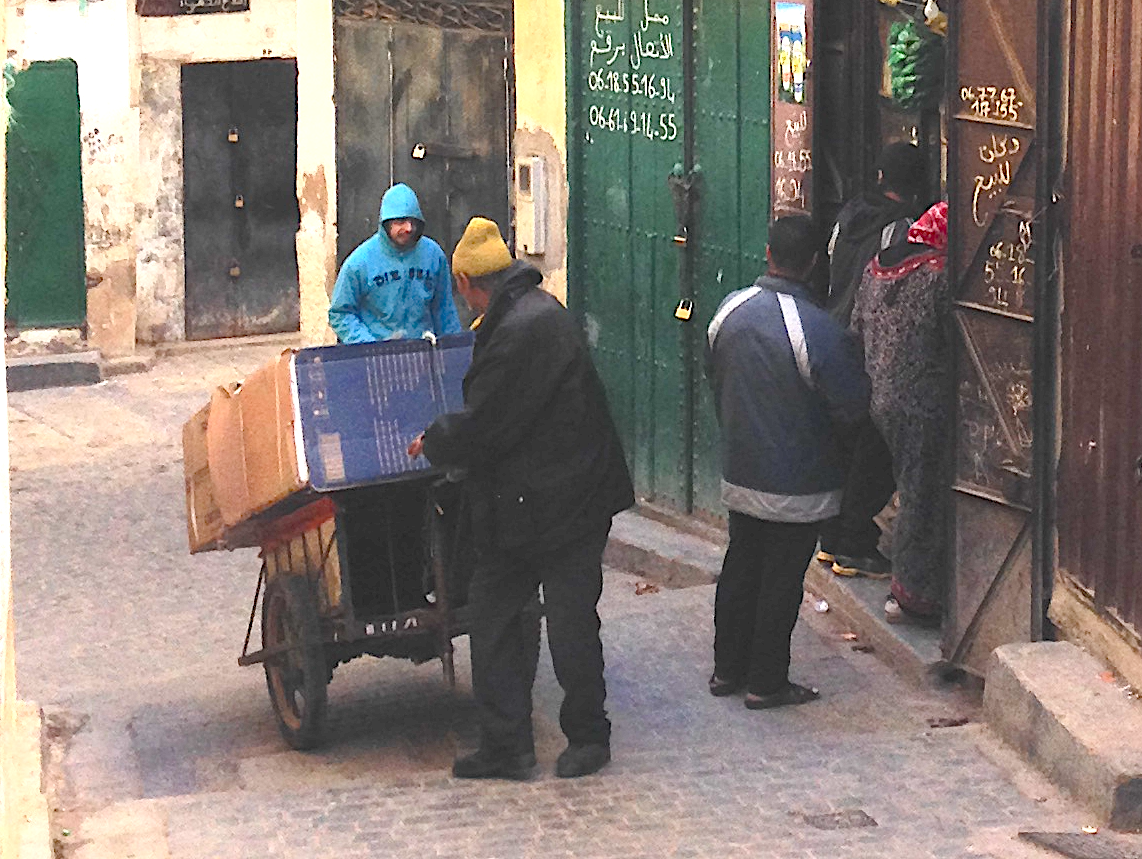
Handcarts and donkeys are the trucks of the Medina, steadfastly moving through the tightly crowded alleyways, stoically unfazed by the oppressive crush that is their daily lot.
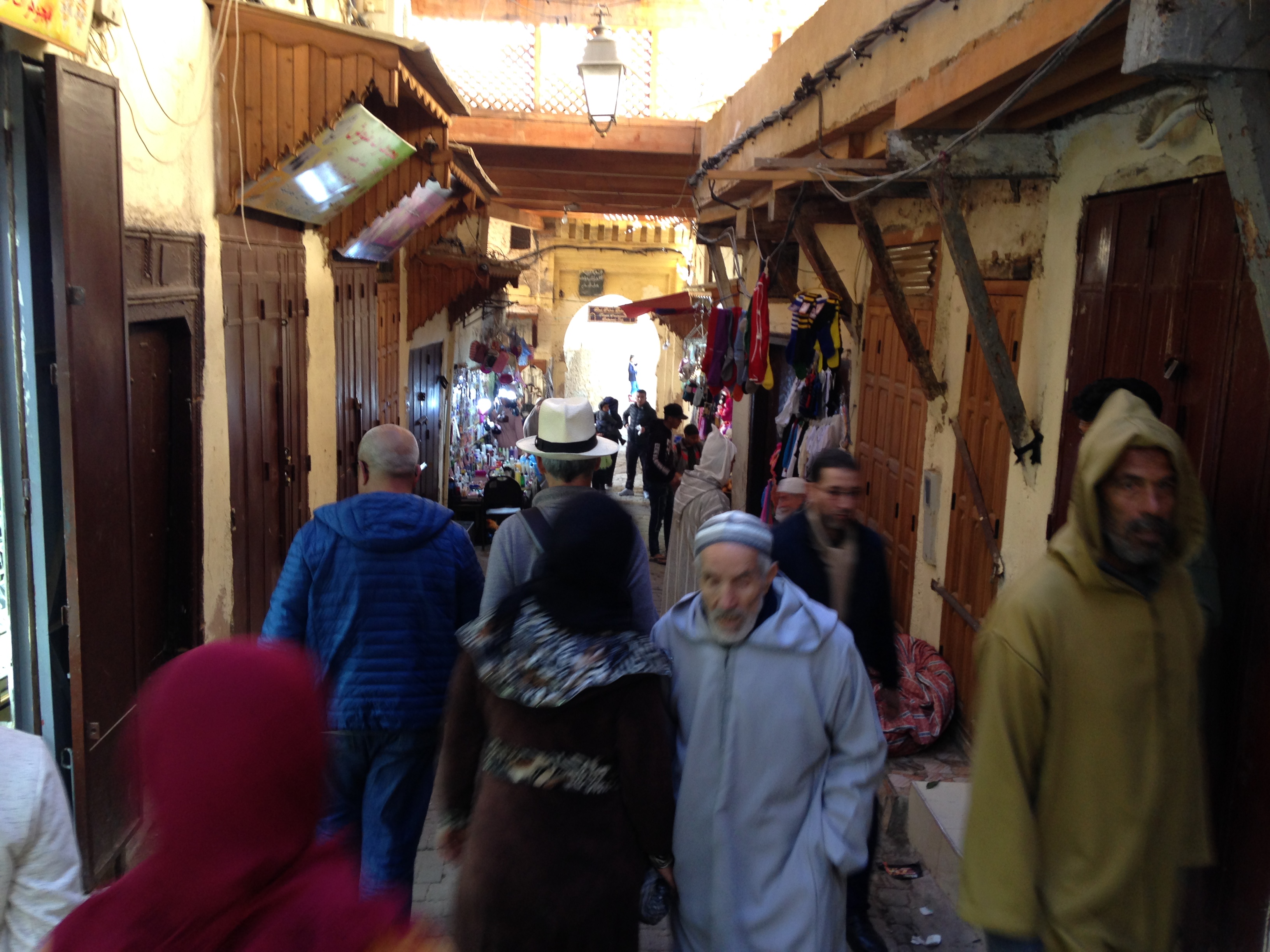
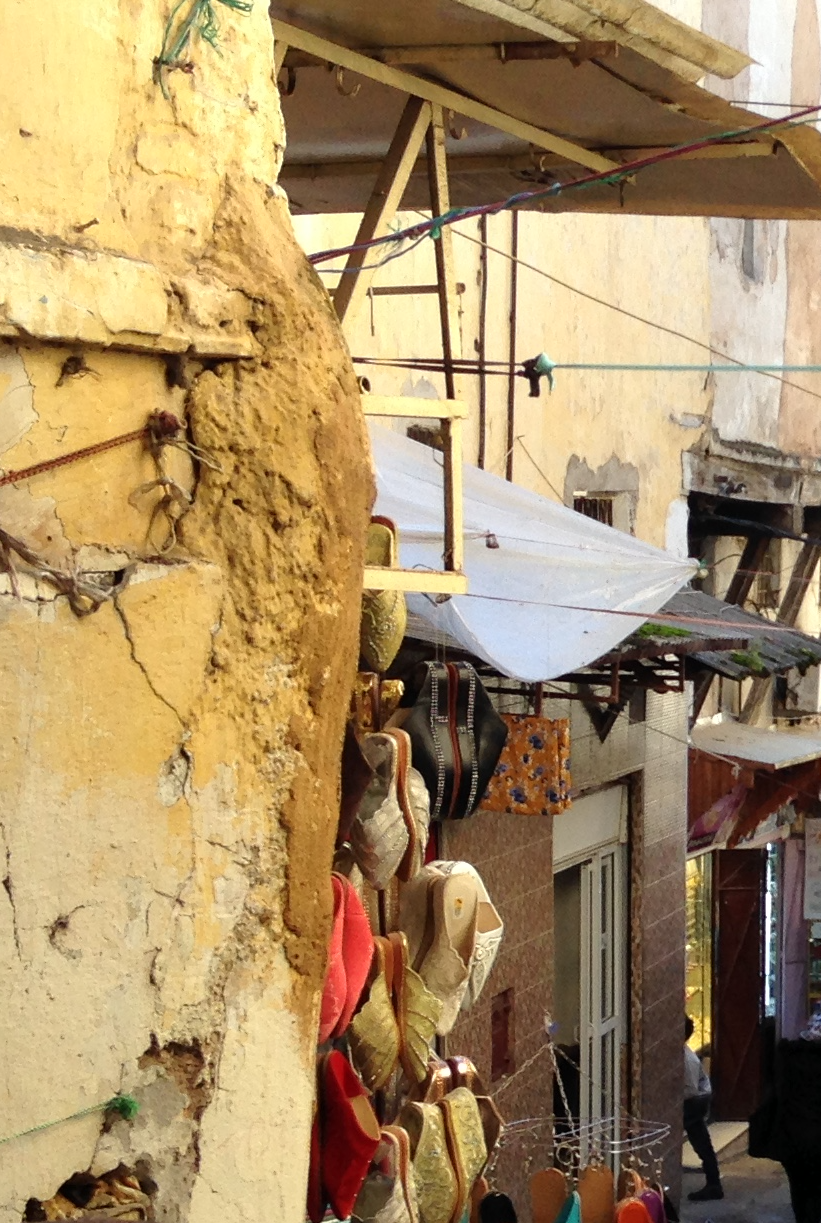
This is the domain of the artisan and the retailer. Nobody is still. Any person entering the ancient Medina is preordained to make, sell or buy something. If you are not there for one of these functions, then you will be out of place. No matter why any person thinks they are coming to the Medina, if they are not earning their living there, then they will be there to spend their money.
Every nook and cranny, within the Medina, uninvolved in direct selling, is taken by people who are turning raw materials into sellable items. There are chickens kept on the upper floors of an old ‘inn’, which was used in ancient times by camel caravans. Originally the downstairs was used to stable the camels and is now used for the sale of animal feed, much of which is bought by the chicken ‘farmers’ and the donkey truckers. The upstairs bedrooms, once occupied by the camel drivers, is where the chickens now roost. They are sold in the Medina as live meat, once their egg production has dropped off.
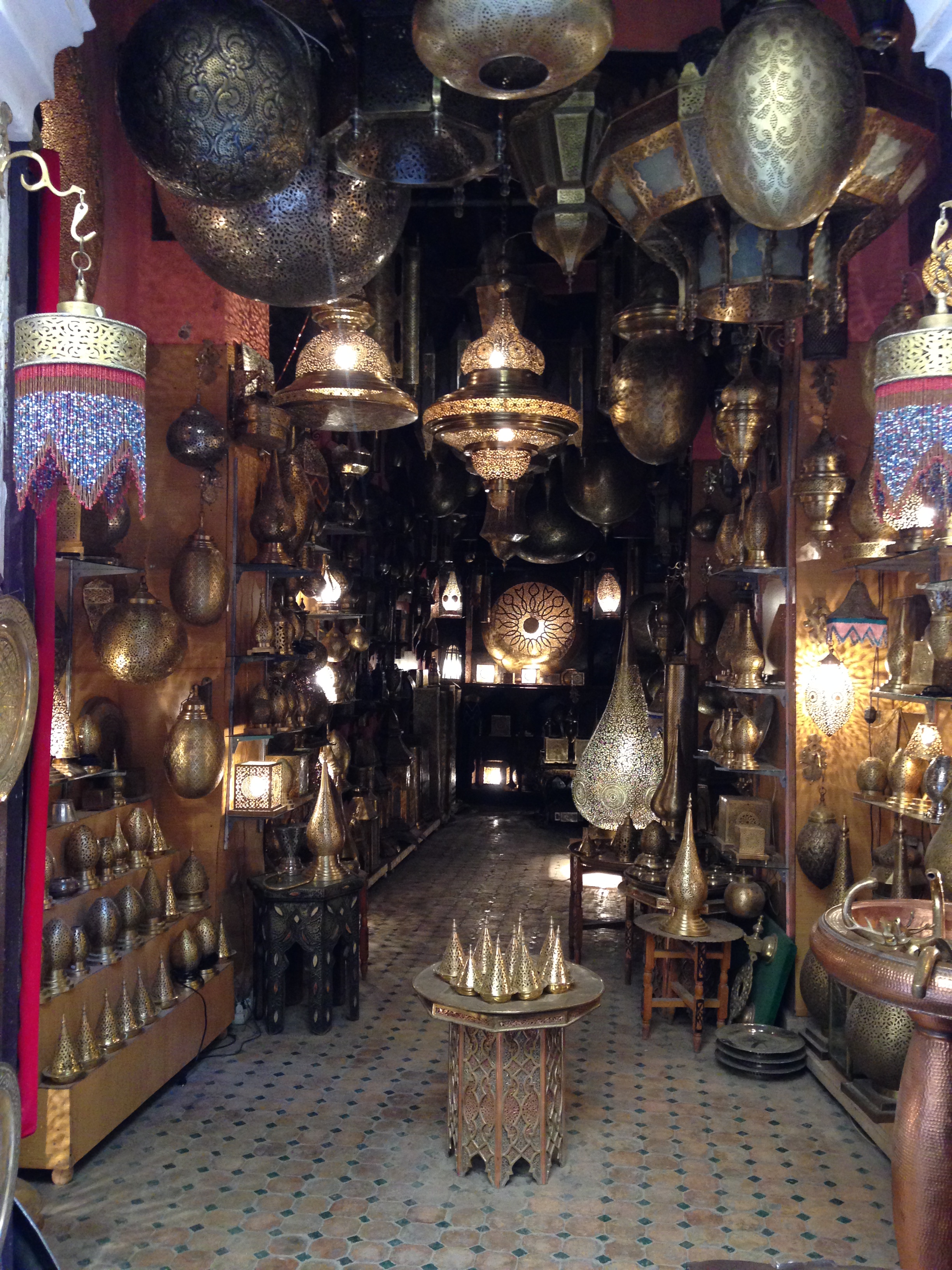
The finished brass lamps.
Another ‘inn’ is now used by artisans as light and sunny workshops, where the ubiquitous pierced brass lamps were being made in every shape and size by men sitting on the floor and using the simplest of hand tools. These inns are accessed through uncompromising narrow arches in otherwise blank walls. To poke your head through one of these entrances takes a certain amount of nerve; it feels like a transgression into a private area.
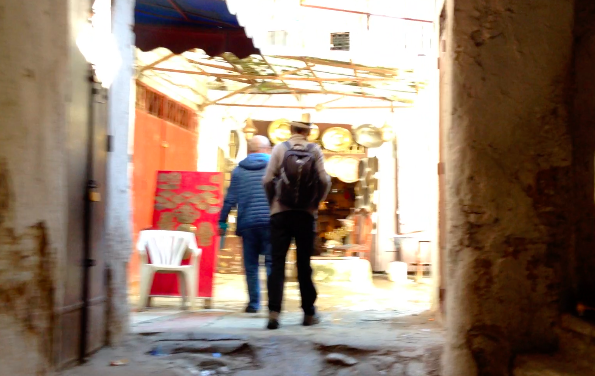
Passing from the alleyways into an ‘inn’ where peirced brassware was being made.
Once through the portal, a large semi-circular courtyard fans out, open to the sky, enclosed by a curved two story wreck of a building. There were a good number of these old ‘inns’ in the Medina and it was not difficult to imagine a long, heavily laden caravan of camels forcing its way between the dark, restrictive, walls to reach their stabling. Here the camels could rest and feed, whilst their drivers haggled for the best prices for the goods they had brought to the market.
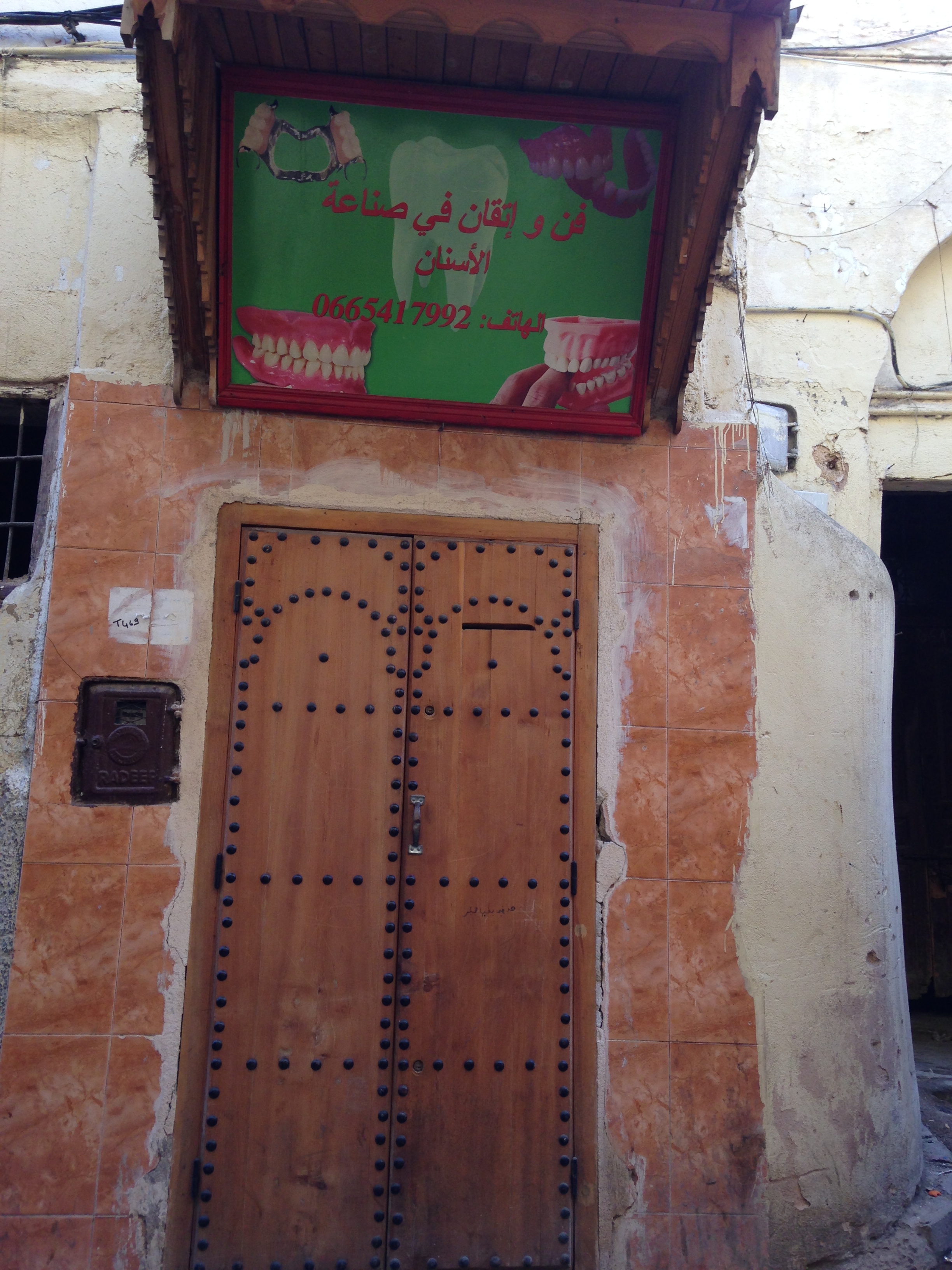
All life can be found beyond the doors in the walls.
In the Medina every wall presented doors and behind every door, you could bet that there was a surprise in store. This miserable, dirty, crowded, shadowy place is, in fact, a sham. There is light to be found but, you need to know where to look for it; in the homes, ‘inns’ and mosques. The light is reserved for ordinary lives lived behind the doors that punctuate the dun coloured walls. People toil in the relative cool of the Medinas’ lanes, with the buying, selling and making all taking place in the intensely cool shade. People live and pray in the intense glare of sun light, which pours in through once open and now glazed roofs,.
Looking through the open doors of a Mosque in the Medina. A haven of spotless space and light.
Fes is three cities in one and the Medina is two cities in one. Having visited both, Chefchaouen and Fes, the I could reflect on the age difference between the two cities, which is nearly 700 years, with Fes being the oldest. I cannot say that I liked ancient, darkly tanned, weather beaten Fes, shored up by it’s many wooden crutches with walls spragged by stout timbers.
No matter where you look in the Medina, buildings are propped.
I can say it was interesting and a world apart from the young, bright and undeniably pretty Chefchaouen, with it’s colourful buildings and much wider lanes and it’s youthful ability to stand up unaided.
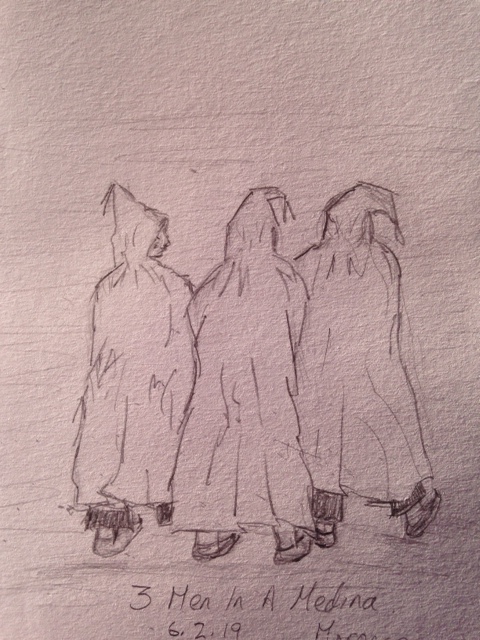
Traditional dress, worn by men, over their clothes. Underneath, often a smart suit and tie, other times … it was hard to tell; maybe nothing underneath.
As we were heading from Spain into Morocco without a clue about anything, we bought an open ferry ticket. This one was good for 6 months, which was a smidgen more than the two or three weeks we had in mind, but allowed ample wriggle room for our total lack of forethought.
So many ferries, so little choice!
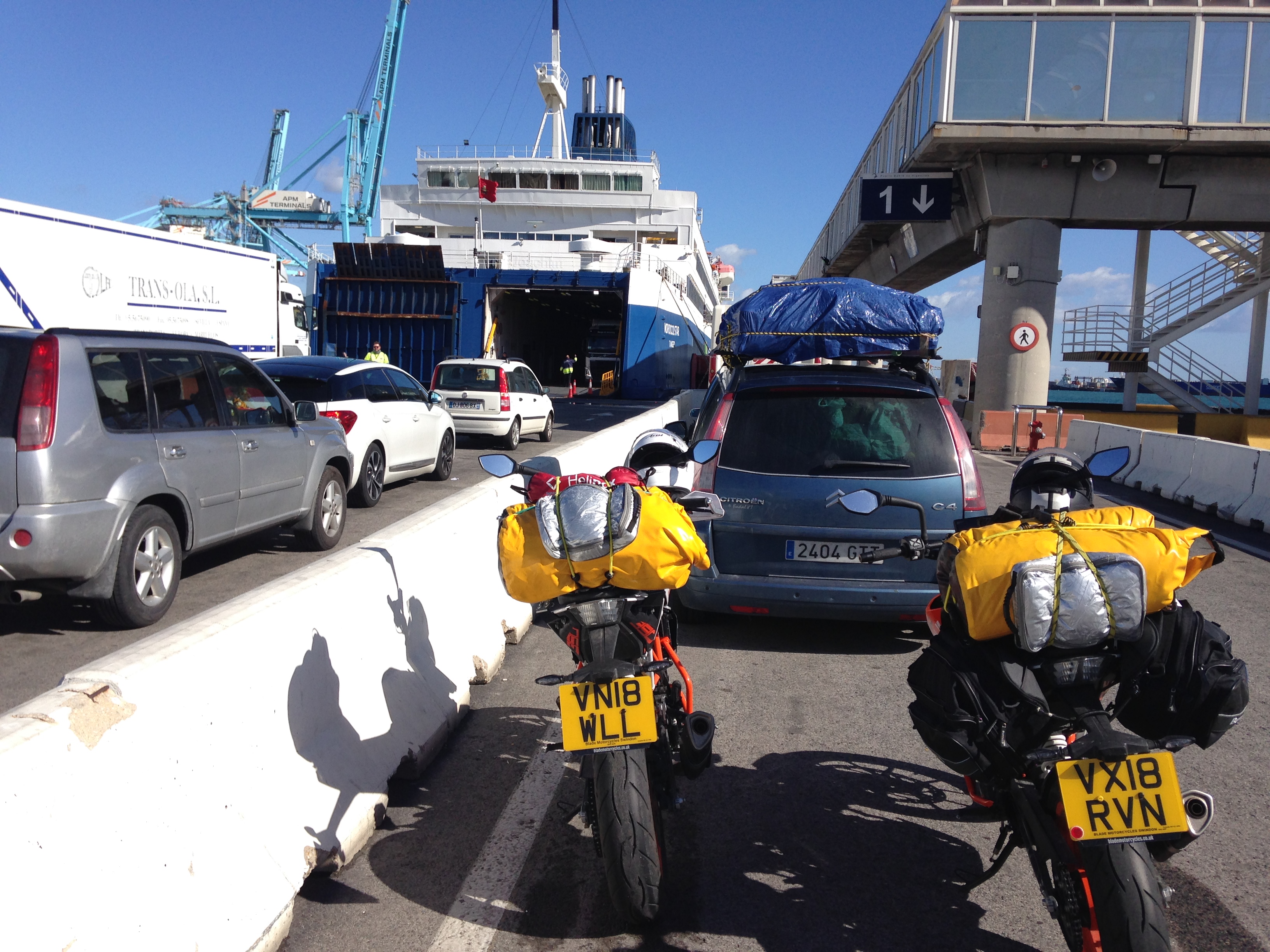
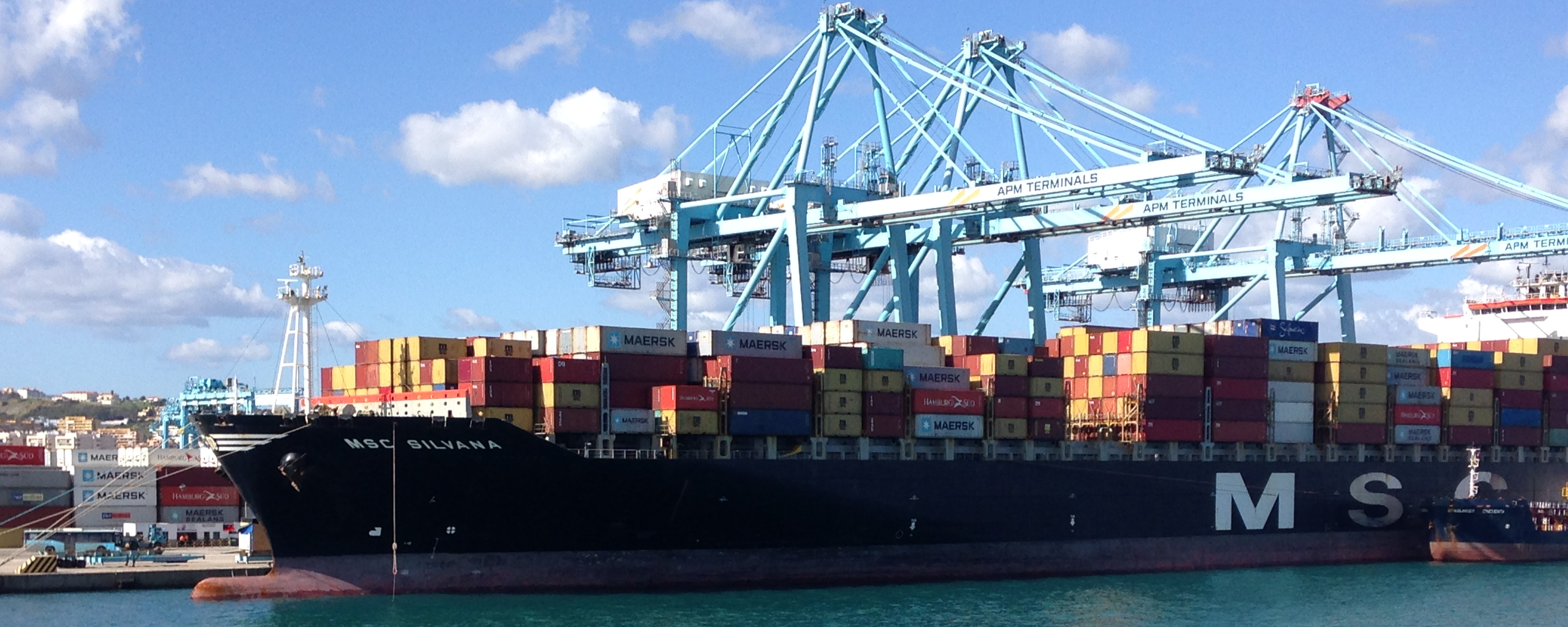
Balearia; not an expletive, but the name of our ferry company, have a choice of seven sailings a day. I must admit, that this is six more crossings than we need in any one day. We went for the 10am option, so that we could get to a place called Chefchaouen with plenty of daylight to spare. If we ran a bit late, it did not matter at all, after all there were another four crossings to aim for.
That mighty hurricane through which we had ridden our motorbikes, had caused the closure of the sea! Too dangerous for the car ferries to set out. We waited until the next day and tried again.
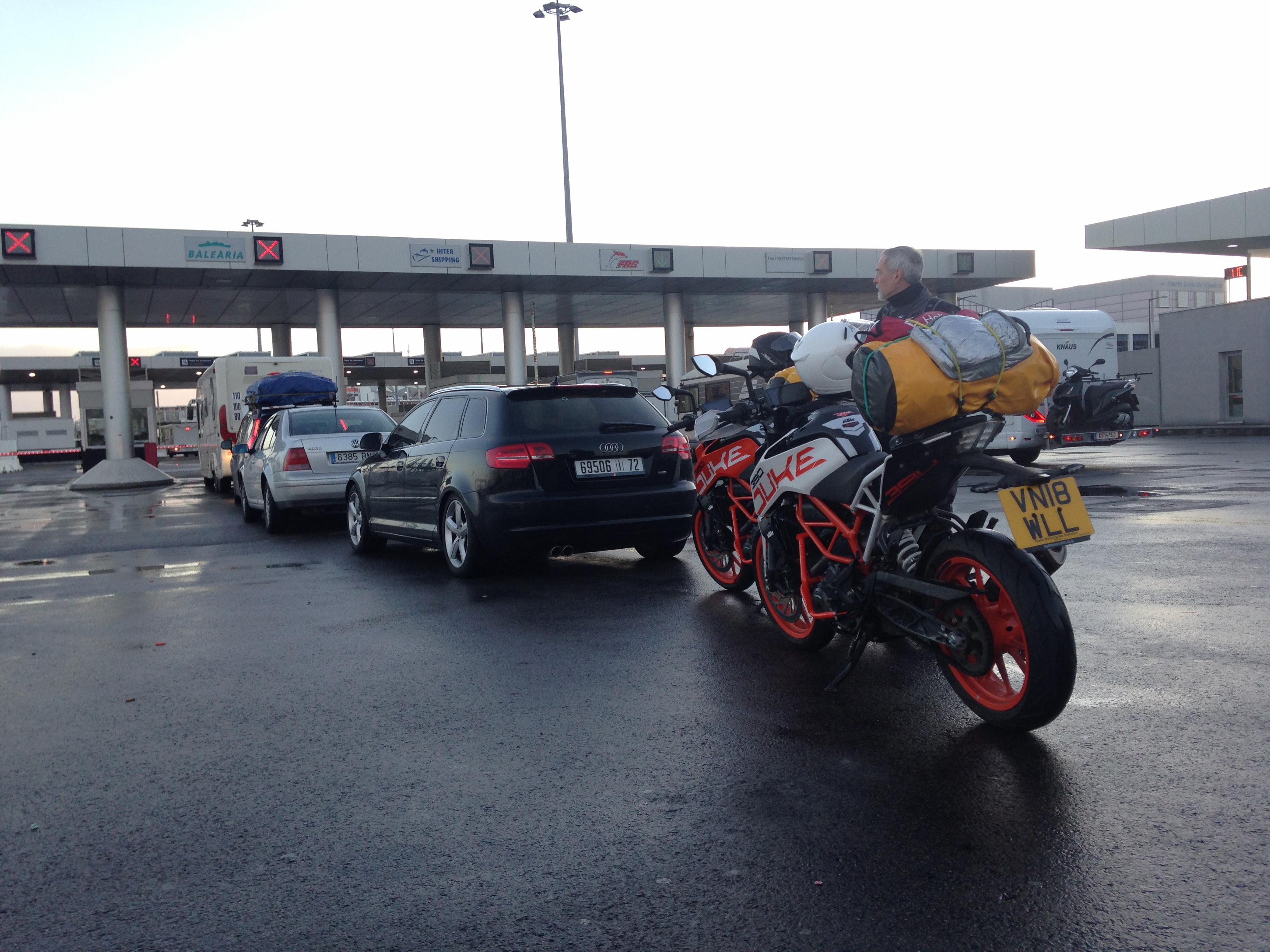
The dock side queue of cars, vans and motorhomes, at Algeciras was targeted by a team of druggy tramp-like people. They were trying to pull over passing vehicles to sell ferry tickets. I almost hit one man, who saw it as perfectly normal to leap out in front of a moving motorbike. Others were openly begging at the windows of the queuing vehicles. There is a Port Authority here and it needs to do its job and clear the area of all unauthorised personnel. These folks are a nuisance and a potential security risk.
To make matters worse, as we huddled on the quayside, trying not to make eye contact with the tramps, I began to think I might like to use ‘the ladies’. What greeted me defies description; but I’ll try. A Portacabin. Filthy outside. Mens and womens’ section. So far, so average. I stepped into the womens’ portion and was knocked back by the over-riding smell of faeces (shit) and, as my eyes grew accustomed to the gloom, the amazing filth of the room became apparent. I doubt if the sinks have been cleaned since the cabin was plonked into place and hooked up to the mains services. One sink appeared to have faecal matter in it, not much; enough. There was no hand drying facility and, no surprises, no soap.
The effect was outstanding enough to win the Turner Prize; I should have shipped it home and entered it. It is possible that you are thinking, it doesn’t sound so bad. But you have not considered the floor. I had a choice of cubicals. One cubical appeared to be out of service, so I followed a set of dubiously brown footprints that managed to stand out against the generally filthy floor, to the stall with a puddled mound of faeces. This, almost completely dried out, cracked and crazed splodge, had plopped onto the linoleum, just in front of the toilet pan. It took up at least a third of the width of the floor. Someone had missed the pan by about 6ins. This is what was trodden throughout the cabin, along with various ages of toilet paper scraps, some clearly faecally daubed. I placed my feet carefully on top of a set of well positioned shitty shoe prints, either side of the accident and hovered my rump above the toilet, whilst trying not to touch the faeces smeared walls. A total lack of toilet paper and door lock completed this grime worn, shit coated loos’ itinerary. Afterwards, with the tap operated using a wad of some of my spare toilet paper, I was able to swill my hands in cold water. I touched absolutely nothing as I left the little building to return to the queue for another hour. Much of my time was spent wondering if I had time to walk back to the loos to take a photo, but we felt we would board our boat at any minute.
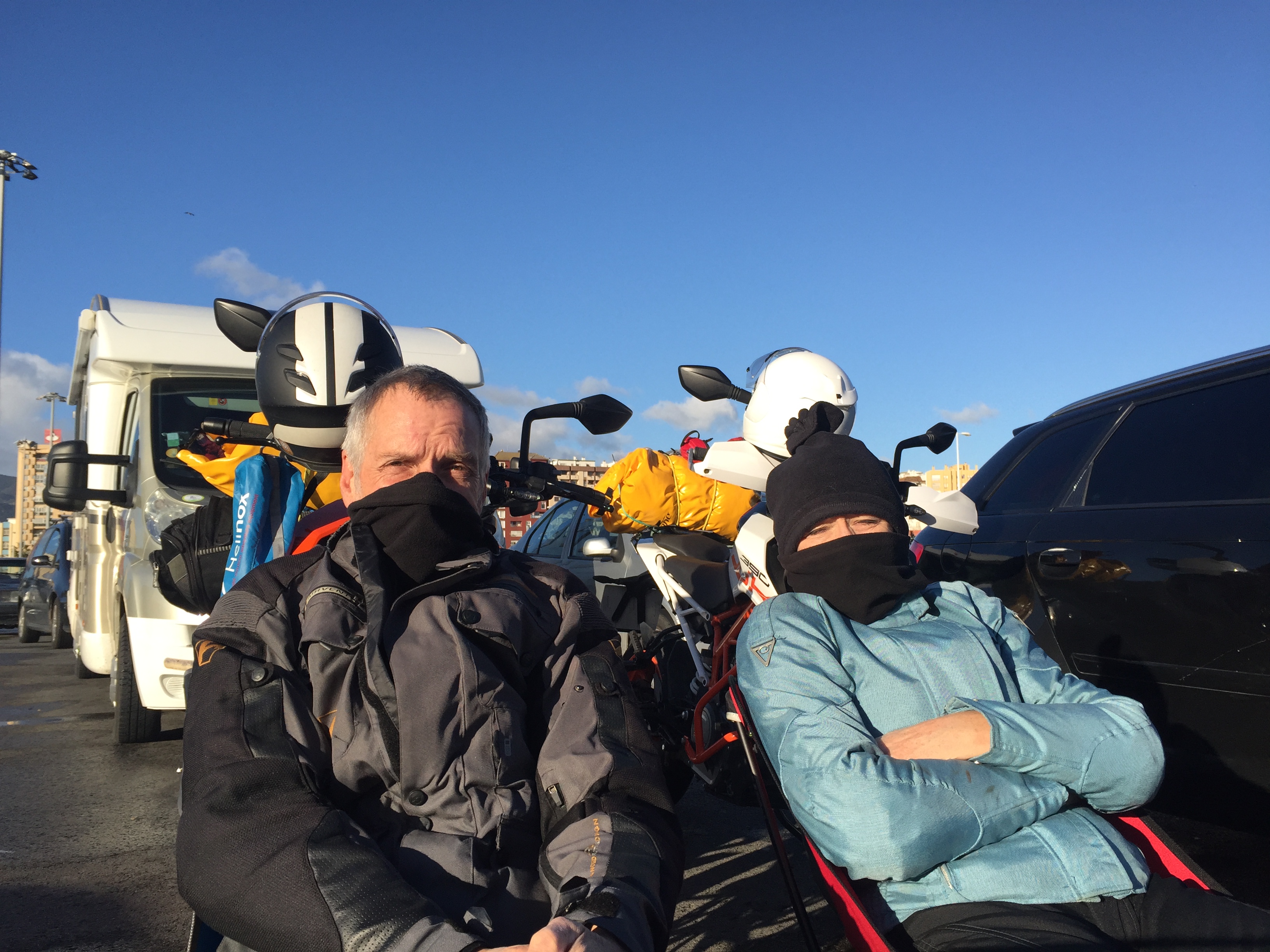
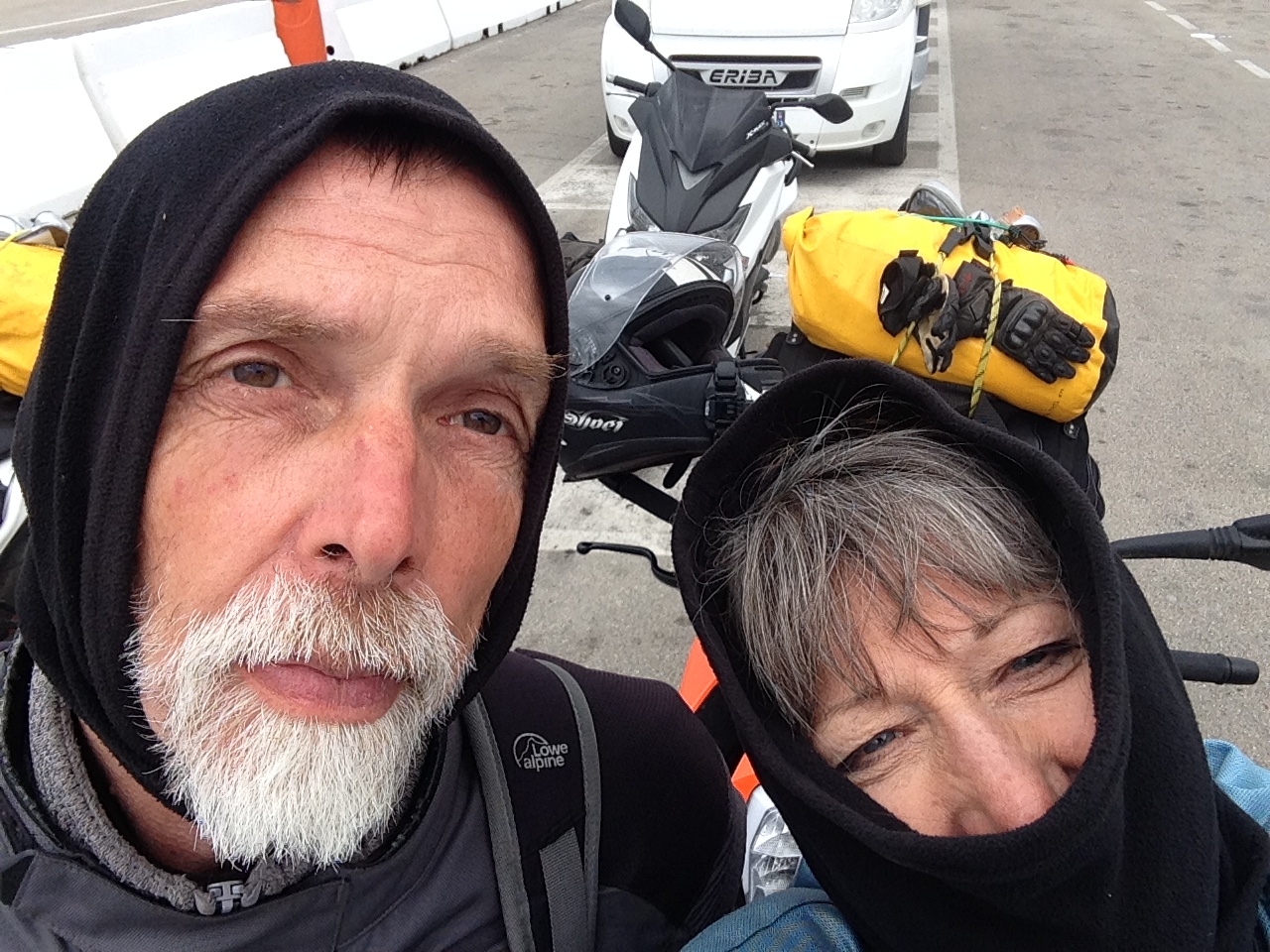
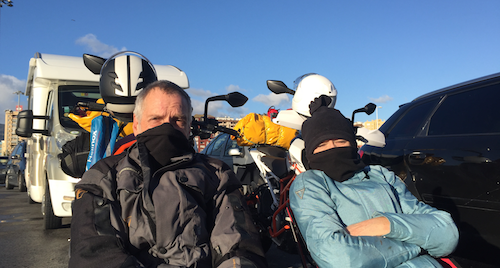
Glad we dressed for cold weather.
We sat on the dock for 3 hours, in the freezing force 8 wind, with no motorhome to keep us warm, watching other ferries come and go. Ours seemed to be the only company unable to get it’s act together. Further delays followed and, eventually, another, heavier boat was deployed. ‘Rent a Wreck’ came to mind. It was more rust than paint and we were relieved that the crossing is only nine miles, swimmable from every point; should one need to bail out of this poor excuse for a vessel.
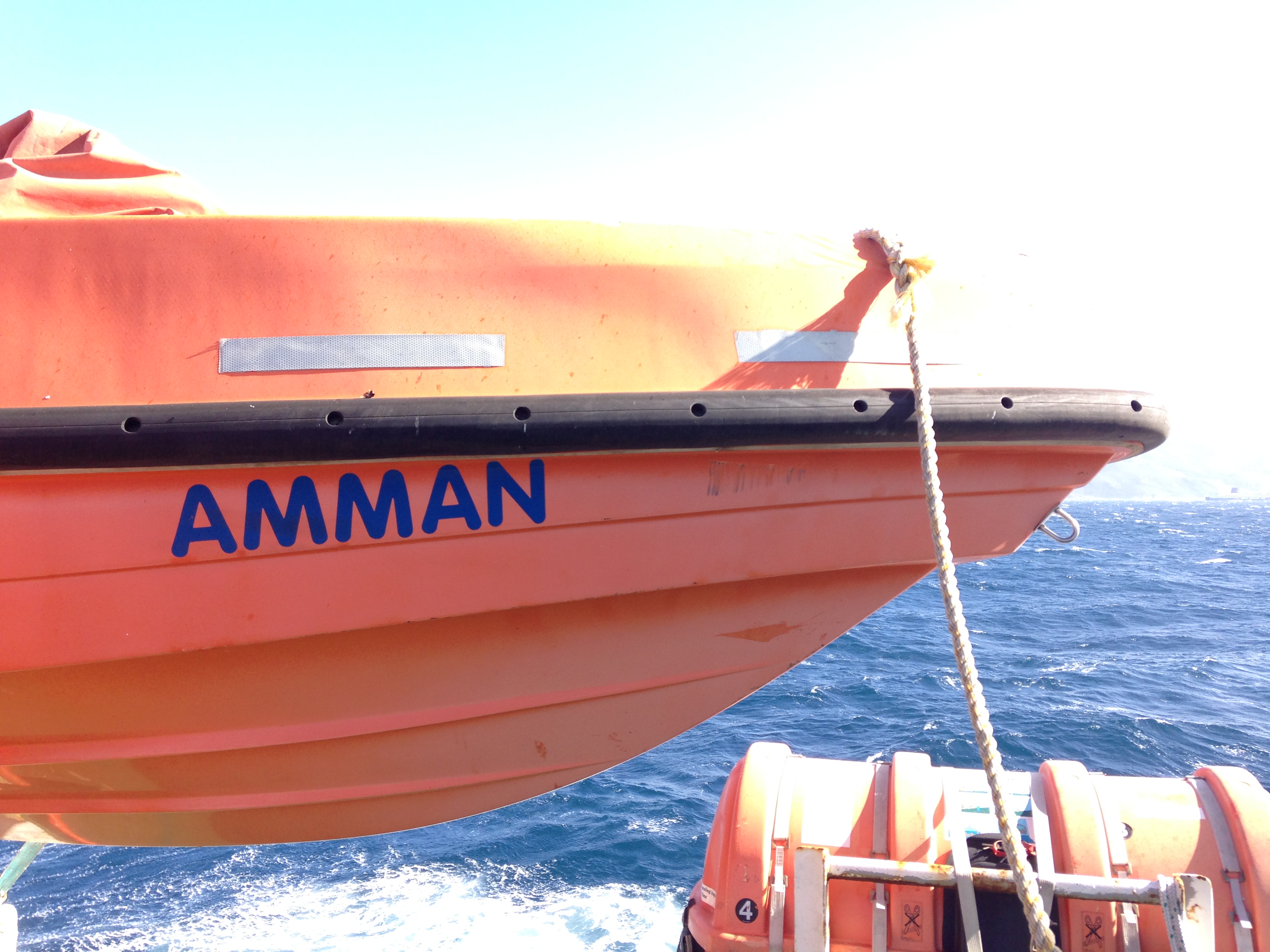
The Amman, Balearia’s rust bucket of a vessel
Our ferry left several hours late; the first and probably only crossing made that day by this lamentable company. As we left Europe, we pondered on how bad the Moroccan toilets need to be before they s(t)ink to the standard of Algeciras Port. We decided that nothing can be worse, but they could, with a huge lack of any effort at all on the part of the ‘cleaners’, be equalled.
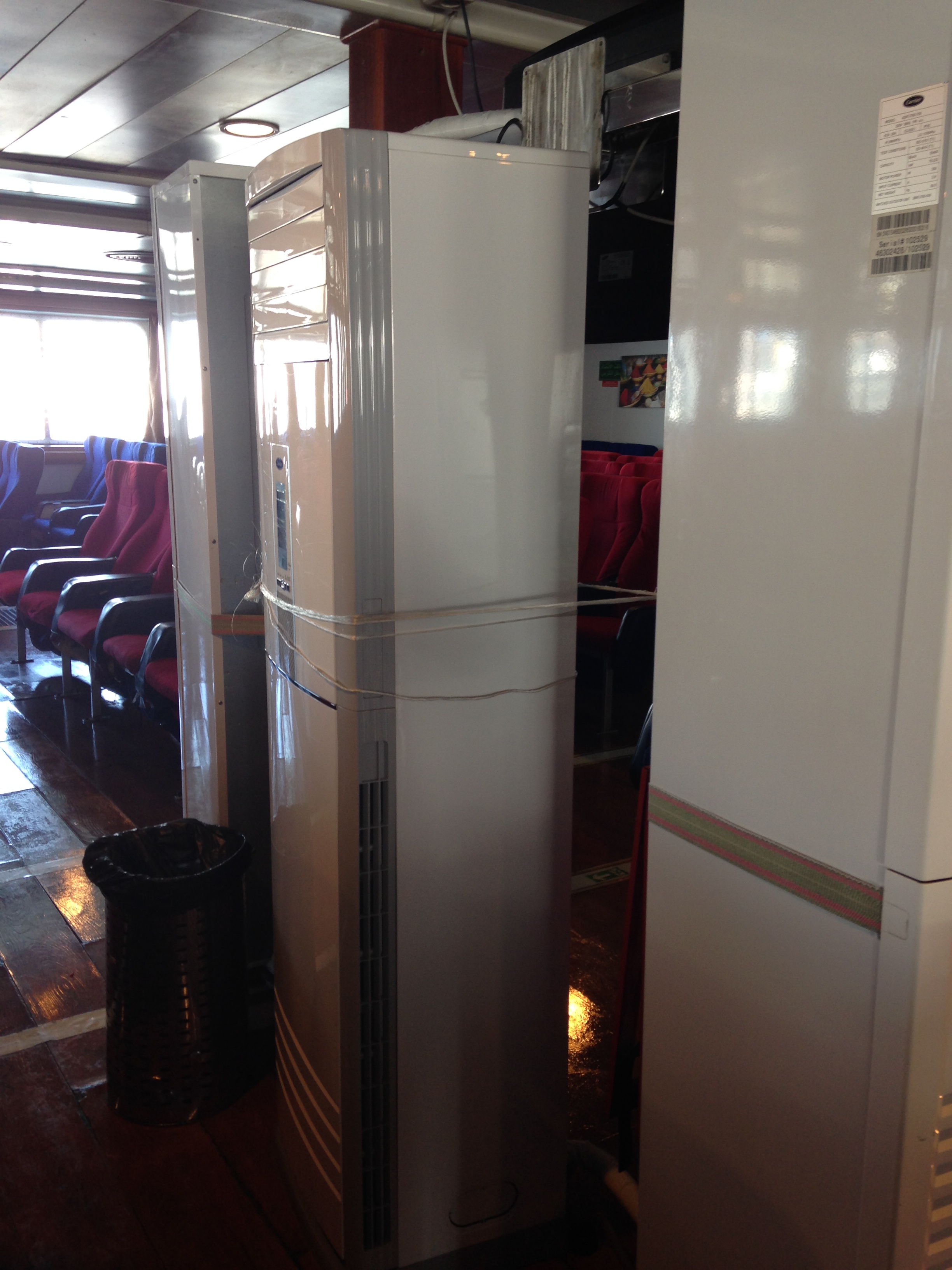
Inside the Amman, the air conditioning system is state of the art and held in place by string.
We enjoyed Morocco. Fourteen days of exploration, which we are documenting and posting on this blog, but not this page. The time came for us to head back to Tangier Med, our embarkation point for Algeciras. When we arrived, we had cleared the port, entering Morocco inside half an hour, with everything done. We had high hopes that our exit from this modern port would be equally quick and efficient. How wrong we were.
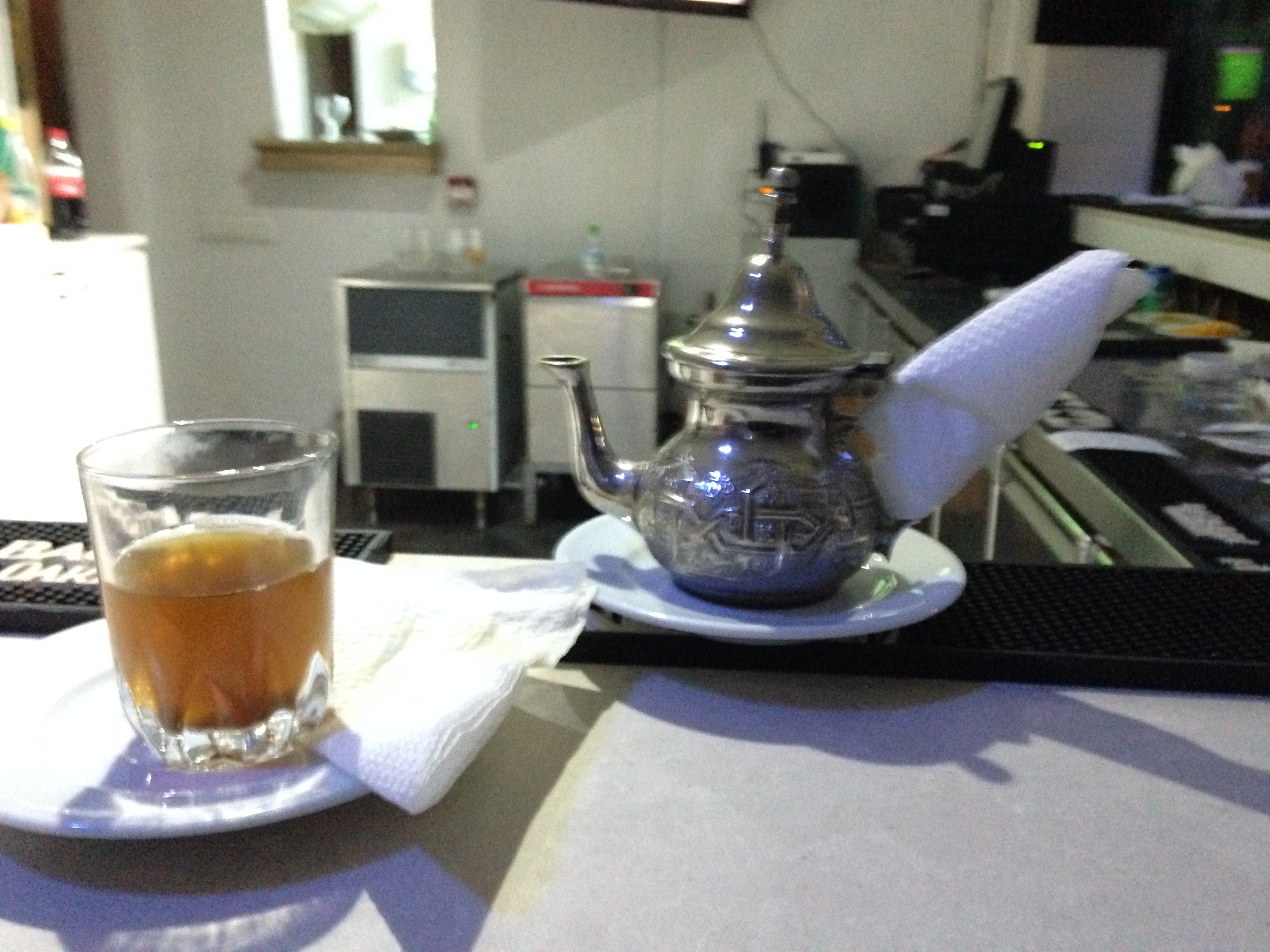
Goodbye lovely mint tea.
As we rocked up to the the port of Tangier Med for our return journey, it was a breezy force 5 kind of day; bracing dinghy sailing weather. The sun was out, but we could see dark clouds near the surrounding mountains.
We checked into the Balearia desk. It was 10am. We were told the ship wouldn’t be sailing until much later; something to do with weather. Well, here’s news for Balearia, there is always weather, get used to it. So our 12 O’clock boat might not sail today. We went into the little port cafe and drank tea. Wally spotted a couple of bikers who had just arrived from Spain. They had been transported here by Balearia and had a miserable tale to tell.
They had arrived at the Spanish side for an early ferry and for what seemed to be no reason, had waited hours on the quayside for the ferry to set off. The sea was calm, they said. Their reading of the situation was that Balearia waited for enough vehicles to line up to make it financially viable for them to sail.
About 1pm an official looking man rushed into the cafe, and took Wally to the Balearia check-in desk. Wally handed over our last note, 200DN (£20 app.), and was told that a boat was about to leave and if we hurried we’d get on it. They implied that the money was a fee, as there had been a change of carrier. They wouldn’t give the name of the replacement boat. As we left the cafe, we realised that we didn’t have enough moroccan money left to pay in full for our tea. There was no time, luckily perhaps, for me to go and demand our money back, as it dawned on us that we had probably been ripped off. We rushed to the dockside, completing paperwork at the various drive through booths as we went.
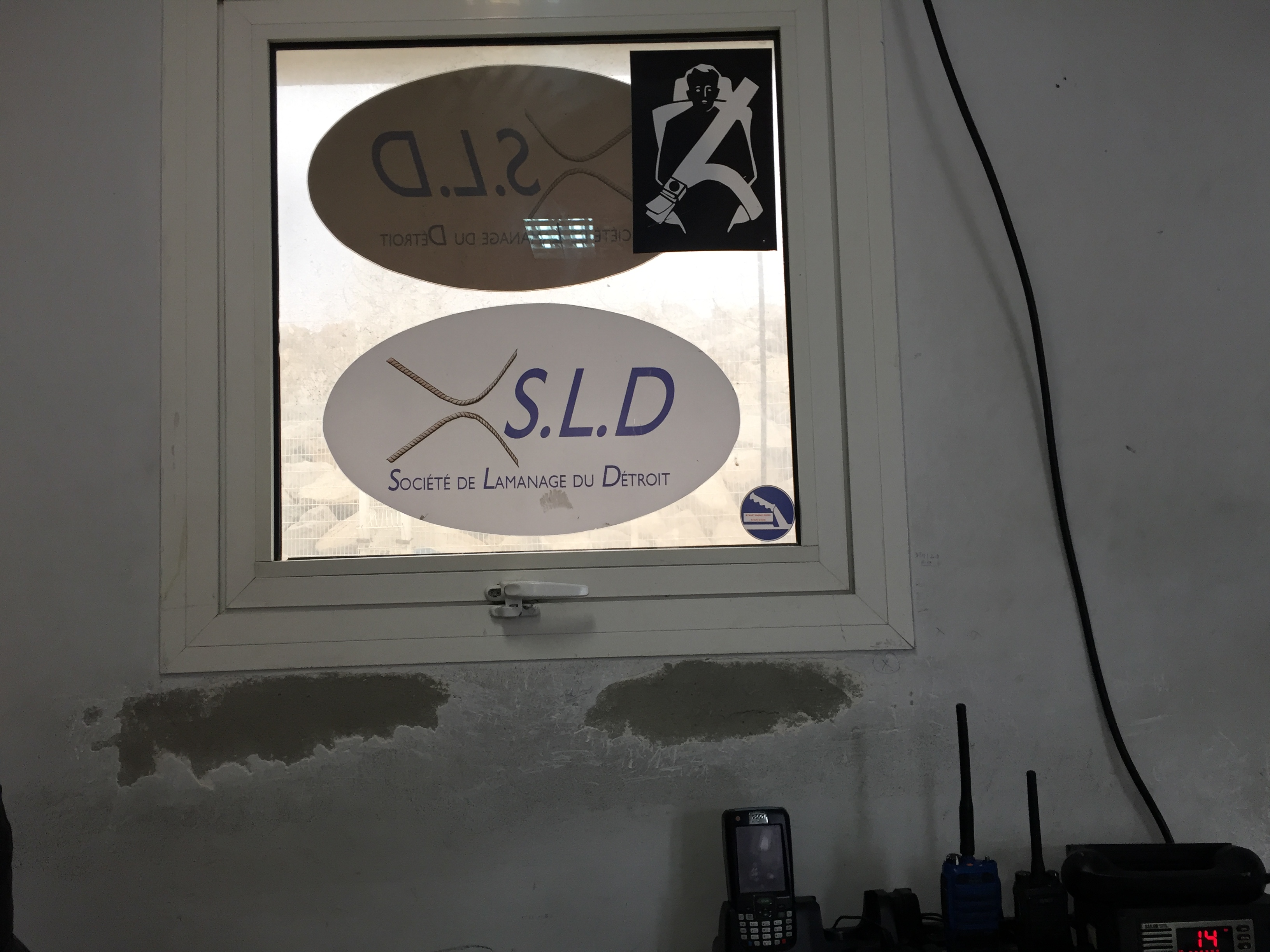
A number of ferries had moored in the dock, all of them for other companies. We were turned away. We were ushered into a short queue where, once again we waited. The sun went in, the wind grew stronger and we were getting colder by the moment. After over an hour and at real risk of hypothermia, we shuffled over to an office block and sheltered there in the lee of a defunct Coke machine. Then it started to drizzle. Some men came out of an office and took us in. They were members of SLD, Societe De Lamanage Du Detroit, the professionals who moor and free the ships that use the port. They made us hot mint tea and carried on working around us.
Inside the SLD office that sheltered us.
A Balearia boat arrived. We left the sanctuary of the SLD, and rejoined the queue. It was another hour before the authorities noticed that there was a line of about 10 vehicles sitting waiting to board a vessel; any vessel. We think it was our SLD heroes who tipped off the ferry company. As it is their job to moor the boats, they know what boats are coming and going and when and they knew we were due to board a Balearia boat. We are pretty sure they knew no boat was due on our mooring that day and notified the authorities.
On the cold, wet and windy quay side once again – SUCKERS!!
Suddenly someone in the queue broke ranks and hurtled off. Like horses out of the traps, we careered after the breakaway vehicle. A nondescript car had been deployed to fetch us. Only one person in the queue had noticed. There was always any number of vehicles moving about the docks and I have no idea why this one caught the attention of that particular driver. We followed at high speed and travelled for a surprising distance, eventually coming to rest at the jaws of the same rust bucket that had brought us to Morocco a couple of weeks before. Our 200DN fee was not for a change of ferry company. It was theft.
At least something on the ferry appeared to be in reasonable order.
We had been hanging around, cold, wet, hungry and angry for over 5 hours, purely for the convenience of Balearia. We are not valued customers, we are cash cows.
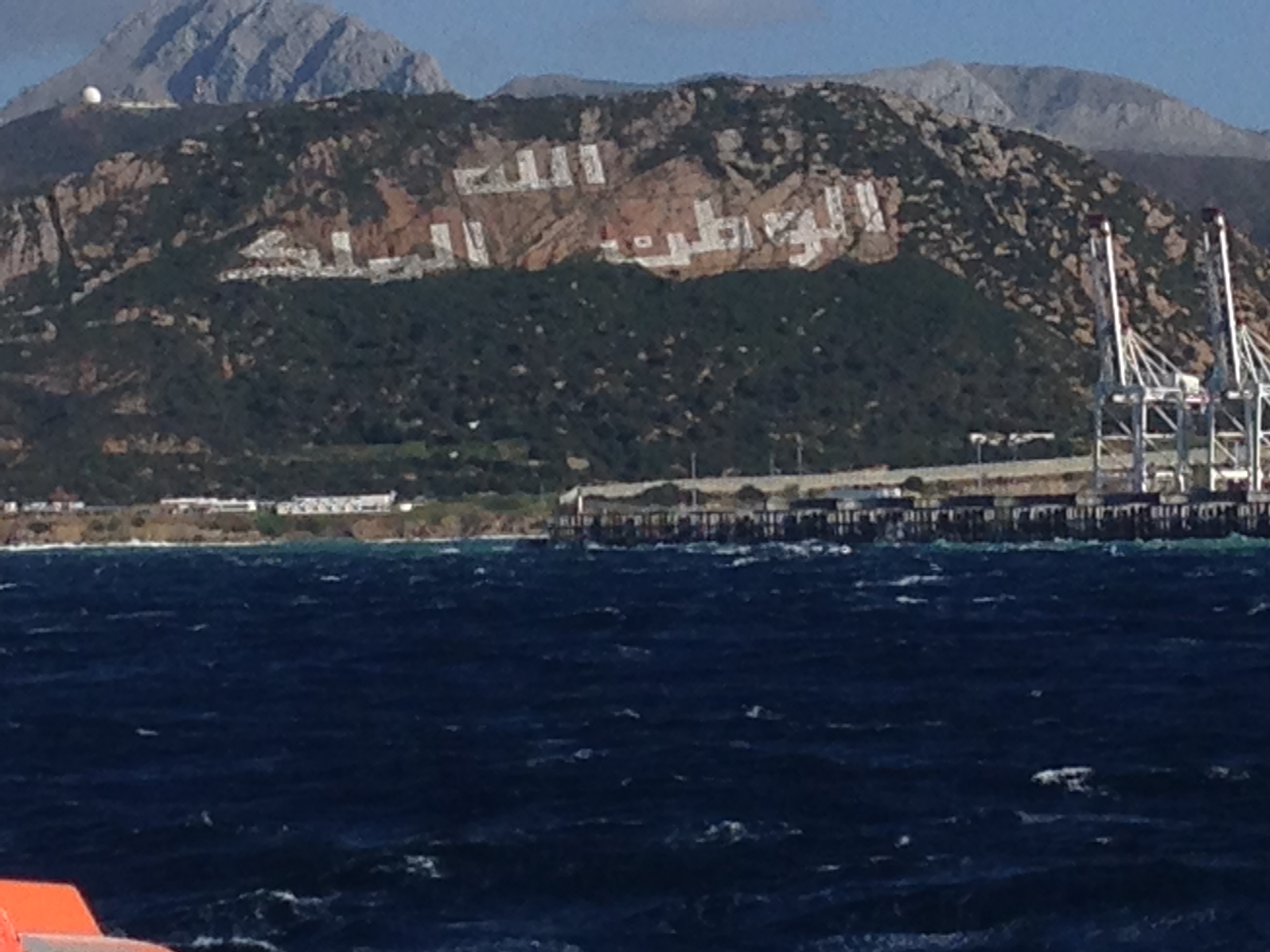
The North African coast.
When we returned to our campsite, it seems this delaying sailing routine is Balearia business model. Those at this campsite had not realised that it happens to other people. They all thought that they had been unlucky.
Personally, I think we were ripped off, as was another person on the boat that day, by a person who had no business being in the port and by the Balearia check-in man. We were also neglected. Surely a ferry company has a duty of care for it’s customers? Dropping customers off at dusk, in an unknown country is appalling. We could not make it to our chosen destinations on either leg of our journey, and had to hastily make other arrangements for our first night in Morocco and our first night back in Spain. This puts people in direct danger and in some cases, where accommodation has been paid in full, in advance, can leave people short of money.
We wont use Balearia again on this crossing and we strongly suggest you don’t either.
There are one or two things that happen in most meals, so let’s store them here, where we can all find them! That way I wont have to bore you and me with longish repeats.
Basic Kit
In a camper you’ll generally have a small under counter cupboard, am I right? This will mean that every pot, pan and kettle will be crammed in there when travelling, so make every item count. No shirkers on this ride.
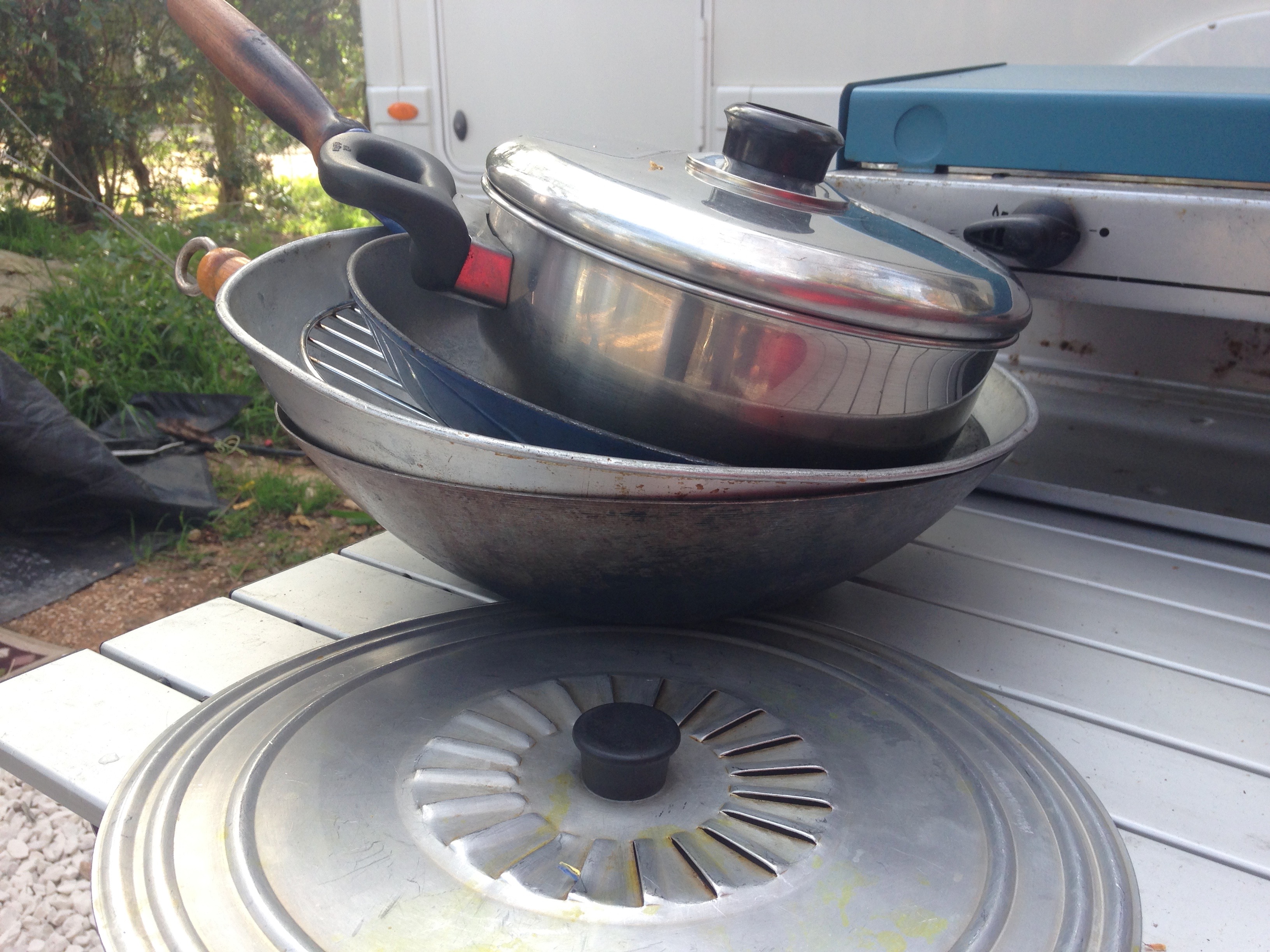
Our basic pan kit, stacked up, minus the kettle. It’s not gorgeous, but it sores in a tiny cupboard.
Your Basic Pan Kit: could be, a wok with lid, a cast iron pan (la Creuset is best dwarlinks- posh shops and charity shops are the places to hunt them down), a large lidded saucepan, a little lidded saucepan, a large chefs lid, a metal rack (from a bbq kit/cooling rack etc) and an electric kettle (wild camper? Hob top kettle).
Basic pots, pans, electric kettle and gas cooker.
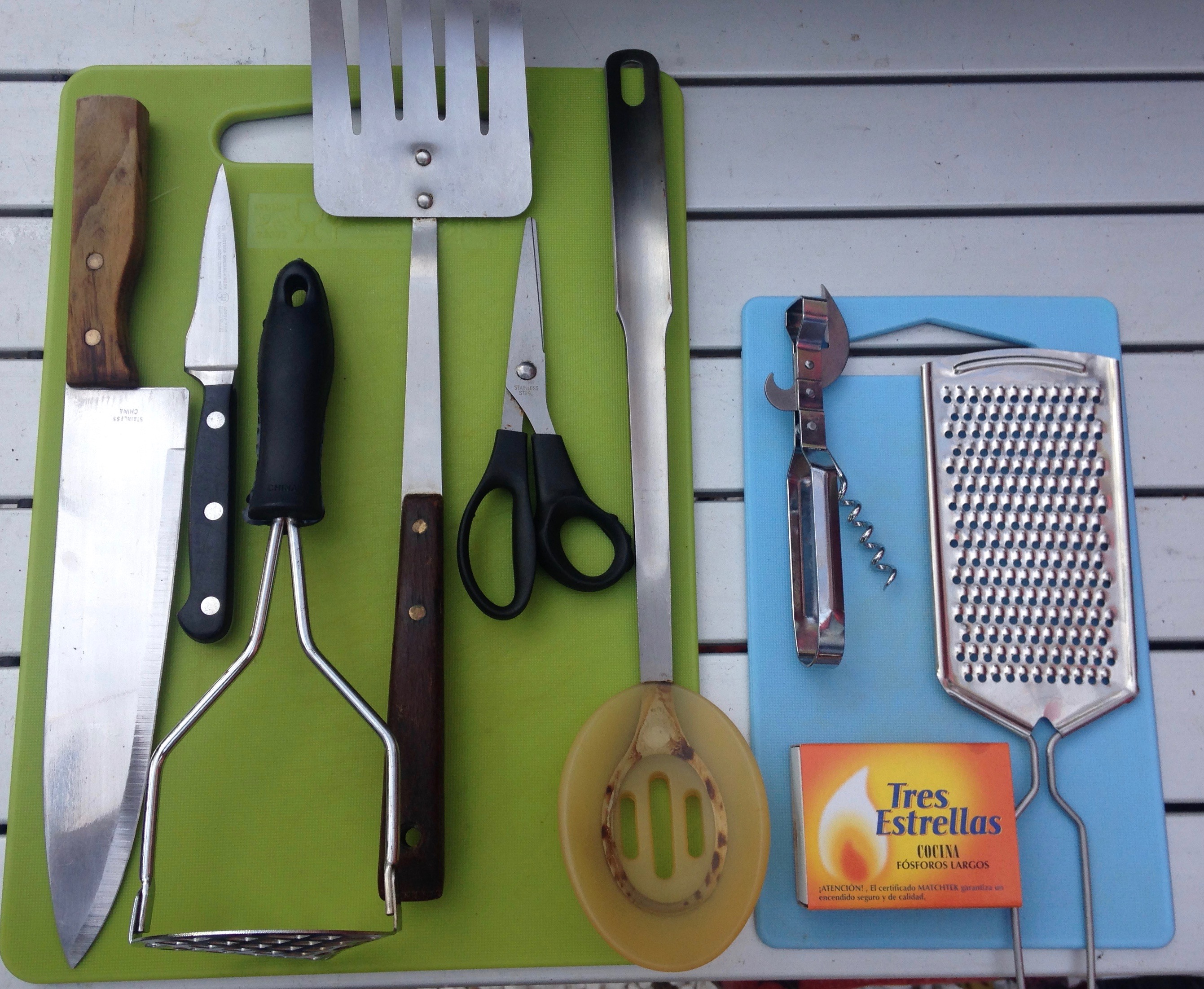
Your Basic Cutlery Kit: 1 teaspoon, 1 tablespoon, 1 cup or mug (your drinkng mug will do), 1 large sharp knife, 1 small sharp knife, a couple of thin plastic chopping boards, a flat fine grater, large stirring and serving spoon, a good metal fish slice, a spud masher, a pair of scissors. With these things you and your camper van can take on the world.
Basic utensils with the teaspoon and tablespoon missing: well nobody’s perfect!
Your Fancy Kit – made from your basic pan kit above
Wallys Pan-Oven: use your cast iron pan, your grill rack and the wok lid. You can also pop a couple of folded tea towels on top of the lid as insulation.
Heat the ‘oven’ on a high heat. When the pan is good and hot, turn down the flame and you’re ready to bake.
Griddle Baking: miss out the rack and wok lid from the Pan-Oven and plop your bakes straight onto the pan’s surface. Use a lid that will sit in the BOTTOM of the pan without squashing your creations. This method suits thin food; pizzas, flat breads etc. You need to watch them like a hungry hawk, as this is a good way to cremate the one you love. And we don’t want that, do we?
Abbreviations of Basic Measurements (taken from the previous blog)
t = teaspoon
T = tablespoon
c = cup
.5c = half a cup
The 3 Food Skills
As we’re trying to use as little gas as possible, it makes sense to do all prep before you strike that match. It’s not always easy to find space to lay out all that food, but you’ll find a way!
Skill number 1: get everything ready, chop food, put pans in place on the stove, and all other ingredients laid out ready to start. Add cooking cutlery and matches and you’re good to go.
Skill number 2: rather than opting for the usual rice, pasta and potatoes, try something new, healthy and hob free such as :-
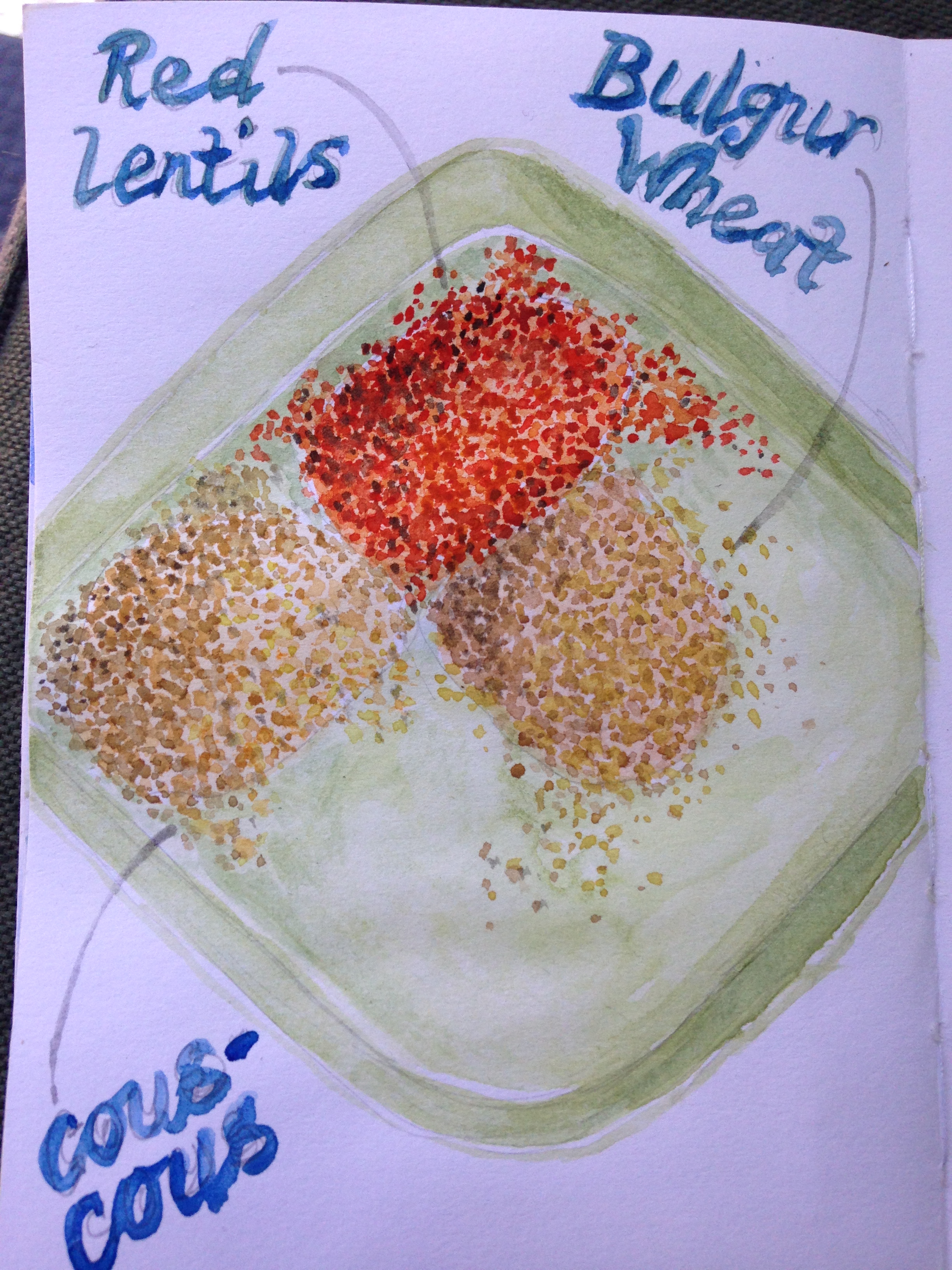
Why not try the two ‘no cook’ options shown here, or the quick cook red lentils?
Bulgur Wheat or Cous cous – both come in whole grain versions, should you fancy having a healthy gut biome (google it, we haven’t gone nuts … yet) and are ‘cooked’ in the same way as each other; half the learning, twice the food options.
Ingredients for 2 people
A shy 1.5c of BOILING water; not hot, not boiled a minute ago; BOILING
.5c Bulgur Wheat or Cous cous.
Method
Put dry ingredient into your small saucepan.
Pour over your boiling water
Sir once to whet all the grains
Pop on the lid
10 -15 minutes later – serve, or get creative by adding whatever makes you smile for an awesome one pot wonder.
Skill number 3: One Pot Wonders – are often based on a good carbohydrate, this one needs very little cooking, which is why it’s made the cut.
Small Red Lentils – a staple food in many countries, this is a chameleon in terms of colour and flavour, it all depends on what you do with it. Red lentils cook more quickly than other lentils. Additional ingredients will vary according to what’s on the menu! These are the lentils that lentil haters hate to admit they like!
Ingredients for 2 people
A shy 2c of liquid. Temperature will depend on the recipe.
1c lentils
Method – Basic
Put dry ingredient into your small saucepan.
Pour over your liquid
Sir once to whet all the lentils
Put on the lid
Bring to the boil
Reduce heat to the lowest possible setting for 5 – 10 mins
Don’t miss the 3 and 2 minute videos towards the end of this page.
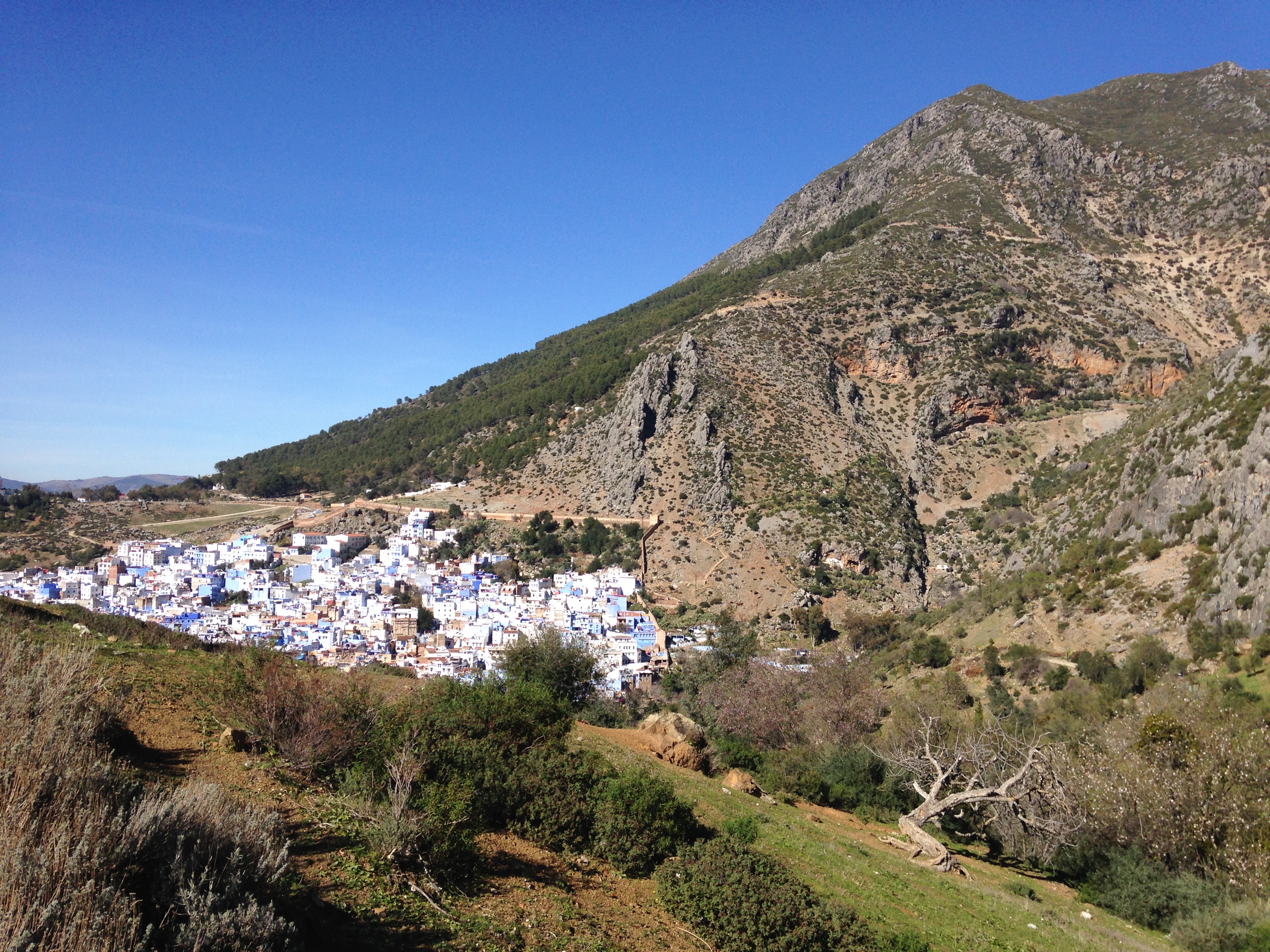
A nestling Chefchaouen with it’s city walls clinging to the Rift Mountainside.
Morocco is different to England. For some visitors, it can feel alien and intimidating, to others it’s more like a warm and welcoming bath. Often, the difference is down to your first real stop over. With any new country, you’ll want to ease yourself in gently and walk away with happy memories and Chefchaouen, the Blue City, lets you do this in spades.
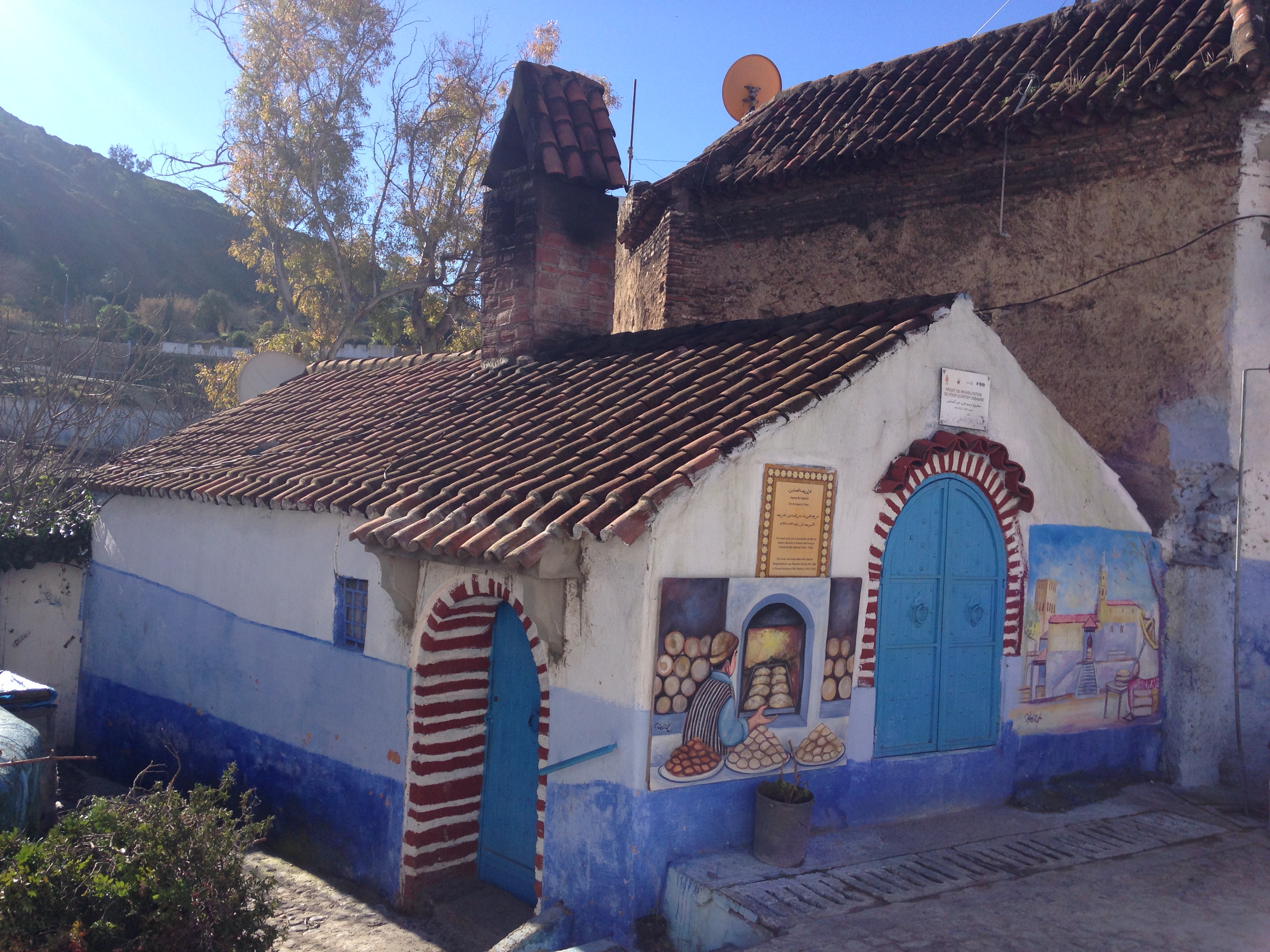
Our Local Bakery
As the town is in the north of the country, a shortish road trip from the ferry port of Tangier Med, it made sense for us to try it as our first encounter with an African way of life.
Swimming In A City Of Blue
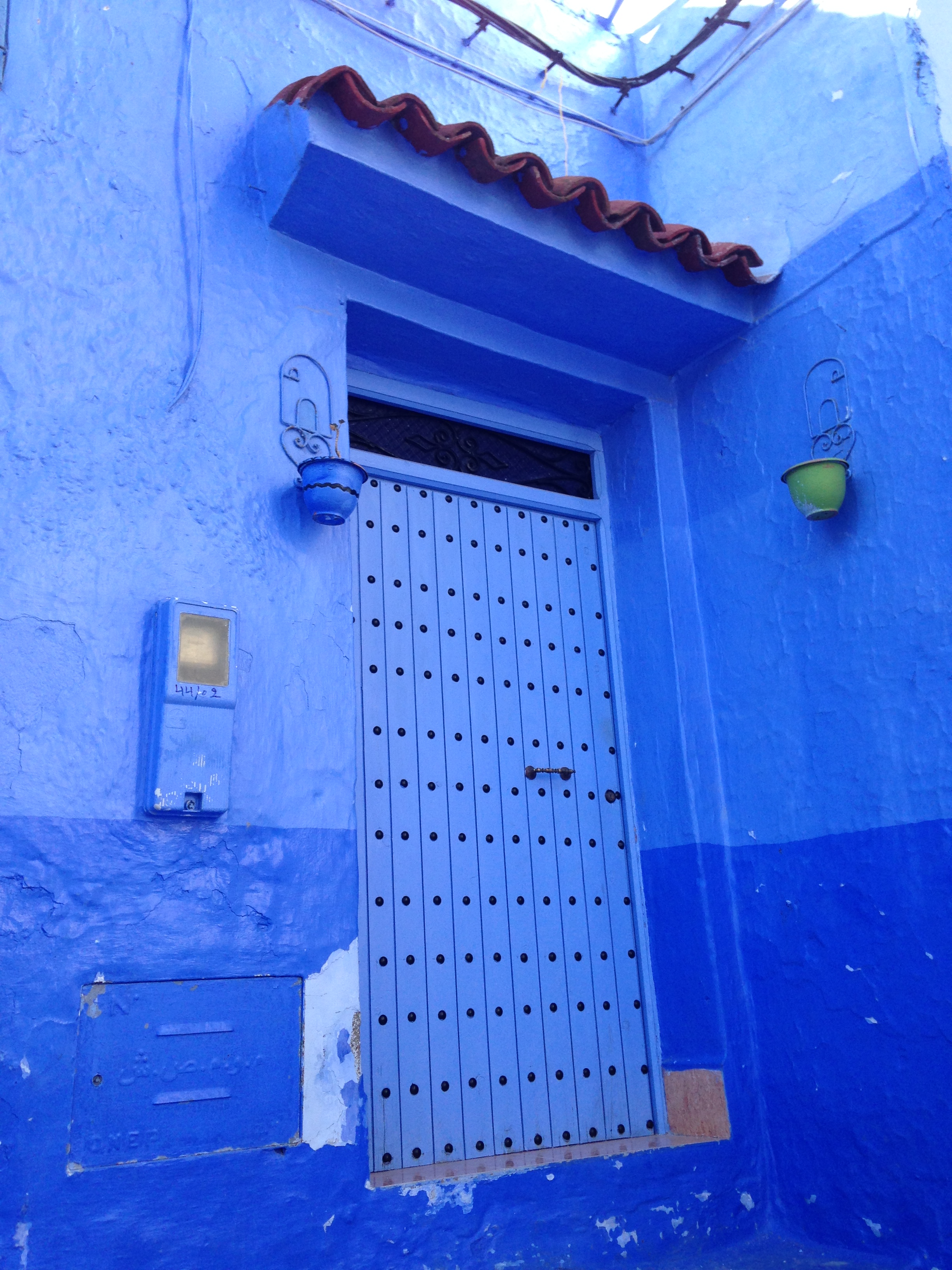
Why is the ‘Blue City’ blue? Some say the mosquitoes do not like the colour, or that it was to do with the Jewish population here? We were given these and any number of reasons, which means that nobody really knows. I reckon a local simply painted their place blue and everyone thought it looked nice and copied it. Now the whole effect is a remarkable spectacle.
A Walk From The Top Of Chefchaouen To The Bottom Of The Medina
After three days here, we felt this place had slid under our skin. It’s quiet serenity and lack of grasping touts and guides who, elsewhere won’t leave you alone for a moment, makes it a rarity as a Moroccan tourist trap. There were other visitors here, a mass of Chinese people, who were making the most of the Chinese new year break and heading to a country that welcomes them and their money with open arms. Chefchaouen’s main square had been decked out with Chinese lanterns to honour these high rollers. It made for a fascinating juxtaposition of cultures.
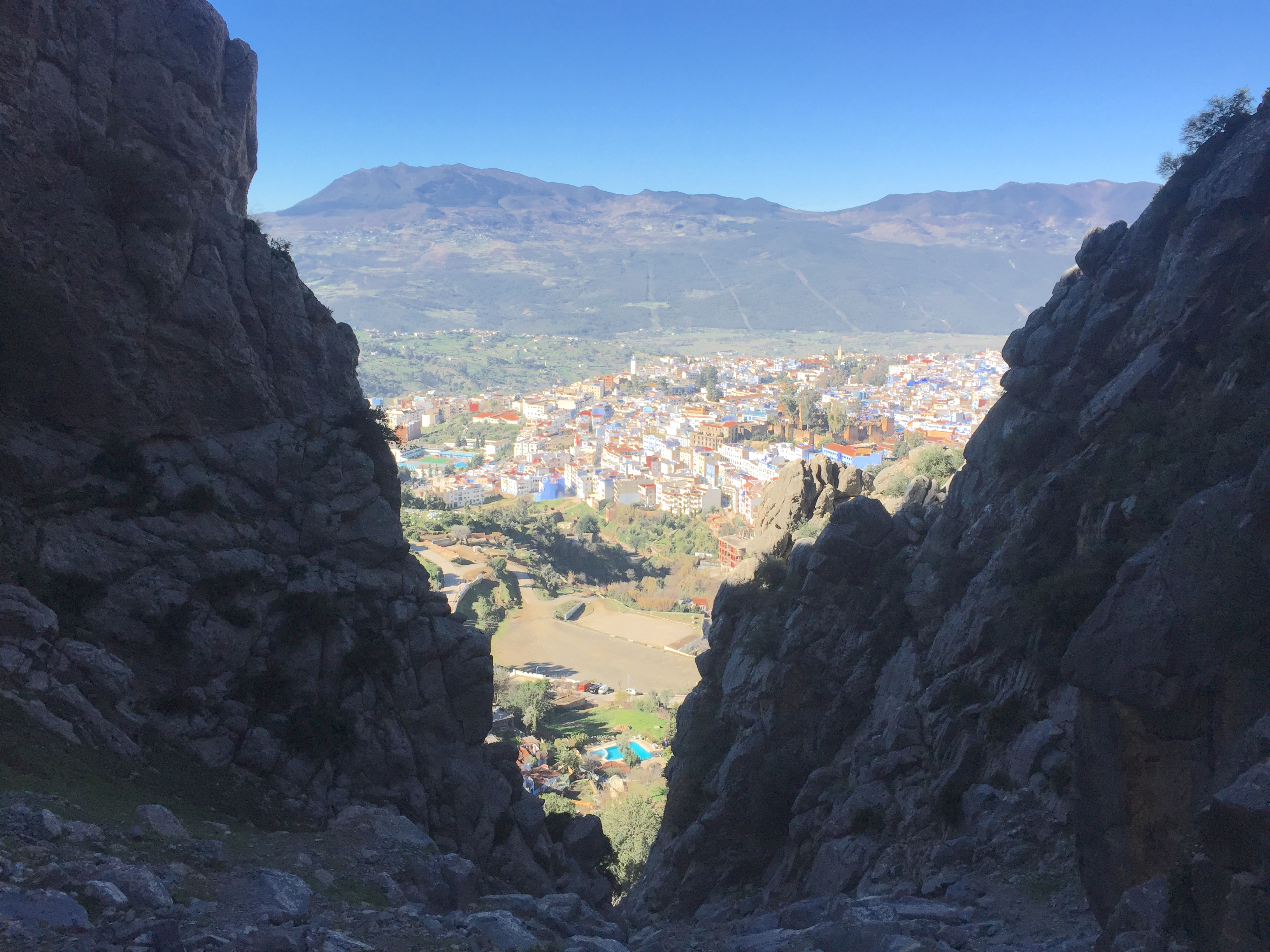
If, like us, you like nothing more than a bracing jog up a mountain, step right up, because this area is bounded on one side by he Rift Mountain range, which tops out at a respectable 2000m. The rugged peaks that run alongside the town are somewhat lower, similar in height and feel to the Snowdon range. We did not actually jog, but we did hike up one of the many obvious paths and admire the town as it snuggled in tight to the lower slopes.
We can’t recommend this town and the French owners of our gorgeous, simple hotel highly enough.
A Stroll Through The Dah Dahlia Hotel
Start your Moroccan journey here and you’ll want to keep going and see much more of this country.
We finally crossed the Straits of Gibraltar, after a long delay, and landed in Morocco in late afternoon. Next the dreaded customs formalities, endless queueing for the inevitable paperchase…..or maybe not? We breezed through in half an hour, including exchanging money and arranging motor insurance (900 dirham or about £75). We felt our luck had just changed.
Waiting for the ferry in Algeciras
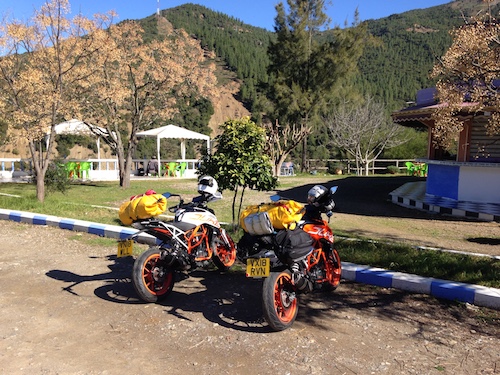
The original plan was to ride to Chefchaouen, about 2½ hrs from the port, and find a campsite. It was however, already 4 p.m. and we didn’t want to arrive in the dark. We decided to wing it and stop as soon as we saw something suitable. Apart from Jen getting blown off her bike, we arrived at an hotel about an hour later without a major problem.
Time for a tea break
Up early the next day, or as early as Jen could cope with, we packed and set off towards Chefchaouen, about 50 miles away. We were feeling quite smug that we had survived our first day in Morocco. Too smug, too soon I think. The next town, Tetouan, was meant to be a dot on the route; a dot that we hadn’t planned to visit. We had momentarily got off route and pulled over to check the map. A motor scooter pulled up alongside. The spiel is generic, someone must have written a guide for Moroccan touts.
“Hello my friend, I have a brother/sister/cousin/son who lives in London/New York/Paris.”
Insert the relative and capital city of your choice.
“You are in luck my friend, it is a special Berber market in Tetouan today, only once a month.”
I faltered and was easily hooked.
“Follow me, safe parking”
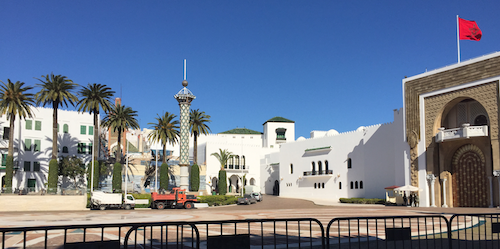
King Mohammed VI’s summer palace.
We didn’t buy a ‘one of a kind’ Berber carpet or a white metal teapot, nor did we get away scot-free. We just about left with our dignity intact, our guide less friendly and decidedly grumpier than when we first met. His tip was a bit lower than he had hoped for and he had no sales commission either.
The citadel Chefchaouen
We had pre-booked an Hotel in Chefchaouen, the Dar Dalia. When we arrived, probably looking lost and confused, we were again accosted by another chancer. Mohammed directed us to a secure parking and after some explanation, offered to show us to our hotel. Mohammed was a much less pushy and a more endearing character than Abdul in Tetouan. We wandered through passageways and climbed numerous steps and were eventually deposited in front of a small and unprepossessing, blue painted building, sporting a sign announcing the Dar Dalia Hotel.
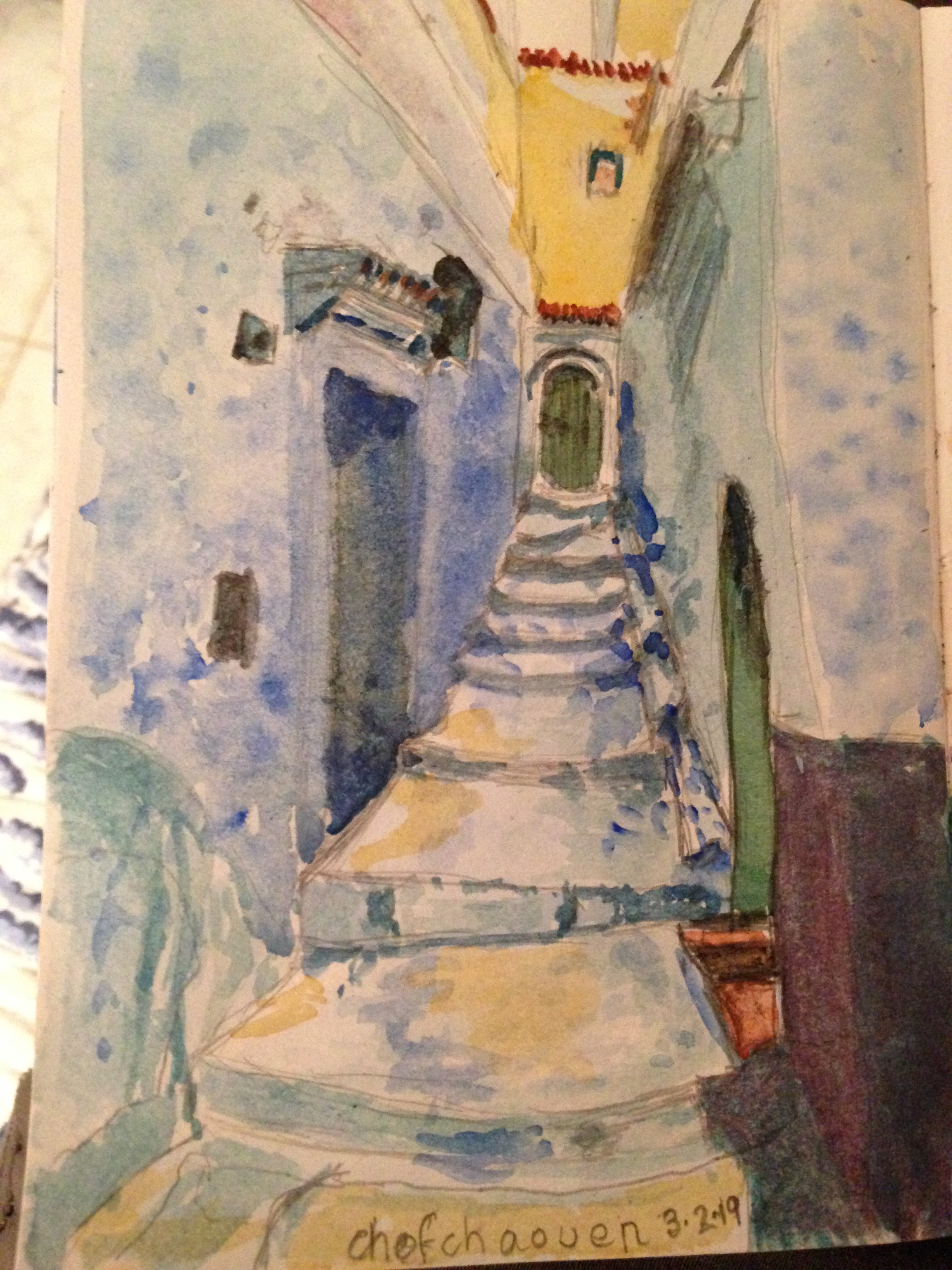
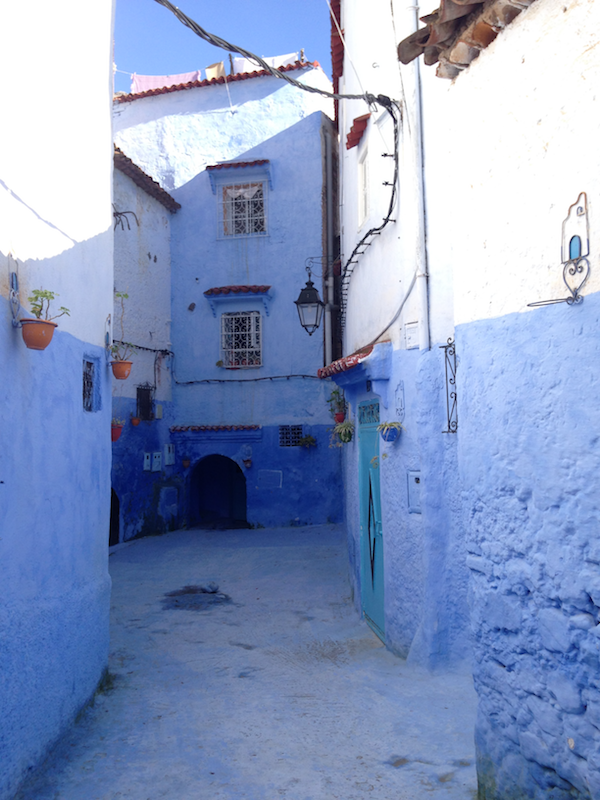
A typical Chefchaouen street
We were a little earlier than had been planned and a knock on the door produced no response from within. Miraculously a tall, imposing man with an official looking ‘maillot jaune’ appeared and proceeded to phone the hotel manager. He handed the phone to me. The voice on the other end said,
“You’re a little early, I’ll be there in 9 minutes.”
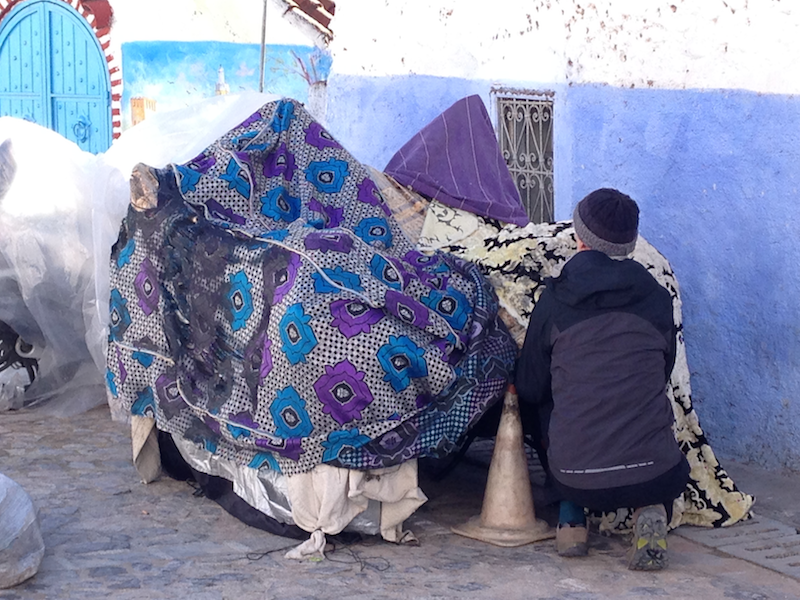
The hotel was a gem, 5 minutes from the medina and beautifully appointed. For the duration of our stay, the ‘maillot jaune’ guarded the bikes around the clock and even disguised them with local drapery.
Stealth bike covers
Chefchaouen, ‘The Blue City’ was, possibly, the best of introductions to Marocco. The town was both tranquil and busily welcoming. Simple food could be found throughout, with a variety of small restaurants clustered around the main square of the medina. To the east the mountains reared up a thousand metres above the city. In celebration of the Chinese New Year bright red lanterns decked the palace walls.
Naive street art
After 2 restful days, in Chefchaouen it was time to move on, to Fes. We had coordinates logged into the phone, the route mapped out and fuel in the tanks.
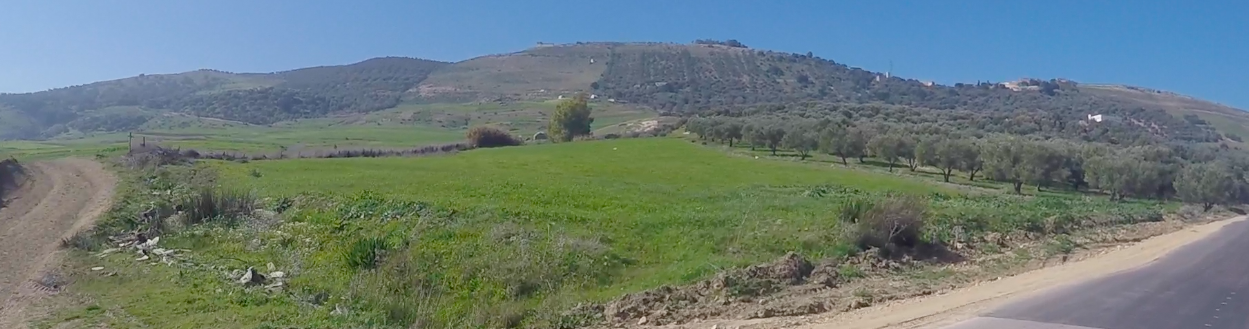
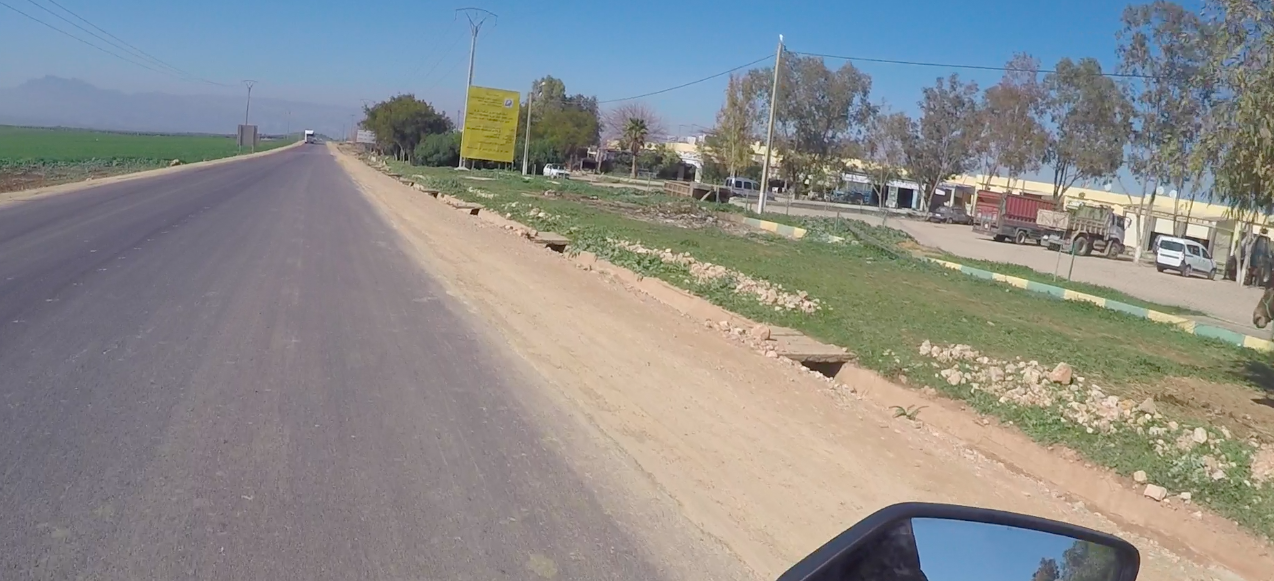
The north of Morocco is verdant with crop production everywhere and a seemingly endless supply of water. The road was in a good state, mostly, which meant that we could relax and enjoy the ride in sunshine and perfect temperatures.
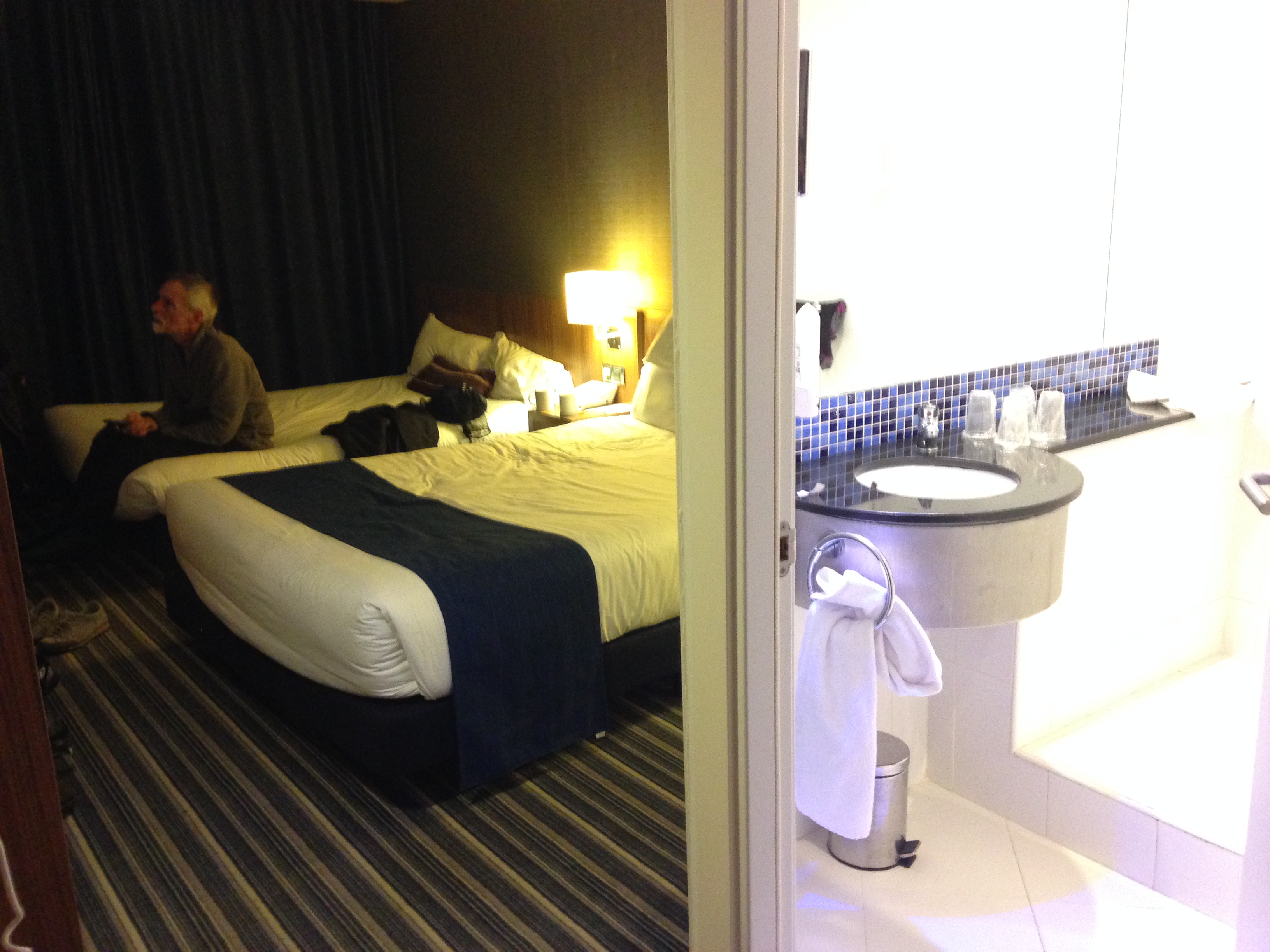
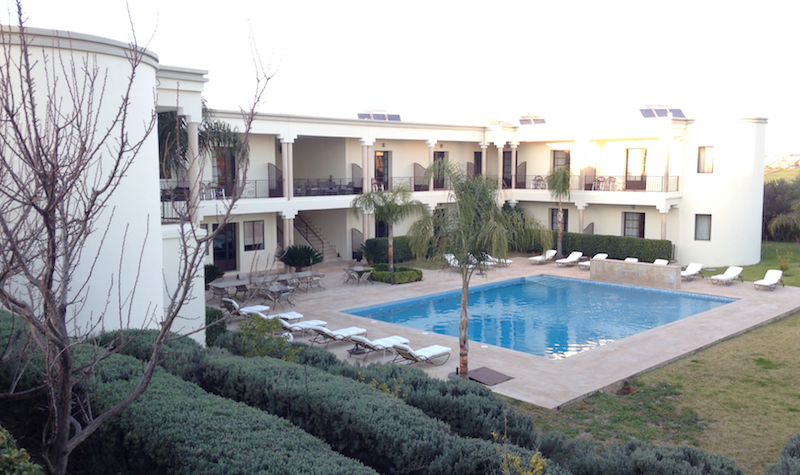
When we arrived at the Fes campsite, we were in for a disappointment, ‘closed for the winter’, we were informed by a young man guarding the entrance. A quick search on booking.com found the ‘Hotel Agapanthe’ some ten minutes away. About an hour later, after some too-ing and fro-ing we found it. At the end of an unpromising dirt road a modern hotel presented itself. Tired and aching we were relieved and grateful and, after an acceptable meal, we slid between the sheets of a king sized bed.
Hotel Agapanthe
The plan for the following day was to find another campsite, this turned out to be the simplest of tasks. At the end of the dirt road from Agapanthe turn right and then turn right again, voilla, the Camping International, Fes and it was only 10.30 in the morning.
Camping International, Fes
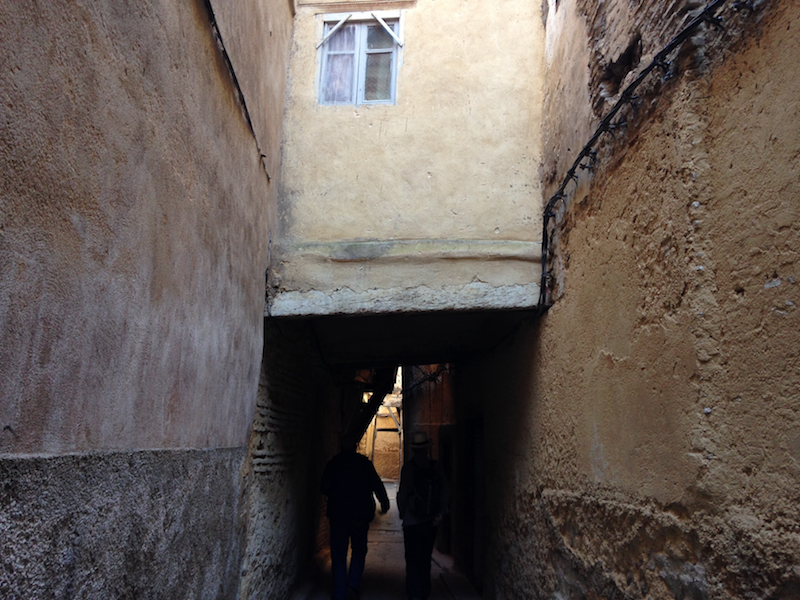
The guy running the campsite organised a guide for us for 1.00 p.m.. At the appointed time he arrived; by scooter. Abbi flagged down a ‘Petite Taxi’ and we were off. Fes is difficult to describe and for this part of the blog a short vignette will suffice. The centre (medina) is an innumerable series of tight lanes and passageways bounded by brown plastered walls rising vertically. The walls often stretched three or four stories above our heads, blocking out all direct light. Reach out your arms and your hands are able to touch the buildings on either side of the street. The walls are punctuated by stout doors, wooden for the grand entrances, metal for the kitchens, and few windows to be seen. The view from any window would be muddy brown, due to the proximity of the walls of adjacent buildings and would afford little light to the interior, rendering them redundant. Most buildings have an inner courtyard open to the sky, letting light flood the interior.
Gloomy canyonised street in Fes
The medina is a place of numerous artisanal activities. Raw materials are brought in on donkey carts or small wheeled push carts. Carpets, leatherwork, metal household goods and numerous other products are created within the secretive walls of Fes. The smallest nook would house a tiny workshop, large courtyards within a building may contain a complete production line. All done by hand, without the aid of powered machinery.
The best saucepan maker in Fes
After two nights at the Campsite International Fes, we finally turned toward the coast and the capital city of Rabat.









 The Wandering Wallys